September 11, 2026
 Categories: Headline / Perspectives / Op-Eds
The Party of Iran
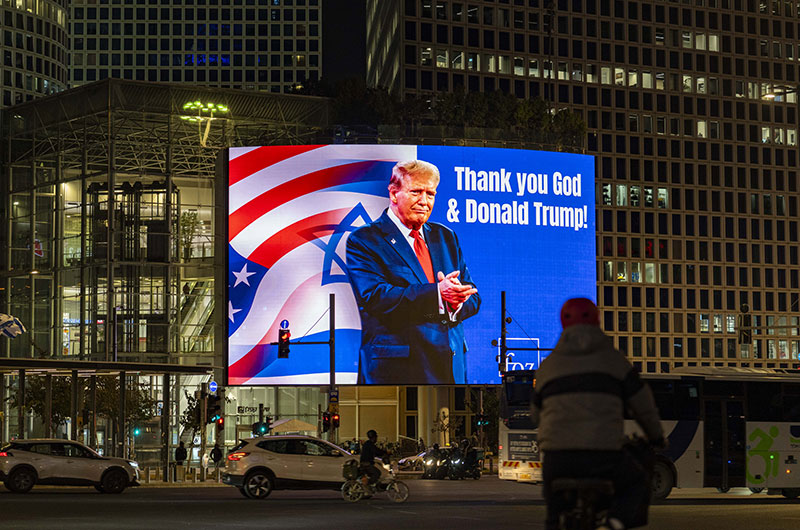


Reacting to the U.S.–Israel military operation in Iran, Democratic politicians and their media allies made explicit what had long been evident: the party that midwifed the Islamic Republic, underwrote its rise, and showered it with cash was incapable of supporting a war to bring that regime to heel – no matter what it had done, was doing, or planned to do. The Democrats had effectively become the party of appeasing – and aiding – Islamist Iran, and by extension, Islamism in general.
Their perfidy was the logical endpoint of a nearly half-century record that began with Jimmy Carter’s betrayal and abandonment of the Shah and ran straight through Barack Obama’s nuclear “deal” and infamous airlift of pallets of cash to Tehran. The long‑overdue operation to end the mullahcracy’s ability to meaningfully threaten other countries was met with a torrent of warnings and talking points seemingly designed to sap American will and sabotage domestic support for the intervention.
The ugly history bears repeating. In the late 1970s, Carter’s foreign‑policy team decided that Iran’s pro-Western, modernizing monarch was morally unacceptable. Under the banner of human rights, Washington publicly pressured, undermined, and connived against its longtime ally, even as the clearly anti-Western Ayatollah Khomeini and his Islamist followers gathered strength. The administration’s machinations facilitated the Shah’s overthrow and replacement by a regime that was bound to be an implacable enemy of the United States and Israel for years to come, as many observers (including this author) warned at the time.
After the revolution, instead of drawing the obvious lesson, the Carter administration tried to “mend fences” with the oil-rich nation’s new rulers. Diplomats sent to Tehran reported encouraging progress and urged engagement, even as the regime murdered opponents, purged relative moderates, and then seized the U.S. embassy and took American diplomats hostage.
Carter’s handling of the Iran hostage crisis was the defining culmination of an administration that never understood the revolution it was appeasing, epitomized by his own U.N. ambassador Andrew Young, who in February 1979 was still serenely predicting that Khomeini would be hailed as “a saint” once everyone “got over the panic.”
Carter compounded that delusion by letting Khomeini turn 52 American prisoners into long‑term hostages and America itself into a global object lesson in weakness for 444 days. His one bid for muscular action, Operation Eagle Claw, was an overcomplicated, under‑rehearsed fiasco that ended in wrecked aircraft, eight dead servicemen in the Iranian desert, and not a single rescued hostage.
By the time the captives were finally released, minutes after Ronald Reagan took the oath of office on January 20, 1981, Carter’s presidency had become a cautionary tale of what happens when Washington confuses wishful thinking for strategy and mistakes a monster for a saint.
Fast‑forward to the Obama years. The same instinct – to appease and accommodate a hostile Islamist regime – was again dressed up in the language of sophisticated diplomacy. The 2015 Joint Comprehensive Plan of Action was sold as a masterstroke of diplomacy, trading sanctions relief for temporary nuclear enrichment limits and intrusive inspections. In reality, the agreement was a lifeline to a revolutionary regime whose regional empire – Hezbollah, Iraqi militias, the Houthis, and the Islamic Revolutionary Guards Corps’ terror apparatus – was already drenched in American and Israeli blood.
The symbolism of how that deal was greased could not have been clearer. In January 2016, the administration secretly airlifted $400 million in foreign currencies to Iran, stacked on pallets of cash and flown in on an unmarked plane. The transfer was the first installment of a $1.7 billion package – $400 million from a pre‑revolution arms claim and $1.3 billion in interest – paid out in hard currency after sanctions were eased.
As the deal took effect, Iran released five imprisoned Americans in a choreographed prisoner swap that quietly echoed Carter’s hostage crisis.
Democrats in Congress protected the pact. In 2015, Senate Democrats used procedural tactics to block a Republican resolution that would have killed the deal, ensuring that the cash and sanctions relief flowed. When a few Democrats who had opposed the agreement later told Donald Trump to keep it anyway, they made the logic explicit: whatever its flaws, the accord was better than confrontation.
All of this set the stage for the conflicts that followed.
When Israel opened the June 13–24, 2025 Twelve‑Day War with surprise strikes on Iran’s nuclear and military sites, Democrats immediately fractured between a vocal antiwar camp and a smaller pro‑Israel bloc. Progressive lawmakers blasted the operation as a reckless bid to “sabotage” diplomacy and warned that Israel was dragging Washington toward a wider war with Iran. Pro‑Israel Democrats stressed that Iran “must never” get a bomb and that Jerusalem had a right to defend itself, but in the same breath fretted about “dangerous escalation” and pressed for de‑escalation and a return to negotiations.
When President Trump then ordered limited U.S. follow‑on strikes later that month, those same tensions deepened. Party leaders like Chuck Schumer and Hakeem Jeffries stayed muted; antiwar liberals demanded restraints on Trump; and centrists tried to hedge by backing Israel’s security in principle while blaming Trump for “creating the crisis” by quitting the Obama‑era deal.
By the time the U.S. and Israel launched “major combat operations” against Iran’s remaining nuclear infrastructure on February 28, 2026, the Democratic debate had hardened into near‑total public condemnation of the war itself. Across the spectrum, Democrats attacked Trump for bypassing Congress and demanded immediate war‑powers votes. House and Senate leaders framed the strikes as an “unacceptable” usurpation of legislative authority and warned of a slide into open‑ended conflict. Progressives went further, branding the campaign “illegal,” “catastrophic,” and a reprise of Iraq, while even many pro‑Israel Democrats emphasized ceasefire, diplomacy, and humanitarian risk more than Iran’s nuclear and ballistic missile threats.
In short, the Democratic Party, taken as a whole, could not accept the objective of defeating the Iranian regime. The first instinct of Democrats was to complain that the President had not asked Congress’s permission and to suggest that America was blundering into “another endless war in the Middle East.”
Progressive Democrats – joined by their media allies – went further. They denounced the strikes as “dangerously illegal,” “entirely unwarranted,” and “catastrophic,” and revived the slogan “no war with Iran” as if the regime had not already been waging war on the U.S. and its allies for decades. Liberal outlets and commentators rushed into overdrive to highlight every Iranian civilian casualty, every spike in oil prices, every foreign government complaint, while downplaying or rationalizing the years of Iranian aggression that had led to this point.
The messaging was unmistakable: emphasize “unauthorized,” “no clear strategy,” “escalation,” “millions could die,” “destabilizing the region.” The practical effect was to erode resolve – to convince Americans that hitting Iran was reckless, futile, and morally suspect.
There were a few outliers. A handful of Democrats – most notably Senator John Fetterman and House members Greg Landsman of Ohio and Josh Gottheimer of New Jersey – backed the U.S.–Israel air campaign on Iran and resisted the left’s push for an immediate cutoff, with Landsman and Gottheimer eventually switching to time‑limited war‑powers language rather than an unconditional shutdown of the strikes.
But the party’s energy, activist base, and media ecosystem were all aligned to restrain America and oppose a decisive military outcome.
In other words, the party that 47 years ago helped an Islamist regime take power now insisted that seriously waging war on that regime was unthinkable. The party that airlifted pallets of cash and unfroze billions in sanctions relief to buy a few years of nuclear “calm” recoiled at the notion of using American power to dismantle the terror state it had helped bankroll.
The loudest Democratic voices demanded an end to the war to guarantee the survival of a regime responsible for decades of American casualties, from the 241 U.S. servicemen slaughtered in the 1983 Hezbollah bombing of the Marine barracks in Beirut to the 1996 Khobar Towers truck-bomb attack in Saudi Arabia that killed 19 airmen and wounded hundreds—atrocities orchestrated and backed by the IRGC—to the hundreds of U.S. troops cut down by IRGC-supplied roadside bombs and other weapons in Iraq and Afghanistan.
Simply put, the Party of Iran behaved exactly as you would have expected.