 October 16, 2026
 The Sefas Emes Weighs In On a Classical Case of Agunah
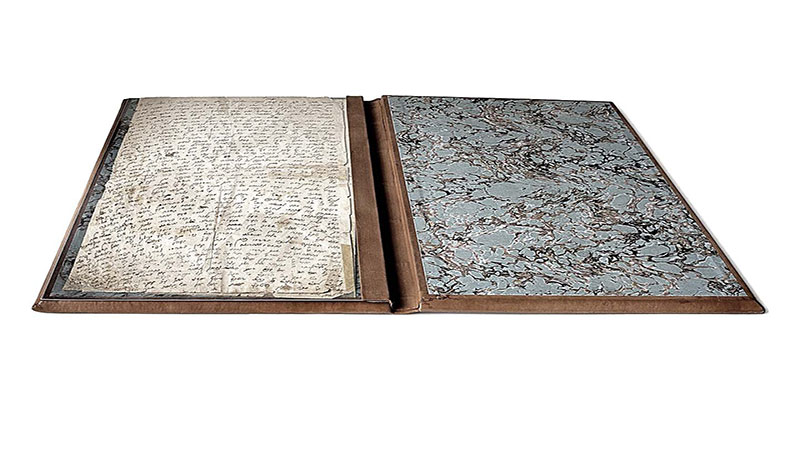


An extraordinary manuscript I was recently entrusted with selling is an autograph halachic responsum, written entirely in the hand of the Sefas Emes.
The subject is one of the most delicate and consequential areas of halacha: permitting an agunah to remarry. The case involved a man who disappeared while traveling and was presumed to have drowned. When a body was subsequently recovered from the water, those who knew the missing man identified it as his. The Sefas Emes, however, approached the matter with the meticulous care such a weighty question demanded, examining the evidence through the lens of halacha.
Two central questions required careful consideration. Had sufficient time elapsed for decomposition to compromise the reliability of ordinary facial recognition? And could the witnesses’ recognition based on distinctive identifying features be relied upon to establish the deceased’s identity according to halacha? Drawing upon the opinions of earlier poskim, the Sefas Emes weighed the relevant considerations with the extraordinary caution that characterizes the halachic treatment of agunos, where a single ruling can determine the course of a woman’s life.
What makes this manuscript particularly significant is the relative rarity of such material in the surviving writings of the Sefas Emes. Although he was one of the foremost Torah leaders of his generation, comparatively few of his responsa have survived, and he is not generally associated with the extensive literature devoted to heter agunah.
There is, moreover, a remarkable tradition concerning this very case, preserved by his grandson, Rav Pinchas Menachem Alter, the Pnei Menachem. According to that account, the question had initially been brought before another eminent rabbinic authority, who indicated that he would permit the woman to remarry only if three additional rabbanim concurred with his ruling. One of the rabbanim whose agreement was sought was the Sefas Emes.
The manuscript therefore offers more than a rare example of the Sefas Emes’s handwriting. It preserves his own halachic analysis of a deeply consequential query, a case in which his judgment was specifically sought as one of the decisive voices in determining whether a woman could rebuild her life.