 October 9, 2026
 Categories: Headline / Business/Finance / Money Matters
The Six Seasons of a Financial Life: Lessons from Kohelet
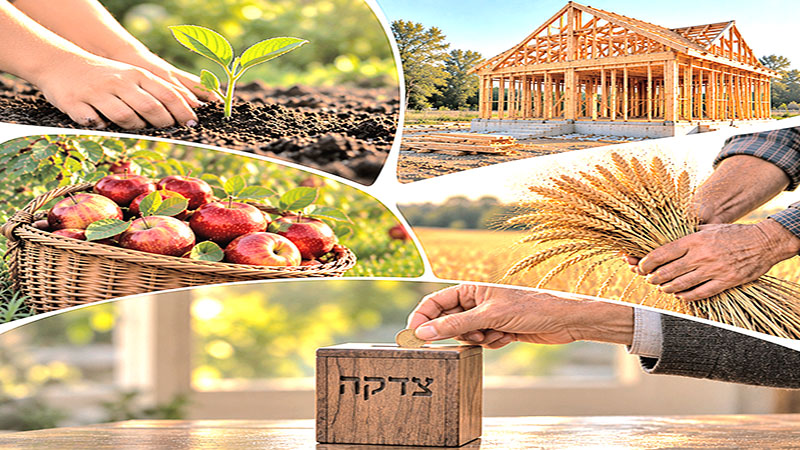


Every year as we read Kohelet during Sukkos the same verse stops me in my tracks: “To everything there is a season, and a time to every purpose under Heaven.” It goes on to say that there is a time to plant and a time to reap. A time to weep and a time to laugh. King Solomon is reminding us that the physical world is fleeting and lasting meaning comes only from fearing G-d and keeping His mitzvos. Anyone who has lived a few decades knows how true this framework feels in daily life. Childhood, yeshiva and seminary years, marriage, children, a first job, a first home. Life unfolds in seasons, each new one arriving with its own opportunities and demands.
A person's financial life moves through seasons too. The mistake many people make is applying the same strategy to every stage when each season calls for its own priorities. What follows is a framework for six distinct financial seasons, each with its own focus and its own lessons.
Foundation: Early 20s Through the Start of a Career: This season is Kohelet’s “time to plant.” The habits formed here matter more than the dollars involved; they’re the foundation that supports every later stage. The first priority should be an emergency fund covering three to six months of expenses, kept liquid rather than invested. High-interest credit card debt should be reduced aggressively, since it is nearly impossible to outearn a balance charging twenty percent or more. Student loans should be paid down steadily so they don't linger for decades.
Young earners should begin contributing to a retirement account even in small amounts, because time in the market matters more than the size of any single contribution. An employer match should be captured in full every year: it's simply free money. This is also a wonderful season to open a Roth IRA or Roth 401(k), since income tends to be lower early in a career, making tax-free growth for decades the better trade.
A first job should not always be about chasing the highest salary. It should be about finding the experience that positions a person for the greatest earning potential later. When I started my career, I turned down significantly more money to join a training program I believed would pay off over time. That decision shaped my entire professional path.
Growth: Mid-Twenties Through Late Thirties: This season reflects Kohelet’s “time to build” spirit. Income tends to rise meaningfully during these years, and the savings rate should rise with it. Individuals should aim to save fifteen to twenty percent of income across retirement accounts. Home ownership often becomes a real question and deserves a careful financial comparison rather than a purely emotional decision. Choosing a community that is affordable and reflects a family's values matters far more than stretching for the priciest neighborhood. It took my wife and me two and a half years to find a community where we wanted to live, and that mattered more than the price of the house itself.
Many families begin automating contributions into a taxable brokerage account for medium-term goals, growing assets in accounts less restrictive than retirement plans and better suited for nearer term objectives. I encourage clients to automate their investing both inside and outside their retirement accounts.
Families sending children to yeshiva day school know how quickly tuition can compete with retirement savings. I caution families not to forsake retirement savings entirely, ideally contributing something every year even while paying tuition. A 529 plan can help with college costs. Tuition planning often deserves its own conversation with a planner familiar with day school expenses, since loans exist for higher education but not for retirement.
Families with young children should strongly consider term life insurance along with a basic will and updated beneficiary designations. An unexpected tragedy without proper planning can create tremendous hardship. One of the best habits to establish during these years is to save part of every raise before it becomes part of the lifestyle. If income rises by twenty thousand dollars, automatically directing ten thousand of that increase toward investments can dramatically increase long-term wealth while still allowing the family to enjoy a higher standard of living.
Peak Accumulation: 40s Through Mid-50s: These years often represent the height of earning power and Kohelet’s “time to gather.” I encourage people to increase their savings rate while keeping spending in check. Families that do this minimize lifestyle creep and position themselves well for the future. Those who increase spending without increasing savings often find they must work longer than planned to afford their lifestyle.
Maximizing contributions to a 401(k), an IRA, and a health savings account should be a top priority. The HSA deserves more attention than it usually gets: contributions are deductible, growth is tax-free, and withdrawals for medical expenses are tax-free as well. This season also calls for a serious look at estate documents, including wills, powers of attorney, and healthcare directives. Families with significant assets should speak with an attorney about trusts, since the federal estate tax exemption is scheduled to change and could be far lower soon.
This is also the season to think about tax diversification rather than simply tax deferral. Having assets in taxable, tax-deferred, and Roth accounts gives retirees far more flexibility later when managing tax brackets, Medicare premiums, Roth conversions, and charitable giving.
Pre-Retirement: Mid-50s Through Mid-60s: This season reflects the shift toward Kohelet’s “time to guard.” The focus moves from growth toward preservation. When I started my career in 2007 and 2008 during the Great Financial Crisis, I watched some of my firm’s clients lose their life savings because they were taking far too much risk in their portfolios. During this season, moderating risk is appropriate.
This is also a good time to build a real retirement budget: assess realistic expenses and identify income sources including Social Security, pensions, rental income, and portfolio withdrawals. Determine what needs to happen to ensure your lifestyle can be maintained in retirement.
This season is an excellent window for Roth conversions, particularly in years when income dips between the end of a career and required withdrawals. It is also the moment to stress test a plan against sequence of returns risk: the danger of a downturn hitting right before or after retirement begins.
One useful exercise is to practice retirement before actually retiring. For six to twelve months, try living on the amount you expect to have available after leaving work. Better to discover that the budget feels uncomfortable while a paycheck is still coming in than afterward.
Early Retirement: Mid-60s Through Mid-70s: This season is exactly Kohelet’s “time to reap” moment. Once income from work stops, a withdrawal strategy becomes the central decision. Some advisors favor a guardrails approach, adjusting withdrawals based on portfolio performance. The order in which accounts are tapped matters enormously for taxes, with taxable accounts generally drawn down first, tax-deferred accounts next, and Roth accounts last.
Required minimum distributions eventually begin depending on year of birth and should be planned for well in advance. For charitably inclined families, a qualified charitable distribution moves funds directly from an IRA to a shul or yeshiva, satisfying the requirement while avoiding taxable income entirely.
The years between retirement and the start of required minimum distributions can be one of the most valuable tax planning windows of a person's life. With employment income gone, retirees may have several years in which to convert portions of traditional retirement accounts to Roth accounts at relatively favorable tax rates.
Late Retirement and Legacy: Mid-70s and Beyond: This final season embodies Kohelet’s “time to give.” The focus shifts from accumulating to simplifying and transferring. Accounts should be consolidated where possible, both for the person's own peace of mind and for the heirs who will manage the estate. Powers of attorney should be confirmed current.
This is also the season for thoughtful legacy planning, including lifetime gifting and charitable giving, sometimes through vehicles like a donor-advised fund. Many families use this season to fund an account earmarked for tzedakah, letting children and grandchildren take part in giving decisions for years to come. Assets left to heirs receive a step-up in cost basis, making appreciated investments more tax-efficient to hold until death than to sell during life.
Legacy planning is not only about how much to leave, but also which assets to leave. Because different assets receive different tax treatment at death, the most tax-efficient inheritance strategy may involve spending some assets during retirement while preserving highly appreciated investments for heirs. A thoughtful estate plan considers the tax consequences of each asset rather than treating every dollar of wealth as interchangeable.
Kohelet reminds us that the physical world is fleeting and that every season eventually gives way to the next. Sound financial planning cannot change that truth, but it can help ensure a person meets each season with confidence, free to focus on what truly matters most.