 October 23, 2026
 Categories: Front Page / Features / Torah
The Sukkah Is Temporary. So Are Our Emotions
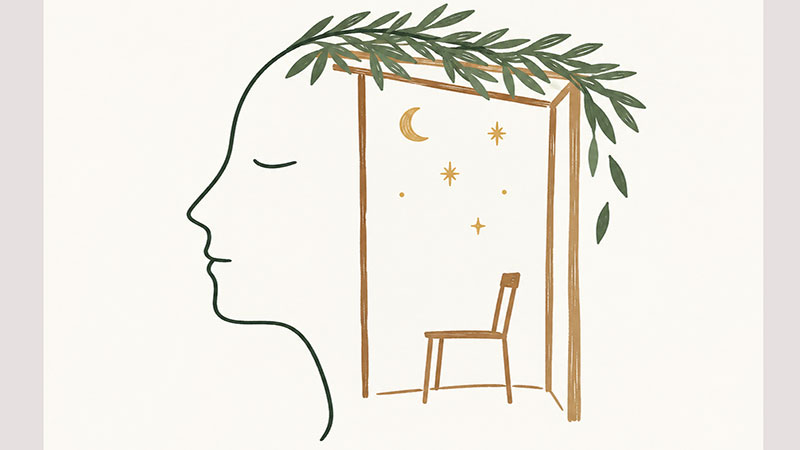


On Sukkot, we leave the safety of our homes and step into structures that are intentionally temporary. A sukkah must be sturdy enough to withstand a typical wind, yet porous enough to let the stars peek through. It must be livable but not permanent. The balance between shelter and exposure is not just architectural, it’s emotional.
As a therapist, mother, and observant Jew, I see the laws of how the structure of a sukkah can be used as an ancient model of psychological resilience. The sukkah is both vulnerable and protected. It can’t be too high, too enclosed, too weatherproof, or it’s disqualified. But if it’s too flimsy or too open, it’s also invalid. This delicate in-between mirrors the emotional state we try to cultivate after the intense self-reflection of the High Holidays: secure enough to feel joy, open enough to stay human.
Sukkot is the only pilgrimage festival that doesn’t commemorate a major historical event. Instead, it marks a paradox: G-d protected us in fragile huts during the most destabilizing period of Jewish history, our forty-year wilderness journey. It is also known as Chag HaAsif, the Festival of Gathering, when crops are harvested and stored. Spiritually and emotionally, it is a time of collecting the insights of the past year and sitting with them, outdoors, under the leaves.
And maybe most profoundly, Sukkot is called Zeman Simchateinu, “the time of our joy,” but the sukkah’s impermanence suggests that joy doesn’t come from certainty. It comes from being present within what is passing.
A Therapeutic Blueprint in Judaism
Jewish law mandates that a sukkah must have at least two full walls and a partial third, and the schach, the roof covering, must be made of unprocessed vegetation and sparse enough to see the sky.
This architectural design invites not just symbolic reflection but psychological insight. It embodies what modern trauma clinicians call the “window of tolerance,” the emotional zone where we’re neither numb nor overwhelmed. Within this zone, like within the sukkah, we can experience regulated emotional presence.
Too much protection can become avoidance; too little, and we’re flooded. The sukkah models a sacred balance: boundaries that are flexible but real.
On Sukkot, we eat in the sukkah, decorate it with fruit and foliage, and take up the Four Species, all of which engage the senses allowing us to utilize not only Jewish practice, but evidence-based practice to heal our minds.
When we fill our sukkahs with branches, gourds, and handmade paper chains, we are not just beautifying a space – we are actively engaging in a healing modality.
Ritual as Regulation
Modern psychology speaks often of “co-regulation” – the way we soothe one another in safe relationships. Jewish ritual has long modeled this. Sukkot, with its emphasis on communal meals, singing, and visiting each other’s sukkahs, offers an annual opportunity for shared joy and nervous system attunement.
And when it rains in the sukkah, Jewish law exempts us from remaining. The implication is profound: discomfort is holy, but suffering is not a mitzvah. We are permitted – in fact, commanded – to recognize our limits and return indoors. Mental health clinicians can only dream of such an elegantly balanced directive: try discomfort, but not at the cost of your safety.
Sukkot doesn’t arrive in a vacuum; it comes after the awe of Rosh Hashanah and the soul-baring intensity of Yom Kippur. According to Rabbi Dr. Tzvi Hersh Weinreb and Rabbi Alan Lew, Sukkot is the resolution of a journey that begins with existential dread and ends with joy, not because fear is gone, but because we’ve faced it.
We do not jump straight into dancing. We build the sukkah, step by step. We feel the breeze through the walls. We eat, even if it’s chilly. We sit with fragility. In therapeutic terms, we integrate.
I remind my Jewish clients regularly: “Emotions are temporary. Like a sukkah, they pass through.” But I also remind them that temporary doesn’t mean meaningless. Transience is often what makes something sacred.
Modern Shelters in the Wilderness
The Torah teaches that G-d protected us in huts during the wilderness years. Today, we seek that same protection, spiritually and emotionally, from our rabbis and community leaders, from our therapists, our psychiatrists, and from nature.
For those dealing with trauma, chronic illness, grief, or anxiety, Sukkot is a reminder that temporary doesn’t mean unstable. And fragility does not equal failure.
I have seen people build their own modern sukkahs, not with bamboo and canvas, but with therapy, community, prayer, and resilience. They craft lives that are imperfect but whole, decorated with the joys they can carry.
We are not meant to be happy all the time. Even the mitzvah of Sukkot is only performed when we’re physically able, mentally present, and spiritually willing. There is no joy commandment under duress. Joy must be possible, not forced.
Dwelling in Complexity
To dwell in a sukkah is to affirm that joy and instability can coexist. That we can love what is passing. That we can be grateful even when feeling uncertain.
This is not just a religious ritual; it is an emotional truth.
The sukkah reminds us that healing doesn't come from sealing ourselves off, it comes from opening, from trusting the wind will not blow us down, and from finding joy in what remains.
Even if just for seven days.