 October 9, 2026
 Categories: Features / Book Reviews
Torah in Their Memory


Title: Chumash of Heroes
Edited by Rabbi Natan Feldman and Rabbi Yitzchak Bloch
Translated by Rabbi Yossi Goldschmiedt
Published by Mantzichim – Israel Memorial Project
The new Chumash of Heroes (Chumash HaGiborim in Hebrew) is a work that stands apart, not only as a tool for learning Torah but as a deeply meaningful memorial project. It weaves together tradition, memory, and unity in a way that feels both innovative and profoundly rooted in the Jewish experience. More than a Chumash, it is a living tribute – one that connects the study of the weekly parsha with the lives and legacies of those who gave everything in defense of the Jewish people.
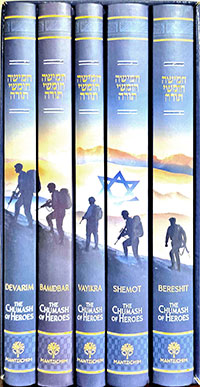 Each page of the Chumash is paired with a facing page dedicated to a fallen soldier. These pages include the soldier’s name, brief biographical details, and the dates of his or her birth and tragic passing. They also recount the circumstances of the soldier’s sacrifice and present words of Torah dedicated to their memory. In some cases, these divrei Torah come from the soldier’s own rabbi or rosh yeshiva. Occasionally, the Torah insight comes from the posthumous writings of the soldiers themselves, or from friends, comrades, or family members. This structure transforms the experience of learning: the reader is constantly reminded that Torah is not studied in a vacuum, but within the context of sacrifice.
At its core, what makes this Chumash so remarkable is its striking expression of achdus, unity, evident in numerous ways. There are both English and Hebrew editions, making it accessible to a broad audience across different linguistic backgrounds, and it has received letters of support and approbation from both American and Israeli rabbis, further emphasizing its bridging of communities. Most powerfully, though, achdus is evident in the selected sources themselves, drawn from an unusually wide spectrum spanning the days of Chazal until contemporary times. They include those of Sephardic tradition such as the works of the Chida and Pele Yoetz, and of renowned Kabbalists like Rav Moshe David Vali. They cite chassidic masters such as the Magid of Mezritch and Noam Elimelech, and also Mussar leaders including Rav Yisrael Salanter and the Alter of Slabodka. The editors emphasize those identified with Zionism, such as Rav Avraham Yitzchak Kook, but also those of alternate perspectives such as Rav Shimshon Rafael Hirsch. Perhaps most pointedly, they include the words of Tzahal rabbanim and Hesder roshei yeshiva alongside those of recent leaders of Yeshivos Mir and Ponevezh. The result is a Chumash that reflects the enormous diversity of Torah thought across generations and communities. It is rare to find such a seamless integration of sources that span so many traditions, demonstrating that Torah transcends communal boundaries. In a time when unity is both essential and challenging, this Chumash quietly but effectively models what it looks like.
A vital separate 6th volume, the Mafteach, serves as an index, allowing readers to locate where a particular soldier is featured within the Chumash. This is more than a practical tool; it underscores the importance of each individual being remembered and accessible. Making thoughtful use of modern technology, the Mafteach also includes QR codes that link to online memorial pages, extending the experience beyond the printed page. In this way, the project bridges past and present, tradition and innovation, ensuring that the stories of these soldiers can be explored more deeply.
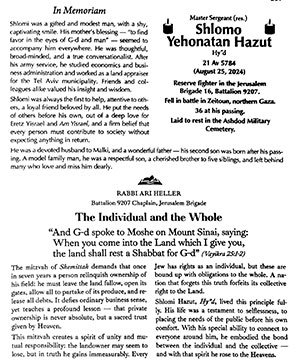
Aesthetically, the Chumash is nothing short of a masterpiece. The high-quality paper and elegant print immediately convey a sense of dignity and care. The covers feature moving textured color images, and beautiful additional artwork adorns the inner linings at the front and back of each volume. Even the box that houses the set is attractively designed. Particularly striking is the way the backs of the five volumes form a single image when placed together in order, like pieces of a puzzle coming together. This visual unity mirrors the thematic unity of the work itself.
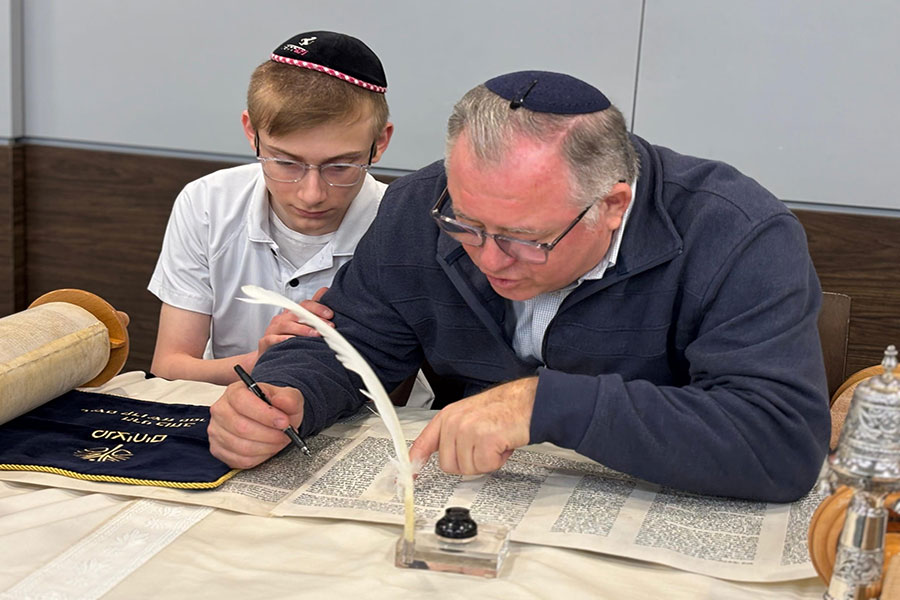
Behind this ambitious project stands its organizer, Yehuda Lanzkron, whose personal story lends even deeper resonance to the endeavor. Years ago, he suffered a devastating loss when his brother was killed in a terrorist attack shortly after the young boy’s bar mitzvah. This personal tragedy is the driving force behind the Chumash of Heroes and another closely related initiative, restoring sifrei Torah no longer usable and dedicating them in memory of fallen soldiers. Some of these Torahs are brought to schools and shuls, where communities can participate in writing letters and connecting to the Torah in a tangible way. My son and his middle school classmates recently enjoyed this experience at their own yeshiva. Experiences like this bring together learning, memory, and participation. They help students appreciate both the beauty of Torah and the sacrifices made by others. At the same time, these projects are intended to provide comfort and honor to the families of the fallen, and strengthen the bonds within communities.
Ultimately, the Chumash of Heroes succeeds on many levels. It is a meaningful memorial, a unifying force, and a unique tool for Torah learning. Whether one is a beginner or an experienced student, there is much to gain from its pages. Even seasoned students of Chumash will encounter new ideas, new sources, and perhaps even entirely new works and meforshim highlighted within its pages. In sum, this is a Chumash that not only informs but also inspires. In bringing together scholarship and sacrifice, it creates an experience that is both intellectually enriching and emotionally powerful. It reminds us that learning Torah is not only about understanding its text, but also about honoring the lives and values that sustain the Jewish people.
Both the Hebrew and English versions of the “Chumash of Heroes” are published by Yehuda Lanzkron’s organization, Mantzichim. For more information on how it honors fallen soldiers and terror victims, and on its project to restore damaged, antique, and forgotten sifrei Torah, visit thechesedfund.com/mantzichim.