 October 16, 2026
 Categories: Headline / Perspectives
Twenty-Five Years After 9/11, the Enemy Is Far from Defeated
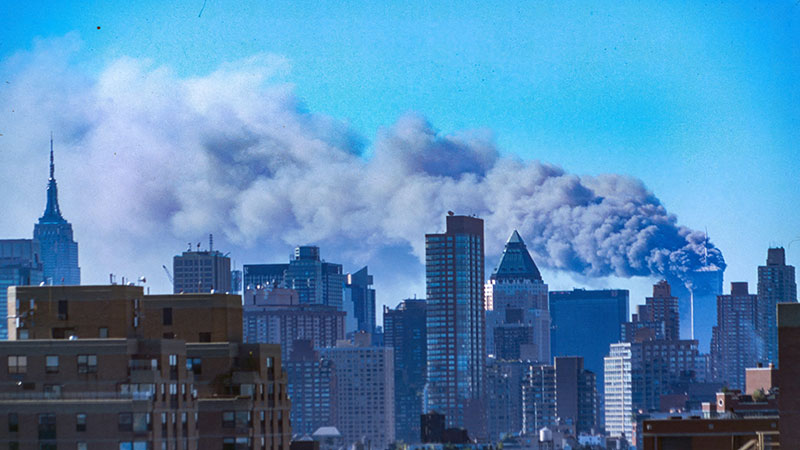


On September 11, 2001, exactly 25 years ago this Friday, 19 Islamist fanatics murdered nearly 3,000 people in the worst foreign attack on American soil.
This week, we will read the victims’ names and repeat the promise: Never forget.
But we should also ask: Twenty-five years later, what became of the enemy?
The answer is disturbing. It is degraded, but far from defeated – and in some ways stronger than it was when it attacked us a quarter-century ago.
Al Qaeda is weaker than when it operated from Taliban-ruled Afghanistan. Its founding leadership has been hunted down, and its capacity to direct another 9/11 from a central command appears diminished.
While those represent real achievements, they don’t constitute victory because Al Qaeda was never the whole enemy. Al Qaeda was and is an armed expression of the enemy, which is political Islam, also known as Islamism – the movement that seeks to subordinate civil society to Islamic religious authority and destroy Western civilization and its chief defenders, the United States and Israel.
The enemy survives in regimes, militias, political parties and propaganda networks – and often works through institutions that do not look like Al Qaeda.
Al Qaeda itself survived by dispersing, franchising and embedding itself in conflicts the West could not or would not finish. Al-Shabaab holds ground in Somalia. Jama’at Nusrat al-Islam wal-Muslimin spreads across the Sahel. Al Qaeda in the Arabian Peninsula endures in Yemen; its African affiliates slaughter civilians and burn villages, feeding on states too weak to stop them.
Afghanistan, Iran and the Terror Network
Afghanistan is the clearest proof that the enemy has not been defeated – far from it. The U.S. went to war there because the Taliban gave Al Qaeda the sanctuary from which it planned 9/11. Twenty years later, the Taliban reconquered the country after a costly and chaotic U.S. withdrawal that recalled the humiliating evacuation of Saigon at the end of the Vietnam War. Thirteen American service members were killed in the August 26, 2021, Islamist suicide bombing outside Kabul airport, along with many Afghan civilians.
In 2022, a U.S. drone killed Al Qaeda leader Ayman al-Zawahiri, Osama bin Laden’s successor, in a Kabul safe house owned by an aide to the Taliban interior minister. United Nations monitors still describe the Taliban and Al Qaeda as close allies.
Iran has been an Islamist state since 1979: clerical fascism claiming divine license, crushing dissent, projecting power through proxies and defining itself by hatred of America and Israel. Even after the joint U.S.-Israel military operation, the regime remains in power with enough missiles and drones to threaten international shipping and regional U.S. allies and bases.
Sunni and Shiite jihadists are often bitter enemies, but they can cooperate against America and the Jewish State. After the Taliban fell, Iran sheltered senior Al Qaeda figures and their families, preserving a leadership and logistics network beyond U.S. reach. British parliamentary intelligence reporting warns that Al Qaeda’s leadership still enjoys Iranian protection. Western assessments place its de facto chief, Saif al-Adel, in Iran.
Iran’s Islamist proxies have remade the region: Shiite Hezbollah in Lebanon, Shiite militias in Iraq, the Shiite Houthis in Yemen, and Sunni Hamas and Islamic Jihad in Gaza. The October 7, 2023 Hamas-led attack on Israel – the worst massacre of Jews since the Holocaust – was the product of two decades of Iranian money, weapons and training.
Turkey and Europe
Under Recep Tayyip Erdogan, a once staunchly secular NATO member has become an Islamist menace: institutional restraints dismantled, religious nationalism made an arm of government, Muslim Brotherhood networks cultivated, and intensifying hostility to Israel placed at the center of foreign policy. Ankara hosts Hamas terrorists.
Europe is in worse shape than it was 25 years ago. Decades of immigration and asylum policy brought in large Muslim populations while governments declined to demand civic integration or confront Islamist organizing in their cities. They treated political loyalty as a matter of housing and paperwork, while experts dismissed criticism of this suicidal policy as bigotry. As a result, Europe now has parallel social worlds, synagogues behind concrete barriers, and establishment figures that are fearful in private and fawning in public.
On Yom Kippur last year, a British citizen born in Syria drove a car into worshippers outside the Heaton Park Hebrew Congregation in Manchester, then attacked them with a knife, pausing to telephone police and pledge allegiance to the Islamic State. Melvin Cravitz, 66, was murdered. Adrian Daulby, 53, died holding the synagogue doors shut so those praying inside could live.
That killer acted alone. The threat around him is organized. Last October, police in Germany, Austria, Britain, Denmark and Cyprus broke up a Hamas network that had cached weapons in Europe for attacks on Jewish and Israeli targets. German prosecutors have separately described an Iranian effort to identify prominent Jews for assassination.
Hamas operates in European capitals. The demonstrators that filled those cities after October 7 celebrated an Islamist massacre.
North American Appeasers and Sympathizers
Ahead of this week’s anniversary, Canada’s public broadcaster instructed staff not to call 9/11 a terrorist attack, or the hijackers terrorists, without attribution. The guidance reduced the attack to hijackings that led to plane crashes. After public outrage, the CBC announced in late August that it would permit use of the word terrorism.
The reversal changes nothing. Someone wrote the guidance. Editors approved it. The mendacious memo survived internal review at a national broadcasting company until outsiders objected. Euphemism of this kind reflects a settled belief among certain elites that clarity about an enemy that is bent on destroying our civilization, that despises democracy, secular pluralism and the rule of law – apart from Islamic law – is bigotry.
The same instinct – to soften, explain and finally sympathize – has worked its way through American political life for 25 years. It now holds elected office.
At a CAIR banquet in California in March 2019, Rep. Ilhan Omar said the group was founded after 9/11 “because they recognized that some people did something and that all of us were starting to lose access to our civil liberties.”
CAIR was founded in 1994. The men who murdered nearly 3,000 people had become “some people” who “did something.”
Two years later, Omar listed “unthinkable atrocities committed by the U.S., Hamas, Israel, Afghanistan, and the Taliban,” blurring the distinction between unintended civilian deaths in war and organizations created to murder civilians for political and religious ends.
New York City now has a mayor who regards Israel as an illegitimate state and in a 2017 rap recording saluted the Holy Land Five – leaders of a U.S. Muslim charity who were convicted in 2008 of funneling millions of dollars to Hamas.
Last year, Zohran Mamdani was photographed arm in arm with Imam Siraj Wahhaj, named by federal prosecutors as an unindicted co-conspirator in the 1993 World Trade Center bombing.
Candidate Mamdani asked audiences to remember a fictitious story about his aunt, who supposedly stopped taking the subway after September 11 because she felt unsafe in her hijab.
More recently, as mayor of America’s greatest city – and largest Jewish population center outside Israel – Mamdani appointed Ramzi Kassem as his chief counsel. Kassem was the lead defense lawyer for Ahmed el-Darbi, a Saudi citizen who pleaded guilty in 2014 to offenses arising from Al Qaeda’s 2002 attack on the French tanker Limburg.
Halfway across the country, Michigan may send Abdul El-Sayed to the U.S. Senate. He won the Democratic nomination on August 4. On the second anniversary of October 7, his campaign sent a fundraising email opening with the following: “Two years ago this month, Netanyahu’s military launched a ground invasion of Gaza.”
The mailing invoked the cost of the war and AIPAC’s money. It did not mention Hamas, the massacre, rape, torture and kidnapping of Israeli civilians.
Saudi Arabia and the Nuclear Question
Fifteen of the 19 hijackers were Saudi nationals, as was Al Qaeda’s leader. The 9/11 Commission identified Saudi charities and wealthy private donors as a principal source of Al Qaeda’s early financing. For decades, the kingdom also financed Wahhabi religious infrastructure that spread Islamist ideology from Pakistan to the Balkans and Europe.
Now Washington has agreed to help Saudi Arabia build a nuclear industry. President Donald Trump announced a civil-nuclear cooperation agreement with Riyadh on July 22 and sent it to Congress on August 24. The agreement takes effect unless Congress acts during its 90-day review.
A 2009 agreement with the United Arab Emirates required it to forgo domestic enrichment and accept inspections beyond declared facilities. The Saudi agreement does neither. It calls for a two-year study, after which Saudi enrichment may proceed “if the parties agree in writing.”
The same centrifuges that enrich uranium for reactors can enrich it for weapons; the difference is running time. A country with the machines, trained personnel and inspections limited to declared sites has acquired the hardest part of a bomb program while remaining a peaceful customer on paper.
Crown Prince Mohammed bin Salman said in 2018 that if Iran built a nuclear weapon, “we will follow suit as soon as possible.”
Twenty-Five Years Later
Twenty-five years later, what became of the enemy? Al Qaeda is diminished but alive. The Taliban again rules Afghanistan. Iran’s Islamist regime clings to power. A NATO member hosts Hamas. Islamism infects Europe. And Washington is preparing to give the country that produced 15 of the 9/11 hijackers a nuclear partnership that could open the way to domestic uranium enrichment.
And across North America, broadcasters, universities and elected officials are censoring and sanitizing language in order to avoid offending constituencies and elites who sympathize – or even overtly support – the enemy. That is not a side issue. A country cannot defeat, deter or even understand an enemy it will not name.
This week we will say: Never forget. The words must mean more than remembrance. They must mean: never blur what happened, never excuse those who did it, and never rationalize the enemy’s atrocities.