 October 9, 2026
 Categories: Headline / Front Page / Perspectives
Two Countries and the Rest of the World


At a moment when Israel is fighting for its survival against enemies on multiple fronts, it’s worth noting an extraordinary fact.
When it comes to the technologies, medical breakthroughs, surgical innovations, and companies that have most shaped modern life since the 1990s, two countries stand out above all others: the United States and Israel.
One is a continental superpower of 340 million people. The other is a New Jersey-sized nation of about 10 million.
The comparison may seem improbable. Yet the evidence is difficult to ignore.
Remember Nokia?
In 2007, Finland’s Nokia controlled nearly 40 percent of the global mobile phone market. It was the most successful handset maker in history. Yet within a few years, it had become largely irrelevant.
Or consider Japan’s NTT DoCoMo. In 1999, DoCoMo launched i-mode, the world’s first truly successful mobile internet service. Long before most Americans had heard the term “mobile internet,” millions of Japanese consumers were using their phones for email, news, entertainment, and online commerce.
Then there was France’s Minitel. Years before most Americans had heard of the World Wide Web, millions of French households were using Minitel for banking, shopping, travel reservations, news, and messaging.
All three were technological pioneers – and losers.
Nokia bet on its own software and was buried by the iPhone and Android, and then sold off its phone business. DoCoMo’s i-mode, a closed system built for Japan alone, never caught on abroad and was finally switched off this year. And Minitel, run by the French state, stopped innovating almost as soon as it launched and went dark in 2012.
None of these companies shaped the modern world.
Unlike Apple’s iPhone.
Introduced in 2007, the iPhone wasn’t merely a better phone. It was the smartphone as we know it: a pocket computer, camera, video recorder, map, music player, communications device, and gateway to the Internet all in one device. It fundamentally changed how billions of people communicate, get their news, travel, shop, work, and entertain themselves.
Europe’s greatest contribution to the digital age came from the British scientist Tim Berners-Lee, who in 1989, working at CERN, invented the World Wide Web – the software that turned the Internet, itself an American invention, into a mass medium for content and commerce. It was a genuine and magnificent achievement.
Then the pattern reasserted itself.
It was two young Americans, Marc Andreessen and Eric Bina, who in 1993 built Mosaic, the first graphical web browser, the program that made the Web usable for ordinary people. Within a year Andreessen had moved to California, founded Netscape, and the boom was on.
Europe gave the world the Web’s foundational software. America built the digital civilization that followed.
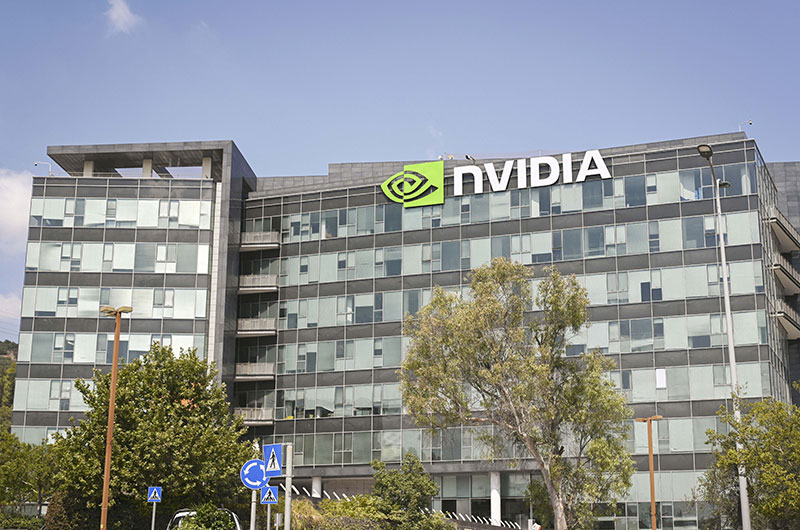
The companies that now mediate much of modern life are overwhelmingly American. Google organizes the world’s information. YouTube became the planet’s video platform. Amazon transformed retail, logistics, cloud computing, and digital commerce. Facebook connected billions of people through social media. Apple put a powerful computer in nearly every pocket. Microsoft remains the backbone of much of the world’s business computing. Nvidia supplies the processors driving the artificial intelligence revolution.
In short, the platforms, ecosystems, and companies that came to dominate the digital age and now mediate much of modern life are overwhelmingly American.
The U.S. has also led many of the most important medical and surgical advances of the modern era: Cancer immunotherapy, CAR-T cell therapies, gene therapy, robotic surgery, advanced medical devices, and implantable devices have transformed medicine.
American innovation revolutionized surgery. Through the pioneering work of US Surgical – a NYSE-listed company that was started and led by Leon C. Hirsch, a Jewish Bronx High School of Science graduate and US Army veteran with no college degree – surgical stapling and laparoscopic surgery moved from specialized techniques to mainstream practice, reducing trauma, shortening hospital stays, accelerating recovery, and improving outcomes for millions of patients worldwide.
These advances changed operating rooms, cancer wards, cardiac care units, and everyday clinical practice, creating new possibilities for treating and curing diseases once considered hopeless.
That isn’t surprising. America possesses immense advantages: a vast economy, world-class universities, deep capital markets, abundant resources, and a culture that rewards entrepreneurship.
The surprise comes when we ask a different question.
If America is first, who is second? Not Europe. Not Japan. Not China. Instead, it is Israel.
Since its founding in 1948, Israel has fought repeated wars, battled and endured terrorism, absorbed immigrants from around the world, and lived under constant security pressure. Yet over the past generation it has become one of the world’s most productive centers of innovation.
Israel gave the world Waze, the navigation app used by millions of drivers every day and acquired by Google for $1.15 billion. Israel produced Mobileye, whose vision technology guides tens of millions of vehicles, and was sold to Intel for $15.3 billion. Israel built Mellanox, the networking fabric that connects the world’s AI data centers, sold to Nvidia for $6.9 billion.
And Israel pioneered modern cybersecurity through companies such as Check Point and, more recently, Wiz, which was acquired by Google for a staggering $32 billion, the largest cybersecurity acquisition in history.
In artificial intelligence, software, communications, and cybersecurity, Israel’s influence is vastly greater than its size would suggest.
Much of this innovation emerged from Herzliya Pituach, the coastal district north of Tel Aviv often described as Israel’s version of Silicon Valley. Square mile for square mile, it may be one of the most productive centers of technological innovation anywhere on Earth.
Nor is Israel’s success confined to software.
Israeli innovators developed PillCam, the swallowable camera that transformed gastrointestinal medicine and is now used throughout the world. Israeli researchers and companies have contributed important advances in cancer care, multiple sclerosis treatment, Parkinson’s disease, focused-ultrasound surgery, rehabilitation technologies, robotic surgical systems, medical imaging, and a wide range of medical devices used by physicians and patients worldwide.
The Weizmann Institute, Israel’s universities, and biotechnology and medical-device sectors have produced discoveries and technologies that improve and save lives every day. For a nation of just 10 million people, Israel’s contribution to modern medicine is every bit as remarkable as its contribution to software, artificial intelligence, and cybersecurity.
The broader point is difficult to escape. Many of the most important breakthroughs in treating cancer, heart disease, neurological disorders, and other dread diseases are coming from the U.S. and Israel. If the experience of the past generation is any guide, many of tomorrow’s breakthroughs are likely to come from those two countries as well.
What about China? It has produced important companies, including TikTok and BYD, the giant manufacturer of a plug-in electric and hybrid vehicles. But much of China’s success remains concentrated within a protected domestic ecosystem.
The point isn’t that other nations have contributed nothing. Of course they have. The point is that the scale, frequency, and global impact of American and Israeli innovation are in a category of their own. When we look at the technologies, medical breakthroughs, surgical innovations, and companies that have most transformed everyday life since the 1990s, the same two countries appear again and again: America and Israel.
America’s presence on that list is understandable. Israel’s is extraordinary.