 October 9, 2026
 Categories: Headline / Features / Movie and Play Reviews
Was Roald Dahl an Antisemite?


Broadway Play Review
Play Featuring the Brilliant Performance by John Lithgow Explores
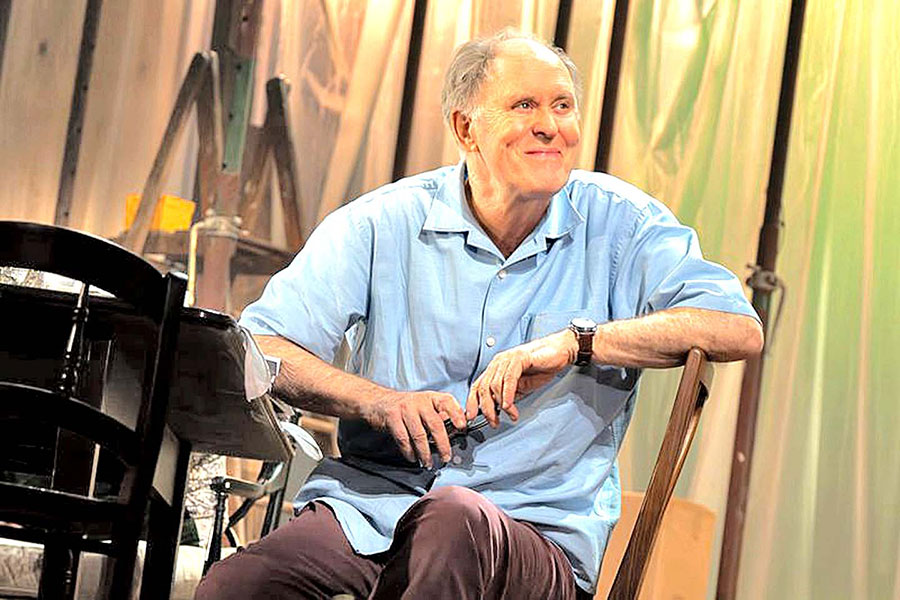
The audience gasp near the end of the Broadway play “Giant” at the Music Box Theatre was the loudest I’ve ever heard at a show. It was also one of the most unsettling. What’s astonishing is not only that this is Mark Rosenblatt’s first play, but that he wrote it in 2022, with no way of knowing how prescient his words would become. “Giant” stars John Lithgow as famed British children’s author Roald Dahl. The 6’6” writer of classics such as Charlie and the Chocolate Factory found himself embroiled in controversy in August 1983. In a review of the book God Cried, Dahl went far beyond condemning Israel’s invasion of Lebanon. He wrote: “Never before in the history of man has a race of people switched so rapidly from being much pitied victims to barbarous murderers.” He also compared Israel to Nazi Germany. The play blends fact with fiction, inventing Jessie Stone, a Jewish representative from Dahl’s American publisher, sent in to manage the fallout. Dahl rudely asks whether she is Jewish, quizzes her about her views on Israel, and questions whether she can remain professional while serving his interests. What unfolds feels strikingly similar to debates we now see on television panels and podcasts. Lithgow’s Dahl spars with Aya Cash’s excellent Jessie Stone in tense, layered exchanges. Lithgow brings some of the warmth he displayed as the reverend in “Footloose,” while channeling the sinister energy he showed in “Cliffhanger” and “Raising Cain.” One moment he smiles and offers sorbet; the next, he lashes out with devastating cruelty. Lithgow’s performance is flawless, and he seems destined to win the Tony Award for Best Actor. The play presents Dahl as a man in physical pain, desperate to secure his marriage to his second wife, and increasingly cornered by public backlash. He resists apologizing, yet understands his book sales may suffer. Speaking to his British publisher Tom Maschler – who is Jewish and played with wit and sophistication by Elliot Levey – Dahl remarks that the person who made a threatening phone call to him must have been “a loner from Stamford Hill or Golders Green.” The line lands differently now, especially after two Jewish men were stabbed in Golders Green on April 29, allegedly by Essa Suleiman. Three central debates drive the play. The first revolves around morality. Dahl challenges Jessie, asking how she can support a country that fires missiles at hospitals and why she seems indifferent to Lebanese children. She counters that she does care, but asks why he omits the context that Israel entered Lebanon in response to PLO rocket attacks on Israeli civilians and schoolchildren. Given his inflammatory rhetoric, she also questions whether his forthcoming book The Witches – featuring a secretive group associated with money and power – could be interpreted as antisemitic. Dahl insists there is no connection. Jessie says she supports Israel’s right to exist, prompting Dahl to ask, “Unconditionally?” Yet when she asks whether he believes Israel has a right to exist, he refuses to answer. The second debate asks whether audiences can separate artists from their personal views. Dahl, despite everything he has said, casually asks Jessie whether she still wants him to autograph a book for her son. But the third debate may be the play’s most compelling because it resonates far beyond the stage – into audiences and Jewish homes around the world. How visibly Jewish should one be? Should Jews move closer to Israel or distance themselves from it, particularly if doing so might help preserve their careers or social standing? Tom, a Holocaust survivor, refers dismissively to another writer as not “Jewish Jewish,” and Jessie objects to the phrase. As she reads the room, she realizes she may have to risk her career to speak honestly, while Tom sees such defiance as naïve and dangerous. I found myself looking around the audience, wondering how many people there had voted for Mayor Zohran Mamdani while trying not to appear “too Jewish,” as Tom describes it. Later, Tom himself is visibly shaken when Dahl calls him a “House Jew.” Jessie argues that hundreds of thousands of Jews openly criticize the Israeli government and that Jews are not a monolith. The only real flaw in “Giant” is that its opening scene drags considerably. Still, it establishes the recurring metaphor of pencils, drawing, erasing, and revision – how people attempt to correct mistakes and respond to criticism. Sometimes great talent can overshadow moral failings. Sometimes it cannot. Yet the pencil remains powerful. The entire play unfolds in a single room, which I didn’t mind, though audiences craving elaborate set changes may feel disappointed. At intermission, a woman seated next to me mentioned she had seen the play during its London run and noted that many Jews there no longer feel safe. A man with her compared New York Times columnist Nicholas Kristof to Dahl. I told them I had just come from covering a rally where someone shouted in my direction, “Zionists, quick to be offended, never want to take responsibility.” The line could easily have been lifted from the play itself. “Giant” also features Liccy Crossland, Dahl’s wife, played elegantly by Rachael Stirling, who attempts to mediate between the man she loves and the woman trying to help him. But the play’s secret weapon is housekeeper Hallie, portrayed with infectious energy by Stelle Everett. Hallie remains cheerful throughout and refuses to offer political opinions whenever Dahl presses her. “It’s not for me to say,” she repeatedly insists. She represents the ordinary observer caught in the middle of a fierce ideological battle, unsure what to think. The show’s climactic moment centers on a real-life phone call Dahl made to a journalist, seemingly to either repair the damage or deepen it. During the conversation, he makes an appalling reference to Hitler’s motives – the line that provoked the audience’s audible gasp. More than three decades later, similar sentiments have resurfaced in podcasts and rap lyrics. Sitting there, I couldn’t help wondering whether some audience members agreed with him. Dahl asks the reporter whether he wants to know if he is an antisemite. He first insists he is merely anti-Israel. Then he says something even more revealing. “Giant” is one of the best plays I’ve ever seen, due in large part to Lithgow’s extraordinary performance. At 80, he still manages to balance menace with humanity, reminding us that even deeply flawed people see themselves as misunderstood rather than malicious.