 September 18, 2026
 Categories: Columns
shanah in Jerusalem


Rosh Hashanah is an unusual day, somehow a combination of Yom Kippur and a standard Yom Tov into one. Half of the day is spent in intensive prayers in shul, and the other half is devoted to lavish meals celebrating the new year. However one resolves that tension – a compromise between two values, confidence in our being vindicated by the Divine court, or otherwise – the result is a bit of an unusual mix.
You can actually see this on the streets of Jerusalem. If you happen to be walking around the city at 11 p.m. on Rosh Hashanah, you will see dozens of teenagers hanging out in various parks, celebrating the day. If you come at the right time, you can see chassidic kids playing alongside their mothers, as the (in some places) VERY long davening inspires them to explore new play venues. Fairly early in the mornings, you can see chassidic men rushing to mikvah and shul, bathing towels in hand. Around davening times, you can see people streaming to the various shuls in the neighborhood. And at other times you can hear people’s joyful seudot, smell their barbecues, and experience their revelry vicariously. Rosh Hashanah may be the closest to Chetzyo LaHashem veChetzyo Lachem that we ever actually achieve (see Beitzah 15b).
There is, of course, a huge selection of excellent minyanim in Yerushalayim. I davened at two different places over the two days of Rosh Hashanah, both very positive experiences, each in its own way, with beautiful singing and serious tefillah. I will not analyze the davening in detail here, but thought I would share a few reflections on the three speeches that I heard from different rabbis over Yom Tov.
The three were on entirely unrelated topics:
One was about the concept of a second innocence, recovering a simple faith in G-d after experiencing the challenges of the world, and comparing it to hearing the shofar on the second day of Rosh Hashanah after rejecting it on the first day this year (as it was Shabbat).
Another speech channeled several Lomdish-hashkafic teachings from Rabbi Soloveitchik about Rosh Hashanah, including on the relationship between individual and community and the idea that at times a thought counts as an action.
A third speech argued that the values typified in stories relating to Avraham: Tzedakah Umishpat, and the idea that Hashem does not want our children sacrificed – should point us away from theologies that glorify vengeance, are indifferent to civilian casualties, and support forever wars.
One drew upon chassidic thought, the other Brisker Lomdus, the third ethical readings of the Torah. But what they held in common was that all three mentioned the challenges and tragic deaths of the past three years since October 7th.
One speech noted the challenge that one can get lost in the magnitude of a tragedy (mentioning both the casualties of the past three years and of 9/11, the day he was speaking) and that it can help to relate to individual tragedy to better appreciate the loss.
Another speech poignantly mentioned that among members of that shul, in each of the past three years a member family had lost a child, and the difficulty of marking Rosh Hashanah amid such rupture.
The speaker about Avraham, sacrifice, and vengeance, an educator, mentioned that he had personally lost students, as well as a son-in-law, over the past several years.
Rosh Hashanah, the day when we are judged for life or death, the beginning of the year when we reflect back on the year past and prospectively consider the year ahead, becomes a fundamentally different experience when situated in a context and a community that has faced so much pain and loss over these past years.
As much as one might have closely followed Israeli news over the past three years, even if one knows people who were killed (as I unfortunately do), there is a difference between spending the past three years in Teaneck and experiencing them in Israel, among the communities that have experienced so much loss.
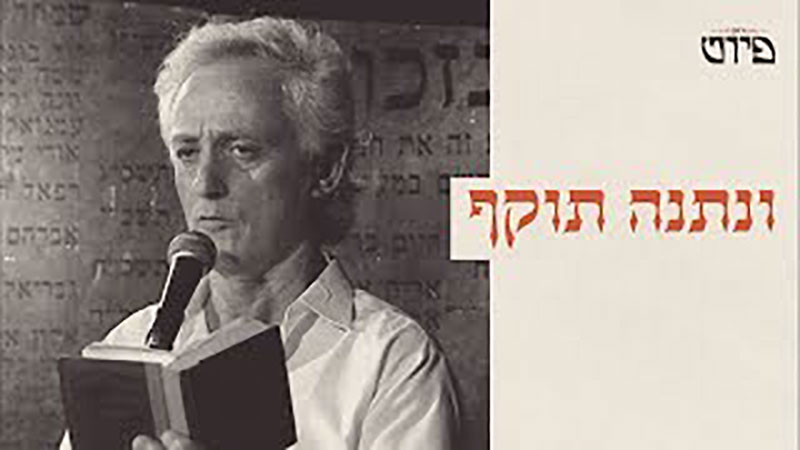
There were other indications that some people were connecting to Rosh Hashanah this year particularly out of a sense of loss. On the second day of Rosh Hashanah, a strapping man in his 20s, with an earring, came in to shul for Mussaf and sat right next to me. He stayed through Unetaneh Tokef, sung to the classical tune commemorating the Yom Kippur War, and left soon after. I didn’t ask him, but it certainly seemed that he came to shul to experience Mi Yichyeh Umi Yamut liturgically, after having lived it alongside his comrades.
Rosh Hashanah still had its balance between happy and more somber moments, but the balance was weighted quite decisively in the direction of the morose. Not that people have given up – Israelis are tired, to be sure, but also have an indefatigable spirit to continue forward. But, especially at times when we are more reflective, the pain, the challenges, the scars of these past years come to the fore.
As the Gemara says (Megillah 31b), and as I heard sung at a recent Elul-themed concert, we hope at the turn of the year that Tichleh Shanah VeKileloteha; Tachel Shana UVirchoteha – “May the [previous] year and its curses end; may the [new] year and its blessings begin!”