יום שני, ט״ו חשוון תשפ״זMonday, October 26, 2026



Follow Us


Rabbi Dr. Shlomo Zuckier is the Kaplan Postdoctoral Fellow at the University of Toronto and Consulting Editor for Tradition. A Founder of The Lehrhaus, he has several thousand Sefarim and books in his own house in Teaneck.
Read More
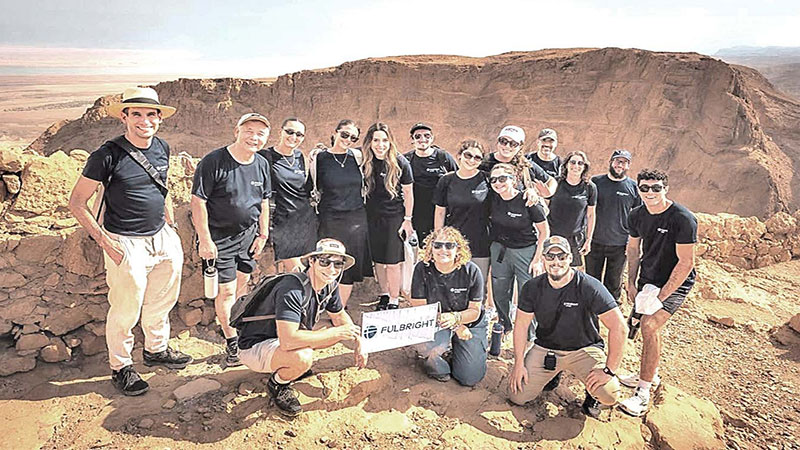
I had been to Ein Gedi and Masada before – these are classic tiyulim for a visit in Israel – but it was over twenty years ago, and there have been some changes, both to these sites and to my own perspective.

It is not just about the competing dates, but also a more general issue: no clear ritual or symbol has emerged to mark the day.

In our brief conversation, he asked both me and Chana about what we were doing this year in Jerusalem, having come from the U.S. It was a lovely highlight of our chag to have the opportunity to meet the President!
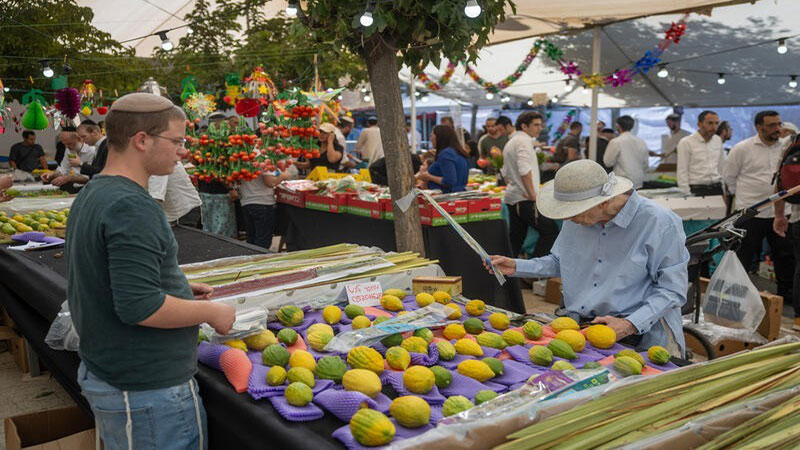
Not only is Yom Tov a day off, but Chol HaMoed is generally a day off as well. Okay, maybe you don’t get a full week off before Pesach and Sukkos like the schools do (which creates its own set of problems), but the work calendar is organized around the Jewish calendar.

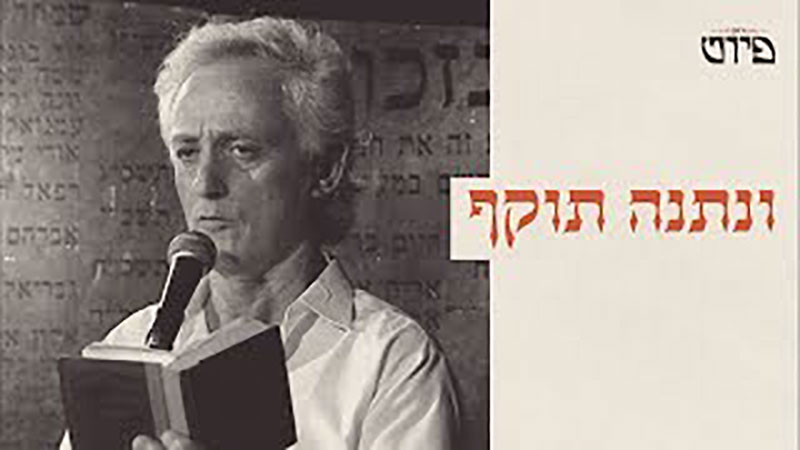
He has also produced dozens of other songs, including several released very recently that he played for us. This is an up-and-coming singer at the height of his creativity.
As much as one might have closely followed Israeli news over the past three years, even if one knows people who were killed (as I unfortunately do), there is a difference between spending the past three years in Teaneck and experiencing them in Israel, among the communities that have experienced so much loss.

In Israel, as opposed to America, Jewish education is run through the government. There are various religious public schools, which are government-funded, and then there are private schools, which are… also primarily government-funded.
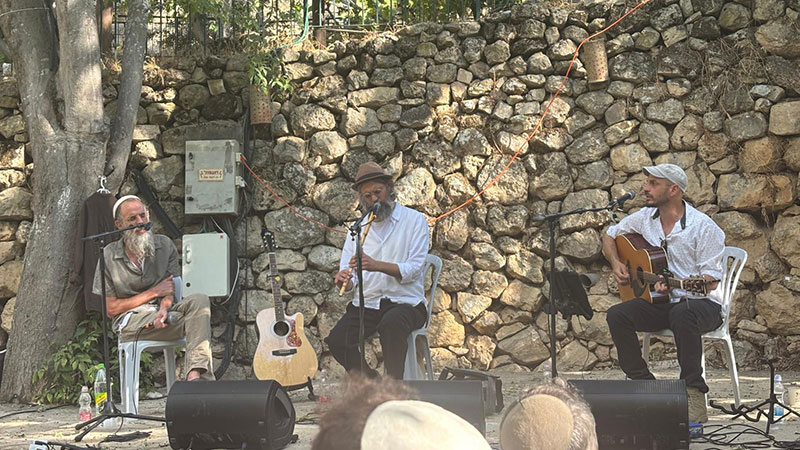
The idea of hundreds, if not thousands, of people gathering together in preparation for the Yamim Noraim – not as a shul program, but as a much larger convocation – reminded me of Yishay Ribo's huge performances at Madison Square Garden in 2023 and 2024. There were, of course, some differences.
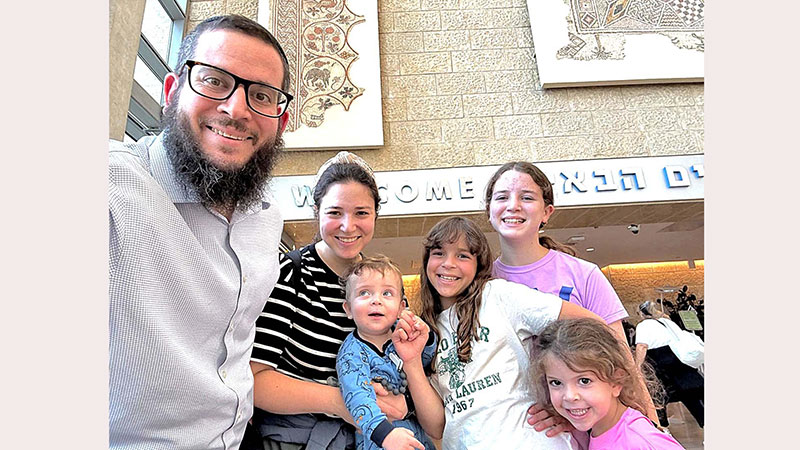
The only way to ensure that tedium does not prevail is to be able to see the positives outweighing the negatives.

Somehow, American consumer culture, combined with the suburban lifestyle and affordances, has led to a culture of accumulation.

I expect to use this column to illuminate some of the more exciting cultural, religious, and national phenomena that are taking place in Israel, but also to do so from my personal (and American) perspective.
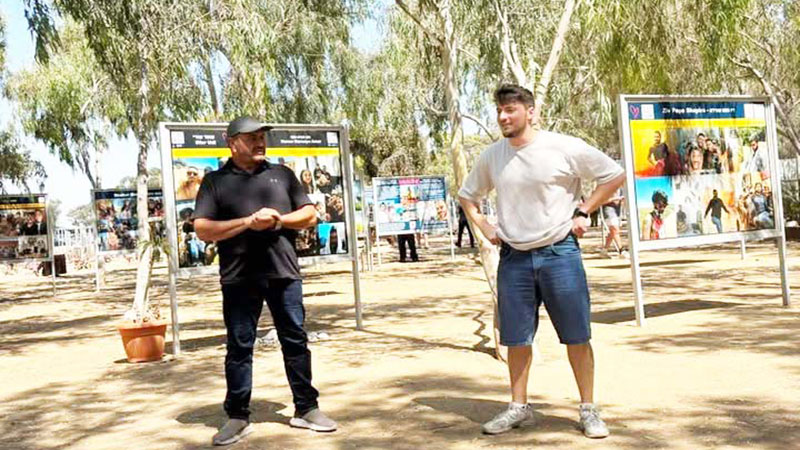
Stories like that of Yunes remind us that even amid unimaginable evil, even within the story of a murderous rampage, extraordinary goodness still exists.

Does Hashem have a reason for everything, and that is why we follow the Torah? Or does Hashem decide some things arbitrarily, but we follow them anyway because Hashem said so?

The reason the word “grace” seems a bit off may be because it has a rich and contentious Christian history.
When we talk about doing something “for the klal,” we are speaking about Klal Yisrael, the Jewish people as a collective, not an abstract category but the very human, physical people that make up our religious nation.
For such a complex word, it has a real simple etymology – it comes from the word pack, which means… pack! Add a diminutive, pluralize it, and you get pekalach!

It was especially haunting to see this image: Rabbi Daniel Walker, who valiantly protected his synagogue and tended to his congregants amidst the horrific violence, wearing his traditional white kittel, stained by blood at the bottom. And yet, in the face of this terrible destruction, we see another model of holiness. Sometimes, when the evil cannot be banished, the High Priest must deal with it directly, even if he gets bloodied in the process.
What’s the point? Why so many? Are you actually going to read all those sefarim? Why not read them online?
One potential challenge is that having real pride in one’s country may take away from one’s pride as a Jew, although it is certainly possible to take pride in two nations simultaneously.
For generations, a Jewish state in Eretz Yisrael was the great hope – Hatikvah – of countless Jews. In 1948, that hope was realized. Yet, hope did not end there – Od lo avda tikvateinu – nor did the challenges.
We should focus philosophically on Hashem’s radical oneness, that Hashem is one being and is non-physical, and thus cannot be broken down into parts but remains forever singular and perfect.
Possibly the most pertinent description of Rebbi, found in Gittin 59a, where he qualifies on the very short list of those who have Torah u’gedulah be’makom echad, Torah knowledge and political greatness simultaneously.
Picture this: It’s Sunday morning, you’ve just grabbed bagels and lox from your favorite appetizing shop. That smoked salmon? Forshpayz. Cream cheese schmear? Forshpayz. Whitefish salad? Forshpayz. This isn’t just any starter; it’s a whole production number.
The Greek term Sanhedrin reflects a new name given to the zekeinim we know from the Torah. So Sanhedrin represents Jewish ability to determine law and justice, even as it is subjugated under an outside imperial culture.
If we are to consider what the future will bring, we must take account of the reception history of this work not only in its early decades but also in more recent years.
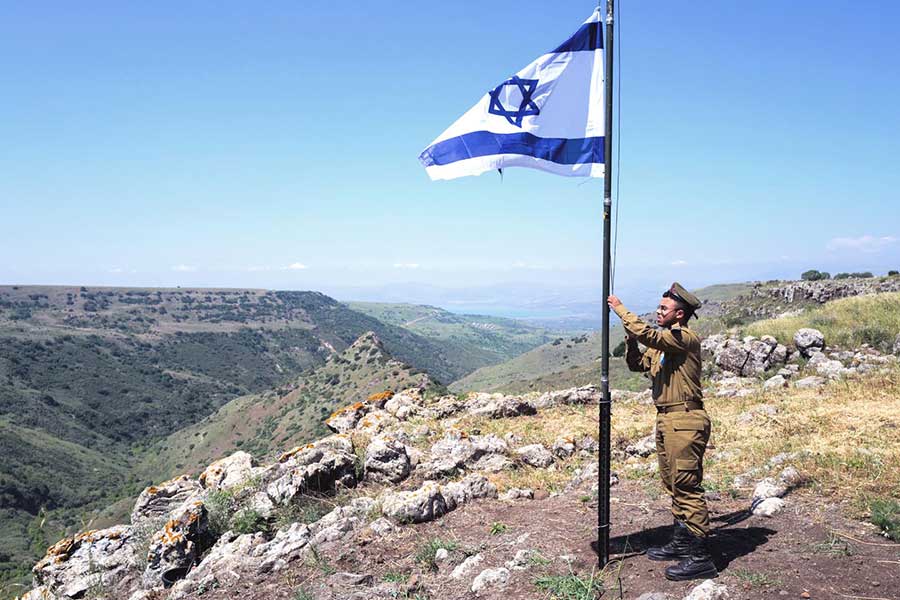
Did I have good reasons for returning to America? At the time I certainly thought so. Would I have been a particularly good soldier? If I had been drafted to a combat unit (as most Hesdernikim were in my time), almost certainly not.
Can one use a cane on Shabbos in a place without an eruv? The Shulchan Aruch paskens that a lame person who cannot walk without a stick, may walk with one, even if they are not attached to him.
The word dirge has an odd etymology. It originally stems from the Latin imperative root dirige, meaning direct!
Sometimes you can’t make up what you missed. On some views, if due to reasons out of one’s control, one cannot fulfill a positive mitzvah, they have missed out and cannot remedy that at all.
Kavod means honor, but it means so much more. Related to the word kaved, or heavy, it refers to things that are weighty, that are deserving of our respect.
In high school, you do Model UN and everyone learns about the existence of Djibouti and Burkina Faso. But that’s not what country means for Jews. If we’re talking Jewish, there is the country and there is the old country.
that Selichos should be seen as more than a mere recitation but as a heartfelt prayer, as not just strict objective discipline but as exalted subjective romance.
Those of us who learn Gemara tend to talk about Gemara differently from the way people talk about other books. We don’t just read the Gemara; we learn it.
Yiddish – and by extension, modern Hebrew – offers us yet another use for this term – the 'shvitzer,' or braggart, someone who's trying too hard and constantly showing off.
His profile as someone steeped in Torah knowledge was also what impelled everyone to seek his counsel and advice on all things large and small, personal and political, Torah-adjacent or further removed.

An extension of Rabbi Lamm's Torah u-Madda Project, the journal spent its early years working out some of the questions and objections relating to the validity of combining secular studies with Torah.
The goal of learning is to build a bond with G-d, the nosen haTorah, and to define oneself squarely within a Torah lifestyle.

While the book certainly cites Litvish thinkers, including such luminaries as Rav Joseph B. Soloveitchik and Rav Moshe Feinstein, the book leans heavily on chassidic thinkers in the modern period.
In some cases, non-Jews joined synagogues to reap the alcoholic benefits of Judaism under Prohibition!

The book is also not completely sure whether it is an academic work or a Torah work for a more general audience.
Halacha is something not just applied as a legal system, but a corpus that is valued and studied for its own sake...
Gush was among the first Hesder yeshivas. In fact, it was among the first dati leumi yeshivas, period.


 October 23, 2026