 October 16, 2026
Categories: Headline / Columns
Commemorating October 7 Up Close
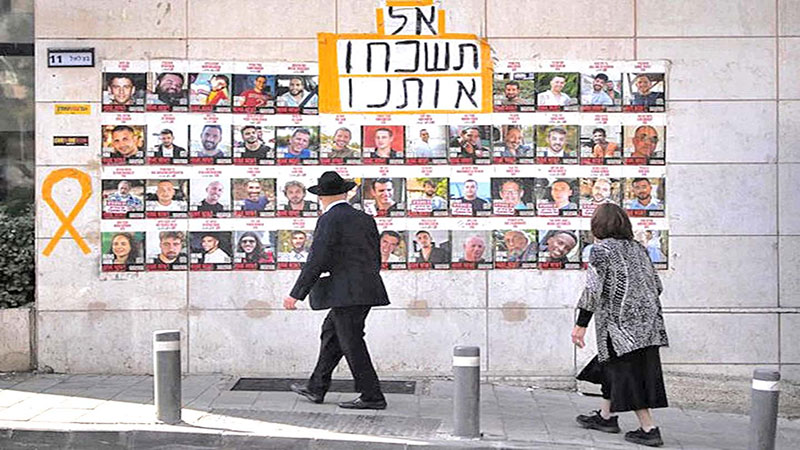


I wasn’t quite sure what to expect as October 7 approached, but my sense was that it would be a major day, punctuated by commemorative events, azkarot, television programs, and widespread discussion of this important, painful day. To my surprise, while of course there were a variety of events, programs, and Facebook posts, there was less of an overriding sense of the day than I had expected.
After reflecting on that, I came up with a few possible explanations, each of which offers a window into the way things are going in Israel now.
One explanation for why the events commemorating October 7 were not as all-encompassing as I expected is the diffusion theory: no one really knows when to commemorate the day. In fact, there were three distinct days on which people commemorated those horrific events of Simchat Torah 5784:
1. Simchat Torah – On Simchat Torah itself, many took time to recall what they did on that fateful Simchat Torah three years ago: how they heard the news, whether they were called up, and the terrible realization of what had taken place. Many minyanim set aside a hakafah for sadder songs in light of October 7, or held hakafot honoring soldiers, so that a day usually devoted to celebration also commemorated those who perished. There were fewer such events than in previous years, especially because the hostages are thankfully out and the fighting has paused. Still, in one minyan I attended, the rabbi said that the apparent contradiction of Simchat Torah combining celebration and Yizkor now made sense in light of the events of three years ago.
2. October 7 – In some ways, the most natural day to commemorate the events is October 7 itself. On this day there were a number of television programs, people posted on social media, and there was a somewhat somber mood. (I received an email that day from someone wishing me a yom mashma’uti.)
3. Kaf Dalet Tishrei – The official date that the Knesset has designated to commemorate those who fell on October 7 and in the ensuing war is the 24th day of Tishrei, the official Yom HaZikaron LeChalalei Milchemet Charvot Barzel. Because Israel always marks its national days of commemoration on the Hebrew calendar, and because Simchat Torah was not going to be officially designated as a day of mourning, the date chosen was the 24th of Tishrei. Several official government events took place on that date, although, as far as I could tell, it did not register widely in popular awareness.
With different people and organizations marking different dates, it is not surprising that any one day made less of an impact than it might have.
A possibly related reason why the day doesn’t have the impact it might is that it is too soon, and we have not yet figured out the proper way to mourn October 7. It is not just about the competing dates, but also a more general issue: no clear ritual or symbol has emerged to mark the day. Unlike the sirens of Yom HaShoah and Yom HaZikaron or the fast day and kinnos of Tisha B’Av, there is no clear ritual in place. And maybe part of that is because we lack the distance to properly appreciate, understand, and contextualize all that has happened. (I recently submitted an article about kinnos and October 7 about how some rabbis argued against writing kinnos to commemorate that date for precisely this reason, that it is still too soon.)
Moreover, it is also possible that October 7 itself was marked less prominently because, given our proximity to that terrible day, in some sense every day commemorates October 7. People have lost loved ones or friends, spent hundreds of days doing milu’im, and supported their families while husbands and fathers were away on reserve duty. People are still living October 7 and its aftereffects on a daily basis, to the point where an annual commemoration is almost beside the point. Especially now, as the election draws closer and assigning responsibility for October 7 is being heavily discussed, the ever-present horrors of that day don’t need to be remembered – they are a live issue.
And maybe for some people it is actually too painful to properly commemorate. Some Israeli friends told me that they intentionally stayed away from October 7 content, limiting themselves to reading a post here and seeing a short video there. If this is true for people who are otherwise coping well, imagine how true it must be for those suffering the aftereffects of that day through PTSD or other difficulties.
Whether because the commemoration was spread across several dates, we lack critical distance, the day lacked a signature ritual, every day commemorates October 7, or it is too painful, there seems to have been a somewhat more limited marking of the day. And that’s okay. In America, there can be a feeling that if one does not hold a proper event marking October 7, or it is not spoken about in shul, one is ignoring it and not supporting those who fell or lost so much on that day. In Israel, the challenges stemming from October 7 are so present that this is less of a concern.
Indeed, this is a reminder of the difficult times Israel is facing, even if people generally do not dwell on the difficulties and put on a happy face. Hopefully we will have no new losses to mourn. May those who lost loved ones find nechama, and may Israel fully regain its footing and live in peace and prosperity.