 October 23, 2026
Categories: Columns
From Ein Gedi to Masada: Reflections on Life and Death
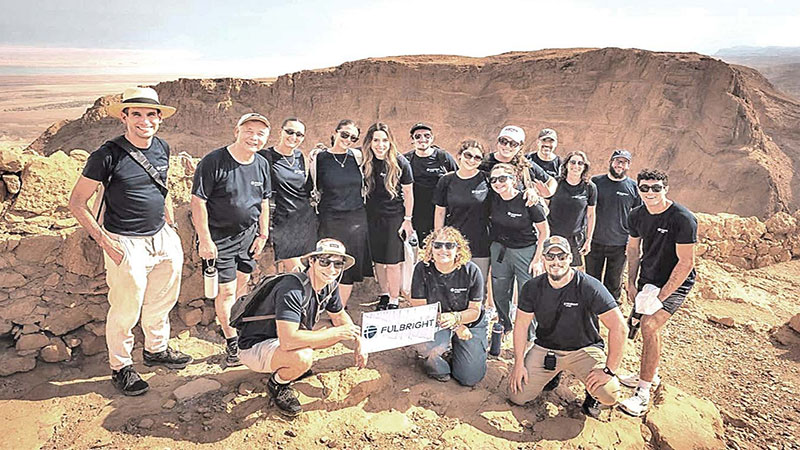


This past week was the beginning of the academic year in Israel, and various research groups and cohorts I belong to began their activities. Most kicked off the year with an academic seminar, or a “getting-to-know-you” round, but the Fulbright program kicked off the year with a tiyul!
Because the program is not just about being exposed to Israel’s academic culture but about getting to know the culture as a whole, there was a three-day trip that included a food tour of Machaneh Yehuda, a tour of holy sites and water tunnels in the Old City, and a hike in Ein Gedi, followed by visits to Masada and the Dead Sea.
While my schedule was limited, I was able to participate in the Ein Gedi-Masada-Dead Sea trip, and it was an interesting experience. I had been to Ein Gedi and Masada before – these are classic tiyulim for a visit in Israel – but it was over twenty years ago, and there have been some changes, both to these sites and to my own perspective.
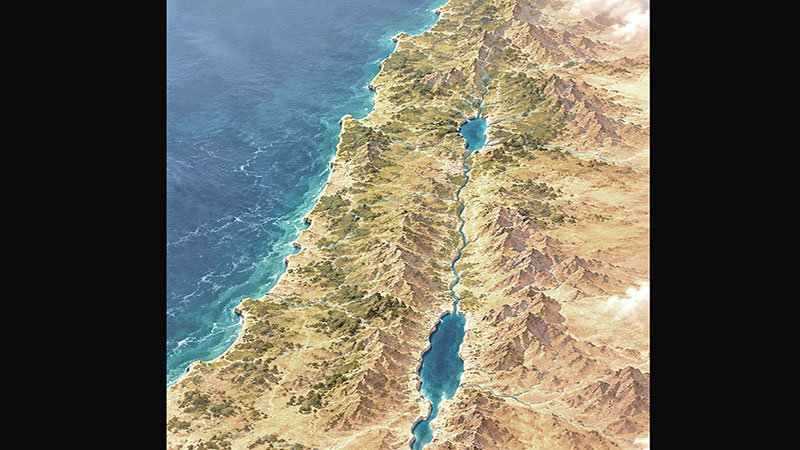
As our bus left Yerushalayim towards Ein Gedi, there was a stark transition from the life of the city to the extreme aridity of the desert. In order for plants to survive, they need to be adaptable and tenacious – to figure out how to subsist on the bare minimum, and to hold on to whatever moisture they have. (It is possible that seeing Dune on a plane a couple of years ago helped me appreciate this reality.) And the only way that life can survive in the desert is by relying on the rare day when it rains, supplemented by the various (and declining) underground springs. Even a relatively small amount of rain can lead to a flash flood, as the water flows through various channels, or valleys, or wadis, in the desert, which is devoid of any life or vegetation that might slow down the water.
Sitting on the bus as we were moving through the desert, dry for now, hoping for rain soon (we’ve already started saying Vetein Tal Umatar in Israel!), a series of pesukim came to mind.
There are the nevi’im who contrast G-d as a source of life with humanity, which as a biological, mortal creature is ultimately dependent on water and can so easily dry up. Thus Yirmiyahu 17 contrasts one who trusts in humans while forgetting Hashem – they are like an ar’ar ba’aravah – like a bush in the wasteland, which inhabits salty, uninhabited land. Instead, blessed is one who trusts in Hashem. We know this from the song, but it continues – “He shall be like a tree planted by water, spreading out its roots by the river, not concerned about heat, with lush foliage, not worrying for drought and never stopping to produce fruit.” Yeshayahu wrote similarly in perek 40: “All flesh is grass, which withers and fades as Hashem’s wind blows upon it. While grass withers, Hashem’s word stands forever.”
Standing in the sun in the 90-degree heat, in the parched air of the harsh desert, you really feel how helpless people are in the desert, how we have no choice but to rely on Hashem.
And you feel the contrast as well, the excitement (and danger!) of flash floods. A bit over a year ago, a flash flood damaged the Ein Gedi site and it took nearly a year to render it walkable again. These floods have the power to provide life and sustenance to the area for months, but also to sweep away everything in their path – from plants to people to roads.
In light of these realities, we can better appreciate pesukim like “Mikolos Mayim Rabbim” (Ps. 93:4) or “KaAfikim BaNegev” (Ps. 126:4) as we envision a powerful flash flood overtaking an unexpected location. With flash floods as with drought, the power of this mashal comes alive when you see it up close.
After Ein Gedi, we visited Masada – sort of. Since we were going in the middle of the day and there were some older people on the trip, we didn’t climb the snake path but instead took the cable car. That was actually a chavaya in its own right – 20 Fulbright Americans, along with 60 Arab Israeli students, packed into a tiny cable car, dangling above the mountains of the Judean Desert.
Why did we visit Masada? Because everyone does. It’s a Zionist rite of passage. You don’t even think about it anymore – of course, Masada.
But with a bit of reflective distance, and surrounded by academics, on this trip I spent some more time thinking and discussing than on previous visits.
Why is Masada the ultimate Zionist tiyul? Because these were Jews who didn’t yield to the all-powerful army of the Roman Empire but instead fought back, against all odds. And when it was clear that they were going to die – running low on food with the Romans closing in – they killed themselves rather than allow the Romans to do the deed. What a great foundational story for the Zionist movement, which returned to Eretz Yisrael, and, unlike its ancestors in galut, was willing to fight to the death like those who populated Masada!
And yet, I found myself wondering – is this the sort of story I want to glorify? If we look at the Gemara, it makes it clear that the survival of Chazal, and of the Jewish people as a whole, was thanks not to the Zealots who were willing to fight to the end, but to Rabbi Yochanan Ben Zakkai (Gittin 56), who was willing to admit defeat and establish the rabbinic community in Yavneh.
And the mass suicide (if it happened; there is some historical debate) is even harder to justify, let alone glorify. Judaism takes murder, including of oneself, most seriously. There may be some debate over whether the Jews of medieval Ashkenaz might be justified in killing themselves to avoid being forcibly converted to Christianity, but no similar logic exists to kill oneself to avoid being sold as a slave in Rome or otherwise being humiliated.
So why are we glorifying this?
I can’t speak to glorification, but I had a very productive conversation with a secular colleague about how my Zionism sees army service and Jews protecting themselves as a necessary response to an unfortunate reality (as Rav Lichtenstein put it, a lechatchila response to a bedieved reality), but not something to glorify per se.
My Zionism is based on the kedusha of the Land, the mitzvos we can do there, and the beautiful history across millennia of Jews living lives filled with Torah in the Land. Unfortunately, it doesn’t come easy, and military service has become a major part of Israeli life. (I feel remiss in not having participated myself, while my friends and colleagues have sacrificed so much.)
But the Zionism that I celebrate is one of Torah and of life, not of militarism and death.
And so we left the desert, the dry climate where life hangs precariously in the balance, and returned to Yerushalayim Ir HaKodesh, with all its kedusha and storied history. For me, Jerusalem, a city where Jewish life continues to flourish, represents the ultimate Zionist tiyul – and, of course, so much more.