

 November 27, 2026
Categories: Headline / Perspectives
What El-Sayed Missed About Israeli Democracy


I recently voted in my third Israeli election in six years. I came away wondering whether anybody could put together a government. Then I watched Michigan’s senator-elect, Abdul El-Sayed, tell Americans that Israelis faced a different choice altogether. Would ours be a Jewish state or a democratic one?
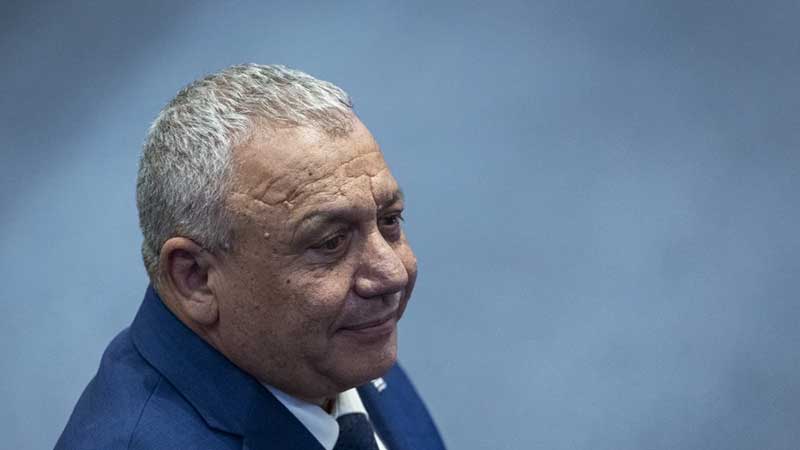
I was still trying to figure out how Gadi Eisenkot, the man tasked with forming our next government, could get to 61 seats in the Knesset. Try doing that arithmetic without counting the seats Arab voters helped put in play.
On NBC’s Meet the Press, El-Sayed pointed to Eisenkot’s reluctance to bring Arab-led parties into his coalition. Arab voters have every right to ask why politicians might welcome their representatives’ votes while balking at giving them a seat at the cabinet table. That question deserves an answer from Eisenkot and the parties he’s courting.
But the voters have already had their say. Ra’am and the Joint List won 19 of the Knesset’s 120 seats. If Eisenkot’s bid for a broad coalition fails, he could try to form a minority government. That government could depend on Arab-led parties for its survival. And in 2021, Ra’am joined the Bennett–Lapid coalition. Its members helped put a government in office in the Jewish state whose democracy El-Sayed now questions.
Israel’s Declaration of Independence establishes a Jewish state and promises full social and political equality regardless of religion, race or sex. Israelis argue about how well we keep that promise. We should. It gives citizens a standard by which to judge their government and a commitment they can insist it honor. As an American, I’m familiar with that idea. We appeal to our own country’s founding promises whenever we think our government has fallen short.
Meet the Press host Kristen Welker asked El-Sayed why Israel should give up its national identity when Pakistan is an Islamic republic and Denmark has an established church. He replied that he opposes American military funding for Pakistan, too. Congress is entitled to debate military aid. Welker asked what Israel should be. Would he also ask Pakistan to shed its Islamic identity or Denmark to amend its constitution? We know what he’s asking of Israel.
There’s another way to test the principle. El-Sayed says Palestinians and Israeli Jews have equal claims to self-determination. The Palestinian Basic Law identifies Palestinians as part of the Arab nation and names Islam as the official religion. Would he ask a future Palestinian state to give up either? If he believes Palestinians can express their national identity through a state and guarantee equal rights to all its citizens, I’d like to know why he doubts Israelis can do the same.
For American Jews, there’s a question closer to home. In March, after a man attacked Temple Israel in suburban Detroit, El-Sayed condemned the attack and added, “hurt people hurt people,” referring to the attacker’s loss of relatives in an Israeli airstrike in Lebanon. He later apologized and said it had been the wrong time to offer that context. I take the apology seriously. At an Atlantic summit after the election, he distinguished between Jewish Americans’ fears about safety and their discomfort with his criticism of Israel. Some of his Jewish constituents were already asking how seriously he took those fears. The American Jewish Committee’s Detroit chapter said the tone of the campaign had deepened them.
I expect to disagree with Michigan’s next senator about Israel. He can start earning the trust of Jewish constituents who share that disagreement by hearing them out and saying plainly what they should be able to take for granted. A congregation in suburban Detroit bears no responsibility for an Israeli airstrike in Lebanon.