 September 25, 2026
 Why Do We Check Our Mezuzot During Elul?
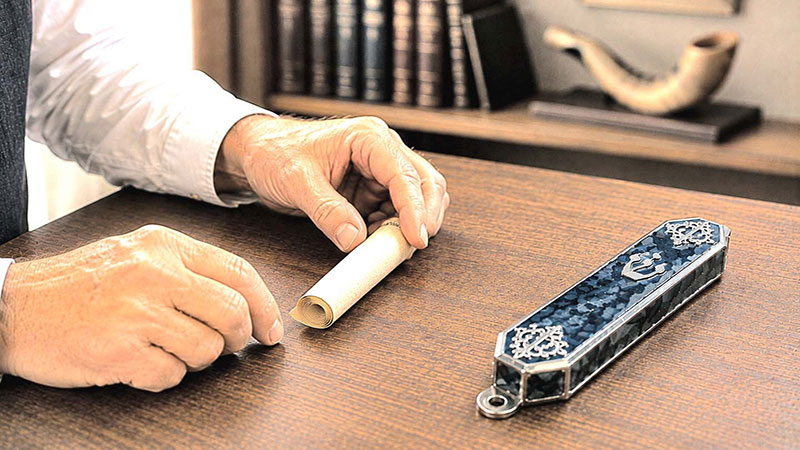


As Elul begins, many of us start preparing for the Yamim Noraim. We hear the shofar, say L’David Hashem Ori, increase our tefillah and tzedakah, and begin thinking more seriously about the coming year.
There is another Elul practice that is less universally known: having our mezuzot checked.
This is not simply a convenient time of year chosen by sofrim. The practice is recorded by major halachic authorities as part of the larger avodah of Elul.
The Source for Checking Mezuzot in Elul
The Mateh Ephraim (581:10), in his discussion of the customs of Elul, writes that anshei ma’aseh – people particularly careful in their observance – use this month to examine the details of their mitzvah performance. As part of that process, they check their tefillin and mezuzot. The Kitzur Shulchan Aruch (128:3) records this practice as well.
In other words, checking the mezuzah fits naturally into the theme of Elul.
Elul is a month of inspection.
We inspect our actions, our relationships with others, our tefillah, and our observance of mitzvot. The Mateh Ephraim tells us that anshei ma’aseh extended that inspection to the physical mitzvah objects that they relied upon every day.
We walk past our mezuzot thousands of times throughout the year. Elul gives us an opportunity to stop and ask a very simple question:
Is the mezuzah on my door still kosher?
Do Mezuzot Really Need to Be Checked Every Year?
This is where an important distinction needs to be made.
There is no general halachic obligation to check every mezuzah every Elul.
The Gemara in Yoma 11a teaches that a mezuzah belonging to an individual must be examined twice every seven years. This is codified by the Shulchan Aruch, Yoreh De’ah 291:1.
That works out to approximately once every three and a half years.
The yearly Elul inspection is therefore an additional practice – a minhag of anshei ma’aseh – rather than the basic minimum obligation.
This distinction is important. Someone whose mezuzot were professionally checked recently should not be made to believe that they suddenly become questionable simply because another Elul has arrived.
At the same time, Elul provides an ideal annual reminder to ask when they were last checked.
If the answer is, “I have no idea,” Elul may be telling you something.
Why Does a Mezuzah Need Checking at All?
A mezuzah is not a printed object sealed permanently in time. It is handwritten by a sofer on parchment, and its kosher status depends upon the integrity of its letters.
Over the years, a mezuzah can be affected by its environment. Outdoor mezuzot in particular may be exposed to changing temperatures, moisture, direct sunlight, or other conditions that can contribute to deterioration. Halachic guidance therefore recommends more frequent inspection when a mezuzah is exposed to harsher conditions.
Problems are not always visible from the outside.
A beautiful case can contain a damaged mezuzah. Conversely, an old or plain case may contain a perfectly kosher scroll.
The only way to properly examine the writing itself is to have the mezuzah opened and inspected by someone qualified in the halachot of STaM.
Perhaps the Most Important Elul Mezuzah Check
There is another type of checking that does not require opening a single scroll.
Walk through your home.
Look at every doorway.
Is there a mezuzah everywhere one is required?
Did you renovate or add a room during the year?
Did a mezuzah fall down without anyone noticing?
Did you move into a home and simply assume that every doorway was taken care of?
Are there outdoor mezuzot that have been sitting through years of rain, summer heat and winter cold?
Sometimes the most important discovery in an Elul mezuzah inspection is not a problematic letter. It is realizing that a doorway was overlooked entirely.
Checking the Doorposts Before the New Year
There is something especially appropriate about examining our mezuzot as we approach Rosh Hashanah.
The mezuzah sits at the transition point between one space and another. We pass it when we leave our homes and again when we return.
And Elul itself is a transition – the doorway between the year that is ending and the year about to begin.
So while we examine the year behind us and consider what needs to be repaired, strengthened or changed, the custom of checking our mezuzot gives that process a physical expression.
Before entering a new year, we make sure the doorposts through which we enter every day are in order too.
Practical takeaway: If your mezuzot have not been checked recently, Elul is an especially appropriate time to have them inspected by a qualified sofer. And even if they were recently checked, Elul is a good opportunity to walk through the house and make sure that every doorway that requires a mezuzah has one.