 September 18, 2026
 Categories: Features / Book Reviews
Word by Word: A Siddur for Translation and Inspiration
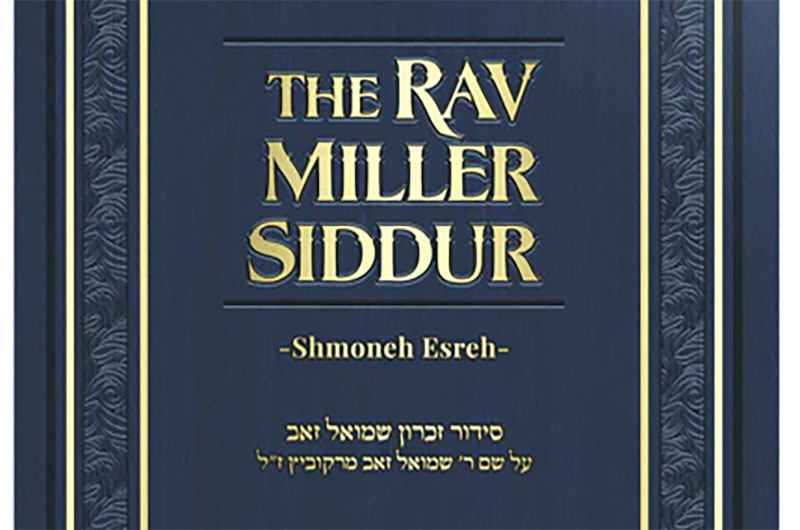


Title: The Rav Miller Siddur: Shmoneh Esreh
By: Rabbi Shimon Maryles
Published by Meoros Haksav
Newly published, The Rav Miller Siddur: Shmoneh Esreh, written by Rabbi Shimon Maryles, represents a unique and welcome contribution to the many in our community seeking to enhance their tefillah. Rooted in the teachings of Rav Avigdor Miller, zt”l, this siddur distinguishes itself by aiming not merely to translate the text of the Shemoneh Esrei, but to transform the experience of tefillah into one of careful study and reflection. It is a work that aims to bridge the gap between recitation and understanding, offering users an opportunity to engage with the meaning of the words on a granular level.
One of the most striking features of the siddur is its format. Each phrase of the weekday Shemoneh Esrei is translated and explained individually, often broken down into units as small as a single word, which sets this siddur apart from other interlinear siddurim. The design is both methodical and user-friendly: the primary translation appears in all-capital letters, immediately followed by a more expansive explanation in standard typeface. Additional insights are provided through numbered footnotes at the bottom of the page. This layered approach allows the reader to choose the depth at which they wish to engage – whether focusing on a straightforward translation or delving into deeper commentary. Complementing this micro-level analysis are introductions to each beracha, which also step back to present the broader thematic flow of the prayer, helping the reader appreciate how each section connects to the next.
The siddur further enhances its value with supplementary sections. A second section in the back offers more detailed elaborations on key words and phrases, serving as a resource for more in-depth study. Following that is a third, more concise section featuring curated selections of inspiring quotes from Rav Avigdor Miller, adding a dimension of spiritual encouragement.
There are a number of unexpected facets to this siddur. For example, many translations depart from the more familiar renderings commonly encountered. The phrase “Baruch Ata” is translated as “The One to whom our knees are bent,” drawing on the etymological connection between baruch and the root associated with kneeling or bending, as found in Rabbeinu Bachya’s commentary to Devarim 8:10. While this interpretation is well-sourced, it is not the conventional understanding, and readers may need to decide how – or whether – to incorporate such perspectives into their own davening. Similarly, “Sofreihem” rendered as “their bookmen” may initially surprise some, even if linguistically legitimate. These choices ultimately contribute to the siddur’s character as a tool to encourage additional inquiry and thought.
In practical terms, the siddur is well-suited for both advance preparation as well as for use during tefillah itself. Those seeking to study the Shemoneh Esrei in advance will find its structured explanations especially helpful, while those using it during davening can benefit from the clarity and accessibility of its layout. Additionally, the availability of the siddur in multiple nuscha’os, including Ashkenaz (reviewed here) and also Sefard, broadens its appeal across different communities. However, there are areas where future editions could further improve its usability. Notably, important occasional additions – such as Yaaleh V’yavo, Al Hanissim, and the insertions for the Aseres Yemei Teshuva – are included without even basic translations. The same is true for alternate texts like Shalom Rav recited as the final beracha in Maariv (and Mincha for Nusach Ashkenaz), the introductory Mincha verse “Ki shem Hashem ekra,” and also the concluding supplication Elokai Netzor. Given the siddur’s target audience, even a simple translation of these passages would be a meaningful enhancement.
Additionally, the inclusion of brief, essential halachic notes – particularly in cases where omissions require repetition, such as forgetting Yaaleh V’yavo or Mashiv HaRuach – would add great practical value. Minor formatting improvements could also elevate the user experience, such as indicating word stress (mil’el vs. mil’ra). Also, relocating donor acknowledgments to a dedicated section – rather than embedding them within the pages of the berachos themselves, where they may distract the mispalel – might be considered.
The Rav Miller Siddur stands as a highly beneficial and innovative work. It succeeds in opening up the Shemoneh Esrei in a way that is both intellectually engaging and spiritually enriching, making the teachings of Rav Avigdor Miller accessible to a broader audience. It has the potential to become an indispensable companion for those seeking to deepen their understanding and experience of tefillah, as is already the case for me. (My teenage son, who recently used this siddur for the first time, enthusiastically agreed!) Both those newly learning about tefillah as well as those already familiar, will gain from this unique siddur. I look forward to further expansions of this project with additional works that bring Rav Miller’s teachings to life.