 September 4, 2026
 Categories: Headline / Features
Yom Ha’atzmaut Without Closure
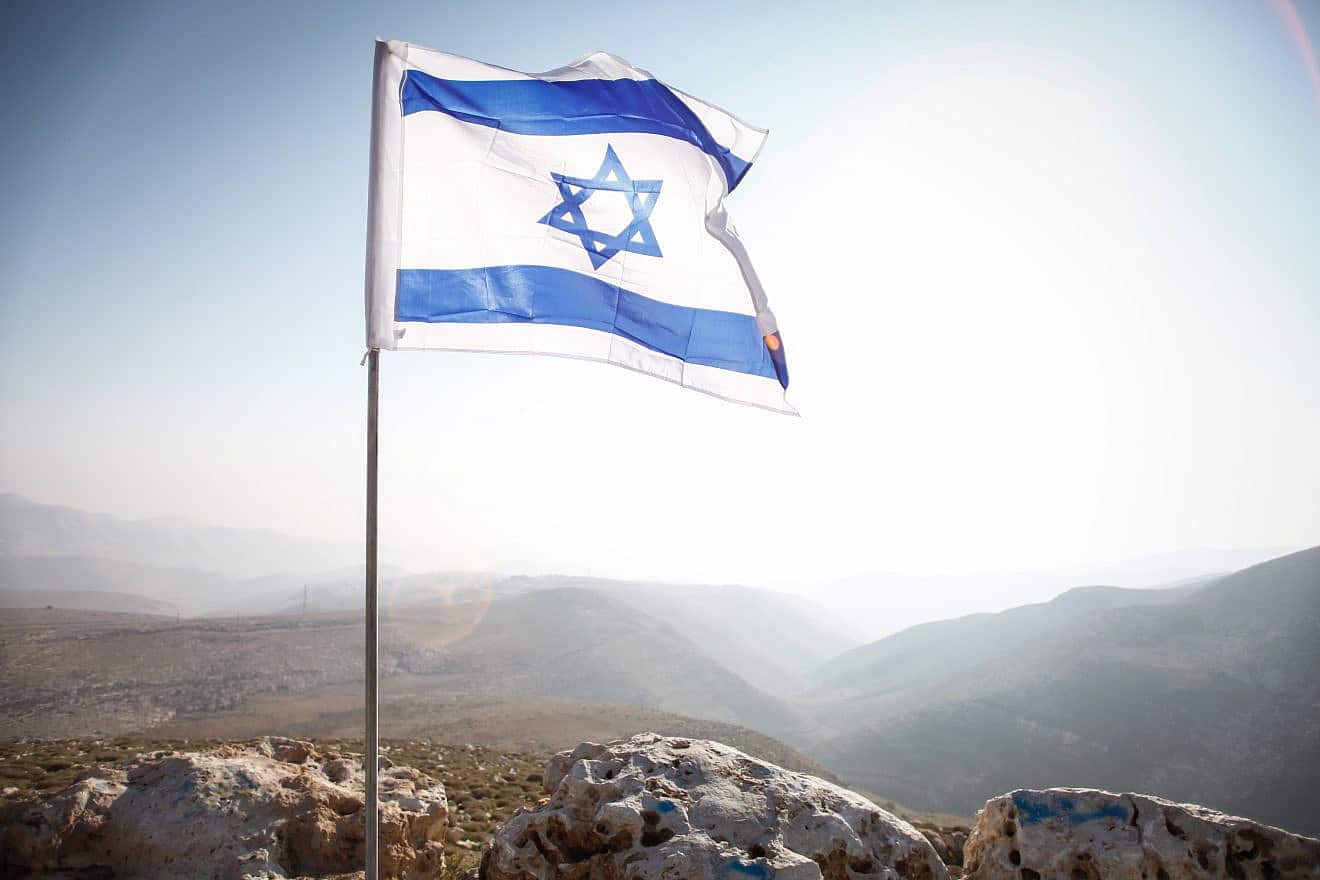


Once again, we face Yom Ha’atzmaut in the shadow of war. For the past two years, we have celebrated Jewish sovereignty and our return to Eretz Yisrael under the weight of war and loss. As this long war drags on, the emotional landscape shifts, and the lens through which we experience and celebrate our independence changes.
We have just emerged from our shelters, literally and figuratively, after six weeks of war. The air is heavy with mixed emotions shaping how we approach this moment. There is relief, but also grief. Pride, but also fatigue. Nothing feels simple or settled.
This year’s celebration doesn’t unfold the way it usually does. Independence is still something we mark, but it is filtered through everything we have just lived through. How should we frame Yom Ha’atzmaut this year after this war?
Not Yet Victory, Not Defeat
During the current ceasefire, there has been much talk about whether we won or lost this war. Predictably, that question has been politicized and weaponized for political gain. Most people just feel unsettled. We have all made significant sacrifices over these past six weeks. Daily routines were upended, families were strained, and normal life was placed on hold. There is a natural urge to point to something tangible, a clear marker of victory, to justify what we have given. We expect victory to arrive neatly packaged, clear and objective. But our struggle for Israel, at this stage, looks very different. In the past, our struggle demanded courage, sacrifice, and historical vision to stand against hostile enemies. Today, those same qualities are still required, but we are also being asked to sustain patience and resilience over time. We have never fought a war that stretches across years, and this is testing the durability of our social fabric. Evidently, this process unfolds in many stages. Instead of trying to force a final judgment about whether we won or lost this war, it is more honest to note the real achievements of this past round with Iran. Is it decisive? Have we fully eliminated the Iranian and Hezbollah threat? Almost certainly not. But have we made meaningful advances in weakening those threats and improving our position in the Middle East? Without question. Most of our earlier redemptions unfolded this way. The return from the Babylonian exile did not happen in a single sweep. It came in waves, with setbacks and partial gains. The Midrash compares redemption to both a sunrise and a construction project. Both move forward, but neither arrives all at once. We should not expect our return to Israel, after close to two thousand years, to feel smooth or final. In many ways, our moment feels closer to 1948 than to 1967. 1967 brought swift, dramatic victories that left little room for doubt. The world shifted in six days. 1948 brought independence and sovereignty, but also uncertainty and unfinished business. It laid a foundation without resolving everything. Patience is essential. It is even more central for a nation that believes it is part of a larger destiny. We may not know the pace or the sequence, but we know the direction. We have been promised this land. That belief calls for patience, not for the constant urge to label each stage as victory or defeat.Faith and Confusion
We should also allow ourselves to feel confused. The hand of G-d operates in the background, guiding historical forces toward a promised end. At times the direction feels clear. At other moments, it does not. The Torah describes the state of the Jewish people on the night of the Exodus as chippazon, hurried and disoriented, caught in a moment that had not yet settled into clarity. Not every stage of redemption is meant to be fully understood as it unfolds. Rather than searching for simple clarity or sharp slogans, we should recognize what has been achieved and remain aware of how much still lies ahead. Political voices will offer confident declarations to rally support, while others will dismiss what has been accomplished to score points. Neither captures the full picture. What we have achieved cannot be described as complete victory, but neither can this war be dismissed as empty or futile. The truth sits somewhere in between, quieter and less defined. It asks for patience and judgment not driven by slogans or politics.The Ties that Bind
At the same time, the past three years, and this war in particular, have highlighted how central the State of Israel has become to Jewish identity and Jewish peoplehood. What often presents itself as opposition to Israel is, in many cases, antisemitism in disguise, directed at Jews across the world, even those with no direct connection to Israel. To be Jewish and to be associated with the State of Israel are no longer easily separated. That hostility to our State has also stirred something deeper within our community. It has strengthened Jewish identity and renewed commitment to Israel. It has made clear how vital Israel is, not only for our physical safety but for our long-term continuity as a people. This is part of what makes opposition to the very existence of the State of Israel different from ordinary political critique. Without a State of Israel, our ability to endure, both practically and as a people with a shared identity, is placed in real doubt.Reality is Stronger Than Ideology
To me, this came into sharp focus over the past few weeks as the chareidi city of Bnei Brak was struck disproportionately by Iranian missiles. Watching local residents being helped by Home Front officials and medical teams was painful, ironic, and reinforcing. Just weeks earlier, Israeli soldiers had been violently confronted when they attempted to carry out arrests in Bnei Brak of those who had not enlisted in Tzahal. It was a difficult moment, watching Jews clash with Jews, and seeing symbols of the State of Israel disrespected by Jewish residents. And then the scenes shifted. Under fire, those same residents turned to the systems of the state for protection and care. In those moments, something more basic came into view. Chareidim who live here are part of the State of Israel. Whatever their ideological stance, they remain exposed to the same threats and are supported by the same medical and rescue networks. Reality has a way of overtaking ideology. Over time, the tensions around chareidi enlistment will be worked through. But by choosing to live here, they have already, in practice, bound their fate to the State of Israel.International Opinion And Jewish Survival
Despite our achievements, our international standing has taken a real hit over the past three years, and particularly during the wars with Iran and in Lebanon. Beyond the usual critics, we are seeing weaker support and sharper opposition even among long-standing allies in Europe. Surveys point to a noticeable decline in support in the United States, across both parties. We had little choice. We faced an existential threat and a brutal, unprovoked attack on our homeland. We fought to defend ourselves, at times with support, and at times on our own. Still, we look ahead to a day when a Jewish presence in Israel is not contested but broadly accepted. In the middle of conflict, it is easy to dismiss the importance of international opinion, especially when shaped by distortion and accusation. But we do need that support, both in practical terms and as part of a larger vision in which our return to this land is recognized and affirmed. That day does not feel close. That reality also shapes how we stand this Yom Ha’atzmaut.