 September 18, 2026
 Next-Level Bentching & Purposeful Prayer


Parshat Eikev
Eikev is the third of 11 sedras in D’varim; the 46th of the Torah’s 54 sedras. Eikev is always read during the month of Menachem Av, specifically from the 18th to the 23rd of the month. When it is on the 23rd (not this year), then it is Shabbat M’vorchim Chodesh Elul, which falls in those years on Shabbat Parshat R’ei. This is a 28%-of-the-time occurrence. The other three possibilities are: Eikev on the 18th (28½%, including this year), the 20th (32%), and on the 22nd (11½%) – thus, Eikev is not Shabbat M’vorchim 72% of the time.
Eikev has 111 p’sukim – tied with Vayikra but larger than it in other categories. With the average for the Torah being 108.26 p’sukim per sedra, Eikev ranks 26th – at the bottom of the top half.
However, with the third-longest p’sukim in the Torah in words and letters, its ranking jumps to 16th and 14th, respectively. And it ranks 14th in number of lines in a Sefer Torah – because of its many words and letters, and its 10 parshiyot and the resultant blank spaces.
* * * * *
As long as we are talking numbers, let’s look at another number topic of sedras: How soon do we get to the name of the sedra? B’reishit is the first word of the sedra. So too for 15 other sedras. Eikev is a second-word sedra name. “V’haya eikev…” That is the most common name position in the Torah – occurring for 18 sedras, exactly one third of them all. It just beats the first-word of the sedra group by a score of 18 to 16.
We might as well mention the remaining 20 sedras in this regard. Only Sh’mini is a third-word sedra-name. There are seven fifth-word sedra names. Five are sixth-worders because the name follows “Vaydabeir Hashem el Moshe leimor…” Then there are three ninth-worders, and one each 11th-word (B’haalot’cha), 12th -word (T’ruma), 13th-word (Tazri’a), and 14th-word (K’doshim).
Let’s play a little more; then we’ll get to some serious stuff. Eikev’s name has three letters. There are nine other sedras with three-letter names. See who at your Shabbat table can name them. Arming you with the answers in advance: Mikeitz in B’reishit; none in Sh’mot; Emor and B’har – two in a row in Vayikra; Naso and then four in a row in Bamidbar – Sh’lach, Korach, Chukat, Balak; and two in a row in D’varim – Eikev and R’ei.
* * * * *
The Book of D’varim has been divided into three parts, based on the opening p’sukim of the Book and sedra of D’varim. The Gr”a suggests that the first part consists of the sedras of D’varim, Va’etchanan, and Eikev. They constitute the beginning of Moshe’s farewell addresses to the Jewish People from the first of Sh’vat in the 40th year of wandering, in the plains of Moav, on the threshold of Eretz Yisrael, until Moshe’s death on the 7th of Adar. In these three sedras, we find the restatement of the foundation of Torah Judaism: the account of the Revelation at Sinai, Matan Torah, and the Sh’ma (first and second passages), the mitzvot of prayer and blessings, plus other events of the early years following the Exodus.
Throughout these three sedras we find repeated reference to G-d’s plan and His Will, R’tzon HaShem, that His Chosen People live a life of Torah in the Land that He promised to our forefathers and their descendants – us.
Allow me to get personal. Very personal. I grew up in Brooklyn (Crown Heights) and Queens (Forest Hills and Kew Gardens Hills) and I came on aliya on September 16, 1981 – the 17th of Elul. That is a date I celebrate with my daughters. But there is another date which is even more significant to me. It is Shabbat Nachamu (the past Shabbat) of 1969. I was a madrich of a group of high school kids from the States for seven weeks in Israel. We were in T’veri’a (Tiberias) for the post-Tish’a b’Av Shabbat. It was late afternoon; we had just davened Mincha and were on our way to the dining room for Seuda Shlishit. The boy I had assigned to give a D’var Torah told me that he had forgotten and was not going to speak. It fell to me to come up with a “DT” in a few minutes. I opened my siddur to the Mincha Torah reading – the first portion of this week’s sedra, Eikev. Pasuk 8:1 jumped off the page and smacked me in the head. “Kol hamitzva… Every commandment that I command you this day, you shall keep to do, that you may live and multiply, and come and possess the Land that the L-rd swore to your forefathers.”
There are other p’sukim – a good number of them – that express the same sentiments. But this one is mine. At that moment, at 21 years old, I made a decision that my future would be in Israel. An absolute mental and whole-hearted commitment to live in Israel.
It took me 12 years – that's another story – but I came. And I celebrate Shabbat Nachamu because of that commitment. And it was the simple, clear statement that we were given the Torah and its mitzvot in order to live by them in Eretz Yisrael.
I am not criticizing all my fellow Jews who have not yet made aliya. There are many good reasons and excuses (some better than others) for people deciding not to come. My criticism is toward those Jews, otherwise Torah observant, who do not yearn to live in Israel. Toward those who called me crazy when I told them my plans. To my fellow Jews in the Diaspora: Look at that pasuk, and the others like it. Read it and stare at it and ponder it. And understand it. And don’t be afraid to say to yourself that you know that Israel is where you should be. Point yourselves in the right direction. Make yourselves a goal and an agenda.
* * * * *
There are eight mitzvot counted from Eikev. That doesn’t sound like that many – especially in comparison to the three coming sedras of Sho-f’tim, R’ei, and Ki Teitzei with 41, 55, and 74 mitzvot, respectively. That’s 170 mitzvot for the second section of D’varim, contrasted with the 22 mitzvot in the first section and the eight mitzvot of the third section of D’varim. But still, there are only 19 sedras with more mitzvot and 34 sedras with fewer.
* * * * *
As I mentioned earlier, the mitzva of Birkat HaMazon is in D’varim 8:10: “V’achalta v’savata uveirachta…” You shall eat and be satisfied and you shall bless G-d (let’s stop at this point in the pasuk, even though there is more to it – we’ll get back to that later).
There is a Mishna in B’rachot (6:8) that has a three-way machloket (dispute) as to what kind of eating requires the full Birkat HaMazon. The Mishna begins: “One who eats figs, grapes, pomegranates – after which he blesses the Three B’rachot (a.k.a. the full bentching). This is the opinion of Rabban Gamliel. The Chachamim say that one says only the one blessing (called B’racha Mei’ein Shalosh). Rabbi Akiva says, “Even if one ate boiled vegetables and that is his meal, he recites the full bentching.”
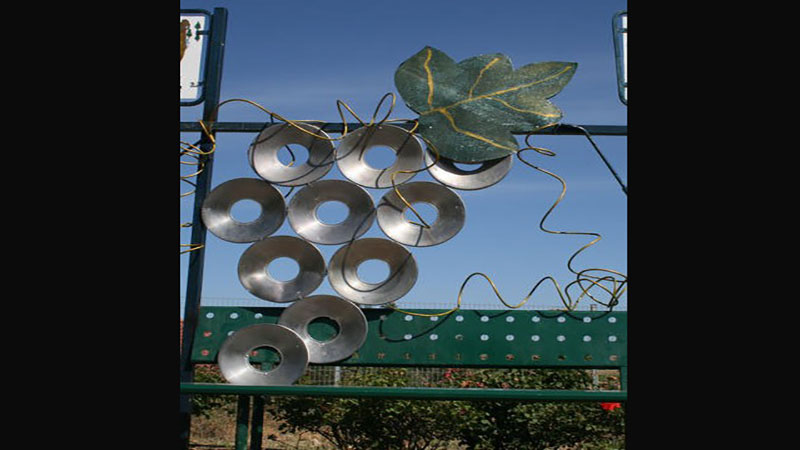
Rabban Gamliel's opinion is based on viewing the full set of p’sukim from D’varim 8:8-10. Pasuk 8:8 is the famous pasuk about the Seven Species – “A land of wheat and barley, and grapes and figs and pomegranates; a land of oil-olives and honey-dates.” This is followed by the pasuk that refers to eating bread, and then comes the “Eat, be satisfied, and bentch.” Rabban Gamliel ties the three verses together to draw his conclusion that not only bread requires full bentching, but the fruits of the Seven Species as well. The Chachamim only look at 8:9 – “A land in which you will eat bread...” followed by the command to bentch. Fruits of the Seven Species, according to the Chachamim, only require a single abridged bracha. Rabbi Akiva looks just at 8:10 – Whatever you eat, if you are satisfied, you must say the full bentching. The pasuk did not mention what you ate; only that you ate and were satisfied.
The halacha is as the Chachamim say – bread meals require full bentching. But the other opinions take us behind the scenes of the formulation of halacha.
* * * * *
And now back to D’varim 8:10 – “...And you shall bless the L-rd, your G-d, for the good land He has given you…” Eat, be satisfied and bless/thank G-d – but not just for the food. For the Land of Israel as well. Actually, we infer that the bentching is thanking G-d for the food, but it actually mentions thanking Him for Eretz Yisrael.
Without belaboring the point, there is a huge qualitative difference between thanking G-d long distance and thanking Him while living in the Land that you are thanking Him for.
In fact, in a sefer about brachot for mitzvot, the author discusses mitzvot that do not get their own bracha, but rather are covered when we say a different bracha that can also include the mitzva in question. As to the mitzva of living in Eretz Yisrael, the author explains the technical reasons for there not being a specific mitzva-bracha for Yishuv Eretz Yisrael. However, he cites the Riv’vot Efrayim (Rabbi Ephraim ben Avraham Boruch Greenblatt, 1932-2014) in saying that the second bracha of Birkat HaMazon thanks Hashem for the good and expansive land that He bequeathed to our ancestors... then quotes D’varim 8:10 and concludes, “Al HaAretz v’al hamazon.” This bracha, he says, is not just part of bentching, but one who lives in Israel should have the additional intent (kavana) for the mitzva of living in Eretz Yisrael when he says this second bracha of Birkat HaMazon. This elevates Birkat HaMazon in Israel way above “Rubba dub dub, thanks for the grub, Yay, G-d.”
* * * * *
Speaking of which, there was a story from many years back at a religious summer camp, that at the end of a meal, one table of kids chanted the above ditty right before everyone was about to bentch. One of the rabbis at the camp immediately raised the question: Can “Rubba dub dub...” qualify as thanking G-d for the meal, thereby making the subsequent regular bentching a series of brachot l’vatala, wasted brachot? The question was based on the fact that the pasuk (8:10 – how many times have I referenced it already?) commands blessing G-d but does not specify how. Perhaps, the rabbi suggested, “Rubba dub dub” would qualify – albeit not the proper way to bentch, but enough to refrain from saying the regular text and brachot.
The conclusion was that it did not qualify as bentching because when our Sages teach us (command us) as to how to do a certain Torah mitzva, we are bound to do it that way. In other words, the Torah requires us to bless G-d; our Sages tell us how to do that. And the Rabbinic legislation becomes part of the body of halacha.
* * * * *
Which leads me to one other mitzva in Eikev – the Torah command to daven. This one is not so simple. Rambam cites D’varim 10:20 – “You shall fear/revere Hashem, your G-d, worship Him (“Oto taavod”), and cleave to Him and swear by His Name.
Focus on “Oto taavod,” literally, “Him you shall serve.” Elsewhere (Sh’mot 23:25), the Torah says, “And you shall worship Hashem, your G-d.” The question so far would be, what does the Torah mean by serving G-d? A third verse is quoted, also from Eikev, in the second passage of the Sh’ma (D’varim 11:13) – “And you shall serve Him with all your heat and all your soul.” What, Rambam asks, is service of the heart? His answer: t’fila, prayer.
What satisfies the command to serve Hashem with prayer? How often should we daven? At what times? What text? Those questions are all answered by Chazal, our Sages. But the essential Torah mitzva to pray is at least once a day, praise Him and ask Him for something. In the case of davening (different from Birkat HaMazon as presented above), Rambam’s view is that there is a Torah-level fulfillment of the mitzva and a Rabbinic level, which includes three times a day, at specific times, using specific words. We can always (and should) add our own words at the appropriate places in the formal davening, but that’s a topic on its own.
Wrinkle: Ramban disagrees and says that the Torah does not require praying, but it inspired our Sages to legislate and organize our prayer. Ramban also quotes “To serve Him with all your heart,” but he considers it that which inspired Chazal to form the whole body of davening. Rambam uses the same Torah words and defines them as the source for the Torah mitzva to daven.
Who is right? I don’t know if there is a clear answer on that. I would say that one can argue for the Torah requirement/Rabbinic legislation model of Rambam, but one might also suggest that Hashem showed us in the Torah many examples of prayer and many inspiring verses that led Chazal in the direction they took. It’s as if Ramban says, “Hashem didn’t have to command us to pray, He just showed us its value and let our Sages take the ball from there.”
* * * * *
In the beautiful description of Eretz Yisrael in Parshat Eikev – specifically, in D’varim 8:7-9, the p’sukim that immediately precede the mitzva of Birkat HaMazon – there are two metals mentioned. “Eretz asher avaneha barzel umeihar’reha tachtzov nechoshet” – A land whose stones are iron, and out of whose mountains you will hew copper” (8:9). Copper is element number 29, and it occurs in two stable isotopes – Copper 63 and Copper 65. The more common atomic weight of copper is 63 (69%), but it is copper 65 (31%) that will interest us (dear readers of Torah by the Numbers and me).
One type of gematria (numeric value of Hebrew letters) is called Mispar Siduri. It assigns value to the letters of the Alef-Bet in their sequential order, not their usual numeric value. Alef through Yud are the same 1 to 10. Kaf, however, is 11 (rather than 20), Lamed is 12...and so on, with Tav being 22.
The regular gematria of the Hebrew word for copper, nechoshet, is 758. The mispar siduri of nechoshet is 14 (Nun) + 8 (Chet) + 21 (Shin) + 22 (Tav) = 65. Does it prove anything? I don't think so and I don’t claim that it does. But it was a nice find.
* * * * *
Daven well. Bentch well. Make brachot properly. And have a wonderful Shabbat!