September 11, 2026
 Categories: Arts
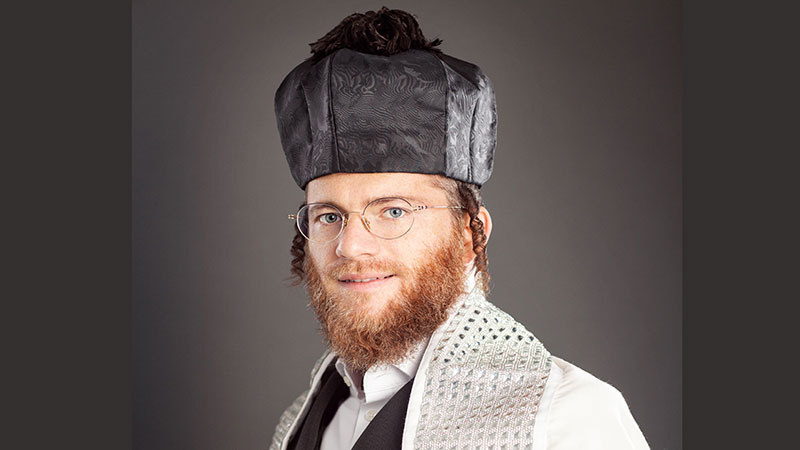
2026 Chazzanut Special: A Chazzan Grows in Brooklyn (and Manhattan, and New Jersey): Cantor Yanky Lemmer


Besides enjoying the singles’ scene on the Upper West Side when I was single (and with more black hair on my head, more hair in general, and fewer pounds...), one of the things I liked most was the cantorial scene. For me, living within walking distance of shuls like The Jewish Center, West Side Institutional Synagogue, Park East, and Lincoln Square Synagogue – which had professional cantors on a regular basis – was a great experience. On Shabbatot and the High Holidays, I used to go there and enjoy the chazzanim.
Although I lived up in the 90s, on Rosh Hashanah I sometimes enjoyed walking all the way down to 69th Street to listen to Cantor Yaakov (Yanky) Lemmer. A little far, but worth every step.
This was actually my first question when I spoke to him: Why did the Upper West Side (UWS) and Upper East Side (UES) become chazzanut hubs? In Brooklyn, which used to be a chazzanut hub, you can’t really find shuls with a regular cantor anymore. But many synagogues in Manhattan still have a regular cantor every Shabbat and holiday.
Lemmer gave me an interesting answer. “It’s the demographics,” he said. “Demographics speak.”
He once heard a rabbi say that they used to have a lot of shuls in the Bronx, and when there were many shuls in the Bronx, there were no shuls in Boro Park.
“I still don’t get it,” I said.
Chazzanut used to be the biggest entertainment for Jews, he explained. Not necessarily only for frum or charedi Jews – for secular Jews as well. It reminded them of their hometowns back in Europe; it was the bridge between the Old World and the New World. The famous shuls in Boro Park that used to have the greatest cantors of the golden age were mostly Modern Orthodox. Young Israel Beth El of Borough Park, for example, where Cantor Moshe Koussevitzky was the cantor, is a Modern Orthodox synagogue. Today, Brooklyn is a lot more charedi and chassidish. Most of the Modern Orthodox in New York City today live on the Upper West or Upper East Side. It’s the demographics.
Lemmer also shared another insight: With the explosion of hasidic music, some people have moved towards that rather than chazzanut. Today, most of the cantors are chasidim, as opposed to the past when many of them were not necessarily even frum. When chasidic music became more popular, someone who wanted something else – something different, something older – turned to chazzanut. And there’s a demand for that in Manhattan.
“In Brooklyn today,” Lemmer noted, “it is often the Admor (Rebbe) or the Dayan who leads the davening. What they’re looking for is a baal tefillah, not necessarily a chazzan. The audience that came to hear Koussevitzky in Boro Park back in the 1960s – that’s the same demographic living in Manhattan today.”
I asked him what his favorite cantorial piece is.
“There’s no single answer to that,” he replied. “It really depends on the mood.” When he feels more emotional, he turns to the works of Zavel Kwartin, particularly his iconic “Ribono Shel Olam.” He is also deeply fond of Mordechai Hershman’s “Halbein Chato’einu” and Yossele Rosenblatt’s timeless “Lo Tachmod.”
Who is his favorite cantor?
Without hesitation, he named Cantor Moshe Stern. Lemmer learned much of his art by listening to Stern’s classic recordings, but their connection went beyond that – he met Stern several times at concerts, and even visited him at his home in Jerusalem’s Har Nof neighborhood.
“In fact,” Lemmer revealed, “about half of what you heard from me when you came to listen at Lincoln Square Synagogue was actually straight from Stern.”
Beyond Moshe Stern, Lemmer credits Cantor Benzion Miller and the legendary teacher Cantor Noah Schall as major influences who helped shape his cantorial style.
And now to my favorite question for chazzanim:Traditional nusach vs. new popular tunes. What does Lemmer think about the trend of using tunes from popular hasidic music in Yamim Nora’im prayers?
Lemmer answered with a question: “Why do we change the parochet of the Aron Kodesh?” We try to create a different vibe for the High Holidays, he explained. We do that also with the special foods we eat. When we have a special nusach, it’s the same idea, he said. It makes the holidays feel special.
“Correct nusach is what you grew up with,” he said. “But you do want to change something every year, to bring something fresh so people don’t get bored.”
However, he added, “You don’t change the Skarbova tunes.” Skarbova tunes are emotional anchors in the tefillah. Skarb in Slavic languages, such as Polish and Russian, means treasure. In Ashkenazic cantorial tradition, we call these Skarbova. There is also a term called “Nigunei Mi’Sinai” (Tunes from Sinai), which refers to a group of about 52 ancient tunes in the Ashkenazic tradition, especially for the Yamim Nora’im, which are perceived as holy.
Mostly, we should try to stick to the tradition, says Lemmer – to the Skarbova. However, he adds, if the congregation gets excited by a new tune, he will use it, even though he prefers the original source. For example, with “Ochila LaKel,” he uses the more modern tune. Once, people got upset with him for using the modern one, so he made a deal: He sang both the old and the new tunes.
How do you prepare for the High Holidays? I asked him.
“I look for a new song that will wake up the congregation, and then I look for a new spot where I can use it,” he said. For example, this year he plans to use the tune of “Hashivenu” by Hanan Ben Ari and Zusha’s “Don’t Leave Me On My Own.” He always looks for new hit tunes that he can mix in here and there.
However, he noted, the preparation is mostly about heart and mind. It’s a different energy, he said. He opens the machzor (he uses both Machzor Hameforash and Artscroll). He likes to learn the perush of the different tefillot and piyutim. He also studies the Mateh Ephraim, which details all the halachot and minhagim, as well as ta’amei ha’minhagim (the reasons behind the customs), for the Yamim Nora’im. He emphasizes the importance of studying the tefillot and their commentaries. In Lemmer’s view, before focusing on the music, it’s very important to understand the tefillot and the different piyutim you are singing.
How do we bring chazzanut to the younger generation?
“If it’s really sincere and natural...” Lemmer began, and then added in Hebrew, “Devarim hayotzim min halev nichnasim el halev” (Words that come from the heart enter the heart). If your fingers are on the pulse of the congregation and you really try to connect with what resonates with them, once you have their trust you can insert a little bit of this and a little bit of that – without overwhelming them. He mentioned that for the younger generation, if you start right away with opera, they just won’t connect with it. They want something simple – the natural voice of the chazzan. Once you have the congregation’s trust, you can bring in the real chazzanut. You have to strike a balance.
I asked him how he got into chazzanut in the first place.
Every Sunday night, his father would turn on 89.9 FM for Charlie Bernhaut’s show to listen to an hour of Jewish music and chazzanut. He tuned in mostly for the chazzanut. That was the main reason Lemmer got into chazzanut – because his father was so passionate about it. Every time he listened to chazzanut, it stirred his soul. Strummed on his heartstrings.
His father took him to concerts as a child. He shared a story about one specific concert: Moshe Stern used to come to America every year and perform in Linden Heights. One year, when it was snowing heavily and Lemmer was only about nine years old, they walked in the snow for a full hour just to hear Stern.
He remembers that when the choir started to hum, he asked his dad in wonder: “How does that sound like a human voice? It sounds like an instrument!”
When he was in yeshiva, he used to sing chazzanut occasionally. As a bochur, when his friends got married, they would ask him to go up and sing during the breaks: “Ah Yanky, go to the mic!”
Over time, Lemmer regularly went to hear Cantor Benzion Miller and became close with him. At age 20, after returning from yeshiva in Israel, he joined Miller’s choir. One day, during a Tu b’Shvat concert around February 2007 at Congregation Beth El, Miller suddenly asked him: “Yanky, would you like to sing something?”
Lemmer said yes, and decided to sing Hershman’s “Misratze b’Rachamim.” The next morning, a thoughtful neighbor dropped a DVD recording of the performance into his mailbox. Lemmer uploaded the video to YouTube. By the next day, his inbox and Facebook messages were blowing up. People were asking: “Who is this guy? Where did he come from?”
He began working alongside Miller, and also attended the Belz School of Music at YU under Cantor Noah Schall.
His first official position was at Young Israel of Fort Lee, New Jersey, arranged through Eli Smith, a legendary figure who matched cantors and baalei tefillah with synagogues. He stayed there for a year.
One day, someone heard him at a concert and said: “I’m taking you to be the chazzan in my shul!” That was Congregation Anshe Sholom of New Rochelle. From there, Lemmer made a big move to Congregation Ahavath Torah in Englewood, where he served for three years. Then came the big opportunity at Lincoln Square Synagogue, after Cantor Netanel Hershtik let him know they were looking for a cantor.
In his day job, Lemmer works as a special education therapist, incorporating music therapy in his practice in Boro Park.
He is ever grateful to his wife and children for backing him up – it’s not easy with his career to be away for Shabbatot, chagim, and constantly traveling. He is also deeply grateful to the clergy and staff at Lincoln Square Synagogue for being so accommodating, and for giving him such a warm, beautiful community to be a part of.