יום שלישי, ט״ז חשוון תשפ״זTuesday, October 27, 2026



Follow Us



By Rabbi Lord Jonathan Sacks z"l
So time in Judaism is an essential medium of the spiritual life. But there is one feature of the Jewish approach to time that has received less attention than it should: the duality that runs through its entire temporal structure.
By Rabbi Lord Jonathan Sacks z"l
We are a hyper-verbal people. We talk, we argue, we pontificate, we deliver witty repartee and clever put-downs. Jews may not always be great listeners but we are among the world’s great talkers. Accuse us of anything and we’ll come up with a dozen reasons why we’re right and you are wrong.
By Rabbi Lord Jonathan Sacks z"l
According to he Netziv, If Jews live distinctive and apart from others they will dwell safely, but if they seek to emulate ‘the nations’ they ‘will not be reckoned’ as anything special at all.
By Rabbi Lord Jonathan Sacks z"l
The trouble is that if the leader is a parent, then the followers remain children. They are totally dependent on him. They do not develop skills of their own. They do not acquire a sense of responsibility or the self-confidence that comes from exercising it.
By Rabbi Lord Jonathan Sacks z"l
But the Torah is not mere history as a sequence of events. The Torah is about the truths that emerge through time.

By Rabbi Lord Jonathan Sacks z"l
Words can injure and inspire. Words can bless or curse. Words can create new moral facts, such as when we make a promise.
By Rabbi Lord Jonathan Sacks z"l
“Torah study without an occupation will in the end fail and lead to sin.” Avot 2:2
By Rabbi Lord Jonathan Sacks z"l
The holy spaces had to be kept free of conditions that bespoke mortality.
By Rabbi Lord Jonathan Sacks z"l
There is an order to the universe, part moral, part political, part ecological. When that order is violated, eventually there is chaos.
By Rabbi Lord Jonathan Sacks z"l
After the Flood, G-d gave humans permission to eat meat, but this was a concession, as if to say: Kill if you must, but let it be animals, not other humans, that you kill.
By Rabbi Lord Jonathan Sacks z"l
If you want to be a great leader in any field, from prime minister to parent, it is essential to think long-term. Never choose the easy option because it is simple or fast or yields immediate satisfaction. You will pay a high price in the end.
By Rabbi Lord Jonathan Sacks z"l
Physically, we are almost nothing; spiritually, we are brushed by the wings of eternity. We have a G-dly soul.
By Rabbi Lord Jonathan Sacks z"l
The Egyptians sought not merely to enslave, but also to put an end to, the people of Israel. One way of doing so was to kill all male children. Another was simply to interrupt normal family life.
By Rabbi Lord Jonathan Sacks z"l
People think they are free because they have been taught that all morality is relative, and you can do what you like so long as you do not harm others.
By Rabbi Lord Jonathan Sacks z"l
The word kavod – dignity or honor – appears sixteen times, but in fourteen (2x7) of these cases the reference is to the glory of G-d.
By Rabbi Lord Jonathan Sacks z"l
The famous Butterfly Effect – the beating of a butterfly’s wing somewhere may cause a tsunami elsewhere, thousands of miles away – tells us that small actions can have large consequences. That is the message the Tabernacle was intended to convey.
By Rabbi Lord Jonathan Sacks z"l
So slavery is to be abolished, but it is a fundamental principle of God’s relationship with us that he does not force us to change faster than is possible of our own freewill.
By Rabbi Lord Jonathan Sacks z"l
The custom of including the Ten Commandments as part of the Shema was once widespread, but from a certain point in time it was systematically opposed by the Sages. Why did they object to it?
By Rabbi Lord Jonathan Sacks z"l
What is the place of song in Judaism?
By Rabbi Lord Jonathan Sacks z"l
Judaism is not a religion of blind obedience. Indeed, astonishingly in a religion of 613 commandments, there is no Hebrew word that means to obey.
By Rabbi Lord Jonathan Sacks z"l
Outside the promised land Jews in the biblical age are in danger if they tell the truth. They are at constant risk of being killed or at best enslaved.

By Rabbi Lord Jonathan Sacks z"l
Consider, now, the choices Moses faced in his life. On the one hand he could have lived as a prince of Egypt, in luxury and at ease. That might have been his fate had he not intervened.

By Rabbi Lord Jonathan Sacks z"l
On the surface, Joseph holds all the power. His family are entirely dependent on him. But at a deeper level it is the other way round. He still yearns for their acceptance, their recognition, their closeness.
By Rabbi Lord Jonathan Sacks z"l
Abraham prays for justice. Judah prays for mercy. Elijah prays for G-d to reveal Himself.
By Rabbi Lord Jonathan Sacks z"l
Jewish law rules that if we can only light one candle – the Shabbat light takes precedence, because in Judaism the greatest military victory takes second place to peace in the home.
By Rabbi Lord Jonathan Sacks z"l
Joseph is the center of attention whenever he is, as it were, onstage, and yet he is, time and again, the done-to rather than the doer, an object of other people’s actions rather than the subject of his own.
By Rabbi Lord Jonathan Sacks z"l
To be sure, a persistent theme of the patriarchal stories is the two promises G-d made to each of them, namely that they would have many descendants and that they would inherit the land of Canaan.
By Rabbi Lord Jonathan Sacks z"l
Jews don’t stand still except when standing before G-d. The universe, from galaxies to subatomic particles, is in constant motion, and so is the Jewish soul.
By Rabbi Lord Jonathan Sacks z"l
Pharaoh was a one-time enemy of the Jews, but Lavan exists, in one form or another, in age after age.
By Rabbi Lord Jonathan Sacks z"l
It is the deep, reverberating question at the heart of Toldot. Why did Rebecca tell Jacob to deceive Isaac and take Esau’s blessing? Her instruction is brisk and peremptory: “Now, my son, listen carefully and do what I tell you: Go now to the flock and bring me two choice young goats, so I can […]
By Rabbi Lord Jonathan Sacks z"l
There is an image that haunts us across the millennia, fraught with emotion. It is the image of a man and his son walking side-by-side across a lonely landscape of shaded valleys and barren hills. The son has no idea where he is going and why. The man, in pointed contrast, is a maelstrom of […]
By Rabbi Lord Jonathan Sacks z"l
All four narratives are about the human condition as such. Their message is universal and eternal, as befits a book about G-d who is universal and eternal.
By Rabbi Lord Jonathan Sacks z"l
Not only are the four kinds and the tabernacle different in character; they are even seemingly opposed to one another. The four kinds and the rituals associated with them are about rain.
By Rabbi Lord Jonathan Sacks z"l
Moses advises his successor to lead by consultation and consensus. G-d tells Joshua to lead firmly and with authority. Even if people do not agree with you, He counsels him, you must lead from the front. Be clear. Be decisive. Be forceful. Be strong.
By Rabbi Lord Jonathan Sacks z"l
Covenant societies exist not because they have been there a long time, nor because of some act of conquest, nor for the sake of some economic or military advantage. They exist to honor a pledge, a moral bond, an ethical undertaking.
By Rabbi Lord Jonathan Sacks z"l
When love is conditional, it lasts as long as the condition lasts but no longer.

By Rabbi Lord Jonathan Sacks z"l
Why do crowds riot? The short answer is, because they can.
By Rabbi Lord Jonathan Sacks z"l
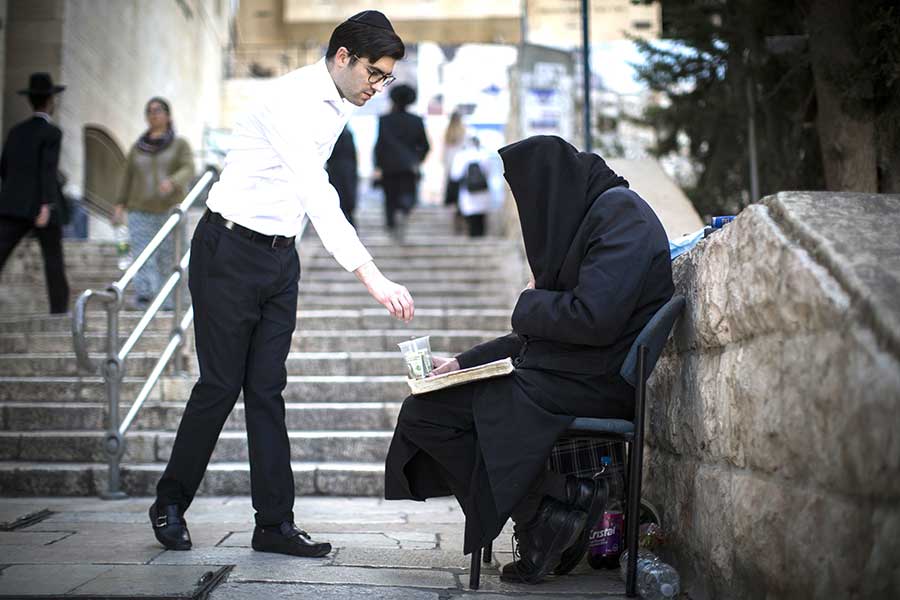
Charity is always voluntary. Tzedakah is compulsory. Therefore, tzedakah does not mean charity. The nearest English equivalent is social justice.
By Rabbi Lord Jonathan Sacks z"l
What Moses was saying to the new generation was this: You thought that the forty years of wandering in the wilderness were the real challenge, and that once you conquer and settle the land, your problems will be over.
By Rabbi Lord Jonathan Sacks z"l
To this day American politics is based on the biblical idea of covenant. American presidents almost always invoke this idea in their Inaugural Addresses in language that owes its cadences and concepts to the book of Devarim.
By Rabbi Lord Jonathan Sacks z"l
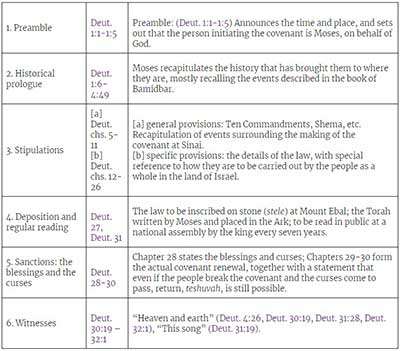
What is unique about the covenant in Judaism is, first, that one of the parties is G-d Himself. This would have been unintelligible to Israel’s neighbors, and remains extraordinary even today.
By Rabbi Lord Jonathan Sacks z"l
According to Maimonides, the death of the High Priest has nothing to do with guilt or atonement, but simply with the fact that it causes a collective grief so great that it causes people to forget their own misfortunes in the face of a larger national loss.
By Rabbi Lord Jonathan Sacks z"l
A leader who fails to work for change is not a leader. But a leader who attempts too much change in too short a time will fail.
By Rabbi Lord Jonathan Sacks z"l
These are important fights, good fights, whose outcome will affect more than Jews.
By Rabbi Lord Jonathan Sacks z"l
It is less reason than emotion that lies behind our choices, and it takes emotional intelligence to make good choices.
By Rabbi Lord Jonathan Sacks z"l
Leadership is a role. It is not an identity. It is not who we are. Therefore, a leader should never take an attack on their leadership personally.
By Rabbi Lord Jonathan Sacks z"l
People with the growth mindset react differently. They don't just seek challenge; they thrive on it. The bigger the challenge, the more they stretch.
By Rabbi Lord Jonathan Sacks z"l
Adaptive leadership is called for when the world is changing, circumstances are no longer what they were, and what once worked works no more.
By Rabbi Lord Jonathan Sacks z"l
Why does the Torah spend so much time describing an event that could have been stated far more briefly by naming the princes and then simply telling us generically that each brought a silver dish, a silver basin and so on?

By Rabbi Lord Jonathan Sacks z"l
The wilderness was not just a place; it was a state of being, a moment of solidarity, midway between enslavement in Egypt and the social inequalities that would later emerge in Israel.
By Rabbi Lord Jonathan Sacks z"l
The people may be faithless to G-d but G-d will never be faithless to the people.
By Rabbi Lord Jonathan Sacks z"l
The Torah commands us in only one place to love our neighbor, but thirty-six times to love the stranger.
By Rabbi Lord Jonathan Sacks z"l
According to the Torah, the first month of the year is Nissan. This was the day the earth became dry after the Flood (Gen. 8:13). It was the day the Israelites received their first command as a people (Ex. 12:2).
By Rabbi Lord Jonathan Sacks z"l
There are holy times and holy places, and each time and place has its own integrity, its own setting in the total scheme of things.
By Rabbi Lord Jonathan Sacks z"l
The disciples of Hillel hold that at a wedding you should sing that the bride is beautiful, whether she is or not.
By Rabbi Lord Jonathan Sacks z"l
The most compelling illustration of what the tradition is speaking about when it talks of the gravity of motsi shem ra, slander, and lashon hara, evil speech, is Shakespeare’s tragedy Othello.
By Rabbi Lord Jonathan Sacks z"l
Why then was spontaneity wrong for Nadav and Avihu yet right for Moshe Rabbeinu? The answer is that Nadav and Avihu were Kohanim, Priests. Moses was a Navi, a Prophet.
By Rabbi Lord Jonathan Sacks z"l
Jews did not abandon the past. We still refer constantly to the sacrifices in our prayers. But they did not cling to the past. Nor did they take refuge in irrationality.

By Rabbi Lord Jonathan Sacks z"l
Regardless of guilt and responsibility, if we commit a sin we have transgressed a boundary.

By Rabbi Lord Jonathan Sacks z"l
Aaron, according to the most favored explanation, realized that he could not stop the people directly by refusing their request, so he adopted a stalling maneuver.
By Rabbi Lord Jonathan Sacks z"l
Art in Hebrew – omanut – has a semantic connection with emunah, faith or faithfulness. A true artist is faithful both to his materials and to the task...
By Rabbi Lord Jonathan Sacks z"l
Moses’s motto was: Let the law pierce the mountain. Aaron, however, loved peace and pursued peace and made peace between man and man.
By Rabbi Lord Jonathan Sacks z"l
All human authority needs checks and balances if it is to remain uncorrupted. In particular, political and religious leadership, keter malchut and keter kehunah, should never be combined.
By Rabbi Lord Jonathan Sacks z"l
It is not what G-d does for us that transforms us, but what we do for G-d.
By Rabbi Lord Jonathan Sacks z"l
If G-d does not want slavery, if He regards it as an affront to the human condition, why did He not abolish it immediately?
By Rabbi Lord Jonathan Sacks z"l
Admittedly, the Talmud questions how free the Israelites actually were, and it uses an astonishing image.
By Rabbi Lord Jonathan Sacks z"l
In Bereishit Rabbah, it is indicated that the division of the sea was, as it were, programmed into Creation from the outset. It was less a suspension of nature than an event written into nature from the beginning, to be triggered at the appropriate moment in the unfolding of history.
By Rabbi Lord Jonathan Sacks z"l
That is the context in which we should read the story of Pharaoh and his advisers. This is one of the first recorded instances of the march of folly. How does it happen?
By Rabbi Lord Jonathan Sacks z"l
The aspect of G-d that appears in the days of Moses and the Israelites is radically different, and it’s only because we are so used to the story that we find it hard to see how radical it was.
By Rabbi Lord Jonathan Sacks z"l
Korach’s motives were wrong. He spoke like a democrat but what he wanted was to be an autocrat. He wanted to be a leader himself.
By Rabbi Lord Jonathan Sacks z"l
Between parents and children, he said, there are often tensions. Parents worry about their children. Children sometimes rebel against their parents. The relationship is not always smooth. Not so with grandchildren.
By Rabbi Lord Jonathan Sacks z"l
In Judaism kadosh, holy, means separation. To sanctify is to separate. Why? Because when we separate, we create order. We defeat chaos. We give everything and everyone their space.
By Rabbi Lord Jonathan Sacks z"l
Joseph has the misfortune of being the youngest. He symbolizes the Jewish condition. His brothers are older and stronger than he is. They resent his presence. They see him as a trouble maker. The fact that their father loves him only makes them angrier and more resentful.
By Rabbi Lord Jonathan Sacks z"l
In the end Joseph and his brothers had to live through real trauma before they were able to recognize one another’s humanity, and much of the rest of their story – the longest single narrative in the Torah – is about just that.
By Rabbi Lord Jonathan Sacks z"l
It is one thing to commit a crime, another to witness someone committing a crime and failing to prevent it. We might hold a bystander guilty, but not in the same degree.
By Rabbi Lord Jonathan Sacks z"l
What Jacob shows, by his sheer quick-wittedness, is that the strength of the strong can also be their weakness.
By Rabbi Lord Jonathan Sacks z"l
Isaac loved Esau because he simply did not know who or what Esau was. But there is another possible answer: that Isaac loved Esau precisely because he did know what Esau was.
By Rabbi Lord Jonathan Sacks z"l
The Jewish people mourned and wept, and then rose up and built the future. This is their unique strength and it came from Abraham, as we see in this week’s parsha.
By Rabbi Lord Jonathan Sacks z"l
It is this principle that underlies the entire practice of child sacrifice, which was widespread throughout the pagan world. The Torah is horrified by child sacrifice, which it sees as the worst of all sins.
By Rabbi Lord Jonathan Sacks z"l
What then does the Torah say about Abraham? The answer is unexpected and very moving. Abraham was chosen simply to be a father.
By Rabbi Lord Jonathan Sacks z"l
Laws shape a society, and a society needs space. A sacred society needs sacred space, a holy land. Hence Jews and Judaism need their own land.
By Rabbi Lord Jonathan Sacks z"l
The Sukkah represents the singular character of Jewish history, the experience of exile and homecoming, the long journey across the wilderness of time.
By Rabbi Lord Jonathan Sacks z"l
As music connects note to note, so faith connects episode to episode, life to life, age to age in a timeless melody that breaks into time.
By Rabbi Lord Jonathan Sacks z"l
Judaism turns life into a work of art. It consecrates the love between husbands and wives, and parents and children. It sanctifies our most physical acts, through the laws of kashrut and family purity.
By Rabbi Lord Jonathan Sacks z"l
The only way to stay young, hungry, and driven is through periodic renewal, reminding ourselves of where we came from, where we are going, and why.
By Rabbi Lord Jonathan Sacks z"l
The answer to the question, Who am I? is not simply a matter of where I was born, where I spent my childhood or my adult life or of which country I am a citizen.
By Rabbi Lord Jonathan Sacks z"l
Love is central to Judaism: not just love between husband and wife, parent and child, but also love for G-d, for neighbor and stranger.
By Rabbi Lord Jonathan Sacks z"l
It taught me that humility is not thinking you are small. It is thinking that other people have greatness within them.
By Rabbi Lord Jonathan Sacks z"l
In Judaism, faith is not a rival to science, an attempt to explain the universe. It’s a sense of wonder, born in a feeling of gratitude.
By Rabbi Lord Jonathan Sacks z"l
It is through the word – speaking and listening – that we can have an intimate relationship with G-d as our parent, our partner, our sovereign, the One who loves us and whom we love.
By Rabbi Lord Jonathan Sacks z"l
If you want to change the world, start with why.
By Rabbi Lord Jonathan Sacks z"l
Only in Israel was G-d seen not just as a power but as the architect of society, the orchestrator of its music of justice and mercy, liberty and dignity.
By Rabbi Lord Jonathan Sacks z"l
Age brings the reflection and detachment that allows us to stand back and not be swept along by the mood of the moment or passing fashion or the madness of the crowd.
By Rabbi Lord Jonathan Sacks z"l
We should be free to live as we choose, worship as we choose, and identify as we choose.
By Rabbi Lord Jonathan Sacks z"l
We are each, to some extent, who we chose to become. Neither genes nor upbringing can guarantee that we become the person our parents want us to be.
By Rabbi Lord Jonathan Sacks z"l
Moses at the rock was not so much a prophet as a man who had just lost his sister.
By Rabbi Lord Jonathan Sacks z"l
Where there is hierarchy, there will be competition as to who is the alpha male.
By Rabbi Lord Jonathan Sacks z"l
G-d wanted the Israelites to create a model society where human beings were not treated as slaves, where rulers were not worshipped as demigods, where human dignity was respected…
By Rabbi Lord Jonathan Sacks z"l
The spies feared success, not failure. It was the mistake of deeply religious men. But it was a mistake.
By Rabbi Lord Jonathan Sacks z"l
To be a Jew is to seek to make a difference, to change lives for the better, to heal some of the scars of our fractured world. But people don’t like change.
 October 23, 2026