יום שלישי, ט״ז חשוון תשפ״זTuesday, October 27, 2026



Follow Us


By Rabbi Lord Jonathan Sacks z"l
We do not need to prove ourselves in order to receive a blessing from G-d. All we need to know is that His face is turned toward us.
By Rabbi Lord Jonathan Sacks z"l
The service of the Priests in the Temple was accompanied by silence. The Levites sang in the courtyard, but the Priests – unlike their counterparts in other ancient religions – neither sang nor spoke while offering the sacrifices.
By Rabbi Lord Jonathan Sacks z"l
Where families are strong, a sense of altruism exists that can be extended outward, from family to friends to neighbors to community and from there to the nation as a whole.
By Rabbi Lord Jonathan Sacks z"l
The account in Deuteronomy is about society. Moses at the end of his life told the next generation where they had come from, where they were going to, and the kind of society they were to construct.
By Rabbi Lord Jonathan Sacks z"l
Moses’ intercession with G-d did not, in and of itself, induce a penitential mood among the people. Yes, he performed a series of dramatic acts to demonstrate to the people their guilt. But we have no evidence that they internalized it.
By Rabbi Lord Jonathan Sacks z"l
What was the connection between the internal Jewish struggle and the Christian burning of Jewish books?
By Rabbi Lord Jonathan Sacks z"l
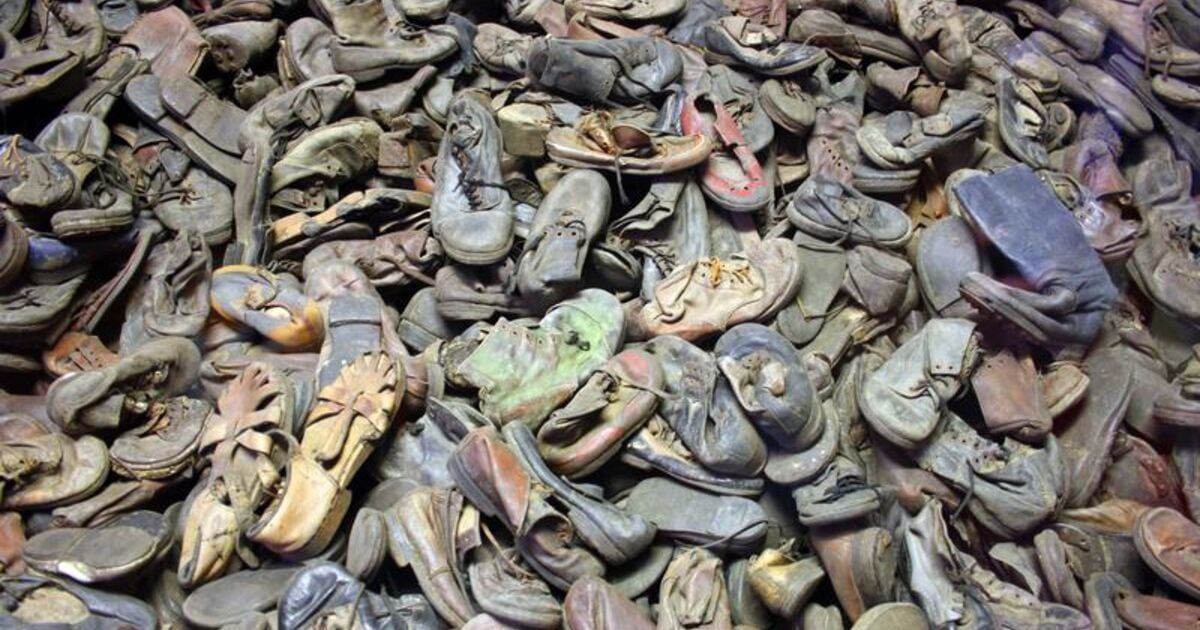
Reflections from Rabbi Sacks’ following his first visit to Auschwitz in 1995
By Rabbi Lord Jonathan Sacks z"l
In Judaism, to be without questions is a sign not of faith, but of lack of depth.
By Rabbi Lord Jonathan Sacks z"l
To love is to thank. To love is to want to bring an offering to the Beloved. To love is to give. Sacrifice is the choreography of love.
By Rabbi Lord Jonathan Sacks z"l
For each of us G-d has a task: work to perform, a kindness to show, a gift to give, love to share, loneliness to ease, pain to heal, or broken lives to help mend.
By Rabbi Lord Jonathan Sacks z"l
Regular attendance at a house of worship is the most accurate predictor of altruism, more so than any other factor, including gender, education, income, race, region, marital status, ideology, and age.
By Rabbi Lord Jonathan Sacks z"l
We cannot see G-d’s face; we cannot understand G-d’s ways; but we can encounter G-d’s glory whenever we build a home for His presence here on earth.
By Rabbi Lord Jonathan Sacks z"l
These were all innovators, pioneers, ground-breakers, trail-blazers, who formulated new ideas, originated new forms of expression, did things no one had done before in quite that way. They broke the mold. They changed the landscape. They ventured into the unknown. Yet their daily lives were the opposite: ritualized and routine.
By Rabbi Lord Jonathan Sacks z"l
So long as Moses was in their midst, the people knew that he communicated with G-d, and G-d with him, and therefore G-d was accessible, close. But when he was absent for nearly six weeks, they panicked.
By Rabbi Lord Jonathan Sacks z"l
The only way to understand leadership is to lead. The only way to understand marriage is to get married. The only way to understand whether a certain career path is right for you is to actually try it for an extended period.
By Rabbi Lord Jonathan Sacks z"l
Envy, covetousness, desiring what someone else has, is an emotion, not a thought, a word, or a deed. And surely we can’t help our emotions.
By Rabbi Lord Jonathan Sacks z"l
What Shabbat gave – and still gives – is the unique opportunity to create space within our lives, and within society as a whole, in which we are truly free.
By Rabbi Lord Jonathan Sacks z"l
Jews became famous throughout the ages for putting education first. Where others built castles and palaces, Jews built schools and houses of study.
By Rabbi Lord Jonathan Sacks z"l
The well-being of the soul is something inward and spiritual, but the well-being of the body requires a strong society and economy, where there is the rule of law, division of labor, and the promotion of trade.
By Rabbi Lord Jonathan Sacks z"l
Where did it come from, this Jewish ability to turn weakness into strength, adversity into advantage, darkness into light?
By Rabbi Lord Jonathan Sacks z"l
We make the future by our choices. The script has not yet been written. The future is radically open.
By Rabbi Lord Jonathan Sacks z"l
If we change the way we think, we will change the way we feel.
By Rabbi Lord Jonathan Sacks z"l
To understand the power of this anti-climax, we must remember that only since the invention of printing and the availability of books have we been able to tell what happens next merely by turning a page.
By Rabbi Lord Jonathan Sacks z"l
We can make a difference, and it is potentially immense. That should be our mindset, always.
By Rabbi Lord Jonathan Sacks z"l
According to Rashbam, despite G-d’s assurances, Jacob was still afraid of encountering Esau. His courage failed him and he was trying to run away. G-d sent an angel to stop him from doing so.
By Rabbi Lord Jonathan Sacks z"l
We find G-d not only in holy or familiar places but also in the midst of a journey, alone at night.
By Rabbi Lord Jonathan Sacks z"l
Isaac surely knew that his elder son was a man of mercurial temperament who lived in the emotions of the moment.
By Rabbi Lord Jonathan Sacks z"l
How did Abraham overcome the trauma and the grief? How do you survive almost losing your child and actually losing your life-partner, and still have the energy to keep going? What gave Abraham his resilience, his ability to survive, his spirit intact?
By Rabbi Lord Jonathan Sacks z"l
It is the space we create for one another that allows love to be like sunlight to a flower
By Rabbi Lord Jonathan Sacks z"l
We are too young to venture into the world on our own. It is precisely the stable, predictable presence of parents in our early years that gives us a basic sense of trust in life.
By Rabbi Lord Jonathan Sacks z"l
Faith is the courage to take a risk for the sake of God or the Jewish people
By Rabbi Lord Jonathan Sacks z"l
...we can now understand the story of the first sin: It is all about appearances, shame, vision, and the eye.

By Rabbi Lord Jonathan Sacks z"l
Simchat Torah was born when Jews had lost everything else, but they never lost their capacity to rejoice.
By Rabbi Lord Jonathan Sacks z"l
Speaking of the three pilgrimage festivals – Pesach, Shavuot and Sukkot – Deuteronomy speaks of “joy.” But it does not do so equally.

By Rabbi Lord Jonathan Sacks z"l
What have you achieved this past year with the help of God, and what would you like to achieve with His help next year?

By Rabbi Lord Jonathan Sacks z"l
How does Yom Kippur help us focus on the future and on making a change?
By Rabbi Lord Jonathan Sacks z"l
The decisive points of the narrative alone are emphasized, what lies between is non-existent; time and place are undefined and call for interpretation...
By Rabbi Lord Jonathan Sacks z"l
Choose life. No religion, no civilization, has insisted so strenuously and consistently that we can choose.
By Rabbi Lord Jonathan Sacks z"l
When we focus on the moment, allowing ourselves to dance, sing, and give thanks, when we do things for their own sake not for any other reward, when we let go of our separateness and become a voice in the holy city's choir, then there is joy.
By Rabbi Lord Jonathan Sacks z"l
What is at stake is the deep understanding of the scope of responsibility we bear if we take seriously our roles as parents, neighbors, townspeople, citizens and children of the covenant.
By Rabbi Lord Jonathan Sacks z"l
The Torah is concerned with what we would nowadays call ‘sustainability.’
By Rabbi Lord Jonathan Sacks z"l
Tocqueville believed that democracy encouraged individualism. As a result, people would leave the business of the common good entirely to the government, which would become ever more powerful, eventually threatening freedom itself.
By Rabbi Lord Jonathan Sacks z"l
The more positive emotions – such as contentment, gratitude, happiness, love and hope – they expressed in their autobiographical notes, the more likely they were to be alive and well 60 years later.
By Rabbi Lord Jonathan Sacks z"l
There are important features of the moral life that are not universal but have to do with specific circumstances and the way we respond to them.
By Rabbi Lord Jonathan Sacks z"l
Throughout the Tanach some of the most intense encounters between the prophets and G-d are represented as courtroom dramas.
By Rabbi Lord Jonathan Sacks z"l
All social institutions in a free society depend on trust, and trust means honoring our promises, doing what we say we will do.
By Rabbi Lord Jonathan Sacks z"l
Maimonides insists that it is not so. “It is not right to alienate, scorn and hate people who desecrate the Sabbath,” he said. “It is our duty to befriend them and encourage them to fulfill the commandments.”
By Rabbi Lord Jonathan Sacks z"l
It means a people prepared to stand alone if need be, living by its own moral code, having the courage to be different and to take the road less traveled.
By Rabbi Lord Jonathan Sacks z"l
What is dangerous about anger is that it causes us to lose control.
By Rabbi Lord Jonathan Sacks z"l
That Moses needed to resort to force was itself a sign that he had been dragged down to the level of the rebels. That is what happens when power, not truth, is at stake.
By Rabbi Lord Jonathan Sacks z"l
Part of what makes religion a force for honest and altruistic behavior is the belief that G-d sees what we do.
By Rabbi Lord Jonathan Sacks z"l
True humility means silencing the “I.” For genuinely humble people, it is G-d and other people and principle that matter, not me.
By Rabbi Lord Jonathan Sacks z"l
Judaism strongly believes that G-d is to be found in the midst of the physical world that He created that is, in the first chapter of Genesis, seven times pronounced “good.” It believes not in renouncing pleasure but in sanctifying it.
By Rabbi Lord Jonathan Sacks z"l
Because the law came before the land, even when Jews lost the land they still had the law. This meant that even in exile, Jews were still a nation.
By Rabbi Lord Jonathan Sacks z"l
Only one other nation in history has consistently seen its fate in similar terms, namely the United States. The influence of the Hebrew Bible on American history – carried by the Pilgrim Fathers and reiterated in presidential rhetoric ever since – was decisive.
By Rabbi Lord Jonathan Sacks z"l
What makes Judaism distinctive is its commitment to both freedom and equality, while at the same time recognizing the tension between them.
By Rabbi Lord Jonathan Sacks z"l
Having chosen to identify His Name with the people of Israel, G-d is, as it were, caught between the demands of justice on the one hand, and public perception on the other.
By Rabbi Lord Jonathan Sacks z"l
Expiation demands a ritual. Yet Maimonides does not explain why Yom Kippur demanded a rite not used on other days when sin or guilt offerings were brought.
By Rabbi Lord Jonathan Sacks z"l
Our best defence is not abstract principle but specific memory
By Rabbi Lord Jonathan Sacks z"l
It is one of the most counterintuitive acts in the history of leadership. Moshe did not speak about today or tomorrow. He spoke about the distant future and the duty of parents to educate their children.
By Rabbi Lord Jonathan Sacks z"l
According to the Sages’ interpretation, the law of tzara’at constitutes one of the rare instances in the Torah of punishment by shame rather than guilt.
By Rabbi Lord Jonathan Sacks z"l
Lena told the families with whom she was working that every day they must notice each member of the family doing something right, and say so – specifically, positively and thankfully.
By Rabbi Lord Jonathan Sacks z"l
The most fundamental mistake – the mistake of Nadav and Avihu – is to take the powers that belong to man’s encounter with the world and apply them to man’s encounter with the Divine.
By Rabbi Lord Jonathan Sacks z"l
Had G-d not told the first humans: ‘Rule over the fish of the sea and the birds of the air and over every living creature that moves in the ground’? That is why Abel brought an animal sacrifice.
By Rabbi Lord Jonathan Sacks z"l
The key element is not so much giving something up (the usual meaning of sacrifice), but rather bringing something close to G-d.
By Rabbi Lord Jonathan Sacks z"l
It is the mark of a good society that public leadership is seen as a form of service rather than a means to power.
By Rabbi Lord Jonathan Sacks z"l
How do you restore moral order – not just then in the days of Moses, but even now? The answer lies in the first word of today’s parsha: Vayakhel.
By Rabbi Lord Jonathan Sacks z"l
This is a totally counterintuitive truth: The more we believe that G-d punishes the guilty, the more forgiving we become; the less we believe that G-d punishes the guilty, the more resentful and punitive we become.
By Rabbi Lord Jonathan Sacks z"l
This week’s Torah portion marks the first time we encounter the idea of a hereditary elite within the Jewish people
By Rabbi Lord Jonathan Sacks z"l
That is why a society based on rights NOT responsibilities, on what we claim from, not what we give to others, will always eventually go wrong.
By Rabbi Lord Jonathan Sacks z"l
As the realization that he was a Jew began to change his life, it also transformed his understanding of the world.
By Rabbi Lord Jonathan Sacks z"l
The first three commands establish the single most important principle of a free society, namely the moral limits of power.
By Rabbi Lord Jonathan Sacks z"l
While it is true that the enemy always hates us for a reason, it is his reason, not ours.
By Rabbi Lord Jonathan Sacks z"l
In Judaism, the stories are not engraved in stone on memorials…. They are told at home, around the table, from parents to children as the gift of the past to the future.
By Rabbi Lord Jonathan Sacks z"l
Freedom in the deepest sense, the freedom to do the right and the good, is not a given. We acquire it, or lose it, gradually.
By Rabbi Lord Jonathan Sacks z"l
This is the first recorded instance in history of civil disobedience – refusing to obey an order, given by the most powerful man in the most powerful empire of the ancient world, simply because it was immoral.
By Rabbi Lord Jonathan Sacks z"l
Forgiveness does not appear in every culture. It is not a human universal, nor is it a biological imperative.
By Rabbi Lord Jonathan Sacks z"l
In order to choose between right and wrong, between good and bad – in order to live the moral life – we must make sure not only to look, but also to listen.
By Rabbi Lord Jonathan Sacks z"l
We became the people whose heroes were teachers, whose citadels were schools, and whose passion was learning and the life of the mind. The end result was that Judaism did survive and thrive throughout the centuries, whereas Ancient Greece … declined.
By Rabbi Lord Jonathan Sacks z"l
This moment is a turning-point in history: Judah is the first person in the Torah explicitly to admit he was wrong
By Rabbi Lord Jonathan Sacks z"l
Who was in the right and who in the wrong are left conspicuously undecided in the text.
By Rabbi Lord Jonathan Sacks z"l
Albert Einstein said it was the ‘almost fanatical love of justice’ that made him thank his lucky stars that he was born a Jew.
By Rabbi Lord Jonathan Sacks z"l
Isaac fully understood the nature of his two sons. He loved Esau but this did not blind him to the fact that Jacob would be the heir of the covenant.
By Rabbi Lord Jonathan Sacks z"l
Providing shelter for the homeless, food for the hungry, assistance to the poor; visiting the sick, comforting mourners and providing a dignified burial for all became constitutive of Jewish life.
By Rabbi Lord Jonathan Sacks z"l
The test was not whether Abraham would sacrifice his son but whether he would give him over to G-d.
By Rabbi Lord Jonathan Sacks z"l
The word “Torah” means “teaching” or “instruction,” and it is difficult to teach ethics through stories whose characters are fraught with complexity and ambiguity.
By Rabbi Lord Jonathan Sacks z"l
If you are prepared to learn something new, you can be 103 and still young. If you are not prepared to learn something new, you can be 23 and already old.
By Rabbi Lord Jonathan Sacks z"l
It is almost as if Sukkot were two festivals, not one. It is. Although all the festivals are listed together, they in fact represent two quite different cycles.
By Rabbi Lord Jonathan Sacks z"l
It is that power of hope, born whenever G-d’s love and forgiveness gives rise to human freedom and responsibility, that has made Judaism the moral force it has always been.
By Rabbi Lord Jonathan Sacks z"l
We are a hyper-verbal people. We talk, we argue, we pontificate, we deliver witty repartee and clever put-downs. Jews may not always be great listeners but we are among the world’s great talkers.
By Rabbi Lord Jonathan Sacks z"l
Our faith – Moses is telling us – is not like that of the Egyptians, the Greeks, the Romans, or virtually every other civilization known to history.
By Rabbi Lord Jonathan Sacks z"l
Gardner’s argument is that what makes a leader is the ability to tell a particular kind of story – one that explains ourselves to ourselves and gives power and resonance to a collective vision.
By Rabbi Lord Jonathan Sacks z"l
The Egyptians enslaved the Israelites, planned a program against them of slow genocide, and then refused to let them go despite the plagues that were devastating the land. Are these reasons not to hate?
By Rabbi Lord Jonathan Sacks z"l
Maimonides holds that the appointment of a king is an obligation, Ibn Ezra that it is a permission, Abarbanel that it is a concession, and Rabbenu Bachya that it is a punishment.
By Rabbi Lord Jonathan Sacks z"l
Do not think that we can survive as a nation among nations, worshiping what they worship and living as they live. If we do, we will be subject to the universal law that has governed the fate of nations from the dawn of civilization to today.
By Rabbi Lord Jonathan Sacks z"l
The tension between the counselors and the rabbis grew almost to the point of crisis, so much so that we had to stop the course for an hour while we sought some way of reconciling what the counselors were doing with Torah.
By Rabbi Lord Jonathan Sacks z"l
What happened to all the promises of Bereishit, that Abraham’s children would be numerous, uncountable, as many as the stars of the sky, the dust of the earth, and the grains of sand on a seashore?
By Rabbi Lord Jonathan Sacks z"l
Other nations, says Moses, will recognize the miraculous nature of the Jewish story.
By Rabbi Lord Jonathan Sacks z"l
Moses succeeds not because he is weak, not because he is willing to compromise on the integrity of the nation as a whole, not because he uses honeyed words and diplomatic evasions, but because he is honest, principled, and focused on the common good.
By Rabbi Lord Jonathan Sacks z"l
This means: a leader must lead from the front, but he or she must not be so far out in front that when they turn around, they find that no one is following.
 October 23, 2026