 November 6, 2026
Categories: Torah
How Was the Me’aras HaMachpelah Discovered?
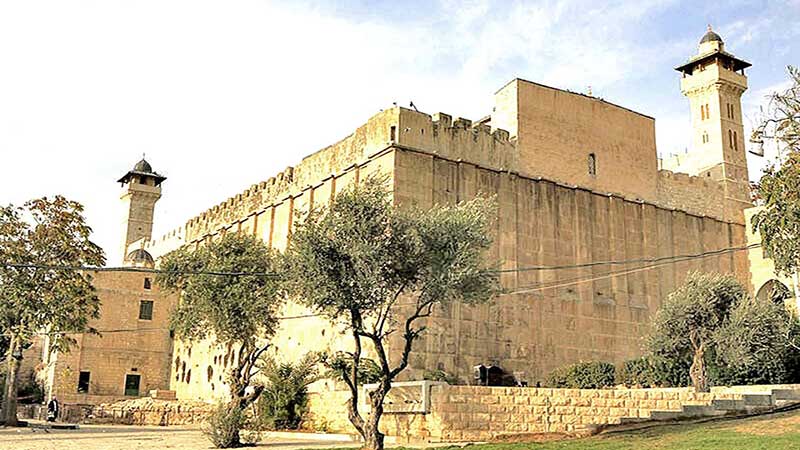


Our parsha talks about Avraham Avinu’s purchase of the Me’aras HaMachpelah, the holy place where he and Sarah would be buried. It is also the burial site of Adam and Chava, Yitzchak and Rivkah, and Yaakov and Leah. But how did Avraham Avinu find this holy place?
The Sefer Kushios (#369), written by one of the Rishonim, relates that at the Akeidas Yitzchak, when Avraham went to take the ayil, the ram that was caught in the thicket to slaughter it instead of Yitzchak, the Satan released it. Avraham had to chase it and only caught up to it at the Me’aras HaMachpelah. Once there, he smelled its ethereal scent and recognized its fantastic worth. He also saw two places already occupied, with torches above them, and he knew this would be his future burial site.
The timing of this was perfect because, upon his return after the Akeidah, he found out that Sarah had succumbed when she was told about the Akeidah by Satan. It’s possible that the word ayil, spelled alef, yud and lammed, hints to the three couples who would yet be buried in the Me’aras HaMachpelah, namely Avraham, Yitzchak, and Leah. It doesn’t name Yaakov, because then we would think it could indicate Yaakov and Rachel. Thus, it mentions Leah so that we know the couple is Yaakov and Leah.
The Sefer Masok m’Dvash cites another way that Avraham discovered the Me’aras HaMachpelah. In the Zohar (Chayei Sarah, 127), it says that when Avraham prayed, he went out in the field for meditation and was drawn by a magnificent smell (remember that “scent is the enjoyment of the soul”) and a radiant light toward the Me’aras HaMachpelah. Incidentally, the etymology of the word me’aras, cave, is appropriate for a burial site of the righteous, for its letters mem, ayin, reish, and sof make up the two words meis (mem and sof) and eir (ayin and reish), to die and awaken, for that’s what happens to the righteous: they pass away and wake up instantly in the next world.
Yet the most popular explanation of how Avraham Avinu discovered the Me’aras HaMachpelah is what’s stated in Pirkei d’Reb Eliezer (chapter 35). There, it refers to when Avraham prepared the cattle to give to the three angels. The cattle ran away, and he chased it all the way to the Me’aras HaMachpelah. It was then that he discovered its beauty and secrets. Both the Panei’ach Raza and Ba’al HaTurim say this is hinted to in the words, “V’el habakar ratz – And he [Avraham] ran to the cattle.” The words v’el habakar (vav, alef, lammed, and hei, beis, kuf, and reish) are the same letters as v’el hakever, meaning, “[Avraham ran] to the grave.”
This immediately begs the question. Why would Hashem choose that particular day when He caused a blazing sun to be out, when Avraham was already busy with angelic guests, and when he had already broken off the visit by the Shechina Itself? This was the day Hashem chose to show Avraham his future burial site? At the time, Sarah was 90. She wouldn’t need a burial site for another 37 years. Why couldn’t Hashem choose a quiet Sunday afternoon, with nothing else going on, to show Avraham Avinu the Me’aras HaMachpelah? I think that the most obvious answer is to point out the middah k’neged middah, measure for measure. Avraham was then on the third day after his surgery, and this was the exact day he did a superhuman act of hospitality! He told the Arab-like angels, “V’hi’sha’anu tachas ha’eitz – Take rest under my tree.” For this, Avraham was shown his future resting place. It also could be that only once he was circumcised was he worthy to have admittance into the Me’aras HaMachpelah. Adam HaRishon was born circumcised, and Eisav, who was uncircumcised, only got his head into the Me’aras HaMachpelah.
It is fascinating to note that the Yalkut Reuveini cites the Sefer HaTemunah: After all the couples were buried in the Me’aras HaMachpelah, angels brought Moshe and Tziporah to bury them there as well. When it says, “V’lo yada ish es k’vuraso – And no man knew his [Moshe’s] gravesite,” this implies that angels did know! The Chida, zt”l, zy”a, says there’s a hint to this, because the first letters of me’aras s’dei HaMachpelah (the cave of the field of Machpeleh) are mem, shin, and hei, which spell Moshe. The Mizimras Ha’Aretz reveals further that the same words, me’aras s’dei HaMachpelah, equal 410 in gematria, the exact gematria as “Zu hi Tziporah – This includes Tziporah.”
The Chida also deflects the question, “Wasn’t the city called Kiryas Arba because there were four couples?” But according to this, there were five couples? He answers that there were four couples buried there from the get-go, and Moshe and Tziporah were added only later.
This gives us more holy thoughts to think about when we are zoche to visit the holy site of the Me’aras HaMachpelah. In the merit of these great tzaddikim, may Hashem bless us with long life, good health, and everything wonderful.
Transcribed and edited by Shelley Zeitlin.