October 2, 2026
 Categories: Perspectives / Op-Eds
A Jewish Pivot to the Eastern Part of the World?
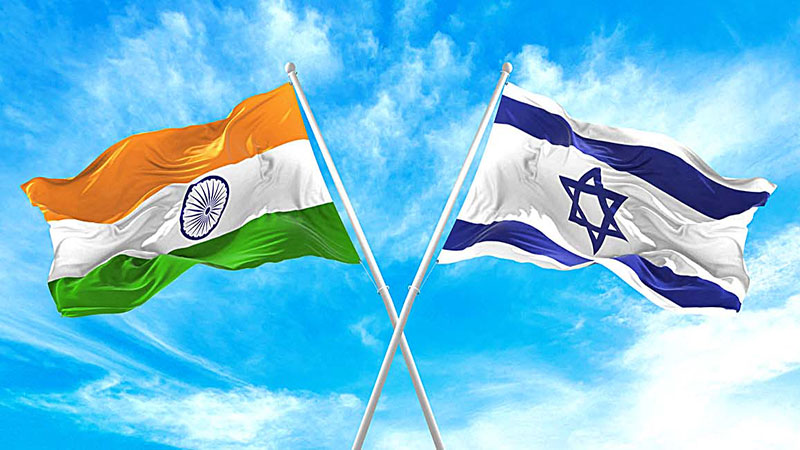


Since the dawn of Jewish history, Jews have almost exclusively settled in the Western part of the world, around the Atlantic Ocean and Mediterranean Sea, specifically in Africa, the Middle East, Europe, and more recently America. Jews make up a minuscule percentage of the world's population, 17 million people, or 0.2% of the total population of 8.3 billion. Despite this, major elements of their culture, ethics, laws, and religion form the basis of most of the countries in the Western half of the globe. Although they have traded and engaged in commerce with Eastern countries, they have not permanently settled there.
Unfortunately, along with their outsized societal influence over the last three millennia, they have also been the object of unending persecution, segregation, discrimination, expulsion, inquisition, and pogroms by the Romans, Greeks, Crusaders, Cossacks, Christians, and Muslims, culminating in the Holocaust. Jew-hatred in the Western countries has waxed and waned over the centuries, but all good times – and there have been many golden periods – eventually turned bitter, giving way to persecution.
There is no history of a parallel sustained, perennial, Jew-hatred in the Eastern world.
That brings us to today. After October 7 there has been the latest explosion in the long series of anti-Jewish, anti-Israel hatred around the world. Again, this is almost exclusively in the Western world where 85% of Jews live in two countries, America and Israel.
America had been looked on by Jews as a "goldene medina," but that sentiment is now wavering. Starting in 2012, President Barack Hussein Obama vowed to "fundamentally transform America" and also "put daylight between the United States and Israel." He succeeded in starting these initiatives, and they are continuing to gain momentum. Today Jew-hatred and Israel-hatred are openly expressed in American streets, government, media, entertainment industry, and academia. Polls show more young people now support "Palestine" than Israel. And the Democratic Party, which represents roughly half of the American populace, is being taken over by the far-left, radical, antisemitic, anti-Israel wing.
Israel is one of the tiniest countries in the world, and although it packs a punch far above its weight in military and technical power, it cannot absorb massive military assaults like those in the Yom Kippur War, or counteract Iran's nuclear and long-range missile threats all by itself. Since its independence, Israel has relied on America as its patron, supporter, and major arms supplier, to help weather multiple wars and terror attacks. And events following October 7 reinforce the view that to counter Iran's nuclear and missile threat, Israel must rely heavily on outside support. And American support for Israel had always been unquestioned, especially under President Trump, but that is also wavering now. And while Israel currently has some friendly or neutral nations in the Middle East, these relationships can also be fragile and fleeting, depending on circumstances. That's why an alliance with a major patron is crucial for its survival.
The question of whether this post-October 7 period is just one more low point in anti-Jewish hatred to be followed by another surge in Jewish prosperity, or whether it is another long period of decline in Jewish fortunes in the West remains to be seen. However, it is always prudent to hope for the best yet prepare for the worst.
With this in mind, it is instructive to explore the possibility of Jews finally migrating to the vast Eastern part of the world which does not have the long history of hatred and persecution.
In Asia-Pacific & Oceania, Israel is recognized by 42 UN members, including Australia, India, Japan, South Korea, New Zealand, The Philippines, Singapore, Thailand, and Vietnam, and Israel is on friendly terms with many of them.
India is a particularly attractive case. For over 30 years, and completely under the radar, India has been a good friend of Israel. As reported in The Jewish Press, July 4, 2017, Modi made his first visit to Israel in 2017. Then Netanyahu visited India on January 22, 2018. Modi had two phone conferences with Netanyahu in 2023, and Modi also visited Israel again this past February. These exchanges covered mutual technical and economic agendas. Netanyahu and Modi are on very friendly, personal terms, and their visits with each other emphasize and cement their long-standing friendship.
Also, extremely important in a geopolitical context is the fact that, in contrast to Israel's currently friendly Mideast neighbors who are small and not military or technical giants, India is the most populous country in the world, has the sixth largest economy in the world, and has the fourth largest military, trailing only the United States, Russia, and China. India's geographic location is also an important factor. It is located in the southern Pacific Ocean, which for the Western world means it counterbalances China's domination of the northern Pacific region.
In short, India is now a world class power, and it is an enormous asset for Jews and Israel to have India as a friend and ally. It was with much satisfaction to hear PM Modi as he graciously concluded his recent speech to the Knesset with his stirring words: "Am Yisrael Chai." In essence the Israel-India friendship may be low key but can become enormously significant.
To conclude, the Jewish people have had a long, rich, but often turbulent history in the areas they migrated to in the past, which have all been in the Western part of the world. There may be a whole new chapter awaiting them in the future in the Eastern part of the world.