יום שני, א׳ חשוון תשפ״זMonday, October 12, 2026



Follow Us


Read More

I believe many people are by nature kind, but they chronically lack awareness or mindfulness and hence are unkind, even cruel.

Angels can be actual humans, not in the sense that they are Hashem’s henchmen, but in their middah of extreme kindness; in going the extra mile in helping someone who is floundering physically and emotionally and financially.
As tiring and draining as it is to be in shul for so many hours on Rosh Hashanah, and to fast and daven for seemingly endless hours on Yom Kippur, it is a gift from Hashem to be able to petition Him in His Celestial Court.
I promised myself that I would be the bubby I never was blessed with if I was zoche to have grandchildren.
a problem many children of Holocaust survivors have to deal with – how to prove who you are, when the name on your birth certificate doesn’t match the name you grew up with after a legal name change.

I’m awakened by the loud chirping of birds, and my first thought is how lucky these birds are to have been hatched in this land of miracles, and their whistles and cooing and cawing is their hakarat haTov to Hashem their creator – songs of gratitude.

Karpas in my home was parsley, although celery was another option. (We did not use potatoes as karpas...)
Over the years, people have shared horrific stories of financial and verbal and emotional abuse from family members and friends, and I ask myself, how could these so called frum people sleep at night.
If the extremely wealthy are worried about the financial well-being of their descendants, how much more so should regular people be worried.
The dove was sent by Noah three times. It returned to the ark twice, portraying the middot of commitment and loyalty, both to Noah and its mate. It took its responsibilities to heart.
Kristallnacht, when Jewish-owned properties and synagogues in Germany were smashed and set on fire by frenzied mobs, will seem like a mild precursor to what Islamic fundamentalists are going to do to their soon-to-be minority neighbors.
Hashem was very clear about how you deal with Amalek, of which Hamas is a spiritual, if not physical descendant (which it likely is with Ishmael commingling with Amalek over the centuries).
As we saw in the recent Olympics relay races, the baton is passed forward and the passer steps away; so too when a man or woman marries, parents have to let go of their biological baton.
Ceaseless, persistent negative speech, lashon hara, can cripple, devastate, and destroy a person’s future and is the verbal equivalent of a barrage of missiles that demolishes a building.
It felt so right to be where I was. I was HOME with my family. Come what may, this is where I was supposed to be. And I fully embraced this belief.
In memory of of the Chayalim of the IDF whose lives were prematurely snuffed out when they still had so much living to do.
With these real life happenings in mind, I want to suggest that people consider an unusual arrangement that is a win-win for all potential participants as a solution to a complex and emotionally difficult situation.
Over 50 years later, men pile out of the sanctuary as the rabbi begins his drasha to partake in the kiddush club, where they enthusiastically indulge in several bottles of whiskey, scotch and other alcoholic beverages.
While a woman might be initially flattered that her spouse has so much confidence in her and tells her to go ahead and make the decisions, it can backfire.
Chances are that the members of the band think they are impressing their audience with their talent by equating ear-splitting with cool. In a misguided attempt to win over fans and potential bookings, they blast their music. But their reasoning is totally off.
Ironically, many people, especially men become put together after marriage, when they are under the loving guidance of their wives who ensure that e.g. missing buttons are sown or stained shirts are dry cleaned and pressed, and fingernails trimmed and clean.
The State of Israel exists, despite 75 years of being surrounded by countries determined to annihilate it, because of brave individuals who risked their lives in order to obtain crucial information by being spies.
Sadly, those who should be supportive and encouraging may be pessimistic by nature or have their own agenda for not wanting the individual to succeed.
I am well aware that if both spouses had the ability to compromise, capitulate and cooperate in order to emerge with an acceptable division of what is mutually theirs, they most likely wouldn’t be divorcing in the first place.
Kids, and of course adults, have an ingrained need to be validated; to have the ups and downs in their life acknowledged.
Why consider yourself as being less? Aren’t you also made b’tzelem Elokim – in Hashem's image – and aren’t you worthy of help – from yourself?
It's extremely daunting and time consuming to basically put two strangers together and be a frequent go-between, negotiator, and adviser, but when it happens, and eventually children are born, you become a partner with Hashem in creating worlds.
Over the years, I have been asked how I get ideas for my articles – often from conversations with random strangers! That’s actually how I was discovered way back in 1985!
I have an accomplished friend who is careful to maintain a healthy weight and works out several times a week – yet she cannot accept a compliment.
The last worldwide pandemic to hit the global population was the Spanish Flu, over 100 years ago. Over the last few months, I've asked myself why a pandemic now – and for over two years?
The beginning of wisdom is rooted in fearing Hashem. I realized that it is a supreme declaration of faith, emunah when one truly fears G-d.
I'd like to point out certain lifesaving classes that I think would be in the best interest of all students to be taught, and should be part of the curriculum.
What struck me this time was the fact that these animals have no guyvah chinam – baseless snobbery. (Remember, you saw this phrase first here.)
There have been numerous tragedies that have resulted in premature death and irrevocable injury – some extremely unlikely to happen, and quite rare, but none were inconceivable.
There are judges and lawyers both in secular and religious courts who ignored the facts so as to curry favor with the more prominent party in a financial or custody dispute. They frame their actions as being halachically justifiable.
There are dissenting opinions by health experts globally, especially now, a year later, but it’s not that simple to uproot yourself and go to a less hysterical jurisdiction.
In the book of Ruth, we learn that Boaz married his late kinsman's childless widow. King David was a descendant of this union – and Moshiach.
Uttering this plea is my verbal version of going after rodfei Yisrael. In Jewish law, one can initiate pre-emptive self-defense, and "take out" someone before they do it to you.
Tthe kids will become creative and inventive and innovative. One teenage sibling I know, with a talent for sewing, is teaching her younger siblings how to use a sewing machine, including the boys.
The consensus was that it had become exorbitantly expensive to be a frum Jew.

Whether there is a medical issue, a mental health illness or an addiction, it must be confronted. The first step to "fixing what is broke” is facing reality and admitting that something is broke.
She is afraid to ask for the going rate for her skill set, aware that she is replaceable – and she needs the income from her job to help support her family.
Remember how as children we were told to look both ways before crossing the street?
When parents insist that their children, especially their daughters, wait for an older sibling to get engaged/married before green-lighting them to enter the “parsha,” they are sabotaging their futures.
Being positive and upbeat is a valuable weapon in the battle to stay healthy.
Every choice comes with potentially life damaging risks.
In cyberspace, the virtual sky's the limit in the game of one-upmanship.
As I mentioned in Part One, my journey to diagnosis was launched by a simple sneeze that caused a sharp pain for a few seconds in July 2017. And that was the only time that happened.
Anyone who walks on a regular basis has likely, on more than one occasion, been startled by the enraged barking of an angry dog, eyes ablaze with fury, clawing frantically at the fence thankfully separating it from you. Since I enjoy walking, this “verbal” abuse by a crazed canine would happen often. What is your […]
As a round-faced child with big cheeks, I was often pinched by visitors to our home, or in shul by acquaintances of my father.
Hashem gave us the right to storm the gates of heaven with an avalanche of requests, even demands.
In my book, all medical appointments take priority. But just as vital as going to your medical appointment is actually booking one (pun intended) in the first place.
Don't assume that the "no" from a doctor is based on "know"ledge.
The inevitable conclusion of the study was that holding back, delaying gratification, leads to a more stable and positive life.
As Torahdik Jews we are expected to view every day as Parents Day.
There is no guarantee that being "pound-wise" will extend our lives, but medical science insists that it helps.
Throughout life, we will face many extremely difficult challenges - custom-made Chanukahs that Hashem tailored for us.
We tend to take our routine abilities for granted.
This can, to some extent, be achieved by having a will, letting your loved ones know where you are to be buried, and advising them of your assets and where to locate them.
I believe that the up-and-coming generations will not live in the grand single-family homes many of them grew up in.
Even a kindergarten student can understand how the pennies collectively put in the pushka can add to real money that can help a kallah buy linens or feed a family for a week.
Boaz obviously finds it necessary to reassure Rut that no one will hassle or bully her while she is gleaning wheat, and twice he admonishes his field hands not to rebuke or shame her and make her feel threatened in any way.

I can’t say for sure if my idea would work, but to me it makes sense to fill the plane back to front with the window passengers getting to their seats first, followed by the middle-seaters.
They werew great girls and were looking for that "winning" dish.
"Even when a sharpened sword is placed on your neck, do not give up on Divine Mercy."
As visible Jews, we have to be vigilant and very mindful of our actions.
Young people tend to be too naive and idealistic to fully fathom the implications of their actions.
What I call verbal terrorism is tragically not rare at all.

There are fathers who bravely step up to the plate and fill in the maternal vacuum with their love and devotion.
The message being conveyed is that without “flour,” without the means to support oneself and one’s family, one’s focus on Torah will be impeded by worry.

Divorce from a vindictive, cruel spouse can be a lifelong nightmare when there are offspring.
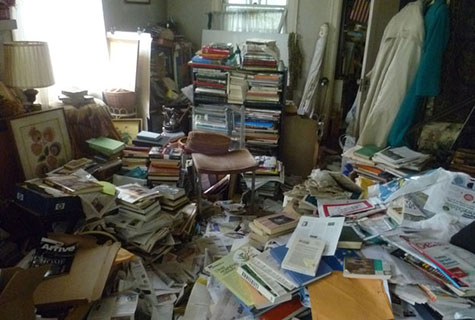
Not knowing any better, I assumed that Molly and her mother must be voracious readers.
Unpleasant happenings are quickly discarded if they do not affect us directly.

I have always insisted that everything that happens to anyone or anything is min Shamayim.

It is so hurtful to heighten people’s sense of inadequacy and guilt in a matzav that is already horrendous and difficult to bear.
Make no mistake: in the wrong hands cars are weapons of mass destruction.

Where once divorce in heimische communities was relatively uncommon, nowadays every family has a son, daughter, sibling cousin who is divorced – sometimes twice or even three times!

Many go about the business of living frum, observant lives, but they are only going through the motions.

Lately I have been hearing quiet grumblings from people who admit that they regret not encouraging their sons to get a post-high school education after a year or two of learning.
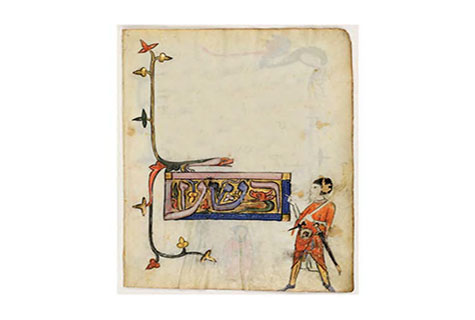
While it would seem from his question that he is being chuzpadik and dismissive, I wonder if its possible, if just maybe, he is a struggling, confused neshama who actually wants to come back to the fold.

A young lady in her early 20’s, “Sarah” was redt to “Shlomie” a boy from her home town who learned in an out-of-town yeshiva. The families know each other well, which in today’s shidduch scene is a big plus – since it was therefore unlikely the kids would “fall in” due to misinformation and misinterpretations.
I came to the conclusion a long time ago that I have to do what is right for me – as long as it’s “ halachically kosher” and doesn’t negatively impact on others – and not worry too much about what others think.
They say the road to hell is paved with good intentions, and that is precisely what almost always happens in situations where a reference knew someone had serious but hidden emotional issues, but did not reveal the information to the person making inquiries.

Time never stood still for anyone – why would I be the exception? In my hubris, I thought that somehow I would live forever – and I suspect we all have secretly felt that way, even though we know it’s a fantasy.
One can argue that forgetting something on a regular basis is a sign of advancing age and it’s time to for a neurological evaluation, but based on the number of young people who need to replace a lost smart phone (too bad it’s not smart enough to warn its owner that that they have become separated – or is there an app for that too?), I safely can say that losing “stuff” cuts across the generations.

For quite a few days in late December, Toronto was transformed into a breathtaking – literally and figuratively – frigid winter wonderland, where every twig, leaf, car door, and outdoor wire and cable was totally encased in ice. When the sun shone the landscape was blindingly brilliant as if billions of diamonds had been glued to everything the eye could see.

Outside is a winter-white wonderland replete with dazzling trees, wires, and sidewalks seemingly wrapped in glittery silver foil. It’s quite lovely to look at, which is about all I can do since I’m stuck indoors. Icicle-laden tree branches are bent and hunch-backed by the frozen heaviness of their popsicle-like burden, and the voices squawking from the battery-operated transistor radio I am listening to are warning people not to go out since walkways and roads are extremely slippery, and there is real danger from falling trees.
The necessity of speaking up when you “have a hunch” applies even more when it comes to shidduchim. One little girl did just that – she said something – and I was fortunate enough to be in town for the very joyful, lively wedding that resulted from her speaking up.
Let me begin by congratulating my dear machatunim, Soraya and Jay Nimaroff, on being the recipients of the Community Service Award at the Sderot Hesder Institutions 18th annual anniversary dinner.
The Hebrew month of Kislev has a special, albeit bittersweet, significance in my family, as it is the month my father was born and passed away.
But even though their medical situations were similar, how they mentally dealt with their new status quo was often as different as night and day.
How confusing it was growing up with conflicting messages. On the one hand, we were told, even admonished, to eat everything on our generously piled up plates (it was a sin to waste food), yet we were made to feel like we were a lower form of human being if we were overweight.
While in New York recently, I was invited to see a performance of "Waiting for Godot" – a multi-layered play on the human condition that I was introduced to in high school. What was fascinating and unique about this particular production was that this renowned play was being performed in Yiddish - with English and Russian subtitles beamed onto a screen for non-Yiddish speakers. (Staged by the New Yiddish Rep, at the Castillo Theatre, and directed by Moshe Yassur, it stars Shane Baker, David Mandelbaum, Rafael Goldwaser, Avi Hoffman and Nicholas Jenkins.)
Now and then my Bubby would open up about what she went through in the camps, of what she witnessed... From time to time she would talk about her baby sisters - twins - and how she would sew them identical dresses and braid their hair the same way challenging everyone to guess who was who.
Our community has a very different mindset - we live to have children. Each child is considered a bracha - a priceless commodity to cherish and nurture.
I read an article recently that described the fascinating phenomenon of mainstream, well-educated, responsible men and women deciding not to have children. According to the article, these people have given the matter a great deal of thought and have come to the conclusion that parenting is not for them.
Now and then you read or hear of a tragedy – typically a car accident - where those involved are suffering from life-threatening injuries or unfortunately have lost their lives. Frequently, in the initial reports, the victims remain nameless “pending notification of next of kin.”
A friend of mine, a young mother, related that her oldest child, now three, was starting pre-school in a few weeks. Her voice, full of pride, quickly took on a tone of annoyance as she described the “welcome package” she had received as a new parent. Amid the rules and regulations concerning drop off and pick up was a dress code for mothers/female caregivers who brought and took home the children. One of the “requirements” was wearing closed–toed shoes. Sandals were not allowed.
Think of how you feel when you pick up a baby and she starts crying and shrieking hysterically. You can't help but feel somewhat chagrined and inadequate.
After my son Moshe got married in Israel several years ago, I decided to keep in more frequent touch with my cousin Ruzah. I would call her on a weekly basis (a good opportunity to practice the Ivrit I learned in day school), speaking to a woman who was of an older, wiser generation - rendering her more like a mother. Ruzah, like all my first cousins was indeed my parents’ age, married with children before I was born. Her experiences mirrored my father’s generation, although she really was from mine. Her mother and my father were siblings and my unknown grandparents were hers.


 October 9, 2026