יום שלישי, י״ח תשרי תשפ״זTuesday, September 29, 2026



Follow Us


Rabbi Ari Enkin, a resident of Ramat Beit Shemesh, is a researcher and writer of contemporary halachic issues. He teaches halacha, including semicha, one-on-one to people all over the world, online. He is also the author of the “Dalet Amot of Halacha” series (9 volumes), the rabbinic director of United with Israel, and a rebbe at a number of yeshivot and seminaries. Questions and feedback are welcomed: rabbiari@hotmail.com.
Read More

What is often overlooked, however, is that not only does bread take priority over wine, but cake (mezonot) takes priority over wine as well.
It is not widely known that the practice of securing and publishing haskama letters originated with the Catholic Church.
While those who are superstitiously inclined may prefer to avoid sleeping with their feet facing the door, there does not seem to be any halachic basis for this.
As a result of the difficulties with many of his rulings, it has been widely suggested that Rabbi Yehuda HaChassid wrote the tzava’a specifically for his own family and future descendants to follow and that it was never intended to be observed by the masses.
Vihi noam and v’atah kadosh should be recited slowly and prolonged somewhat. This is because punishment in Gehennom is suspended from the beginning of Shabbat until the end of Ma’ariv after Shabbat.
One may not make any use of the Chanukah lights whatsoever. They are only to be looked upon in order to arouse praise and thanksgiving to G-d for the miracles that He performed for us.
Many halachic authorities opposed the custom of lighting the menorah in the synagogue. The Chatam Sofer would decline the "honor" of lighting the menorah in the synagogue for this reason.
Vihi noam and v’atah kadosh should be recited slowly and prolonged somewhat. This is because punishment in Gehenom is suspended from the beginning of Shabbat until the end of Ma’ariv after Shabbat.
It is noted that according to gematria the phrase "Elokei Avraham, Elokei Yitzchak, V'elokei Yaakov," has the same numerical value as the names of the Matriarchs.
Another explanation for the custom is based on a concern that a woman's hair might become unintentionally exposed from under her wig or other hair covering.
The ban on doing business with non-kosher foods was instituted as a precautionary measure to help ensure that one does not come to accidentally eat them. It is permitted, however, to do business involving foods that are only non-kosher due to rabbinic decree.
It is permitted to engage in routine activities or movements even if one’s intention might be for the exercise.
In no area of halacha should one assume that an action is permissible just because there is no punishment for its violation.
One who knows of Jews who are counterfeiting money is required to report them to the authorities. So, too, Jews who engage in activities that will endanger the well-being of the Jewish community may be informed upon as well.
There is even a view that one who forgot to recite asher yatzar after relieving oneself and then remembers the omission after relieving oneself again some time later is to recite asher yatzar twice, one after the other. However, the halacha is not in accordance with this view.
A woman who does not have the custom to drink some of the wine upon which Kiddush was recited is certainly permitted to answer amen to the shehecheyanu blessing.
Today, when we enjoy the benefit of a fixed calendar, we continue to observe two days of Yom Tov in the Diaspora even though we know exactly when the holidays are to be observed. This is based on the requirement to “follow the customs of our ancestors."
Although one might think that the solution to this problem is to allow one’s child to recite the blessing on one’s lulav with the explicit condition that the child does not acquire the lulav, this is incorrect.
There is also a widespread custom to avoid eating sour or bitter foods on Rosh Hashana in order not to arouse any “bitter” influences for the coming year.
In most congregations, the rabbi or other official makes an announcement immediately prior to the blowing of the shofar reminding the congregation that conversation is forbidden from this point onwards until the shofar blasts have been concluded.
We are told that one should choose the most righteous person possible to serve as the sandek (and as mohel as well for that matter). This is because we are taught that the one who serves as sandek will have an impact on the child’s spiritual development.
The primary reason that we gaze at our fingernails as part of the blessing over the fire is to ensure that we benefit somehow from the light of the fire.
There are those who interpret the ruling of the Rema in a manner that would allow bread to be declared mezonot as long as the liquid component of the dough consists of more fruit juice than water.
If it looks like bread, tastes like bread, and is used like bread, then it must be treated like bread, regardless of its level of sweetness.
It is entirely permissible for parents to find out the gender of their baby should they choose to do so. There is also nothing wrong with parents revealing to their friends and family their baby's gender.
There is much discussion as to exactly when the first Beit HaMikdash was destroyed. According to one account, it was destroyed on the 7th of Av, while according to another account, it was destroyed on the 10th of Av.
In order to properly understand the prohibition of greeting others on Tisha B'Av and what it entails, one must first understand what the definition of sheilat shalom truly is.
In some communities, Shalom Aleichem is not recited at all due to the halachic issues regarding addressing or praying to angels.
As the Shulchan Aruch does not discuss any requirement regarding how one should recite borei nefashot, it might just be that the manner in which one recites it is not important.8
Complicating matters even more is the prohibition against beginning a meal within a half-hour before nightfall.
Contrary to widespread misconception, most authorities permit a husband and wife to accept Shabbat at different times, i.e., one spouse is permitted to make "Early Shabbat" while the other spouse accepts Shabbat "on-time."
If they thought that the person should be spared, they would reply, “L’chaim.” If, however, they thought that he deserved to die, they would reply, “L’mita,” – to death.
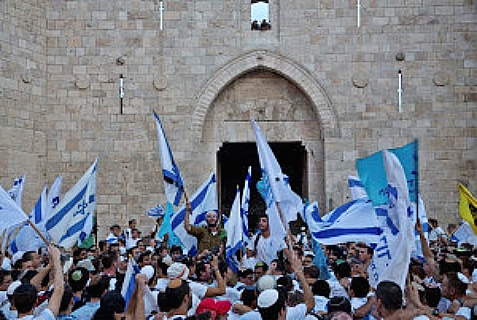
The Talmud teaches: “If someone comes to kill you – kill him first!”
The sefer opens with the origins of the kaparot custom. Readers may be surprised to learn that kaparot – at least in some form – might date back to the Talmudic era, with Rashi testifying about a custom to use a plant for kaparot.
I’ve always had an interest in the intersect between halacha, history, and archaeology. It is this interest that led me to research and write about the status of Purim in modern-day Israeli cities that are adjacent to ancient cities that had a wall around them in the days of Yehoshua Bin Nun. I concluded, in regards to Beit Shemesh at least, that there is much merit in observing a second day of Purim, on the 15th of Adar.


 September 25, 2026