יום שני, ח׳ חשוון תשפ״זMonday, October 19, 2026



Follow Us


Rabbi Ari Enkin, a resident of Ramat Beit Shemesh, is a researcher and writer of contemporary halachic issues. He teaches halacha, including semicha, one-on-one to people all over the world, online. He is also the author of the “Dalet Amot of Halacha” series (9 volumes), the rabbinic director of United with Israel, and a rebbe at a number of yeshivot and seminaries. Questions and feedback are welcomed: rabbiari@hotmail.com.
Read More

One should take the opportunity afforded by Tu B'Shvat to reflect and thank G-d for the fruits that He has created for our enjoyment.
One must not give one’s lulav to a child, even one’s own child, to shake on the first day of Sukkot. This is because according to Torah law, a child is able to acquire ownership of something (in this case, the lulav), but is not able to transfer ownership to someone else.
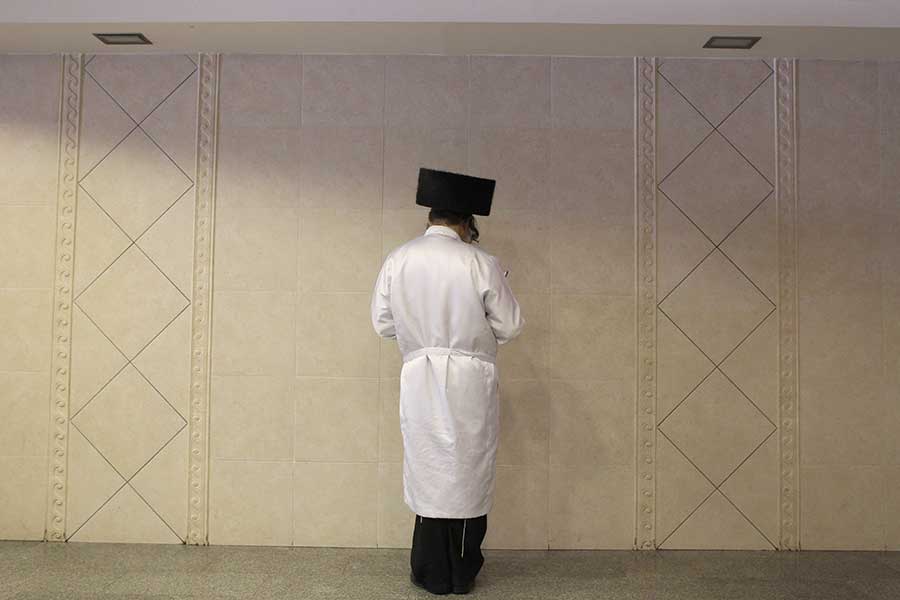
On Yom Kippur, the kittel takes on added meaning. In addition to reminding one of the day of one's death and arousing feelings of humility and repentance, kittels are worn to emulate the angels who, we are told, wear white.
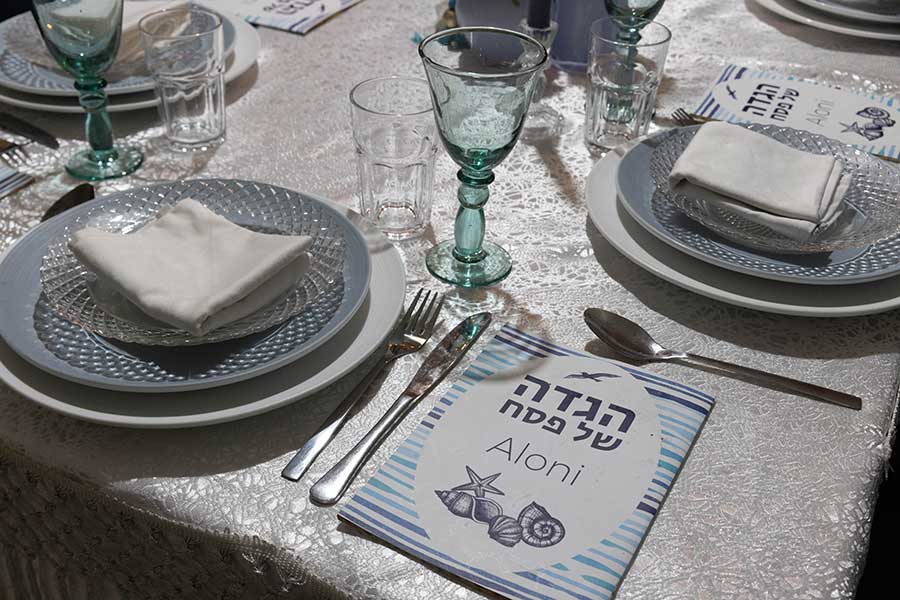
Most people will be surprised to learn that at one time a blessing was indeed recited before beginning the Haggadah. For some reason, however, the practice was discontinued.
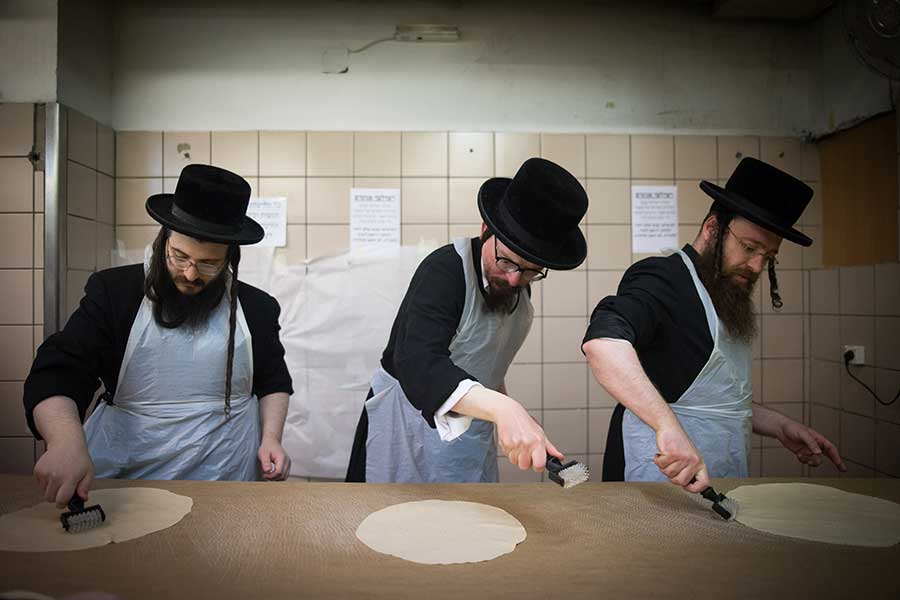
Although today our matzot are thin and hard, they used to be made thick and soft, and this remains the custom of some Sephardim today.
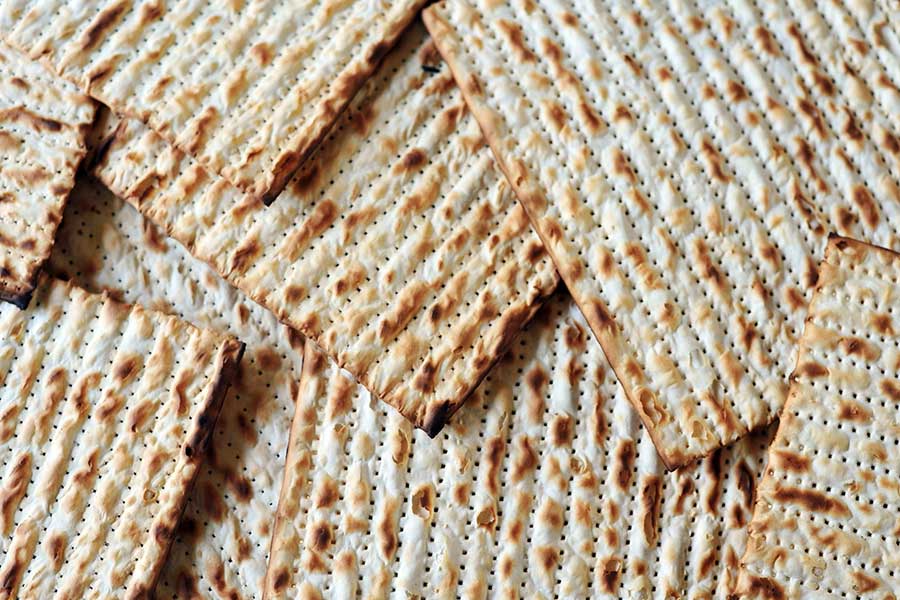
There are several reasons for the requirement to use mayim shelanu. According to some, the reason is that the wells and springs are warm in the springtime, and cold water must be used for baking the matzot.

Can one simultaneously discharge the mitzvot of mishlo'ach manot and matanot la'evyonim by giving a poor person a generous food package on Purim?

According to Kabbalah, the spiritual effects of Haman's evil decree were never completely rescinded. As such, the purpose of the Fast of Esther is to eradicate any harmful effects of Haman's decree that may remain in the world.
One who writes his own Sefer Torah should never give that Sefer Torah away. This is because, according to some authorities, the mitzvah of writing a Sefer Torah also requires one to keep that Sefer Torah in one's possession forever.
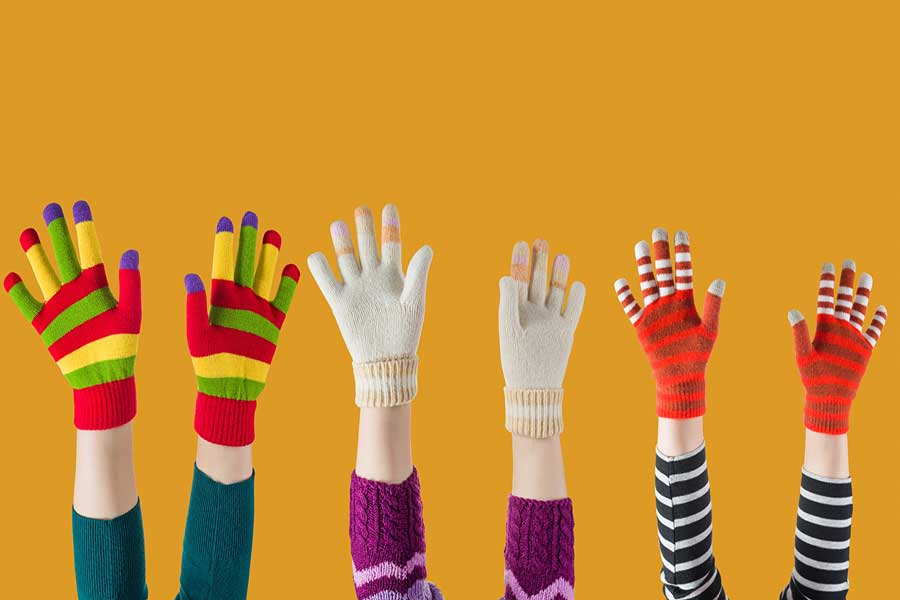
While it may not be halachically forbidden for a bride to wear gloves at the chuppa, there are several reasons why it is frowned upon. One reason is that the custom of using a ring at the wedding ceremony is intended to represent the relationship, the bond, between the bride and groom.

It is said that greeting people with Shalom aleichem brings people closer together.6 As such, a man should not greet a woman with Shalom aleichem so that they do not become overly social with one another. According to this approach, there would be no problem for a man to greet a woman with good morning or how are you?

The halachic authorities are somewhat divided on the need to mention the name of a sick individual when praying for them. Several authorities rule that mentioning the name of someone when praying for them is optional.
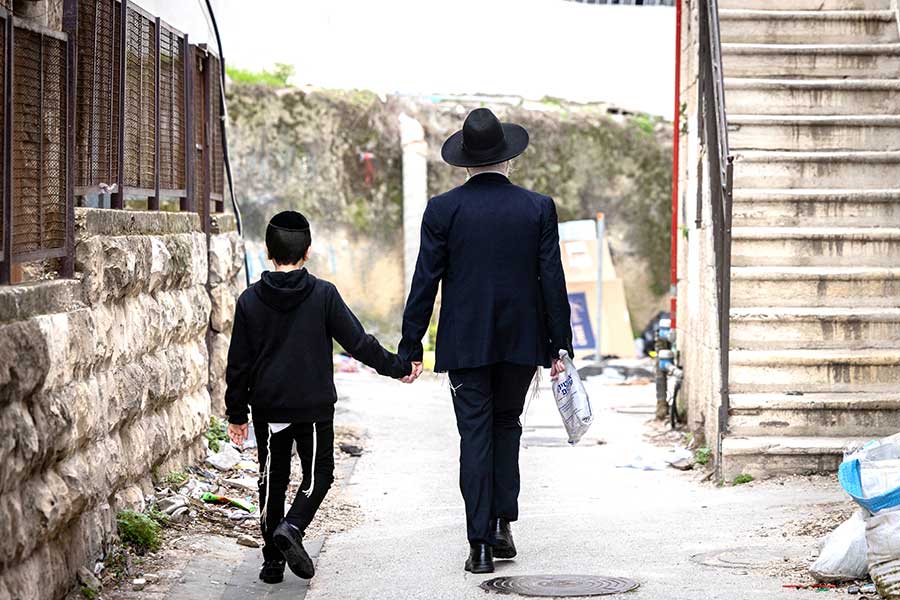
Ultimately, there is no color requirement for Shabbat clothes, and they may be of any color. The only requirement is that one have specially designated clothing exclusively for Shabbat that are as nice and dignified as one can afford.

It is interesting to note that although an aron kodesh must certainly be treated with respect and reverence, a number of authorities rule that an aron kodesh is not awarded any inherent or exclusive sanctity.
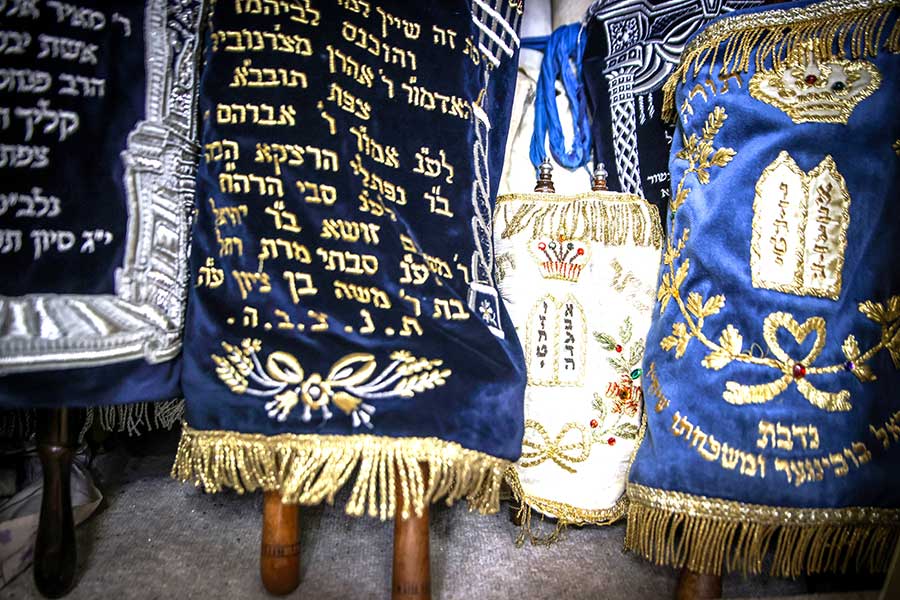
Those honored with hagba and gelila on weekdays should first remove their tefillin straps from their hands. This is both for comfort as well as to avoid having an interposition between one’s hands and the Torah.

One who has more than one name should recite a verse that corresponds to both names. Others, however, are not particular to do so and suffice with a verse corresponding to one name.
It is explained that each child was taught his specific verse because it began and ended with the first and last letters of his Hebrew name.
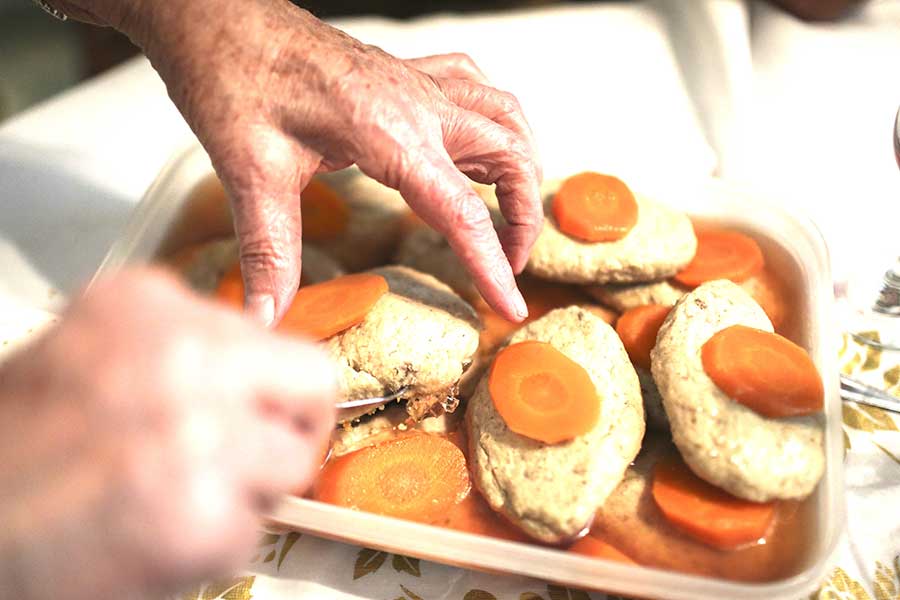
One of the reasons we eat elaborate meals on Shabbat is based on the Talmudic teaching that anyone who partakes of delights in honor of Shabbat will be blessed with all his heart’s desires.
Believe it or not, the main purpose of the neshama yeteira is to facilitate the consumption of the many gastronomic treats and pleasures that are characteristic of Shabbat without being harmed by the excessive intake.
There are a number of reasons why one should not go around barefoot. One of the reasons is that this is considered to be immodest and undignified.
A mourner whose hair grows long as a result of the prohibition against taking a haircut, or one who decides to become a nazir, is excused from any halachic concerns related to long hair or chatzitza.
The rules of the dreidel game require each player to contribute some coins to a central fund, the proceeds of which are used to pay out the winners.
Even the one honored with lighting the menorah in the synagogue is required to light the menorah again at home, as the mitzvah of lighting the Chanuka menorah is discharged only when performed in one's home.
A widespread custom is to avoid using a metallic mezuzah case. This is because metal represents the sword and the shortening of life, while a mezuzah represents mitzvot and the lengthening of life.
The permissibility of a ben pakua is derived from the words ba’beheima ota tocheilu, which teach that anything found inside a properly slaughtered animal is also permitted to be eaten, including another animal.
Several authorities rule that one who finishes the Shemoneh Esrei of Mincha after sunset should not recite Tachanun, as Tachanun should not be recited at night.
Why is it that we only modify the conclusion of the blessing when drinking wine or eating fruits that originated in Eretz Yisrael? Why isn’t it also modified when eating mezonot products that originate from Eretz Yisrael?
Rav Moshe Feinstein concludes that civil marriage, and by extension, a couple who choose to live together, is not halachically binding. He argues that the fact that a couple chose to forgo a Jewish ceremony demonstrates that they have no desire to be married according to Jewish law.
Some argue that the Torah reading is intended to parallel and recall the giving of the Torah. According to this approach, just as the entire nation stood when the Torah was given at Mount Sinai, one should likewise stand when the Torah is read in the synagogue.
Adon Olam is said to have been authored by Shlomo ibn Gabirol, and it made its way into the siddur sometime in the fifteenth century.
When the Mishna rules that visitors to a new place must continue to observe all the restrictions that are normally observed in their hometown, it only refers to customs that are or can be practiced in the new location by the residents of that place.
The long lines and rushed atmosphere typical of erev Yom Kippur Kapparot gatherings frequently lead to invalid slaughter and render the chickens, which are later distributed to the poor, as non-kosher.
It is also explained that performing Tashlich alongside a body of water is intended to recall that kings were historically inaugurated alongside a body of water.
It is suggested that unmarried girls stopped lighting Shabbat candles because it was difficult and costly to get candles during and even between the two world wars. With this disruption the custom was lost, and unfortunately not reignited in the New World.
Nevertheless, there are authorities who justify leaving Eretz Yisrael for the Uman pilgrimage and other similar trips, arguing that doing so can be no worse than leaving Eretz Yisrael for business purposes, which is permitted.
It is interesting to note that one is only truly required to address one's rav muvhak with a title while all other rabbis can theoretically be referred to by their first name.
Most Ashkenazic authorities rule leniently in case of need. This is especially true with today’s high-quality household appliances that make very little noise and often cannot even be heard in an adjacent room.
More recent halachic authorities, however, recognize that hats and jackets are no longer a component of standard dress, especially in warmer climates.
It is noted that in past generations there were very few individuals who had semicha, let alone were practicing rabbis, while today everyone seems to have semicha.
The popularity and interest in pursuing semicha studies has surged in recent years, and there is even a widespread practice for men to make an effort to receive semicha before marriage. This is true even if one has no intention of serving professionally as a rabbi.
We are taught that addressing one's teachers by their first name is so severe an offense that the Talmud labels one who does so as an apikores – one who has distanced himself from Jewish norms.
Some mistakenly believe that using a multi-wick candle is a requirement, citing the wording of the blessing Borei me’orei ha’eish (Who creates the lights of fire) as proof for this position.
It is believed that one who donates this Chai Rottel quantity of refreshments will be blessed with all forms of miraculous salvation.
Although one might think that a day of fasting and introspection would be in order for the yahrzeit of a tzaddik, as is the case regarding the yahrzeit of Moshe Rabbeinu, Lag Ba'Omer is uniquely different.
Almost all contemporary halachic authorities rule that in our day, when sefarim are abundant and relatively inexpensive, it is permitted to ship or otherwise take sefarim out of Eretz Yisrael without exception.
The other purpose of charoset is symbolic. The traditional ingredients of the charoset mixture – nuts, figs, and apples – are used in Scripture to describe the Jewish people.
The ancient Egyptians worshipped sheep. When they saw that the Jews were tying sheep to their beds, they became enraged and demanded an explanation for this sacrilege.
Many individuals have the custom to cover or remove any knives that are on the table before reciting Birkat HaMazon. This is because knives, reminiscent of swords, are items that shorten a man’s life, while the table, which represents the altar of G-d, lengthens it.
There is also hilchot treifot. According to the rules of hilchot treifot, we are obligated to check almost every internal organ of an animal. But we don’t. We rely on all types of leniencies and only check the lungs.
Let’s be honest. Corn on the cob has always been consumed, along with many other fruits and vegetables that Rav Vaye’s rulings have forbidden (or considerably regulated).
It might just be that the use of a rabbinic title should be evaluated differently nowadays when it is no longer used in the manner that it once was.
While it is clear that the Torah's preference is for one to perform yibum rather than chalitza, this is rarely the case nowadays and yibum is generally no longer an option – a man does not marry his brother's widow.
It is a virtually universal practice to light a 24-hour memorial candle on the evening before the yahrzeit so that it burns throughout the yahrzeit. It is said that the soul derives pleasure when candles are lit in its honor.
There is a mistaken belief that one should cease reciting Kaddish on the yahrzeit of a parent once fifty years have passed since their death.
It is explained that the reason one may not leave a sefer lying open is that there is an angel whose name is Sheid – an abbreviation for “shomer dapim” (guardian of [book] pages) – who causes anyone who leaves a sefer open to forget what he has learned.
Although the Torah strictly forbids taking revenge and bearing a grudge, these are not transgressions that are punishable in a beit din
Rebbe Nachman teaches that reciting Kiddush Levana is a segula for curing weak eyesight.
It also might just be that the custom of inviting one’s departed relatives to the wedding is a manner in which one can “force” them to attend.
Rav Moshe Feinstein argues that the fact that a couple chose to forgo a Jewish ceremony demonstrates that they have no desire to be married according to Jewish law.
While most authorities agree that the shehecheyanu blessing should only be recited when lighting the menorah, there are some who rule that one who has not lit a Chanuka menorah by the eighth night of Chanuka is permitted to recite shehecheyanu simply in honor of the holiday.
One should tidy up the table in preparation for Birkat Hamazon, such as by removing empty serving dishes and cleaning up any unsightly spills and messes.
Although it is true that virtually no interruptions are permitted between ga’al Yisrael and the beginning of Shemoneh Esrei, these three steps are deemed to be a component of the prayer, and as such, are not considered a hefsek.
Closely related to the concept of geneivat da’at is giving credit where credit is due. The Talmud teaches that whoever reports something in the name of the one who said it brings redemption to the world.
It is best that a father and son or two brothers not be awarded hagba and gelila together, just as they should not be awarded any two aliyot in succession.
According to some authorities, one should avoid studying Scripture (Written Torah) at night. This is based on the Kabbalistic teaching that the Written Torah was specifically designated for study during the day and that the Oral Torah (Talmud) was specifically designated for study at night.
There are different customs as to what should be written on a tombstone. Although the name of the deceased should certainly appear on the tombstone, this was not always done.
The funding for all death related expenses must be provided by those who inherit the estate of the deceased, whether from their own funds or from the inheritance.
A prominent Simchat Torah feature is the flags that are distributed to children to wave and strut. It is explained that the flags are intended to recall how each tribe was led and represented by its flag throughout the wanderings in the desert.
The Shulchan Aruch rules that one who sleeps under a bed in a sukkah does not fulfill the mitzvah of sukkah if the bed is higher than ten tefachim.
Some authorities teach that one should not clean one's kittel after Pesach. This is because the wine and matza stains on one's kittel from the Pesach Seder – proof of one’s devotion to mitzvot – will serve well on one's behalf on Rosh Hashana and Yom Kippur.
It is taught that the power of this prayer lies in its dual declaration of G-d as both our Father and our King.
Itis also noted that the one who leads selichot is required to go through the trouble of waking up earlier than everyone else. The privilege of leading the remaining services of the day was his reward and appeasement for having lost sleep.
Although a number of customs and themes characterize the month of Elul, it might just be that it is the repeated recitation of L’David that encapsulates them all.
Contrary to popular misconception, the bar mitzvah is not truly the exact moment that a boy becomes obligated to observe the mitzvot.
Not only does wine exempt regular beverages from a blessing, it even exempts watery foods, such as certain yogurts and ice cream, from a blessing, as well.
In more recent times, the late Satmar Rebbe is quoted as having said, If women knew the reward that awaits those who bake challot for Shabbat, bakeries wouldn’t sell a single challah.
It goes without saying that it is not always so simple to secure such a letter. Very often, the one who initiated the breakup will be expected to make financial amends to the other party in order to obtain it.
One is permitted to wash dishes that give off an unpleasant smell or will attract flies and other insects. So too, one who is disturbed by the sight of dirty dishes piling up in one's sink or kitchen is permitted to wash them.
It is not entirely clear, however, if the Menorah depicted on the Arch of Titus is how the Menorah actually looked in the Beit HaMikdash... In fact, there are opinions within the Talmud that the Menorah’s lights were not even positioned in a straight line, as is commonly believed.
If one changes location in the middle of a meal that includes bread, one is not required to recite a new blessing upon one's return. This is true even if one is eating alone.
Many authorities rule that the custom to wait until nightfall on Shavuot only applies to the recitation of Kiddush.6 It would be permissible, however, to recite Maariv before this time.
Before the Jewish people received the Torah they only had the seven mitzvot bnei No’ach to observe. Upon receiving the Torah, however, another 606 mitzvot were added.
Since the soul of one who converts is transformed into a Jewish soul upon conversion, it follows, therefore, that a convert is perfectly entitled to recite this blessing just like everyone else.
The reason why the day is called Lag B’Omer and not Lag L’Omer is that Lag B’Omer is the gematria of the word Moshe. This emphasizes the belief that Rabbi Shimon bar Yochai was a reincarnation of Moshe Rabbeinu and that he reached the same levels of greatness that Moshe did.
According to a number of authorities, a mohel is not required to inconvenience himself and forgo spending Shabbat with his family in order to perform a brit.
Although there is no mention of any restrictions on listening to music during sefira in any of the early halachic codes, it has become a widespread custom8 to refrain from doing so.
Although ideally the Omer should be counted immediately at nightfall, it is pushed off in deference to ma'ariv and the recitation of Shema, which must be recited first.

If one is unsure whether or not a particular food item is subject to the penalty of chametz she'avar alav hapesach, one is permitted to derive benefit from the item, though it remains forbidden to be eaten.
Many companies manufacturing baby wipes claim that the wipes are manufactured with the objective that the soapy liquid remain on the surface of the wipe and not be overly absorbed into it.
It is also said in the name of the Rebbe of Ruzin that the deadlines allotted to the various prayers are only binding on those who pray on behalf of their own needs.
Other authorities disagree and insist that matanot la’evyonim should be performed first.
Mysteriously absent from the mitzvah to remember Amalek is the frequency that the mitzvah must be performed.

The rush to fold one’s tallit soon after Shabbat has ended is based on the Kabbalistic teaching that an unfolded tallit attracts klippot, impure spiritual forces.

A number of authorities are of the opinion that the prohibition against kissing in the synagogue only applies to one’s children and not to other people. This is because the feelings that one has for one’s children are unlike those one has for other people.
It is explained that the pinky is associated with the sense of hearing because it is used to clean out one’s ears allowing one to hear better. This recalls the Jewish people’s “na’aseh v’nishma – we will do and we will hear” when asked if they wanted to receive the Torah.
While the custom of not seeing each has become normative and should be observed, a number of authorities have counseled waiving the custom when observing it will be overly inconvenient.
There are additional grounds for leniency if one personally adds sugar and/or milk to one’s coffee. This is because, for most people, coffee is considered to be “incomplete” and unfit for drinking until these condiments are added.
The Torah explicitly states that there is only one man who may not marry a widow: the Kohen Gadol.
It is taught that dogs have the ability to see the angel of death.
One should take the opportunity afforded by Tu B'Shvat to reflect and thank G-d for the fruits that He has created for our enjoyment.


 October 16, 2026