יום רביעי, י״ט תשרי תשפ״זWednesday, September 30, 2026



Follow Us


Rabbi Dr. David Hertzberg is the principal of the Yeshivah of Flatbush Middle Division. He is also an adjunct assistant professor of History at Touro College. Comments can be emailed to him at mdrabbi@aol.com.
Read More
Leaders must have the courage to try new things, build new edifices and achieve new heights.

A society needs laws to function, while at the same time it needs to provide opportunities within the structure for the human spirit to blossom.
Among Custer's character flaws was his inability to look inward. When a problem arose he blamed others.
Leaders need to pay special attention to the law of unintended consequences.
A leader must aim to change the culture and not just temporarily affect behaviors.
Whereas all people need to be careful of what their words may cause, leaders must especially be careful in this regard.
Leaders on all levels must pay careful attention to the commander's intent as a misunderstanding can result in terrible consequences.
Ben-Gurion understood both the strategic and symbolic value of Yerushalayim.
For an organization to move forward there needs to be internal agreement and alignment with respect to the organization’s goals and the plans to achieve them. Without this unity of purpose things will likely get derailed at some point.
Based on my historical research of leadership I believe there is what I refer to as the leadership paradox. In essence it claims that we should have more confidence in leaders who possess self-doubt.
It is not enough to assemble one's people in one place. There must be a unifying mission.
The Torah is teaching us a very important lesson regarding how to criticize and rebuke people.
A commander, he told me, must view every soldier as a parent views a child.
The word captain refers to the tactical expertise necessary to actualize this vision.
The message is clear - there really is no such thing as a quiet day.
This week's parsha presents us with an example that balances the need to guard information with the need to reveal it on some level.
Self-censorship occurs when members of the decision-making team refrain from making suggestions that are counter to the prevailing consensus of the group.

Proper use of downtime is a concept familiar to all Bnei Torah. It is safe to say that nobody becomes an expert in his or her field only through what they learn in school.
Great leaders like Lincoln have the strength of character to overlook wrongs and see the broader picture.
No opportunity is too small to make a difference.

The Torah (22:27) prohibits people from cursing a leader. Rav Levine argues that people don't just point out the obvious and evident flaws of leaders; they tend to exaggerate them.
The Civil War was a conventional war with large massed armies arrayed against each other in set battles. These battles were more or less governed by accepted rules of war.
You cannot decide whether we should fight or not. We will... That decision is taken...
Leaders often have to make difficult decisions of critical importance.
In light of these approaches, we can also suggest that by walking around Moshe was able to check out the true pulse points of the nation.
Leaders must be able to identify these existential, or Dunkirk moments, and act accordingly.
The mindset of risking one's life for the cause can only be acquired once the civilian mindset of self-preservation is unlearned.
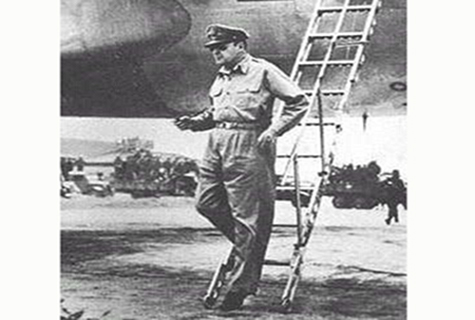
MacArthur was more than simply an expert in the writing and delivery of sound bites.

True repentance requires a confession that enables the sinner to focus totally on his own errors.
Leaders have to make many difficult decisions - decisions that affect, often negatively, other people.
Anyone from any tribe can rise to greatness so long as he or she has the vision, drive, and talent.
The importance of working hard in advance to prevent problems can be seen in this week's parsha.
The authors, based on their research, suggest leaders employ certain practices to allow their followers to grow and be inspired by their humility.
Leaders often find themselves with down time and time that the are down.
People were stunned, but they got the message.
While turning points do not often announce themselves with a clarion call, there are, nonetheless, moments in our lives when the potential for major change is evident.
One thing a person can do to ensure that he repents quickly after he sins is to think ahead.
A leader must be aware of and responsible for all details on the ship - big or small.
In politics as in business, the ability to deliver matters.

The terrorists were told that they would be given a plane to take them to an Arab country.
The importance of uniforms is underscored in this week's parsha.
What really defines a person as one type of decision maker or the other?
Why do dreams nit becine okans and why do strategic ideas rarely get implemented?
Tragedy could still have been avoided had Ismay stuck to his origincal vision and goal.
Yehuda, in an act of moral courage, readily admits his sin.
All too often leaders fail to consider adequately the importance of logistics and their organizations suffer as a consequence.
In every leadership situation there are basic gauges and indicators that must never be ignored.
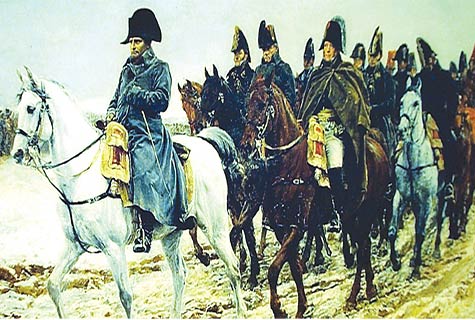
We need to have the endurance Napoleon demanded from his troops.

While leadership is always needed, complex situations require it at the highest level.

A truly great leader is someone who not only leads and influences his immediate circle, but the broader world as well.

Though studying Torah is the most important mitzvah, it is performed in private.

Lincoln was not a perfect man. But he rose above his imperfections to do what he thought was right not matter the obstacles.
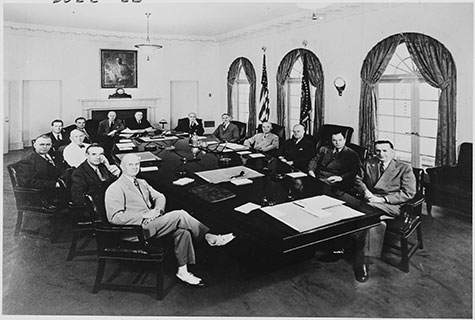
Before we embark on a major project or make a fateful decision we must get a wide-range of views and perspectives.
The Torah presents us with a model of how to effect change in a sustainable way.

Three years of war and the loss of one-tenth of Britain's men is not too great a price to pay.

This ability to remain calm under pressure and continue to see the situation clearly is a hallmark of Yehuda’s leadership.

Leaders must always pay attention to the importance of timing.
Realizing that his death was immanent and he had only a few more moments, Moshe focuses on doing the most important thing: he runs to Bnei Yisrael and blesses them.

Perhaps the most important leadership lesson Elkana taught us is to never underestimate the difference a single person can make.

Eisenhower understood that motivated men will fight much harder and longer than unmotivated men.

When Germany invaded neutral Belgium on August 4, England declared war on Germany. Thus, by the end of the first week of August all the major powers of Europe were at war.
Although famous for his smile, Ike Eisenhower actually harbored a volcanic temper that he worked arduously to control.

Why did we merit exiting the gas chamber alive when so many others did not?

Without a plan of action, a leader will never be able to lead his followers anywhere, no matter how important the destination or lofty the goal.

Like Dempsey and Gates, leaders must always be cognizant of the costs involved in their decisions – even when the costs are less than human life

G-d, accordingly, is encouraging Moshe to not just focus on reaching the top of the spiritual mountain but remaining there as well, thus fully capitalizing on his gains.
Moshe's name would forever remind him of the kindness that Pharaoh's daughter did for him by taking him out of the Nile, and serve as a lodestar to him as he interacts with his people.
Having come to the conclusion that nobody was more qualified than Yosef to lead Egypt in anticipation of and during the approaching famine, Pharaoh appointed him prime minister. This appointment made Yosef the second most powerful man in Egypt.
Esav truly thought he was getting the better part of the deal. He considered that as a hunter, whose life is constantly at risk, it was likely he would die before his father anyway. Therefore, when an opportunity to sell the birthright presented itself he jumped at it and immediately profited from the sale.
Though history offers no hard and fast laws like we find in physics, it does provide us with some guidelines. One of the most important is that when it comes to making plans, “the enemy gets a vote” or as Winston Churchill put it: “However absorbed a commander may be in the elaboration of his own thoughts, it is necessary sometimes to take the enemy into consideration.”
Peter Drucker famously said, “Long range planning does not deal with future decisions, but with the future of present decisions.” Sadly, history is replete with examples of leaders who have not only ignored this principle, but who have lost focus of their immediate goals. By doing so, they not only fail to think about the second and third layers of effects, but they fail to consider the possibility of unintended consequences.
Our rabbis teach that the first step of repentance is ackowledging our sins and errors. If we feel that our behavior is on the right track then by definition we will fail to identify our shortcomings. Sadly, then our repentance will never leave the start gate.
Louis XVI hoped that July 21, 1791 would be a turning point in the French Revolution. It was, but not quite the way he had hoped it would be. Louis had planned to cross into Austria, raise an army and invade his home country of France to crush the revolution. In fact, Louis and his family nearly made it to the border. They were a mere thirty miles away from putting his grand scheme into action. But a stable master recognized him when the carriage stopped to rest. The National Guardsmen were alerted and intercepted his carriage forcing him and his family to return to Paris embarrassed and humiliated. The French Revolution was about to take a dangerous and radical turn.
One of the most studied intelligence failures of the past fifty years is Israel’s performance in the lead up to the Yom Kippur War. Despite numerous indicators that Egypt and Syria were planning an actual attack, Israel’s intelligence establishment continued to dismiss them as acts of deception. To be sure this failure was not one of “collection.” Israeli intelligence had collected many facts and identified numerous “dots.” Rather, this was a failure of analysis. The question is why did this happen?
The story is told about Alfred Sloan, the CEO of General Motors, who in the middle of a meeting where everybody was in agreement, stopped the discussion and said: "I propose we postpone further discussion of this matter until our next meeting to give ourselves time to develop disagreement and perhaps gain some understanding of what this decision is about".
There is something striking about the word tomorrow. Rashi explains that the word connotes some future distant time. Accordingly, for some reason the son described in this pasuk will not know why we perform the rituals connected with Pesach.
When Bnei Yisrael donated money to build the golden calf all they got was a very small calf. This was despite a very successful fundraising campaign. Yet nobody questioned where all the money went.
Besides being the final arbiter of difficult legal cases and the licensing agency for Kohanim, the Sanhedrin was also responsible for the maintenance of the religious well-being of Bnei Yisrael.
General George Marshall became the U.S. Army’s Chief of Staff in 1939. With a keen understanding that the United States would eventually be drawn into the war that had just erupted in Europe, he set out to rebuild and modernize the army. This was no easy task. Besides the normal difficulties inherent in such an undertaking, Marshall had to do it against the wishes of many influential isolationists. Even President Roosevelt was reluctant to upset the country’s isolationists for fear that battling them would undermine his New Deal.
Most people remember where they were when they heard the news that Osama Bin Laden had been killed and justice delivered. Many books have already been written about the ten-year search for him, the decision to launch the mission and the actual attack on his compound in Abbottabad. While every aspect of this story is fascinating, I would like to focus on one specific area: Why were the Navy SEALs chosen to execute the mission? When the mission was being planned it was hardly a done deal that the SEALs would be selected as opposed to the CIA’s own paramilitary unit.[1]

The theme of my column is leadership. As a general rule I avoid extrapolating leadership lessons from current events. The following is my reasoning. First, the information available from current events is often incomplete and inaccurate. Even when the information is relatively complete and accurate it is unanalyzed. Therefore the basis for lessons learned may prove to be faulty. Second, current events are often too current. To attempt to draw practical lessons in a dispassionate way would be insensitive.
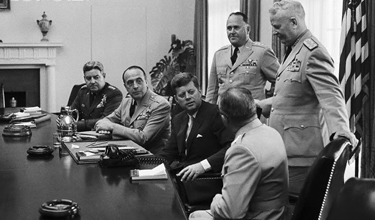
In his book, Thirteen Days (1968), Robert Kennedy publicized the inner workings of the Kennedy White House during the terrible days of the Cuban Missile Crisis. He described how the President’s special advisory group, known as ExComm, debated the options available to defuse the crisis in light of the intelligence presented to them.
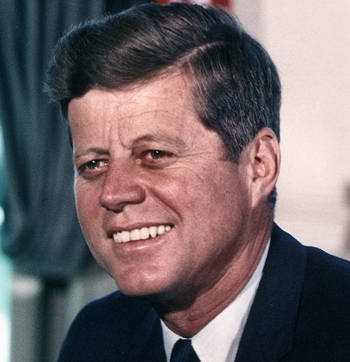
With the campaigns for the presidency of the United States in full swing people are beginning to imagine the inaugural address that will be delivered this coming January 20. Especially this year, when the candidates offer such different visions for America, rhetoric enthusiasts are expecting whoever wins to deliver an inspiring speech designed to provide a strategy and game plan for the country to move forward.

Each year, amid the ebullient joy manifest during the holiday of Sukkot, we read the megillah of Kohelet. With its realistic perspective on the world, Kohelet provides us with the means to not only properly calibrate our joy, but to accurately understand the role of joy and happiness in the world.

Colin Powell, despite reaching the pinnacle of power, has never forgotten his simple roots in the Bronx. This proud connection to his past manifests itself in many ways, ranging from his work ethic to his love of hotdogs. It also manifests itself in his appreciation of what the “regular guy” brings to the table in every organization.
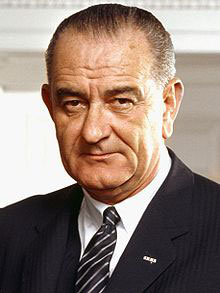
When national tragedy struck on November 22, 1963 Vice President Lyndon Johnson was inadequately prepared to assume the presidency. The Kennedy people had done their best to sideline him throughout the first three years of JFK’s term. Thus, he was not in the know in regards to many of the important initiatives Kennedy had proposed, but that would now become his responsibility. Additionally, there was substantial personal ill will between LBJ and Kennedy’s people - especially JFK’s younger brother Bobby, the attorney general.

Captain Chesley Sullenberger, of “miracle on the Hudson” fame, recently wrote a book on leadership entitled, Making a Difference: Stories of Vision and Courage From America’s Leaders. Instead of focusing on his own heroic performance, landing Flight 1549, he decided to focus on a number of contemporary leaders who have influenced events in some way. The first person he wrote about is Admiral Thad Allen, former commandant of the U.S. Coast Guard. Allen is best known for assuming command of the government’s rescue and relief effort in the wake of Hurricane Katrina.

Although Megilat Rut is one of the most beautiful stories regarding unadulterated chesed, it also serves as a primer on leadership. After all, its primary purpose is to establish the lineage of King David’s dynasty. Therefore we should expect to glean from it some important leadership lessons. Yet at first blush it would appear more apt to describe it as a book about followership. Rut’s noble commitment to join the Jewish people, despite all the hardships this entailed, is captured in her stirring words (1:16): “To where you will go I will go, where you will sleep I will sleep, your nation is my nation…” These words seem to constitute a declaration of what is termed “followership” more than leadership. However, a recent class trip, with my Yeshivah’s 8th grade, to the United States Naval Academy at Annapolis helped clarify matters.

In a famous photo, President John F. Kennedy is seen facing the windows of the Oval Office with his back to the camera. Slightly bent over, with his hands spread out on a credenza, he appears in deep and painful thought. The caption of the picture says it all: “The Loneliest Job.” Only the relatively few people who have been President of the United States truly understand the enormity of the job’s burden. It is for this reason presidents, despite their party affiliation, and often after leaving office, develop close bonds with one another, give the current office holder the benefit of the doubt and make themselves available to whoever may be president at the moment to help and advise.
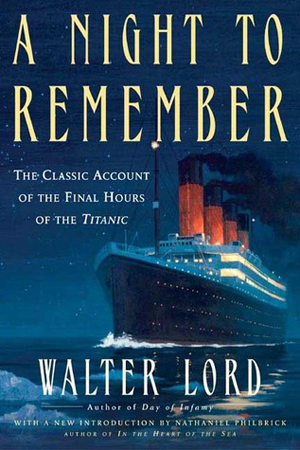
More than 1500 people died on the Titanic. As a result of the tragedy, out of date conventions and procedures were changed, navigational mistakes were identified and corrected, and the threat of ice was taken seriously—even in the era of modern ships. Walter Lord, in his seminal book on the disaster, A Night to Remember (1955), wrote: “Never again would men fling a ship into an ice field, heedless of warnings, putting their whole trust in a few thousand tons of steel and rivets. From then on Atlantic liners took ice messages seriously, steered clear, or slowed down. Nobody believed in the ‘unsinkable ship.’

On April 14, 1912, at 11:40 p.m., the Titanic struck an iceberg. It sank at 2:20 a.m. on April 15. Thus, this month (both according to the Jewish and secular calendars) marks the centennial of the disaster. Despite the passage of time, the tragedy still fascinates people and continues to be a source of lessons learned - both good and bad.
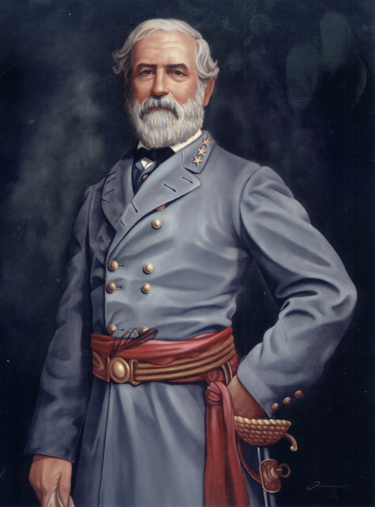
May 1864 was one of the bloodiest months in American military history. At what came to be known as the Battle of the Wilderness, General Grant’s Union forces suffered close to 18,000 casualties between May 3 and May 6. It seemed as yet another Union general, even one such as Grant who had been successful out west, lost to General Robert E. Lee.

For most of the nations of the world, the laws governing interactions between people are conventions set up by citizens to enable their society to function. They are bereft of any Divine influence. However, such laws within a Jewish society are very much religious laws as well. To demonstrate this point the Sanhedrin, which was ultimately responsible for all legal aspects of society, was housed in the Temple. By being there it was made clear to all that, for Jewish society, the interpersonal societal laws were Divine in origin, just as the ritual laws were.
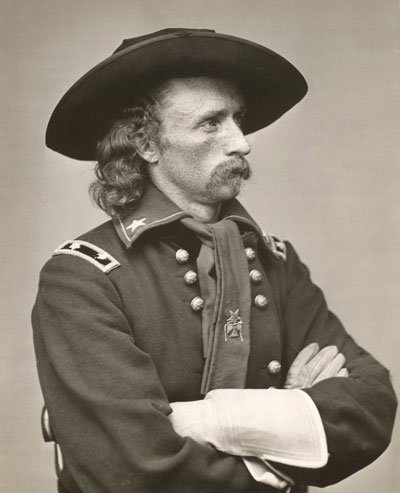
General George Armstrong Custer. The mere mention of his name evokes strong opinions of condemnation or admiration, depending on one’s perspective.


 September 25, 2026