יום שלישי, ד׳ תשרי תשפ״זTuesday, September 15, 2026



Follow Us


Rabbi Dr. Mordechai Schiffman is an Assistant Professor at Yeshiva University’s Azrieli Graduate School, an instructor at RIETS, and the Straus Center for Torah and Western Thought. He graduated YU with a BA in psychology, an MS in Jewish Education from Azrieli and Rabbinic Ordination from RIETS, before attending St. John’s University for his doctorate in psychology.He learned for two years at Yeshivat Netiv Aryeh. He has been on the rabbinic staff of Kingsway Jewish Center in Brooklyn, NY since 2010 and practices as a licensed psychologist in NY. His book “Psyched for Torah,” his academic and popular articles, as well as many of his lectures are accessible on his website, www.PsychedForTorah.com.
Read More
By Rabbi Dr. Mordechai Schiffman
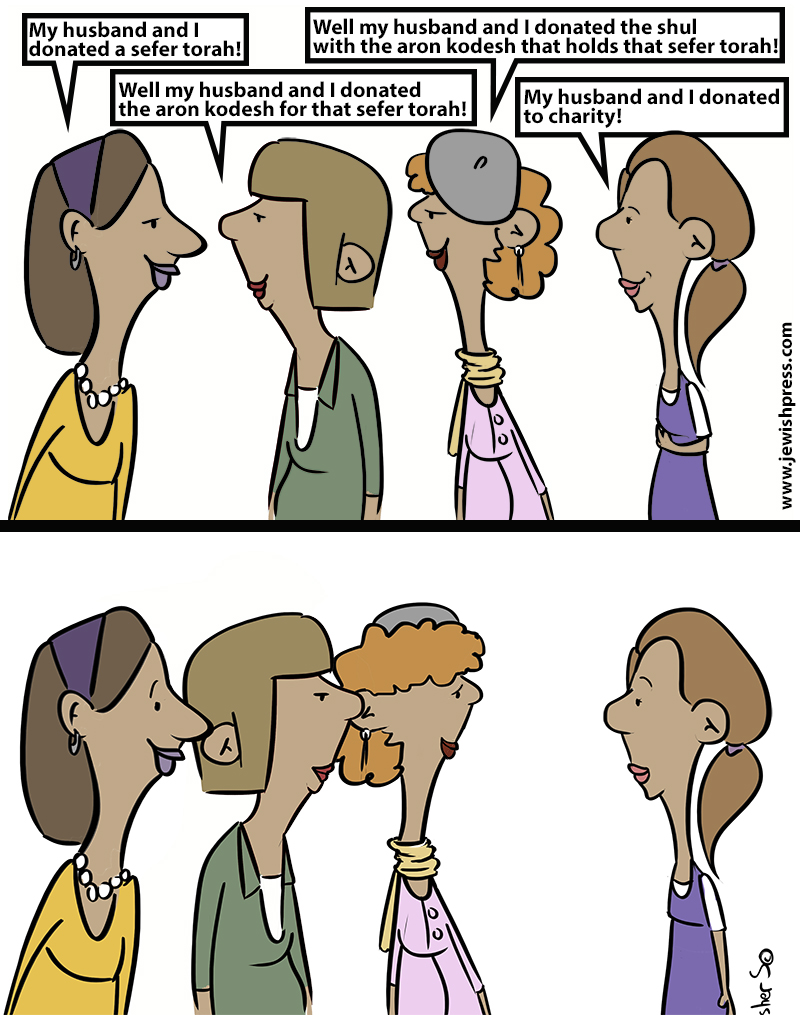
The failure to observe the agricultural laws such as tithes, challah, and the Sabbatical year reflects an unbridled acquisitive drive and a failure to care for the poor and needy. G-d provides the antidote to this disease of greed through the laws of charity.
By Rabbi Dr. Mordechai Schiffman
Wisdom is not conceptualized here in any form of abstract internal intellect. Everything revolves around active listening, relevant and organized speech, and intellectual humility.
By Rabbi Dr. Mordechai Schiffman
While the commentaries analyze each miracle on its own, the overall thrust of the presentation seems to be that G-d showed an added level of care for the continual functioning of the Temple.
By Rabbi Dr. Mordechai Schiffman
Rabbi Elazar’s frank realization that from the time we are born we are destined to die frames the entirety of the Mishna. This knowledge is meant to instill our awareness of G-d and His judgment, informing our religious decision-making.
By Rabbi Dr. Mordechai Schiffman
Desire, Maimonides notes, will interfere with a person’s mission in life to strive for knowledge and pristine character. This will automatically negatively impact his well-being in this world.
By Rabbi Dr. Mordechai Schiffman
As we know from educational psychology, it is not just cognitive ability that impacts learning. Emotional and motivational factors are essential as well.
By Rabbi Dr. Mordechai Schiffman
If we want to assist a friend in need, we must know how emotions impact not just ourselves, but other people. When someone else is emotionally hijacked, our well-intentioned methods can potentially exacerbate the situation.

By Rabbi Dr. Mordechai Schiffman
When people use visualization to think about their future selves, they are able to make better long-term choices in the present. The results are stronger when the conjured image is related to a specific goal and the image is vivid and realistic.

By Rabbi Dr. Mordechai Schiffman
While being cordial to everyone is important, Rabbi Mathia ben Harash closes with advice as to who it is best to associate with over longer periods of time. It is better to be a tail unto lions, and not a head unto foxes.

By Rabbi Dr. Mordechai Schiffman
If we want to learn effectively, we need to relocate ourselves to a better learning environment. Knowing how to choose the right environment to learn and avoiding distraction is known in educational psychology as self-regulated learning.
By Rabbi Dr. Mordechai Schiffman
Managing a good reputation is an essential value, particularly for a spiritual leader. Maintaining a good name enables the values he or she embodies to be respected and internalized.
By Rabbi Dr. Mordechai Schiffman
By honoring our teachers, we learn through the interpersonal social dynamics how to revere G-d as well.
By Rabbi Dr. Mordechai Schiffman
Noted marriage therapist Dr. John Gottman also contends that each marriage has perpetual, unsolvable problems. The goal is not to resolve those conflicts but to know how to relate to those conflicts in healthy ways.
By Rabbi Dr. Mordechai Schiffman
If left to our own merit, the rabbis presumed that divine justice would demand punishment.
By Rabbi Dr. Mordechai Schiffman
Learning how to politely say no to opportunities that take us away from our top priorities and goals is essential for fulfillment and success. Moreover, once we neglect studying Torah, writes Arvei Nachal, we will lose motivation to study, leading to even more idleness.

By Rabbi Dr. Mordechai Schiffman
Generalizing from judges to general ethical advice, the Lubavitcher Rebbe suggests that getting another’s perspective is essential for self-improvement. We tend to have self-serving biases in either positive or negative directions that distort our self-assessment.
By Rabbi Dr. Mordechai Schiffman
We honor Torah, suggest the commentaries, by learning Torah and by performing the commandments, as well as by showing proper respect for both holy books as well as sages.

By Rabbi Dr. Mordechai Schiffman
Presumably, even the lowly of spirit according to Maimonides is not purposefully self-denigrating and contains a healthy sense of self-worth (contingent on an awareness of G-d, not one’s own accomplishments).
By Rabbi Dr. Mordechai Schiffman
Even someone who openly performs wicked deeds should not be disparaged in totality.
By Rabbi Dr. Mordechai Schiffman
The reverse is true of sin, continues Rabbi Hirsch. It removes you from the pure and loving presence of your Father in heaven. It will awaken within you the torturing pangs of conscience...
By Rabbi Dr. Mordechai Schiffman
We tend to define our own levels of wisdom, power, wealth, and honor by likening how much of these commodities we have in relation to others. According to psychologist Leon Festinger, when we make downward social comparisons, we tend to inflate our sense of self by reflecting on how much more we have than others.

By Rabbi Dr. Mordechai Schiffman
Unlike niddah calculations, which may impact real-life halacha, the doubts and calculations in kinnim are generally removed from practical ramifications.
By Rabbi Dr. Mordechai Schiffman
Wisdom is a broad term that can have numerous interpretations, including knowledge of Torah (Chazon Ish), spiritual ability to fulfill the Divine will (Rabbeinu Yonah), or a social intelligence wisdom (Sforno). Regardless of definition, wisdom needs the supplemental value of fear of G-d.

By Rabbi Dr. Mordechai Schiffman
While the commentaries glean nuggets of wisdom from analyzing the various nuances in the metaphors and the word choice, the essential theme is that although we are free to choose how we act and what we consume, we must remember that there are consequences to our actions.
By Rabbi Dr. Mordechai Schiffman
According to Rabbi Yom Tov Lipman Heller, Beloved is man because he was created in the image of G-d refers not just to the Jewish people, but to all humanity.
By Rabbi Dr. Mordechai Schiffman
Silence has a role in the learning process that leads to wisdom, and is also a signal that one has obtained wisdom.
By Rabbi Dr. Mordechai Schiffman
No matter which approach we take, the underlying message of Rabbi Dosa’s teaching is that there are certain habits that can derail us from our larger goals and values.
By Rabbi Dr. Mordechai Schiffman
Wisdom must be manifested through deed. It cannot be relegated to a purely intellectual exercise but must be supplemented with and evident through moral and spiritual action.
By Rabbi Dr. Mordechai Schiffman
Another factor that negatively impacts memory is not properly understanding the material when originally learned. When the information is not encoded properly, later retrieval is unlikely.
By Rabbi Dr. Mordechai Schiffman
Whether nature is vanity or just lower on the values hierarchy than Torah study, both of these approaches seem to agree that nature disrupts the learning process, and presumably, if possible, learning should be done inside, with minimal distractions from the natural world.
By Rabbi Dr. Mordechai Schiffman
We can express gratitude for a benefit bestowed by a friend, but that gratitude can also have a spiritual component if we also thank G-d for helping to orchestrate the place of this friend or the significance of the gift in our lives.
By Rabbi Dr. Mordechai Schiffman
Commentaries are bothered by two main questions. First, what is the symbolism of Torah being referred to as a yoke? Second, what exactly is the mechanism behind what seems to be guaranteed removal of these other responsibilities?
By Rabbi Dr. Mordechai Schiffman
The importance of not squandering opportunities to learn is not just an abdication of personal responsibility or failure of personal growth but has larger repercussions for the national survival of the Jewish people, and that is why Rabbi Chanina uses such strong admonishment.
By Rabbi Dr. Mordechai Schiffman
Learning alone is valuable, but not ideal. Words of Torah are enhanced through social interaction and social interactions are enhanced through words of Torah.
By Rabbi Dr. Mordechai Schiffman
While we can be hopeful and optimistic that people will express their naturally benevolent and compassionate sides, we also need powerful external systems in place to curb the also natural human tendency towards maleficence and cruelty.
By Rabbi Dr. Mordechai Schiffman
These negative visualizations can be particularly important when the long-term consequences of our actions are not immediately resonant.
By Rabbi Dr. Mordechai Schiffman
The second chapter of Pirkei Avot ends with two related teachings from Rabbi Tarfon, both centering around procrastination and productivity.
By Rabbi Dr. Mordechai Schiffman
Following his approach that each element of this mishna relates to advice for Torah study, Rabbi Lipschitz explains that knowing before whom you toil will also help with effective learning.
By Rabbi Dr. Mordechai Schiffman
When someone considers himself as a wicked person, there is a strong likelihood that will lead to him sinning even more.
By Rabbi Dr. Mordechai Schiffman
The better self-awareness we have, the better our relationship with others will be, and the stronger connection we will have to G-d.
By Rabbi Dr. Mordechai Schiffman
From ancient times, the idea that animals and people can affect their surroundings with their eyes was considered perfectly normal, and even to have a scientific basis.
By Rabbi Dr. Mordechai Schiffman
There is a philosophical debate as to whether it is possible to completely excise anger from our emotional repertoire. This debate plays out within the Jewish ethical literature as well, with Rambam, at least in one place, indicating that one should never feel anger.
By Rabbi Dr. Mordechai Schiffman
What does it mean to have a good heart? It is common in the modern era to associate the heart with emotions, and contrast that with the mind, which represents thought.
By Rabbi Dr. Mordechai Schiffman
Without denying the importance of tradition in determining ethical obligations and norms, Pirkei Avot in chapter 2 seems to offer a complimentary method.
By Rabbi Dr. Mordechai Schiffman
Some commentators state that it is simply a way of complimenting his fine character. Others connect the praise more directly to his mother. But why should his mother get the credit for his character?
By Rabbi Dr. Mordechai Schiffman
Perhaps, instead of framing these as debates in terms of which one is superior (intelligence versus character, fluid intelligence versus crystallized intelligence), it would be beneficial to take a different approach to this issue.
By Rabbi Dr. Mordechai Schiffman
In the previous mishna, Rabbi Yochanan ben Zakkai cautioned against the dangers of self-praise. In contrast, here he explicitly praises his students, naming what he perceives as their signature qualities.
By Rabbi Dr. Mordechai Schiffman
Praise is not the goal. The goal is to live a life of values and integrity. Praise may be a byproduct of such strivings, but it is ancillary.
By Rabbi Dr. Mordechai Schiffman
The challenge is when perceived reality doesn’t map onto the system of justice. What do we think when confronted with a situation when someone seems to be suffering for no fault of their own?
By Rabbi Dr. Mordechai Schiffman
To what extent are you in control of your own life? Many early psychological theories assumed that the answer to this question was not much.
By Rabbi Dr. Mordechai Schiffman
Rashbatz adds that there is also a positive aspect to social pressure. Fear of social consequences can be an effective motivator to avoid ethical and spiritual violations.
By Rabbi Dr. Mordechai Schiffman
One of Viktor Frankl’s most essential contributions to psychology was his highlighting the importance of self-transcendence and its contribution to a sense of meaning.
By Rabbi Dr. Mordechai Schiffman
Throughout Jewish history the advice to be suspicious of governmental authorities was sound and perhaps even life-saving advice.
By Rabbi Dr. Mordechai Schiffman
We should be so engaged in meaningful and valuable pursuits that we don’t have time to sin.
By Rabbi Dr. Mordechai Schiffman
Many first violate smaller sins, and that serves as a gateway to more significant violations. To avoid the dangers of such minor infractions, contemplate deeply on what is above you.
By Rabbi Dr. Mordechai Schiffman
If we are deficient in one of these strengths, we cannot sidestep our moral obligation to cultivate them and decide instead to focus on building our sense of humor (no matter how valuable a sense of humor may be psychologically or morally).
By Rabbi Dr. Mordechai Schiffman
The assumption behind the theory was that current psychological problems can be alleviated when a patient talks about his or her past history, eventually gaining insight into the root causes of the issue.
By Rabbi Dr. Mordechai Schiffman
While we have seen the concept of appointing a teacher before (Avot 1:6), many commentaries differentiate between the two presentations.
By Rabbi Dr. Mordechai Schiffman
To a large extent, Pirkei Avot and its commentaries serve as a type of educational psychology textbook. Many of the maxims encourage learning Torah and provide advice and guidance as to how to best accomplish this scholastic goal.
By Rabbi Dr. Mordechai Schiffman
After focusing on personal responsibility, Hillel transitions to social responsibility: When I am for my own self, what am I?
By Rabbi Dr. Mordechai Schiffman
When you work towards a learning goal, are you motivated for better grades, looking smarter, outperforming others?
By Rabbi Dr. Mordechai Schiffman
The use of Aharon as a model is illustrative. Pirkei Avot is filled with advice from many Talmudic sages, but most don’t invoke a Biblical precedent to prove their point.
By Rabbi Dr. Mordechai Schiffman
Students take what the sage says seriously. If he is not careful about how he says things, the students can misunderstand.
By Rabbi Dr. Mordechai Schiffman
Shemaiah’s advice in Pirkei Avot bears out this wisdom as he encourages us to love work.
By Rabbi Dr. Mordechai Schiffman
Empathy, care, kindness, which are all generally cherished interpersonal values, need to be curbed for the sake of justice.
By Rabbi Dr. Mordechai Schiffman
The overall message of this mishna seems to be one of social caution. If we want to learn and maintain good behavior, we need to stay away from any people that can inhibit that growth.
By Rabbi Dr. Mordechai Schiffman
Many commentaries differentiate between three different categories of people: wicked, intermediate, and righteous. These commentaries contend that the message to judge favorably just relates to the middle group.
By Rabbi Dr. Mordechai Schiffman
Children can act in ways that are embarrassing, and guests can potentially generate uncomfortable conversations. The importance of keeping calm and kind, even in these moments, is essential.
By Rabbi Dr. Mordechai Schiffman
Besides for the ethical and prosocial benefits of helping, it also provides new scenarios to observe, interact, and learn.
By Rabbi Dr. Mordechai Schiffman
Extrinsic motivators don’t necessarily lead to lasting change. When the incentives or punishments are removed, the behavior often stops.
By Rabbi Dr. Mordechai Schiffman
So, what is psychology? In its most basic form, psychology is the study of the mind (thought and emotion) and behavior. With this definition, we see that the discipline of psychology really does include almost anything human related under the sun, because what doesn’t incorporate an element of how we think, feel, or act?
By Rabbi Dr. Mordechai Schiffman
While the process of change is very personal and needs to be individualized, there are also commonalities and trends that traverse both time and person.
By Rabbi Dr. Mordechai Schiffman
Unfortunately, it is too easy to just go through the motions, traversing life without knowing our purpose, cause, and what drives us to get out of bed every morning.
By Rabbi Dr. Mordechai Schiffman
Yesterday this sinner was separated from Hashem… But today he is connected with the Shechinah… he observes commandments, and they are received with pleasure and joy…
By Rabbi Dr. Mordechai Schiffman
In terms of the book’s structure, because it is a compilation rather than a direct commentary, some connections are more directly related to the mishnayot than others.
By Rabbi Dr. Mordechai Schiffman
Direct and indirect references to his previous works provide brief insights into his ideas about happiness, meaning, materialism, alcoholism, character, marriage, anger, sensitivity, honesty and teshuvah.
By Rabbi Dr. Mordechai Schiffman
‘Woe to a person who is not aware of his faults, for he does not know what he needs to correct. But double woe to a person who is not aware of his virtues, for he is lacking the tools for correcting himself’ – Rabbi Yerucham Levovitz

By Rabbi Dr. Mordechai Schiffman
Researchers reported that for some people, more introspection led to less insight about themselves.
By Rabbi Dr. Mordechai Schiffman
If G-d graces you with a particular strength, for example wealth, physical strength, wisdom, memory, a pleasant voice, and the like, offer it to G-d, utilizing it for the purposes of holiness.
By Rabbi Dr. Mordechai Schiffman
Knowing that our brain cells are not fixed into unalterable patterns, people can understand that change is possible.
By Rabbi Dr. Mordechai Schiffman
According to the Vilna Gaon, the world currently stands exclusively on the pillar of chesed.
By Rabbi Dr. Mordechai Schiffman
Hillel, according to Rambam, is emphasizing that we all have free will to improve ourselves and acquire virtues...
By Rabbi Dr. Mordechai Schiffman
As Sinek describes through examples such as Martin Luther King, Jr., Apple, and Southwest Airlines, starting with why is the best recipe for success, as it boosts passion and motivation, and inspires others to follow.
By Rabbi Dr. Mordechai Schiffman
He seems to conflate different subfields of psychology, assuming that a critique of one would automatically spill over to others.
By Rabbi Dr. Mordechai Schiffman
How are we to understand Aharon’s silence? ... Does it mean that he couldn’t say anything, didn’t have any urge to say anything, or that he desperately wanted to cry out but controlled himself?
By Rabbi Dr. Mordechai Schiffman
From a Jewish calendrical perspective, Rosh Hashanah, the Ten Days of Repentance, and Yom Kippur embody a fresh start perspective with change embedded in the framework of the new year.
By Rabbi Dr. Mordechai Schiffman
Perhaps one of the goals of the requirement to bring these sacrifices is to create psychological safety for sin and failure. The institution of sacrifices balances the normalization of failure with responsibility and accountability.
By Rabbi Dr. Mordechai Schiffman
Stiff-necked people are creatures of habit, and those habits become especially rigid during times of stress.
By Rabbi Dr. Mordechai Schiffman
Concepts such as marit ayin enjoin us to be “inauthentic” and to put on a show for the outside, even when we know there is nothing inherently wrong with our actions.
By Rabbi Dr. Mordechai Schiffman
Because verbal abuse is more prevalent and generally overlooked as being problematic, the Torah makes the consequences more severe.
By Rabbi Dr. Mordechai Schiffman
One of the most important factors in delivering and receiving feedback is the relationship between the giver and the recipient.
By Rabbi Dr. Mordechai Schiffman
He could have stressed the evilness of slavery or underscored the responsibilities of freedom... Instead, though, Moshe spoke about children and education. At that moment, in Rabbi Jonathan Sacks’s words, “the Israelites were told that they had to become a nation of educators.”
By Rabbi Dr. Mordechai Schiffman
Pharaoh’s refusal to believe in the miraculous power of G-d is evident even before the plagues begin.
By Rabbi Dr. Mordechai Schiffman
While each relationship has its own dynamic that adds to the drama, the fact that the younger sibling takes the spotlight away from the older sibling is a theme that cuts through all of them.
By Rabbi Dr. Mordechai Schiffman
While there are several permutations of the exercise, the crux of the concept is to immerse your head in cold water while holding your breath. By doing so, your heart rate, blood pressure, and body temperature will decrease, “freezing” the emotion so that you can better handle the challenge.
By Rabbi Dr. Mordechai Schiffman
The upshot of these responses is that tranquility and peace of mind can never be goals in and of themselves in Judaism.
By Rabbi Dr. Mordechai Schiffman
An additional layer that complicates Yaakov’s emotional response is the fact that G-d previously promised him that He would protect him. If that’s the case, why was Yaakov afraid?
By Rabbi Dr. Mordechai Schiffman
Time drags on when we are afraid and really does fly when we’re having fun.
By Rabbi Dr. Mordechai Schiffman
Perhaps one of his favorite ideas emerges from neuroscientist Antonio Damasio, whose work helped shift the way we view the relationship between intellect and emotion, and also serves as a paradigm to help us better understand an important part of Rabbi Sacks’ legacy.
By Rabbi Dr. Mordechai Schiffman
Avraham is a paradigm of alacrity and productivity. We are awed at how this pillar of kindness swiftly tends to the needs of his guests.


 September 11, 2026