יום שלישי, ט׳ חשוון תשפ״זTuesday, October 20, 2026



Follow Us


Rabbi Reuven Chaim Klein is a freelance researcher and scholar living in Beitar Illit. He has authored multiple books and essays, including “Lashon HaKodesh: History, Holiness, & Hebrew” and “God versus Gods: Judaism in the Age of Idolatry.” He studied for over a decade at the Mir Yeshiva in Jerusalem and BMG in Lakewood before he earned his MA in Jewish Education from Middlesex University/London School of Jewish Studies. Any questions, comments, or suggestions can be addressed to him at historyofhebrew@gmail.com.
Read More
Kiryat Arba is an older name for the city of Hebron (Josh. 14:15, Jud. 1:10). It means “City of Four” or “Tetrapolis.” But what does Hebron have to do with the number four?
Rabbi Shlomo Zalman of Hanau writes that the word teivah means "box, chest" and refers to the written word because books that contain written words are stored in a teivah.
After banning Jews from being augurs, diviners, sorcerers, and necromancers, the Torah commands that one should be “tamim with G-d” (Deut. 18:13).
Avot de-Rabbi Natan explains that the world is called taivel because it is “spiced up” (metubal) with Torah, so that the Midrash is emphasizing the importance of Torah in that the entire world is called taivel simply because there’s a little bit of Torah “mixed into” it.
The Radak in Sefer Shorashim also connects eretz to the idea of running – in this case because of the planet’s non-stop astronomical motions.
In his immigrant social circles, he hadn’t even known anyone who went to college, as finishing high school was considered the highest possible achievement for his peers.

A meilitz yosher is a defender who emphasizes a person’s good and “straight” deeds, while a prosecutor emphasizes a person’s evil and criminal deeds.
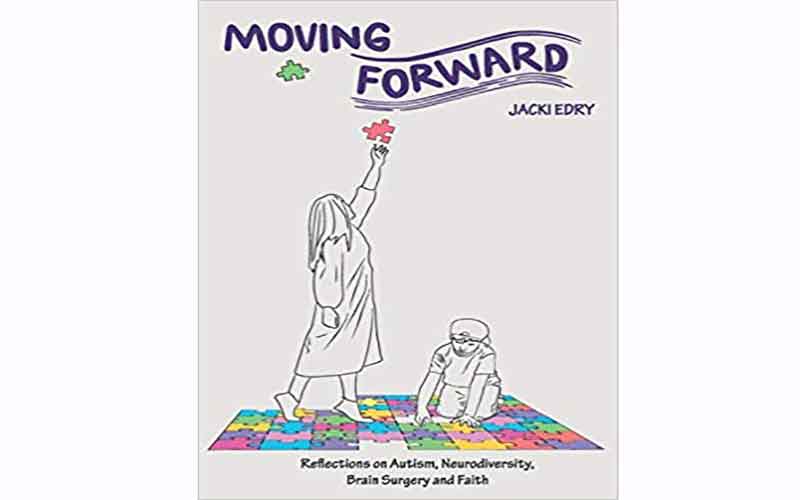
In many cases, it turns out that neurological diagnoses like dyslexia and ADHD are actually cases of Irlen Syndrome masquerading as a different disorder.
The concept of “roundness” also comes into play in this discussion. The Hebrew word galal in the sense of “dung” appears five times in the Bible (I Kgs. 14:10, Job 20:7, Zeph. 1:17, Ezek. 4:12, 4:15).
When it comes to the word yavam, Rabbi Pappenheim explains that this term for a relative-in-law contrasts with other terms for relatives-in-law.
As a young child, Joash was hidden away in the Holy Temple by his uncle Jehoiada, the Kohen Gadol, and later ascended the throne.
In exploring the etymologies and polysemous usages of just a few of these words, we will shed light on the nuanced differences among some of the words for anger in our list.
Siddur HaRokeach adds that just as the rooster closes one eye when G-d is angry, so was Balaam blind in one eye, and just as the rooster stands on one foot when G-d is angry, so was Balaam lame in one foot.
A person who is not careful to speak precisely… disregards the quality of his speech, as if he is grinding kemach.
Yabia means speech that flows from the depths of one’s heart … or speaking continuously, non-stop, like an ever-flowing spring.
A person who pesters another and unrelentingly tries to convince him of something is called misarev (Nedarim 8:7), because he refuses to give up on changing the other person’s mind.
The poshea is not one who tries to rebel but is rather one whose indolence shows that he does not care about the result of his actions.
According to the explanation that dag means “male fish” while dagah means “female fish,” it is hard to understand why the Jews in Egypt would have specifically eaten female fish and why the Plague of Blood would have only killed female fish.
Rabbi Marcus argues that at the core of “taninim” (sea-monsters – see Genesis 1:21) is the word “nun.” In offering this explanation, Rabbi Marcus explicitly rejects scholarly speculation that “taninim” is a Sanskrit loanword.
Not only does G-d strengthen those who are tired, He also energizes those who are completely exhausted.
In the same way that rays of light spread out to illuminate as much as possible, an enlightened person must spread his intellectual purview…in order to not violate what is expected of him.
According to Rabbinic tradition, the infinitive verb “la’gur” connotes living in a certain place under a temporary arrangement.
I used to think that the English word “bizarre” is related to “zar,” but the Oxford English Dictionary maintains otherwise.
The semantic range of “dod” later expanded to include lover or companion, as the word seems to mean throughout Song of Songs.
Israeli archaeologist Dr. Shmuel Yeivin (1896-1982) writes that some scholars have proposed that “chermesh” is a “sickle” while “magal” is a larger “scythe.”
Rabbi Pappenheim traces “yehgeh” to the root hey-gimmel, which primarily refers to diligence and consistency, making its derivative “yehgeh” refer to a lion consistently crying.
An apocryphal Midrash describes the colorful sounds made by the animals etched on King Solomon’s throne. Most of these words do not appear in the Bible.
Rabbi Shlomo Pappenheim of Breslau (1740-1814) writes that “masveh” and “suto” are related to “stav” (autumn or fall) and refer to soft, spongy fabrics worn to insulate oneself from cold weather.
One of the book’s most creative and powerful essays discusses the so-called “IKEA effect,” which asserts that people value things in accordance with the amount of effort they put into getting or building them.
“Pakad” primarily means remembering something or someone in order to deal with it, and the most basic way of dealing with something is to determine whether it’s actually present or not – hence, it means to count.
Indeed, the Talmud (Shavuos 26a) exempts a person from punishment if he swore falsely to something that he thought was true.
Rabbi Wertheimer further notes that wings create shade and thus serve as a metaphor for offering protection.
We now turn our attention to “eshnav.” This rather obscure word only appears twice in the entire Bible.
The Zohar interestingly seems to echo this idea (Bo 34a), stating that “Bo el Pharaoh” teaches us that G-d brought Moses into some sort of heavenly inner chamber that was somehow associated with the sea-creature that characterizes Egypt.
Rabbi Pappenheim writes that “achu” refers to the brotherhood between the different animals that join up in fertile land to feast on its produce.
Rabbi Hirsch notes that because kuf can be interchanged with gimmel, “kashah” is also related to “gishah”/“gashash” (approaching, impacting). Most people only consider solid objects substantial enough to approach or cause an impact.
Not every mention of a seafaring vehicle in the Bible, however, contains the word “oniah.”
Following this explanation, it seems that when Yehudah approached Yosef, he came physically close to him (vayigash) - perhaps even in a threatening way.
The Talmud (Chagigah 12a) teaches that G-d created the world using 10 different qualities, the first three of which are chachmah, tevunah, and daat.
Rabbi Pappenheim also argues that “cheich” [palate] comes from “chakah” because the open fish net resembles a person’s mouth opened wide in anticipation of food.
More scholarly-oriented etymologists are at a loss to explain the origins of “donag.”
“Apadna” appears once in the Bible (Daniel 11:45), and the commentators explain that it denotes a palace. In the Talmud, “apadna” sometimes means, not a palace, but a den that is especially grand or kingly.
A whole slew of other words also come from ayin-lammed, including “elyon” (high), “l’maaleh” (up), “oleh” (elevate), “aleh” (leaf, which grows on a branch), “ohl” (yoke, which placed on an animal), “meil (tunic, which is worn on top of other clothing), “na'al” (shoe, which is worn on top of the foot), etc.
Rabbi Mizrachi explains that Rehoboam was called a naar at 41 because he was immature and had weak leadership skills...
“Pil” actually doesn’t appear anywhere in the Bible. Biblical Hebrew seems to have a different word for elephant, “shenhav,” which appears twice in the Bible.
Rabbi Zimmerman was also quite well-versed in the sciences, including advanced mathematics, philosophy, and physics.
In four places in Tanach, the middle patriarch is referred to as "Yischak," not "Yitzchak."

When all is said and done, this reviewer counted more than 10 different opinions on where the halachic dateline ought to be placed – all of which are thoroughly considered in Crossing the Dateline.
Dr. Michael Satlow suggests that “kiddushin” is actually a loanword from the Greek legal term “ekdosis,” which refers to a bride's father handing over his daughter to her husband.
The Torah’s word for betrothal is “erusin,” and its cognates appear throughout the Bible. The Mishnah, however, more often uses a different word: “kiddushin.”
In Cheshek Shlomo, Rabbi Pappenheim connects “eitan” to the biliteral root aleph-tav, which he further reduces to the monoliteral root tav. He explains that this root means connections and linking.
Another verse in Psalms (68:35) exhorts the reader to give “oz” to G-d. Obviously we can’t actually strengthen G-d.
Rabbi Wertheimer explains that the greater Torah scholar a person becomes, the more effort he must exert on performing good deeds and not lose himself in the more theoretical world of study.
Like Rabbi Pappenheim, Rabbi Aharon Marcus connects “te’ne” to “eitun,” but he argues that both words are actually of Egyptian origin. Master etymologist Rabbi Dr. Ernest Klein (1899-1983) also maintains that “te’ne” is an Egyptian loanword.
“Shalom” implies the cessation of hostilities, while “sheket” implies the cessation of any rush or toiling that force people to be constantly moving about.
Other words derived from this root include “chatzi” (half), “chazot” (midday or midnight), “chutz” (outside/exterior), and “cheitz” (arrow).
Rabbi Pappenheim suggests that “chomah” is related to “milchamah,” as the main purpose of building a city wall is to protect its inhabitants from enemy warfare.
The Talmud (Kritut 9a) states that “peta” connotes shogeg (by mistake), while “pitom” could connote oness (by accident), meizid (on purpose), or shogeg. The Midrash (Sifrei to Numbers 6:9) disagrees.
The Shelah (1555-1630) writes that not everyone can be cognizant of their chayah and yechidah during their lifetimes. Only bnei aliyah (spiritually-elevated people) can connect with their chayah-yechidah.
Rabbeinu Yonah notes that the nefesh and ruach represent man’s instinct for thriving and surviving in a physical or material way.
Maimonides explains that “ruach” also means a life-giving spirit, which is what remains of a person after death (Ecclesiastes 12:7).
In another famous Talmudic passage, the rabbis speak about taming the force of the Evil Inclination for idolatry, which took on the form of a lion made of fire.
Rabbi Mecklenberg writes that “arisah” is related to “eres” (bed): Just as dough consists of a mixture of flour and water, so too a bed’s mattress rest on a mixture of interplaced beams or planks.
Ultimately, when Antoninus pointed out that doing so would totally erase his progeny, Rebbe encouraged the Roman official to have mercy on his deviant daughter.
Rabbi Pinchas Eliyahu Horowitz (1765-1821) writes that Ophir is Peru, where large deposits of gold are supposedly concentrated.
The Torah stipulates that if one tries to transfer holiness from one animal to another, both the original animal and the new animal become consecrated.
Rabbi Sofer explains that all legal documents are called “get” because they bring people together (e.g., lenders and borrowers, buyers and sellers, etc.).
Rabbi Dr. Ernest Klein explains that this word originally referred to a dot or speck on an otherwise pristine background and was later expanded to mean any type of blemish or defective imperfection.
The word “yashar” (straight) would seem to hold the opposite meaning of “shirah,” but Rabbi Shapiro notes that in rabbinic literature the two are linked.
In what is possibly a separate explanation, the Malbim writes that “shirah” is a more general term that can refer to song both in a religious sense and in a secular sense, while “zimrah” refers specifically to a religious song that speaks of G-d’s praises.
Rabbi Kook warns that sometimes a person can become so involved and devoted to his work that his work controls him instead of the reverse.
Rabbi Shapira-Frankfurter discusses a third word for delay or late: “hitmahmah.” In his view, this word denotes a delay caused by moving slower than usual.
A fourth word for quiet is “hass.” This verb means making others quiet (i.e., hushing them). The etymology of this word might be an onomatopoeic adaptation of the sound used to quiet others (like “shh…”).
The Mishnah and the Talmud do not explain what “padachat” means, so how do we know it means “forehead”?
The gaNav steals at Night [i.e., when nobody is looking] while the gazLan steals in the Light [i.e., out in the open].
The groom does not join a new family, but rather branches off from his own family, creating a new subdivision of it.
Rabbi Pappenheim traces the etymology of “baz” and “bizah” to the biliteral root bet-zayin, which refers to something unimportant.
He argues that "malkut" only denotes physical hitting while "makkot" denotes any sort of painful ordeal.
A number of commentators explain that “chefetz” is a strong, physical type of desire while “ratzon” is a more subtle desire to do the right thing.
The Land of Israel is often called the desired land: “eretz chefetz” (Malachi 3:12), “eretz chemdah” (Jeremiah 3:19, Zecharia 7:14, Psalms 106:24), and “eretz ha’tzvi” (Daniel 11:16, 11:41).
How do we know that Yeshurun is Yaakov? One place where the equivalence is clear is a passage recited before the morning prayers.
Ibn Janach writes that produce is called “tevuah” because it comes at certain times of the year.
Rabbi Hirsch ties “komer” to the emotional manipulation commonly employed by idolatrous priests.
Not all appearances of “hashlachah” carry a negative connotation. Some connote throwing something deliberately to bring about certain results.
During the evening or at night, the lack of light makes everything appear mixed up and one cannot discern the differences between them. (“Erev” means both night and mixture.)
The Talmud (Rosh Hashanah 26a) points out that "yovel" also means ram, and was borrowed to mean a ram’s horn (Joshua 6:4-5), as well the 50th year – the jubilee, an English word derived from the Hebrew "yovel," when such a horn is blown.
Rabbi Mecklenburg notes that another cognate, “sha,” means “closing one’s eyes” (Isaiah 6:10 and 32:3) since when a person closes his eyes, it appears as though he attaches his upper eyelid to his lower one.
“Sav” is related to the Hebrew word “seivah,” and both these words form the basis of “saba,” which means “old man” or “grandfather.”
Rabbi Wertheimer writes that "ayeh" is used when one has no inkling where something is, while "eifo" is used when one does have a general sense of where it is.
Another word for dust, mentioned above, is “avak.” Rabbi Pappenheim argues that afar is run-of-the-mill dirt while avak is finer dust.
The Vilna Gaon argues that man stopped resembling G-d in the generation of Adam’s grandson Enosh when idol worship began to develop.
The Malbim argues that “asifah” connotes bringing inside what one has gathered, while “kovetz” connotes gathering without necessarily bringing inside.
Righteousness is man’s natural state; sinfulness, in contrast, is considered unnatural. Therefore, a wicked person who repents is viewed as “returning” to his natural state.
Some Jews have a custom to greet others on the first night of Rosh Hashanah with the words “Le’shanah tova tei’katev ve’tei’chatem le’alter le’chaim tovim u’le’shalom.
“Selichah” also refers to a type of liturgical poem, or piyut, characterized by begging for forgiveness.
Rabbi Hirsch writes that “shachach” implies forgetting as a result of focusing on something else while “nashah” is forgetfulness that results from a weakened memory.
It’s possible that this body of water actually does not have its own name and is identified instead by the most prominent city on its banks.
...the Torah is telling us that Og was so big and strong even as a baby that he needed a metal crib to contain him; otherwise he would have broken his bed.
In Hebrew, an egel is a male calf, while an eglah is a female calf. Calves are immature bovines that rely on their mother’s milk to survive and grow.
Another Hebrew word for tax is meches, appearing six times in chapter 31 of Sefer Bamidbar.


 October 16, 2026