 October 9, 2026
 Categories: In Print / Headline / Jewish Community
Bell to Bell No Cell – Cell Phones That Is
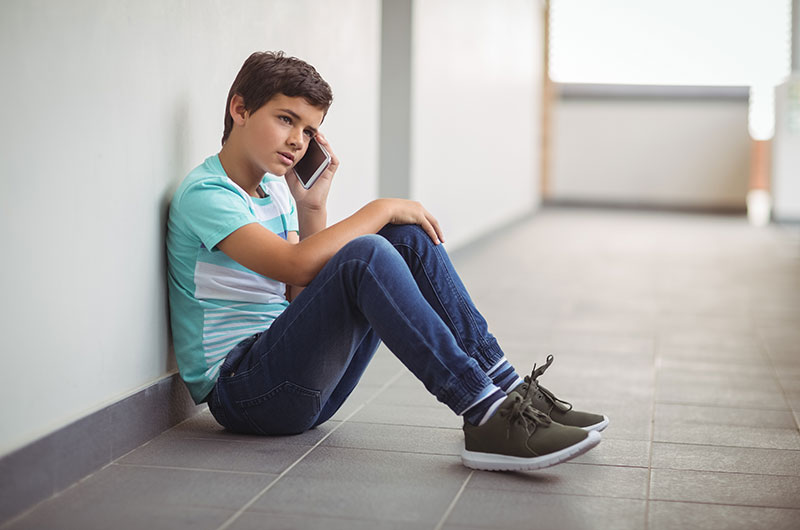


Governor Kathy Hochul has been crisscrossing the state educating parents, students and professionals about the cell phone ban which requires all K through 12 public, charter and BOCES schools to have a plan in place when students return to the classroom in September.
The distraction-free learning policies prohibits students to use their cellphones, smart watches and earbuds during school hours. The law prohibits students from using non-school issued internet-enabled devices on school grounds during the entire instructional day and applies to all school districts, charter schools as well as BOCES across the state. New York will be the largest state in America to adopt a bell-to-bell cell phone-free experience in school.
School administrators have applauded the move generally because prior to the ban they had no proper policy recourse over students’ social media habits.
This move requires all students to power down their devices and store them in assigned storage pouches for the entire school day. This is a matter of focusing on classroom subjects and not texting with friends in another classroom. One benefit, administrators hope, is that this will increase students’ social skill interactions. Teachers and administrators have been frustrated that students have been playing games as well as watching TikTok and YouTube videos.
“One girl told me, as I was sitting in her high school library… she said to me, ‘You’ve got to save us from ourselves. Can you take this from us?’” Hochul recalled. “I realized at that moment, I am the adult, I’m a parent. These are all my kids as well and I want to make sure that we start having better outcomes. On this journey, I learned we need to do something dramatic. I think this will give our students a competitive advantage because they will just be smarter.”
The governor said she “has had round table discussions and conversations with everyone from the students themselves, to their parents, to school superintendents, teachers, principals and to really just dive into what is happening in our classrooms. Our schools today are not the same as when I went to school because of the constant bombardment of messages on children’s cell phones including cyberbullying. They have not been able to put down the electronic devices. It’s in their hands all day long,” Hochul recalled.
Without input from the governing body of school policy statewide, the state Board of Regents, Hochul took matters into her own hands, partly because of the psychological impact cell phone use in schools have on students, she has said.
“I believe our educational outcomes are not what they should be. Also, you have to ask why half of all teenagers are feeling hopeless, some sort of sadness and, beyond that, even depression and some suicidal thoughts,” Hochul said. “Teenage years are always tough. What we’re learning is that with the bombardment of these algorithms, they get a lot of negative messages. It takes them to a dark place. This is in addition to the peer pressure that goes on all day.”
New York City Mayor Eric Adams and New York City Public Schools Chancellor Melissa Aviles-Ramos have updated the city’s “Cell Phone and Electronic Device Policy,” the implementation of which will provide for a citywide standard for distraction-free schools starting this coming academic year. To comply with the state law, Adams allocated $25 million to help with implementation of the policy at the 1,600 public schools across the five boroughs. The state has allocated $13.5 million to help school districts purchase equipment to store cellphones.
More than $1 billion has been set aside for mental health support in schools to combat depression in students.
Policy rules within the New York City public school system will differ. The Department of Education mandates that each school will develop its own policy, in writing. “Children can take their phones to school but once they arrive, the phones must be stored,” according to wording on the department website. “Phones can be placed into school-assigned personal or shared lockers or cellphone pouches. The phones cannot simply remain in a backpack all day as backpacks alone are not considered a sufficient storage option, unless they are kept in a closet or cubby that cannot be accessed by students without permission.”
For students who manage to sneak a smartphone into class, the regulation reads that a student may be subject to discipline for violating cellphone rules but may not be suspended solely for accessing a smartphone during the restricted time.
“There is a clear nexus between cell phone use and a decline in students’ mental health and academic success due to a decreased ability to focus, diminished social interaction and emotional stress,” said Senator Shelley Mayer (D – Yonkers, Westchester County), chairwoman of the Senate Education Committee. “Throughout this process, I have sought out feedback from students, parents, teachers, school board members, superintendents, and other stakeholders about cell phones in our schools.
“Although I favored giving districts additional flexibility, the ban includes exceptions that are granted for when use is allowed by school staff, for health reasons, translation use, emergencies among other exemptions,” Mayer concluded.
“As a father of two daughters, I’ve seen how pervasive smartphone use can be in our daily lives and how it impacts our children’s ability to focus and connect with the world around them,” said Assemblyman Charles Fall (D – Mariners Harbor, Staten Island). “Governor Hochul’s proposal to restrict smartphone use in schools is a thoughtful, evidence-based step toward ensuring that our classrooms are spaces for learning, creativity, and personal growth. This initiative puts students’ mental health and academic success at the forefront.”
One state Senator, who will be the next Manhattan Borough President, said Hochul co-opted language from his bill to include in her proposed executive budget where she could take the credit for the implementation of this policy.
“As a parent of a 14-year-old daughter, I understand how phones have become an obstacle in the learning environment. These devices have a clear impact on young people’s mental health and their ability to focus,” said Senator Brad Hoylman-Sigal (D – Greenwich Village). “That’s why I introduced legislation to prohibit the use of cellphones and smart devices when students are in the classroom. I applaud Governor Hochul for recognizing the severity of this issue and including similar language in her executive budget. I also appreciate that her initiative takes the safety concerns of parents into account and would still allow children to be able to use their phones when traveling to and from school.”
The head of the New York City school system is also supportive of the ban.
“As an educator and a parent, I have seen firsthand how constant access to cell phones in the classroom distracts from learning, divides attention and significantly impacts our students’ mental health, inside schools as well as at home,” said Public Schools Chancellor Melissa Aviles-Ramos. “This policy takes into account input from unions and advocacy groups, families, community members and our students. This policy is designed to be responsive to the diverse needs of schools, individual students and families.”
Teachers’ unions support the move. “This isn’t about being anti-phone or anti-technology. It is about being pro-childhood,” said Melinda Person, the president of New York State United Teachers.
“There is a thought that the parents need to be connected with their child all day long in school. What I learned from law enforcement, police chiefs and sheriffs as well as other law enforcement professionals, is if there is something going on the school campus or in the building, an active shooter, the worst nightmare, the last thing you want is for that child to have their cell phone go off and reveal their location to the shooter or for them to start videoing and giving information out there that could be misdirecting law enforcement as to where to go,” Hochul said. “It would be unintentional but they cannot be doing this and they need to be following the trained professional in the front of the classroom. The teacher knows what to do. They have had many drills over years to deal with this. Your child is safer if they do not have that phone with them throughout the day, they will be better off.”
To appease parents’ concerns that in the case of a school-wide mass casualty where students need to let their parents know about their health status, the guidelines state, “Each school is to provide at least one method for parents to contact a student in an emergency and that the school must give parents a direct number they can call.”
“For us, we really feel it is going to make a huge difference for our kids. We think they’re going to be more engaged in learning and the social-emotional effects are going to be beneficial for them,” said Terry Ward, superintendent of the North Syracuse Central School District. “In the absence of phones, students will not only pay more attention to their teachers as well as pay attention to one another. The hope is there will be renewed conversations in the halls and lunchrooms that will lead to richer relationships and better outcomes overall.”
District administration is responsible for the effective development and rollout of new policies, and educators say that uniformity will be a key element of success.
Hochul made another salient argument for fewer hours on a cell phone even at home.
“I believe that without this, there will be children that are more fully well-adjusted. And when they leave school and enter the workforce or go to college, they will just be more normal. They won't be depressed students, young people who have been spending their teenage years in their basement addicted to a phone,” Hochul said. “I can't help what goes on at home but I really encourage parents to look at their behavior, because children watch their parents and what’s happening at the dinner table. Are you having conversations with your children, or are you checking your work emails and texts? And that's something we need to watch with our own behavior.”
Most religious schools, including yeshivas and other Jewish day schools, already have a policy of bell to bell, no cell (phones).