October 2, 2026
 Categories: Collecting / Arts
Bernard Lécache, Eretz Yisrael, And the Birth of The Fight Against International Antisemitism


There are historical figures whose lives are best understood through their most famous acts and others whose significance lies in a pattern of choices, accumulated over time, that gradually reveal a coherent moral vision. Bernard Lécache (1895-1968) belongs unmistakably to the latter category.
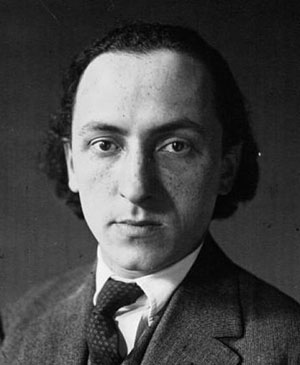
Lécache’s life invites a particular kind of historical attention because he does not fit neatly into any one category. He was neither a traditional communal leader nor a purely literary figure, neither a politician nor simply a journalist, and yet he moved through all these roles with unusual intensity. The intellectual and political world in which he operated stretched from the devastated Jewish communities of Eastern Europe to the salons of Paris, from courtrooms to editorial offices to Eretz Yisrael under the British Mandate.
Lécache was not born into prominence, nor did he begin life as a professional defender of Jewish rights. Rather, he emerged from the crucible of early twentieth-century upheaval as a man shaped by war, journalism, and a series of moral shocks that convinced him that antisemitism was not merely a prejudice but a recurring social disease that required organized international resistance.
Born in Paris to Jewish parents of modest means who were émigrés from Ukraine (his father, Joseph, was a tailor), Lécache’s upbringing was French, republican, and secular in tone. Like many assimilated Jews of the period, his early identity was not defined primarily by Jewish communal life. And like many Jews of his generation in France, he grew up in a society that, at least in principle, offered equality and integration, even as the aftershocks of the Dreyfus Affair still lingered in the political atmosphere.
Lécache did marry, but the details of his wife’s identity are not extensively preserved in standard biographical references, and, unlike some contemporaries whose spouses were themselves public figures, his wife appears to have remained largely outside the public spotlight. As a result, her name, background, and religious identity are not consistently recorded in reliable historical sources. Accordingly, while some secondary and not wholly reliable discussions imply that, given his own strong Jewish identification and social milieu, she may well have been Jewish, there is no firmly documented, widely cited source that conclusively establishes her background. Similarly, Lécache did have children but, here again, the documentation is limited so that details about the number of children, their names, and especially their upbringing (religious or otherwise) are not clearly established in the available scholarly literature.
Lécache’s early life was not marked by Jewish activism; rather, his later commitments appear to have been shaped by events that unfolded during his adulthood, particularly during and after WWI, when he served in the French army and was wounded, an experience that left him with both a sense of patriotic attachment to France and a heightened sensitivity to the fragility of civilization.
In the aftermath of the Great War, Europe was not at peace so much as in a state of unsettled transition, and in Eastern Europe particularly, waves of violence swept through Jewish communities. It was the pogroms in Ukraine and neighboring regions during the Russian Civil War, roughly between 1918 and 1921, that marked a turning point for Lécache as reports of mass killings, rapes, and destruction of Jewish communities reached Western Europe. Working as a journalist, Lécache, deeply engaged with these reports, published Quand Israël Meurt (“When Israel Dies,” 1925), a work that documented the atrocities and sought to awaken Western conscience about the fate of Jews. The book was not simply reportage; it was an indictment, written with the urgency of someone who believed that indifference in Paris or London could translate into death in Kiev or Odessa. There is broad agreement among scholars and historians that Lécache’s work contributed to bringing these events to the attention of a Western audience that might otherwise have remained indifferent, and that this moment was decisive in his evolution from observer to activist, as he came to see antisemitism not as an occasional aberration but as a persistent and deadly force that required organized opposition.

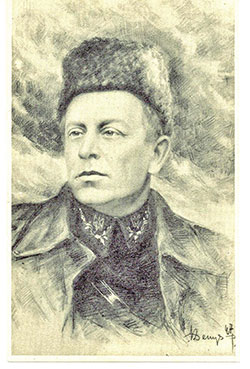
The decisive step came in 1926, when Lécache traveled to Poland and Romania, investigating firsthand the conditions of Jewish communities and the persistence of violence and discrimination. This conviction was reinforced by his involvement in the case of Sholem Schwartzbard, a Jew who assassinated Symon Petlura, a Ukrainian nationalist leader who was widely accused by Jewish communities of responsibility for pogroms during the civil war. Schwartzbard’s trial in 1927 became a cause célèbre, drawing international attention much as the Dreyfus case before it, and Lécache participated in the defense effort, helping to gather and publicize evidence of the atrocities attributed to Petlura’s forces. Schwartzbard’s acquittal was broadly interpreted as an implicit recognition of the enormity of the crimes committed against Jews but, for Lécache, the episode reinforced the power of coordinated advocacy and the idea that legal defense, public opinion, and organized advocacy could intersect powerfully.
That same year, in 1927, Lécache founded the Ligue Centre les Pogroms (“League Against Pogroms”), an organization initially conceived as a response to the specific phenomenon of Eastern European anti-Jewish violence. However, from the outset, it carried a broader ambition: to create an international network capable of mobilizing intellectuals, politicians, and public opinion against antisemitism in all its forms. In 1928, the organization was reconstituted and renamed the Ligue Internationale Contre L’antisémitisme, often rendered in English as the International League Against Antisemitism (ILAA), with the name change signaling a broader ambition: a shift from reacting to episodic violence to confronting a pervasive ideology of hate, from combatting not only specific outbreaks of violence but also the underlying ideology of antisemitism wherever it appeared.
From the outset, Lécache envisioned the ILAA as more than a reactive body. It was to be an international organization capable of mobilizing opinion, influencing policy, and providing support in concrete cases. Accordingly, the ILAA under his leadership developed a distinctive character; it was French in its organizational base and rhetorical style, rooted in republican ideals of equality and universal rights, but international in its aspirations. He understood that antisemitism was not confined to one country, and he sought to build alliances across borders. To that end, he assembled an honorary committee of outstanding prominent intellectuals and cultural figures, whose names lent prestige and visibility to the cause.
The ILAA was, in many respects, a pioneering organization. It sought to mobilize an international network of supporters, drawing on intellectuals, writers, scientists, and public figures. Among its most prominent figures was Albert Einstein, who served as honorary president and whose global reputation lent considerable prestige to the organization. The honorary committee also included Sigmund Freud, whose support for the ILAA can be seen as consistent with his broader concern about the irrational forces that shape human behavior.
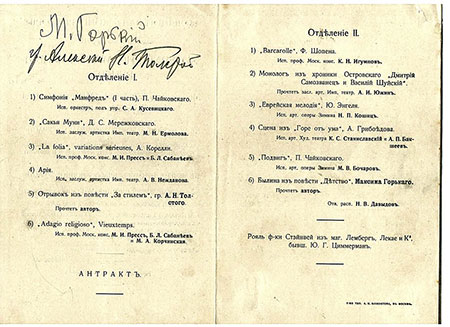
Another leading figure associated with the ILAA was Maxim Gorky, the Russian author whose revolutionary credentials and literary fame made him a significant presence. Gorky’s inclusion illustrated Lécache’s effort to bridge ideological divides; not aligned with a single political camp, the ILAA sought support from liberals, socialists, and others who could agree on the need to combat antisemitism.

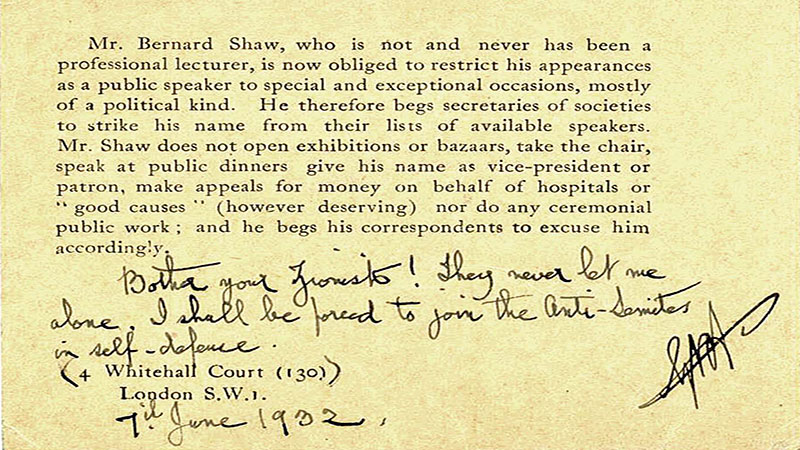
From the English-speaking world came figures such as George Bernard Shaw and H. G. Wells. Shaw’s involvement is particularly intriguing, given his complex and sometimes controversial views; while Shaw opposed persecution and supported humanitarian causes, some experts have noted that his writings occasionally included problematic generalizations about Jews. His association with the ILAA underscores the broad, and sometimes uneasy, coalition Lécache assembled, one that prioritized opposition to violence and discrimination even when deeper philosophical agreement was lacking. In contrast, Wells was a more straightforward advocate of internationalism and social reform, and his participation aligned with his broader commitments.
The ILAA’s leadership extended beyond its honorary committee, with Lécache himself as the driving force, serving as secretary-general and later as president, but he was joined by activists, lawyers, and journalists who shared his sense of urgency. The organization established branches in several countries and sought to coordinate campaigns, publish reports, and intervene in specific cases of persecution.
Its methods were varied. The ILAA organized public meetings, issued statements, engaged with the press, pursued legal strategies, and supported defendants and challenging discriminatory laws. In some cases, it acted as an early form of what would later be called a human rights organization, documenting abuses and appealing to international opinion so that many authorities consider the ILAA one of the precursors to modern anti-racism and human rights groups.
The interwar period, however, was not an easy environment for such work. Antisemitism was rising in many parts of Europe, particularly in Germany, where the emergence of National Socialism, fueled by economic instability, political extremism, and nationalist ideologies, posed a particularly grave threat. The ILAA sought to raise awareness and mobilize opposition, but its capacity was limited because it was an advocacy organization, not a state actor, so that it lacked the means to enforce its aims.
Reactions to the ILAA varied. Some political leaders, particularly in France, viewed it as a legitimate and even necessary voice, in part because of the French republican tradition, with its emphasis on citizenship and equality. However, at the same time, critics accused the organization of exaggeration or of pursuing a narrowly Jewish agenda to the detriment of other interests. Within the Jewish community, responses were also mixed; many Jewish leaders welcomed the ILAA’s efforts, seeing it as a vital instrument in a dangerous time, but others were more cautious, concerned that overt activism might provoke further hostility or that international campaigns could interfere with local strategies.
The organization achieved notable successes, though they were often incremental rather than transformative. It helped to publicize cases of injustice, influenced public opinion, and provided support to victims particularly its advocacy role in the Schwartzbard affair, which remained a touchstone demonstrating the potential impact of coordinated advocacy. However, WWII disrupted the ILAA’s activities, and Lécache personally faced significant danger because, as a Jewish activist in occupied France, he was a particular target.
In September 1939, although he was not subject to military obligations because he had been honorably discharged in 1918 after his service during WWI, Lécache nonetheless volunteered to serve. Fleeing the Nazis to Algiers, he was later arrested, stripped of his French nationality by the Vichy government (which he did not regain until 1949), and sent to a succession of internment camps until he was liberated in December 1942, a few weeks after the Anglo-American landings and the establishment in Algiers of a French High Commission for North Africa. After the war, he helped to reconstitute the organization, and the ILAA evolved into what is now known as LICRA (Ligue Internationale Contre le Racisme et L’antisémitisme), reflecting a broader mandate that included combating racism more generally.
Lécache’s evolution as a Jewish activist is reflected in two of his major works, Jacob (1925) and Au Pays des Pogromes (1927). Jacob closely reflects his broader intellectual profile in this period. Before becoming best known as an anti-racist activist, he moved within left-wing, secular, and Masonic circles that were generally skeptical of organized religion while remaining attentive to antisemitism and Jewish vulnerability in Europe. Jacob is a semi-realist novel focusing on a Jewish immigrant family in Paris, strongly shaped by Lécache’s own background as the child of Eastern European Jewish immigrants and his exposure to socialist, anarchist, and assimilationist intellectual circles in interwar France.
The narrative centers on a Jewish family, most importantly a father and his children, whose life trajectory illustrates a generational rupture. The parents remain attached, at least symbolically, to inherited Jewish traditions, while the children move decisively into secular French bourgeois society. The son, Jacob, functions as both a character and a symbolic figure: he embodies the tension between inherited Jewish identity and full integration into modern French life.
Across the novel, Jewish identity is not presented as a unified religious or cultural system but rather as something increasingly fragmented under the pressures of modernity. The children’s abandonment of tradition is not simply treated as rebellion, but as a sociological transformation: education, professional mobility, and urban bourgeois existence gradually replace ritual observance, communal continuity, and religious authority. In that sense, the “assimilation” theme is central, but it is less a moral judgment than a narrative observation about historical change.
Significantly, the Jewish characters are not caricatures of wealth or “big bourgeoisie” in any strict sense; while they do become socially mobile within French society, the emphasis is more on cultural transformation than economic class critique. The family’s trajectory is used to explore how Jewish identity survives, or dissolves, when placed in an environment of French republican universalism, where religion and communal distinctiveness are expected to recede into private life.
What emerges from Jacob is a Lécache who is intellectually close to assimilationist and secular republican Jewish currents of early 20th-century France. His portrayal suggests sympathy for Jews entering modern French society as equal citizens, but also anxiety about the cost of that transition: the weakening of inherited religious practice and collective memory as Jewish tradition appears as something historically meaningful but socially vulnerable. As such, Jacob reflects a position that is neither religiously affirming nor hostile. The emotional center of the book is therefore not theological affirmation, but rather the ambivalence of transition; that is, what is gained in civic integration and what is lost in continuity.
Jacob and Lécache’s later anti-antisemitic reportage, especially the Au Pays des Pogromes (“In the Land of the Pogroms”), while closely linked, show a noticeable evolution in tone, purpose, and his understanding of Jewish identity.
The Au Pays des Pogromes cycle represents a decisive shift in both genre and outlook. These works are journalistic investigations based on Lécache’s travels in Eastern Europe, particularly in areas of Poland, Ukraine, and Romania where violent antisemitism was widespread in the interwar period. Here, Jewish life is no longer framed as a question of assimilation versus tradition but as a question of physical survival under systemic hostility.
The Jewish characters in these accounts are no longer bourgeois intermediaries between tradition and modernity, but vulnerable communities living under threat. Instead of generational conflict within a family, the central structure becomes the confrontation between Jewish civilians and hostile or indifferent state structures, local militias, and nationalist movements. The tone is far more urgent and accusatory, as Lécache documents pogroms, legal discrimination, and social exclusion, and he frames these not as isolated incidents but as a broader European crisis of antisemitic violence.
What changes most significantly is Lécache’s understanding of Jewish identity itself. In Jacob, Jewishness is something that can fade into French citizenship; in Au Pays des Pogromes, Jewishness is something that marks a group as permanently exposed to danger regardless of their internal cultural choices. While this does not translate into a complete abandonment of his earlier assimilationist framework, it forces a recalibration: Jewish survival is now seen as dependent not only on integration but also on political protection, international attention, and collective rights. Seen together, the two works show a writer moving from a relatively inward, sociological-literary exploration of Jewish modernity to an outward-facing, documentary and activist engagement with antisemitism as a European political reality.

In the rare and historic September 23, 1929 correspondence to Francis Jourdain exhibited here, Lécache writes in French:
I have just returned from Palestine and found your petition. If it is not too late, here is my signature.
Our correspondence acquires particular significance, with Lécache’s reference to having “just returned from Palestine” being consistent with his pattern of travel and engagement. In the interwar period, Eretz Yisrael, then under the British Mandate, was becoming a focal point of Jewish political and cultural life, as well as of international attention so that visits by activists and intellectuals were becoming increasingly common and such journeys often influencing their perspectives.
The late 1920s were a particularly volatile period in Eretz Yisrael. The 1929 riots, which resulted in significant loss of life among both Jews and Arabs, underscored the fragility of the situation and it is reasonable to suggest that either Lécache was present during these events or traveled to Eretz Yisrael in response to these events.
As to Lécache’s views on Zionism, the historical record suggests a nuanced position; he was not primarily a Zionist ideologue in the mold of Herzl or later political leaders, but his central concern was the protection of Jews wherever they lived. That said, he was not opposed to Jewish settlement in Eretz Yisrael and he appears to have regarded it with a degree of sympathy, particularly as a response to the precarious conditions facing Jews in Europe.
After his 1929 visit to Eretz Yisrael referred to in our featured correspondence, Lécache wrote Cross Bearers, in which he presents the situation in Eretz Yisrael as a multi-layered colonial and intercommunal crisis shaped by competing national, religious, and imperial pressures. He criticizes the British Mandatory authorities for what he views as administrative inconsistency and failure to manage competing commitments under the League of Nations Mandate system; in his framing, British governance is depicted less as neutral arbitration and more as a structurally unstable colonial arrangement that exacerbates tensions by trying to balance irreconcilable promises to both Arab and Jewish communities.
He also expresses unmistakable criticism of extremist or politically mobilized elements within the Arab leadership of the period, particularly figures associated with religious-national agitation in the wake of the 1929 Arab violence. Consistent with many liberal Jewish observers of the period, he tends to distinguish between ordinary Arab populations and political or religious leadership factions that he believed were instrumental in escalating tensions.
On the Jewish side, Lécache’s position is more nuanced than a simple “pro- or anti-Zionist” stance. He was not a rejectionist of Jewish national aspirations in Eretz Yisrael and, as a Jewish activist fighting antisemitism, he generally accepted the legitimacy of Jewish historical ties and the refugee-driven context of Zionist settlement. However, he was critical of certain strands of political Zionism as they were manifesting in the Mandate period.
His critique is usually described in three overlapping directions:
First, he was concerned about what he saw as the increasingly rigid national framing of the conflict. In his account, Zionist institutions were sometimes portrayed as contributing, whether intentionally or structurally, to a zero-sum political logic in which Arab and Jewish national claims become mutually exclusive rather than negotiable within a shared civic framework.
Second, he expressed unease about aspects of settlement policy and land acquisition practices. While not rejecting Jewish immigration as such, he was sensitive to Arab dispossession narratives and he suggested that rapid institutional land transfer and settlement expansion risked intensifying hostility and undermining prospects for coexistence.
Third, and perhaps most importantly, he criticized what he perceived as political insularity within segments of Zionist leadership. In his framing, certain Zionist actors underestimated Arab political identity and overestimated the degree to which European diplomatic protection (especially British backing under the Mandate) could substitute for local political accommodation. This is where his tone appears critical: he argues that ignoring Arab national sentiment or treating it as a secondary factor is strategically and morally shortsighted.
As for the book’s overall argumentative structure, Cross-Bearers is best understood as a moral-reportage text typical of interwar French Jewish intellectual journalism. It is not an academic monograph with systematic argumentation but, rather, a travel-based synthesis combining eyewitness impressions, political commentary, and ethical reflection. Its tone is often alarmed but reformist, as he tries to warn that Eretz Yisrael is moving toward irreversible communal polarization.
Many authorities characterize Lécache as aligned with a form of liberal internationalism rather than exclusive nationalism. He supported Jewish rights in Eretz Yisrael but did not advocate for them in isolation from broader considerations; as such, his approach was consistent with the ILAA’s general orientation: to combat antisemitism globally rather than to focus solely on the establishment of a Jewish state.
The mention of a petition signed by “Jourdain” introduces a more elusive element, as I have been unable to find any reference to a widely documented “Jourdain petition” associated with the ILAA in standard historical accounts. It is possible, however, that the reference is to a specific initiative or individual that did not achieve lasting prominence or that is recorded under a different name, and Lécache’s willingness to add his signature, even belatedly, reflects the culture of advocacy in which he operated: one of constant appeals, declarations, and attempts to mobilize opinion.
Lécache personally continued to play a role in postwar efforts to combat racism and antisemitism and his career reflects a continuity of purpose, even as the context changed dramatically. From the pogroms of Eastern Europe to the broader struggles of the mid-twentieth century, he remained committed to the idea that organized, principled resistance was both necessary and possible.
As such, our letter is more than a mere historical curiosity; rather, it is a fragment of a larger narrative, one that connects an individual activist to an international movement and to a moment in history when the stakes were already high and rising. It captures, in a few lines, the urgency and the humility of Lécache’s approach: the recognition that one signature might not change the world, but that it was nonetheless worth adding, even if one arrived a little late.
If there is a final irony, it is that the ILAA’s efforts, while unable to avert the disasters that followed, helped to shape the language and strategies of later human rights advocacy. The idea that prejudice and violence against a particular group are matters of international concern, requiring coordinated response, is now widely accepted but, in Lécache’s time, it was still being forged, often in the face of skepticism or indifference.
Many historians argue that this is where the enduring significance of Lécache and the ILAA lies: not in their immediate successes or failures, but in their contribution to a longer trajectory. They were among those who insisted that antisemitism was not an internal matter for any one country, but a problem that demanded attention from the wider world. At the end of the day, his life can be seen as a response to a series of moral challenges. He did not begin as a dedicated activist, but he became one through experience, observation, and conviction, and his travels, including those to Eretz Yisrael, were part of a broader effort to understand and engage with the realities facing Jewish communities.

Lécache is buried at the Montparnasse Cemetery in Paris, one of the city’s major secular cemeteries. The location of his burial is itself revealing; the Montparnasse Cemetery is not a specifically Jewish cemetery, though Jews are buried there among many other figures from French intellectual and cultural life. His burial there arguably reflects his identity as a French public figure rather than as a Jewish activist.