October 2, 2026
 Categories: Featured / Headline / Parsha / Torah
Between Darkness and Dawn: Steadiness in Parshas Bo


We read Parshas Bo in the chill of January, months before Pesach. The calendar feels ordinary, and our world still storming, yet the Torah places us at the threshold of liberation. Bo is not just about leaving Mitzrayim. It is about learning that freedom is not chaos, but a covenantal rhythm.
Reading Bo in January reminds us that freedom begins long before Nissan. It begins in anticipation, in preparation, in the sanctification of time itself. Even in a world that trembles, we are called to trust Hashem’s structure, to stand strong, and to temper our joy with compassion.
The Compassion of Diminished Joy
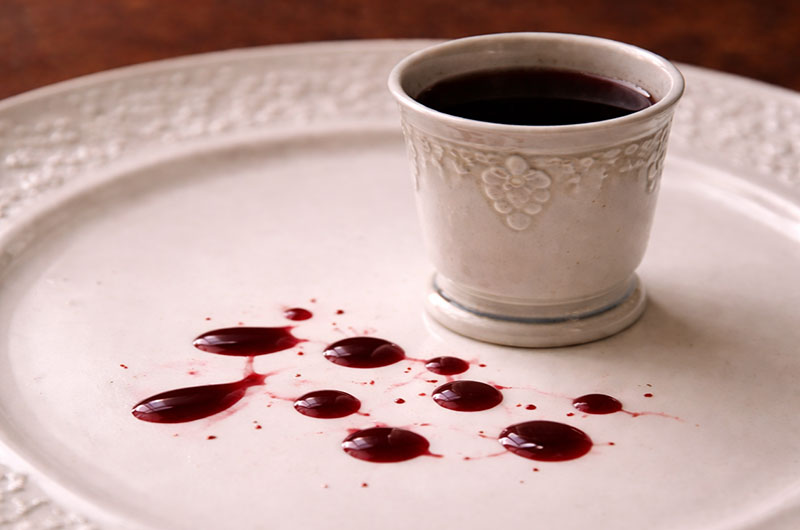
In Bo, the plagues reach their terrible climax. It is a portion filled with devastation, fear, and the unraveling of a world. And yet, when we retell this story each year at the Seder, we do something quietly radical: We diminish our joy. We spill a drop of wine for each plague, acknowledging that even necessary justice carries human cost.The Torah does not ask us to sanitize the suffering of others, nor does it pretend that liberation comes without consequence. It presents the plagues in all their complexity. It is a story of justice intertwined with grief, of freedom born through upheaval. And our response is not triumphalism, but restraint.
Rashi notes that the Egyptians were “the work of My hands,” and therefore their suffering is not taken lightly. The Midrash (Megillah 10b) famously teaches that when the Egyptians drowned in the sea, the angels wished to sing and Hashem silenced them. “My creations are drowning, and you wish to sing?” If even angels are asked to pause, how much more so must we.
But what has always struck me is that the Torah does not erase the plagues. It does not soften them. It does not pretend that the suffering did not occur. Instead, it asks us to hold the full truth: that liberation sometimes comes through events we would never wish on anyone, and that acknowledging this does not weaken our gratitude. Rather, it deepens it.
The spilled wine is not a political statement, nor is it a commentary on any modern conflict. It is a reminder of who we are meant to be. It teaches that moral clarity does not require emotional hardness. It teaches that even when we are right to celebrate our freedom, we acknowledge that that freedom came at a cost. And it teaches that empathy is not an exception in Jewish life – it is the expectation.
The first time I saw someone spill the wine, I remember feeling almost startled. I had never encountered a religious tradition that built compassion into its rituals so quietly, so naturally, without fanfare. There were no sermons attached to it, no dramatic explanation. It was simply part of the rhythm of the Seder, as natural as the matzah and the maror. It was a way of saying: We do not rejoice in suffering, even when the suffering belongs to those who oppressed us.
In a world that has grown louder and more polarized, I find myself returning to this image of spilled wine. Not because it offers easy answers, but because it offers a framework for holding complexity. It reminds me that Jewish tradition does not ask us to deny our pain or minimize our fear. It does not ask us to pretend that threats are imaginary or that history has been gentle. But it also does not permit us to lose our humanity in the process.
The spilled wine teaches that we can acknowledge suffering without surrendering our right to exist. We can mourn losses without questioning our own legitimacy. We can be compassionate without being naïve. And we can be strong without becoming indifferent.
This ritual has become an anchor for me. It is a reminder that our Jewish identity is built on the ability to hold vulnerability and resilience at the same time.
Al Tira: Courage Without Hardness
There is another quiet moment in Jewish life that echoes this same balance. Toward the end of davening, after the structure of the service has carried us through its familiar steps, there is a short prayer that some communities recite quietly, almost as an afterthought. It appears in some siddurim in italics, tucked beneath Aleinu: “Al tira mi-pachad pis’om” – Do not fear sudden terror.It is not a long prayer, and it is not recited with the same communal energy as the earlier parts of the service. But its placement is intentional. It arrives at the moment when we are about to step back into the world, when the sanctuary’s walls no longer shield us, when the noise of ordinary life begins to press in again. It is a reminder that whatever we carry with us – our worries, our uncertainties, our responsibilities – we do not carry them alone.
The haftarah for Parshas Bo echoes the same message: “Do not fear, My servant Yaakov… for I am with you” (Yirmiyahu 46:28). Ramban writes that this reassurance is not a promise of ease, but a promise of presence. Jewish courage is not the absence of fear. It is the decision to keep moving, keep practicing, keep belonging, even when the world feels unpredictable.
Rav Joseph Soloveitchik, zt”l, wrote that Jewish courage is not a matter of temperament but of covenant. It is not the absence of fear, nor the performance of strength, but the decision to keep living Jewishly even when the world feels unstable. Courage, in his view, is expressed not in dramatic gestures but in the quiet, stubborn insistence on continuity. Consistently showing up, praying, learning, and belonging. It is the daily choice to remain part of the mesorah, even when the atmosphere around us feels uncertain.
In the last several years, the atmosphere around Jewish identity has shifted in ways that feel unmistakably connected to the story of Bo. The Torah describes a world trembling under the weight of upheaval. A society turning against its neighbors, a ruler whose fear curdles into cruelty, a people forcefully reminded of their status as “other.” That history is not distant. You feel echoes of it now in the way conversations tighten, in the way institutions quietly add layers of security, in the way Jewish students and professionals weigh whether it is safe to speak openly or even to be visibly Jewish in public spaces. You feel it in the sudden awareness of being seen, of being counted, of being watched. These are not abstract anxieties; they are lived realities. And while none of this stops Jewish life (nor has it ever), it changes the emotional landscape in which it unfolds. It reminds us that the world can shift quickly, that visibility can become vulnerability, and that the steadiness we cultivate inside our tradition is not a luxury but a necessity.
In those moments, al tira becomes more than a line in italics. It becomes a grounding practice. It reminds me that fear may be present, but it does not define us. It reminds me that Jewish life has endured far more turbulent periods than this one, and it has done so not by retreating, but by continuing to gather, to pray, to study, to celebrate, to mourn, to mark time, to live.
Courage, in this context, is not a grand gesture. It is the decision to show up. It is the decision to keep participating in a tradition that has carried our people through every imaginable circumstance. It is the decision to stay connected to a community that has learned, over and over again, how to hold both vulnerability and resilience at the same time.
And perhaps most importantly, al tira reminds me that Jewish courage is not loud. It is not performative. It is not about projecting strength. It is about living with steadiness. It is a steadiness rooted in covenant, in memory, and in the quiet confidence that we are part of something larger than whatever moment we are living through.
Structure that Holds Us
If al tira teaches us how to stand steady, Bo teaches us how to stay steady.Slavery had its structure: Pharaoh’s demands, the endless cycle of bricks and mortar. Freedom, too, requires structure, but a Divine one. In Bo, we are commanded to sanctify the new moon, to mark our thresholds with blood, to gather as families for the Pesach offering. These acts are not random; they are choreography. They teach us that redemption is not a sudden collapse but a carefully woven rhythm.
The Maharal teaches that the endurance of the Jewish people comes from the structure of Jewish life itself – from the rhythm of mitzvos and the sanctity of Jewish time. In his view, it is this sacred patterning that binds us to something larger than any single moment in history. Structure is not a constraint; it is the architecture of continuity. It is what allows a people to remain whole even when the world around them shifts.
And that structure is not theoretical. It is lived. It is the candles lit on a Friday night even when the week has been heavy. It is the Shema whispered before bed. It is the familiar melodies of the siddur that rise up from memory even when the heart feels uncertain. It is the calendar that pulls us forward. From Shabbos to Shabbos, from chag to chag, these are not mere abstracts. They are the lived frameworks that have carried the Jewish people through every kind of uncertainty. They continue even when the world feels unsettled, and they remind us that Jewish life is not reactive: It is rhythmic, steady, and enduring.
When I first entered Jewish life, I assumed the structure would be something I’d grow into slowly. Instead, it grounded me almost immediately. Lighting candles on Friday night, even when I was still learning the blessings, created a stability I didn’t know I needed. Showing up to shul, even when I didn’t understand every word, gave me a place to stand. The rituals didn’t require fluency. They required presence.
That is the quiet strength of Jewish practice. It does not depend on perfect knowledge or perfect circumstances. It depends on showing up. It depends on participating in a rhythm shaped and refined over thousands of years. It depends on trusting that the structure will hold you even when you are still learning how to hold it.
And it does hold. It holds in moments of joy and in moments of fear. It holds when the world feels predictable and when it feels uncertain. It holds because it was built to withstand far more than any one generation’s challenges.
The Three Pillars of Jewish Steadiness
The spilled wine teaches compassion. Al tira teaches courage. And the structure of Jewish life teaches continuity.Together, they form a way of living that has carried our people through every kind of uncertainty. They remind me that strength and empathy are not opposites, that fear does not define us, and that belonging is something we practice, not something we inherit.
In a world that often demands that we choose between vulnerability and resilience, Judaism insists that we hold both and that we do so with dignity. It insists that we remain human even when the world feels inhumane, that we stay rooted even when the ground shifts, and that we continue the rhythm of Jewish life not because it is easy, but because it is ours.
And perhaps that is the quiet legacy of Bo – that a people shaped in the tension between darkness and dawn learned to walk forward with compassion in one hand and courage in the other.
Steady, enduring, and bound to a mesorah that outlasts every storm.