 October 23, 2026
 Chayei Sarah And the Day You Were Needed
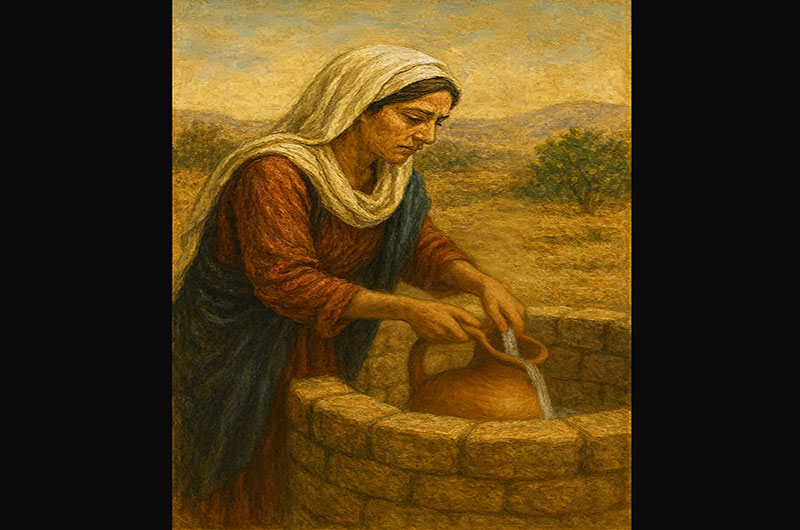


Parshas Chayei Sarah begins with the death of Sarah Imeinu. That’s where most commentaries start. They begin with her age, her legacy, and Avraham’s response. But before I sat down to write this, I had a conversation with one of my cousins. She shared a teaching her daughter had learned recently, and it shifted how I approached the parsha.
The teaching was simple, but it stuck: Who are you living for? Are you living for your work? For your children? For your parents? For fame or fortune? Or are you living for Hashem?
But if you say Hashem – what does that actually mean?
It’s not just a spiritual question. It’s a systems question. It’s about how we choose, how we show up, and how we build clarity in a world that demands everything.
Chayei Sarah isn’t just about mourning. It’s about movement. Avraham rises to negotiate a burial site with purpose. Eliezer sets out with a mission and a strategy. Rivkah steps forward without being asked, but with conviction. And in the haftarah, Dovid HaMelech is silent, Bat-Sheva speaks up, and Shlomo is named.
Each figure this week moves. Some speak; some stay silent. Some act without being asked. None of them says who they’re living for. But their choices, quiet or loud, make it clear.
And that’s what I’m still sitting with – not just what they did, but what it reveals about how we live now.
She Wasn’t Asked
Rivkah isn’t given instructions. She isn’t summoned. She sees thirsty camels and responds – quickly, decisively, and without hesitation. Her hospitality isn’t just generous; it’s deliberate. She draws water not only for Eliezer but for all his camels, running back and forth without being asked. The Midrash (Bereishis Rabbah 60:5) highlights this as a sign of her character: not just kindness, but initiative and clarity.Rashi notes that Eliezer was watching to see whether Hashem had made his journey successful. But Rivkah’s success wasn’t about fulfilling a prophecy. Rather, it was about revealing who she already was. She didn’t wait for a Divine signal. She acted with conviction, and that became the sign.
Living for yourself doesn’t mean acting selfishly. It means acting with integrity, even when no one is watching.
Rivkah doesn’t perform for approval. She doesn’t wait to be chosen. She chooses. And in doing so, she becomes the matriarch of a nation.
We see echoes of this kind of clarity in our own time. Rachel Goldberg-Polin, whose son Hersh Goldberg-Polin, z”l, was taken hostage on October 7, stepped forward as a global advocate for hostage release. She wasn’t appointed. She didn’t wait for permission. She spoke to the U.N., met with world leaders, and refused silence. Her leadership wasn’t about recognition. It was about responsibility. Like Rivkah, she moved with conviction before anyone named it holy.
Rivkah’s story reminds us that living for yourself isn’t passive. It’s deliberate. It’s about knowing what matters and moving toward it. Even when no one names it sacred.
She Refused Silence
Avraham’s purchase of Machpelah is not a real estate transaction; it’s an act of permanence. The Torah devotes twenty verses to the negotiation, emphasizing Avraham’s insistence on paying full price. He refuses borrowed dignity. He lives for Sarah’s memory, for Yitzchak’s future, and for a legacy that threads grief into stone.Rabbinic commentary sees this moment as foundational. Rabbi Michael Hattin notes that Avraham’s act transforms Divine promise into documented reality. He doesn’t invoke prophecy; he secures permanence. His grief becomes architecture.
Bat-Sheva also acts with conviction. When Adoniyahu seizes power, she refuses silence. She allies with Natan, invokes Dovid’s oath, and ensures Shlomo’s succession (Melachim Aleph 1). The Talmud (Sanhedrin 70b) praises her wisdom and timing. She doesn’t plead – she corrects. She lives for her son, not out of obligation, but as an act of restoration.
Living for family is not submission; it’s conviction. It’s naming grief without being consumed by it. It’s threading memory into stone, into song, into succession.
We see echoes of this in modern life. Rachel Fraenkel, mother of Naftali Fraenkel, z”l, became a voice of unity after her son’s murder in 2014. She spoke not with vengeance, but with clarity. Her grief became communal strength. Like Bat-Sheva, she refused silence. Like Avraham, she turned loss into legacy.
Living for family means choosing clarity over comfort. And sometimes, that clarity leads to conflict, especially when career, power, or legacy are at stake.
He Did Not Thunder
Eliezer may be a servant, but his actions in Bereishis 24 are sovereign. He sets conditions, prays for signs, and negotiates with Rivkah’s family with precision. The Midrash (Bereishis Rabbah 60:5) notes that Eliezer is one of three figures whose prayers are answered before they finish speaking – a sign of Divine alignment. Rashi emphasizes Eliezer’s clarity: He doesn’t wait for prophecy; he watches for character. His career is not just service – it’s sacred discernment.Natan HaNavi, likewise, is a prophet, but he operates like a tactician. In Melachim Aleph 1, he sees Adoniyahu seize power and acts with timing, not thunder. He approaches Bat-Sheva first, then Dovid, threading prophecy into politics. The Talmud (Sanhedrin 70b) praises his wisdom and restraint. Natan doesn’t perform miracles; he performs restraint.
Living for a career is not only secular – it’s sacred. It’s knowing when to speak, when to wait, when to act. It’s threading Divine purpose into human systems.
We see echoes of this in modern Jewish life. Boaz Dovidoff, writing on the tension between parnassah (livelihood) and kedusha (holiness), notes that career choices often reflect spiritual priorities. Choosing when to work, when to rest, and how to protect sacred time is itself a form of Divine clarity.
We see it outside Jewish life as well. Temple Grandin, scientist and inventor, built her career on observation, empathy, and conviction. Her designs transformed livestock handling across the world, not through power, but through clarity. Like Eliezer, she watches for signs. Like Natan, she intervenes with timing and care.
Her work is not political; it’s purposeful. Not religious, but restorative. Not thunder, but clarity.
To live for career is to resist the collapse of purpose into ambition. It is to know when your role is service and when it rises into authority. And discernment, at its sharpest, becomes refusal. Where legacy, land, and power converge.
He Named What Would Last
Ephron sells Machpelah, but he does not live for legacy. He names the price, performs the transaction, and disappears. His words are many, but his memory is thin. He lives for land, not permanence. As Rabbi Yanki Tauber notes, Ephron’s speech is public, but his covenant is hollow; he vanishes from the narrative after the sale.Adoniyahu lives for power, not promise. He seizes the throne without covenant, gathers supporters without clarity, and moves without Divine sanction. His ambition is loud, but his legacy is short. As Andrew Knapp writes, Adoniyahu’s self-coronation lacked prophetic or parental endorsement, violating ancient succession norms. He is corrected, not crowned. His name is remembered not for building, but for being refused.
Shlomo lives for legacy. He is named by Dovid, affirmed by Bat-Sheva, and anointed with oil. He builds the Temple, threads wisdom into law, and consecrates permanence. His legacy is not just architecture – it’s cadence. He lives for Hashem, for family, for future. His name is not seized; it is given.
Living for legacy is not possession – it’s promise. It’s naming what will last and refusing what will fade. It’s threading permanence into memory, into covenant, into stone.
We see echoes of this in modern Jewish life. Rabbi Lord Jonathan Sacks, zt”l, built a legacy not through power, but through wisdom. His writings, teachings, and leadership as Chief Rabbi of the U.K. threaded Torah into public life, ethics into policy, and memory into modernity. He didn’t seize influence; he earned it. His legacy lives in books, students, and communal clarity.
Legacy is not what you own – it’s what you name. And sometimes, naming is the most enduring act of all.
He Met Her in Silence
Yitzchak walks in the field at dusk (Bereishis 24:63). He meets Rivkah not with speech, but with presence. The Midrash (Bereishis Rabbah 60:14) links this moment to Mincha, the afternoon prayer – quiet, brief, and deliberate. Yitzchak lives for Hashem not through command, but through cadence. His prayer is not words; it’s presence.Dovid, too, lives in silence. In Melachim Aleph 1, he is cold, quiet, and fading. He does not act until prompted. But when he does, he restores promise. He names Shlomo, affirms Bat-Sheva, and consecrates succession. The Talmud (Brachos 3b) teaches that Dovid rose at midnight to study Torah and commune with Hashem, not through spectacle, but through stillness. He lives for Hashem not through prophecy, but through correction.
Living for Hashem is not obedience; it’s cadence. It’s choosing when to act, when to pause, when to restore. It’s meeting the Divine in ambiguity, in longing, in sacred silence.
We see echoes of this in modern Jewish life. Rav Adin Steinsaltz, zt"l, spent decades translating the Talmud and opening its gates to all, modeling presence as a form of devotion. His scholarship was intense, deliberate, and expansive. Like Yitzchak, he walked with intention. He sought understanding. Like Dovid, he acted when it mattered.
Living for Hashem means refusing to let faith dissolve into noise. It means discerning the silence that sanctifies and the correction that binds covenant. And covenant, when carried forward, becomes legacy, especially in the crucible of succession, memory, and permanence.
The Day You Were Needed
When we ask, “Who should we live for?” the Torah doesn’t offer a single answer. Instead, it presents a constellation of lives, each one responding to a different call, each one living for Hashem in a distinct way.Rivkah and Bat-Sheva live for service, stepping in when silence would cost everything. Eliezer and Natan live for career, threading purpose into systems with restraint and clarity. Shlomo lives for legacy, building permanence not through possession, but through promise. Yitzchak and Dovid live for Hashem in silence and longing, meeting the Divine in ambiguity and timing.
These are not separate paths. They are all expressions of one truth: To live for Hashem is to live with purpose. Whether through action or stillness, strategy or surrender, each figure models a way of answering the Divine call.
The Lubavitcher Rebbe, zt”l, taught, “The day you were born is the day Hashem decided that the world could not exist without you.” That birth is not random; it is a Divine decree. In it, we are entrusted with gifts, instincts, and opportunities to bring kedusha into the world.
And we are given the freedom to choose how we use them.
Living for Hashem doesn’t always look like prophecy or prayer. Sometimes it looks like a well-timed correction, a quiet refusal, a strategic act of service, or a name spoken at the right moment.
The question, then, is not whether to live for Hashem. The question instead becomes how.
How will you use the gifts you were given? How will you thread holiness into the world that needed you enough to bring you into it?
That is the ultimate question. And only you can answer it.