 October 23, 2026
Categories: Headline / Halacha & Hashkafa / Torah
Daf Yomi - What Is a Sheep?
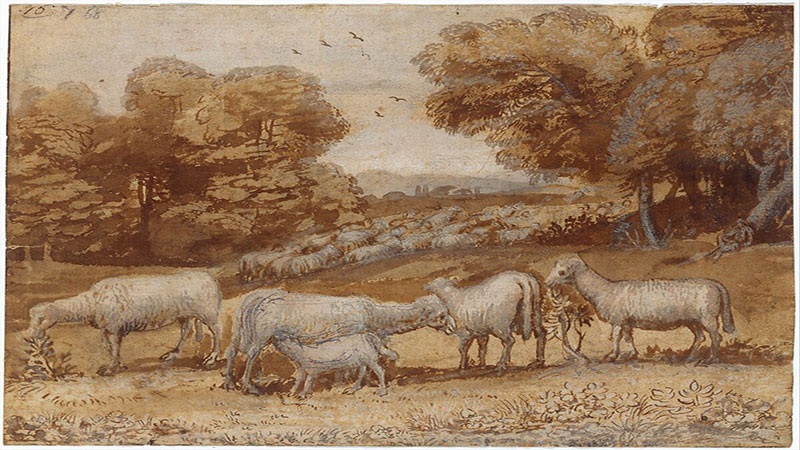


What Is a Sheep?
“If It…Does Not Possess Three Vertebrae”
(Bechoros 40b)
Our Mishna lists various animals and explains their status when they are missing certain organs that affect their fitness to be brought as sacrifices. Among other defects, the Mishna mentions that a sheep is considered defective if it lacks a tail and does not possess at least three vertebrae.
A Merino Lacks a Fat Tail
Today, there are many species of sheep, and the pertinent point for our discussion is that some lack a fat tail (alyah). The sheep we are familiar with all have an alyah, a part the Torah commands us to offer on the altar (Vayikra 3:7-9): “If he offers a sheep…and he shall offer from the Shelamim…the whole alyah.” One of the most prevalent breeds today is the Merino, originating in Spain. It constitutes about 20% of the sheep population in the world and is very much in demand due to the fine quality of its fleecy, curly wool. However, the Marino lacks an alyah. Therefore, we might question whether it is indeed the type of sheep mentioned in the Torah. Can we weave tzitzis from its wool? Can we fulfill the mitzvah of the “first shearing” with it? Does the prohibition of shaatnez pertain to it, and can it be offered as a sacrifice?
Change Due to the Environment Does Not Change a Species
Rabbi Moshe Feinstein, zt”l (Responsa Igros Moshe, O.C. 4:123) proves from the Gemara (Bava Kama 55a) that changes that have occurred in animals due to changes in habitat and climate do not change their identity. Rabbi Shmuel HaLevi Wosner (Responsa Shevet HaLevi 8:236) reinforces this conclusion by noting that the Torah only mentions three species of pure domestic animals: sheep, goats, and cattle, and as these animals are pure and most of their features resemble those of sheep, they are considered sheep in every respect even though their nature has changed because of the environment or the like.
Sheep Taller Than Camels
Rav Wosner adds that Tosafos (Menachos 87a, s.v. She’gov’han) note that the sheep offered for a Tamid sacrifice were actually taller than camels! We thus see that even sheep differing from those commonly found today are considered sheep in every respect. However, he maintains, we should query whether a sheep without an alyah is fit for the altar since our Mishnah explains that a sheep without an alyah is defective. Alternatively, it could be that if a sheep differs from its entire species in not having an alyah, it is considered defective, but if the nature of the species has changed and all these animals lack an alyah, it could be that they are not considered defective.
He concludes his responsum by citing a wonderful and careful study by Malbim. Sometimes, the Torah calls a sheep a keves and sometimes it calls it a kesev. Malbim says that it is called a keves because its wool can be laundered (kovess) and is used to produce cloth. On the other hand, its name kesev derives from the strength of its body: kes av, as in “you have grown fat” (avisa, kasisa), and this is owing to its alyah, which is big and fat. Malbim says that we should notice that it is called a kesev only where the Torah indicates that one should offer the alyah. The ShevetHaLevisays that we thus learn that the name keves also befits a sheep without an alyah whereas kesev denotes a sheep with an alyah. Therefore, regarding halachos other than those pertaining to sacrifices, when there is a doubt, a sheep without an alyah is a sheep in every respect.