 September 25, 2026
 Categories: Features / Marriage and Relationships
Dear Dr. Yael,
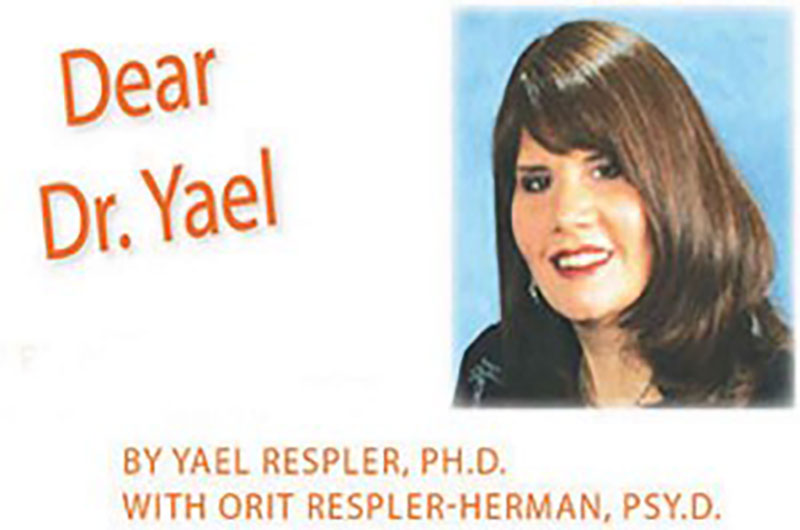


Dr. Yael and Dr Orit wish everyone a Chag Kasher V’same’ach and a special welcome to the Mandel Family Pesach Program in the Hilton at Sommerset New Jersey.
Dear Dr. Yael,
I was married for 50 years to a very difficult and angry man who was niftar suddenly. We built a large family together, and baruch Hashem, all of our children are married with families of their own and are financially successful.
My husband was a generous provider and a respected businessman, but at home he was often angry, controlling, and at times emotionally and physically abusive toward the children. I tried to be a loving, gentle mother and kept a beautiful home, but I did not stand up to him or leave the marriage.
Over the years, our children kept their distance. They maintained respectful contact, calling for Yom Tov and Shabbos, but did not spend time with us or invite us into their homes. They explained that growing up in a tense and painful environment affected them deeply, and they worked hard in therapy to build healthier homes for themselves.
When my husband passed away, we sat shiva together, and for the first time in many years, I felt a deep closeness and connection with my children and grandchildren. It was incredibly meaningful to me, and I hoped it would continue.
However, after shiva, my children expressed long-standing pain and even anger toward me. They feel that by staying in the marriage and not protecting them from their father’s behavior, I chose comfort and financial security over their emotional well-being. As a result, they are not ready to have a close relationship with me now, and they have not invited me for Yom Tov or regular family time.
I feel heartbroken, confused, and very alone. I always believed I was a good and loving mother, and it is very painful to hear how much they suffered and how they see my role in it. I understand why they wanted to stay away when my husband was alive, but now that he is gone, I don’t understand why they would still want to be alienated from me.
How can I begin to repair my relationship with my children and grandchildren? Is there any hope for rebuilding these connections?
A Heartbroken Mother
Dear Heartbroken Mother, You lived for many years in a difficult marriage. You coped the way many people in your position do, by keeping the peace, softening the edges, and trying to give your children warmth in a home that often lacked it. All of these things you did throughout your children’s childhood was not “nothing.” What you did for them mattered. You can see how important it was by the fact that they were able to build beautiful homes of their own. At the same time, your children’s pain is also real. Both of these truths can exist together, even though they seem to be opposite statements. Your children are not describing a small discomfort; they are describing a childhood that felt unsafe and unpredictable. When children grow up around anger and fear, especially when it includes being hit, their nervous systems carry that experience for years. Even if they want to be close and forgive, their bodies remember what they felt and they likely have physical reactions to being in your home and even possibly to being around you as this reminds them of their unsafe childhood. As adults, creating distance is often how your children protect the calmer, safer lives they worked very hard to build. What is especially painful for your children is not only what their father did, but how alone they felt in it. From their perspective, the parent who was “safe” (you) was also the one who did not or could not stop it. That creates a very deep and complicated wound. I want to be very careful here because this is not about blaming you. I am only trying to help you understand what your children are likely feeling. You were in a marriage with its own realities that included emotional, cultural, financial, and possibly fear-based realities. All of these realities made leaving or confronting your husband incredibly difficult. Many strong, loving women make the same choices under those circumstances. BUT, if your goal is to rebuild connection, the path forward is not through explaining your realities or reasons for staying in your marriage. Rather, it is through understanding your children’s pain. Right now, your children are not asking, “Why did Mommy stay?” They are asking, “Can Mommy finally see what it was like for us?” That is a very different conversation. If you want to begin healing, here is what I would suggest may help: Validate your children’s feelings instead of explaining yourself. You may feel a strong need to explain your situation. Your explanations are likely very valid; however, at this stage, explanations can feel to them like minimization. Start instead with something like: “I am beginning to understand how painful your childhood felt, and I am so sorry that you went through that.” Be ready to listen to what they have to say without taking offense and without getting defensive. Your children will likely say very painful things, and it will be hard for you to hear it. However, it is imperative that you let them share their feelings and validate their experience. They may express anger, even unfairly at times. Try to listen without correcting the details. What they are sharing is their emotional truth, not a courtroom case. It doesn’t matter if you have the same perspective, it is very important to listen to their perspective. It is also important to have someone that you can talk to afterward (a very close friend and/or an empathetic and caring therapist) who can help you deal with the emotions that you are feeling because this may be a very difficult thing to do. Take responsibility for your part, without taking all the blame. If you can say something like, “I wish I had protected you more. I didn’t, and I see how much that hurt you, it will open doors that years of gifts and good intentions could not.” Let go of the timeline. The closeness you felt during shiva was real, but it was also held within a unique moment of loss and unity. Relationships built on deeper trust will take time, and likely a lot of it. Don’t expect your children to follow a timeline. Recovering from trauma has its ups and downs and sometimes they will have more strength than others. Consider seeking professional help. A skilled family therapist, someone experienced in trauma and estrangement, can help create a space where both you and your children feel heard safely. This is often essential in situations like yours. Hold onto hope, but reshape it. Repair may not look like large Pesach gatherings right away. It might begin with a short visit, a conversation, or one child slowly opening a door. Small steps are how trust is rebuilt. It is important to remember that you were a loving mother inside a very complicated reality. Your children were loving children inside a very painful reality. Now you are all meeting each other as adults, carrying those histories and trying to do the best that you can. It is not too late to build a connection with your children, but it will require a different kind of strength than the one you used all those years. Now you need the strength to listen, to validate, and to sit with discomfort without rushing to fix it. If you can do all of this, slowly and sincerely, there is a real possibility that connection can grow. It may not look exactly how you imagined, but you can have a meaningful connection with your children. Hatzlacha in this very difficult situation.