 October 23, 2026
 Categories: Features / Marriage and Relationships
Dear Dr. Yael
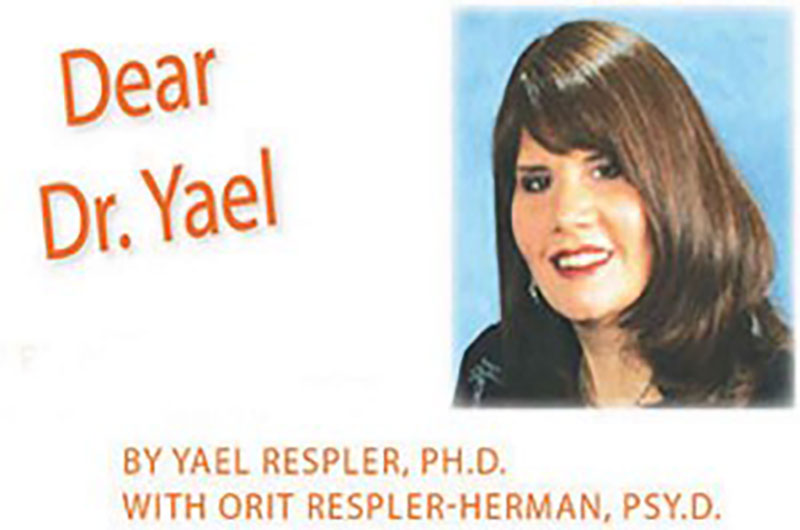


Dear Dr. Yael,
I’m writing because I’d really appreciate your advice about my marriage. My husband is a good person at heart, and there are many things about him that I love and respect. He has worked hard for our family, and there are times when he is thoughtful, caring, and supportive. Those qualities are a big part of why I have stayed committed to our relationship.
At the same time, I often struggle with behaviors of his that seem narcissistic. He can be very self-focused, dismissive of my feelings, and unwilling to take responsibility when we have conflicts. Sometimes our conversations end up revolving around his needs and point of view, and I come away feeling unheard or unimportant. These patterns can be frustrating and emotionally draining.
Because of these challenges, some of the people closest to me, including our children, have wondered whether I should stay in the marriage. They see how difficult things can be and worry about the effect it has on me. I understand why they feel that way, but I don’t want to leave my husband. Despite our problems, I still love him, and I believe there are important parts of our relationship that are worth holding on to.
What I’m hoping to learn is how to handle this relationship in a healthier way. How can I communicate more effectively with someone who often gets defensive or seems focused mainly on himself? What kinds of boundaries might help me protect my own emotional well-being while staying married? Are there strategies that could help us have less conflict and more understanding?
I would be very grateful for any advice, practical suggestions, or resources you can share. I’m not expecting my husband to become a completely different person. I just want to find better ways to deal with these challenges and, if possible, make our marriage stronger.
Thank you for taking the time to read my letter.
Sincerely, Anonymous
Dear Anonymous, Thank you for your honest and thoughtful letter. I can hear both the pain and the love in what you’ve written. You are describing a husband who can be caring, thoughtful, and supportive at times, yet also self-focused, dismissive, and difficult to deal with in conflict. These mixed realities are often what make these situations so confusing. As you noted, your goal is not to change your husband. If he truly has strong narcissistic traits, no amount of explaining, pleading, reasoning, or sacrificing on your part is likely to transform him into the partner you wish he would be. Thus, we can focus on how you can protect your own well-being while remaining in the marriage you have chosen. One of the most important tools is setting firm boundaries. Many people think boundaries are rules they impose on someone else, but healthy boundaries are actually commitments you make to yourself. Instead of saying, “You need to stop speaking to me that way,” a more effective boundary might be, “If you raise your voice or insult me, I will end the conversation and leave the room.” The key is consistency. Boundaries only work when you calmly follow through. I would also encourage you to stop engaging in arguments that are designed to pull you into a power struggle. Individuals with narcissistic tendencies often thrive on emotional reactions, debates, and attempts to prove who is right. The more you defend yourself, explain yourself, or try to get them to see your perspective, the more frustrated you may become. This is where the “Gray Rock” approach can be helpful. When your husband is provoking you or looking for a reaction, respond with as little emotional energy as possible. Keep your responses brief, neutral, and factual. “Okay.” “I understand.” “I hear you.” Then disengage. You do not have to attend every argument to which you are invited. Another important step is practicing radical acceptance. This does not mean approving of hurtful behavior. It means accepting reality as it is. You may spend years hoping that one perfect conversation will finally make your husband understand your feelings. If that never happens, you can end up exhausted, resentful, and disappointed. Accepting that this may simply be who he is allows you to stop taking every selfish comment or manipulative tactic as a personal failure on your part. At the same time, I want you to invest deeply in your own life. Living with someone who consistently centers their own needs can gradually shrink your world. Reconnect with friends, family members, hobbies, interests, and activities that remind you who you are outside of this marriage. A strong support system can provide perspective and emotional nourishment when the relationship feels draining. I am also a strong believer in professional support. However, I would proceed carefully. While couples counseling can be helpful in many marriages, individuals with significant narcissistic traits sometimes use therapy sessions to control the narrative, deflect responsibility, or make their partner question their own perceptions. For that reason, I would strongly recommend individual counseling with a therapist who understands narcissistic relationship dynamics. Having a safe place to process your experiences can be invaluable. Finally, although you are clear that you want to remain married, I would still encourage you to have an exit plan. An exit plan is not the same as planning to leave. It is simply good self-care. Know where important documents are. Maintain access to financial resources. Stay connected to trusted people. If the relationship ever becomes emotionally abusive, physically unsafe, or severely damaging to your mental health, you will have options available to you. You do not have to decide today whether to stay forever or leave tomorrow. Your task right now is to focus on creating a life that is emotionally healthier and more stable, regardless of whether your husband changes. The less energy you spend trying to manage him, and the more energy you invest in managing your own responses and protecting your own well-being, the stronger and calmer you will likely feel. Hatzlacha in this challenging situation!