 October 16, 2026
 From Korach to Chukas


Parshas Chukas
Bamidbar is all about the journeying of the people of Israel through the desert over a period of forty years, a journey that should have taken a few weeks, but that was stalled because of the sin of the spies. Along the way, the people despair, blame Moshe for their travails and even challenge his authority, as Korach and his cohorts did.
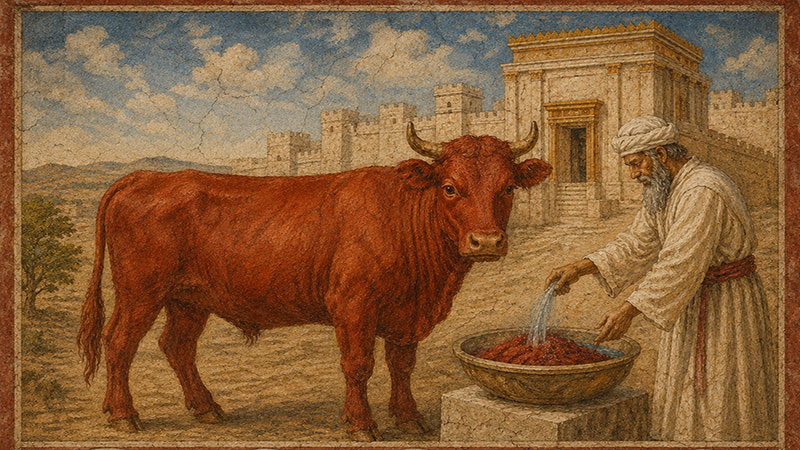
But immediately after recording the events of Korach, the Torah in Chukas interrupts this story to teach us the laws of Parah Adumah, the red heifer. It opens with the words “Zos chukas haTorah. What is the connection between the story of Korach and the Parah Adumah?
“Chukah” means something that defies human logic. The Torah consists of chukim, like the laws of Parah Adumah, which make no sense to us. How can the very potion of ashes mixed with water render the tameh (the impure person it touches) tahor (pure), while at the same time rendering the tahor person who administers it tameh, impure?
That is why Parshas Chukas follows Korach.
Korach was all about validating laws with logic. If a chok does not make sense to the human mind, it is wrong, he said. And so Korach asked Moshe: Does a cloak made entirely of techeiles require tzitzis or is it exempt?
Moshe responded that it is obligated in tzitzit. Korach and his cohorts then ridiculed Moshe and said, is this logical? If one thread of techeiles in a cloak made of non-techeiles material fulfills the mitzva of tzitzis, why would a cloak made entirely of techeiles material require tzitzis? Shouldn’t it exempt itself from tzitzis? (Midrash Tanchumah, Korach 2). Yet you Moshe say it does require tziztis, they said. That makes no sense, so you Moshe must have made it up, just like you made up your mind to anoint your brother kohen gadol.
Moshe’s answer was simple. “You’re right and you’re wrong. I was the one who received the Torah from G-d, not you. I asked Him the same question. Does such a tallis which is entirely techeiles need tzitzis? And Hashem said yes. Why? I don’t understand it myself. But just because we don’t understand something doesn’t make it wrong.
In fact, chukim arelogical. They are logical to their Maker, just not to us. Not wearing sha’atnez, a classic chok, protects us like some sort of medication. It works, even though we don’t understand how. The chukim “are your wisdom and discernment in the eyes of the nations who shall hear all of these decrees and say, ‘Surely a wise and discerning people is this great nation’” (Devarim 4:7).
The color red symbolizes sin (Yishayahu 1:18). The Parah Adumah, which was entirely red, personified someone riddled with sin. How did such a person descend to such an abyss of evil? Because there was nothing, no yoke of the Torah, to restrain him (see 19:2). Eventually, such a person who chases pleasure to exhaustion loses all joy in life and becomes depressed.
Depression is a form of tumah because it is the closest living thing to death.
The Parah Adumah was a cure for tumah. The kohen took the ashes of the cow, which symbolized the cardinal sin of the Egel HaZahav and purged them with water (19:19) which symbolizes the purity of Torah.
Thereby, the individual who was so close to death was rejuvenated through this process. It was the fear of depression and death that brought him back to the paths of the Torah.
There are two motivations to keeping the mitzvot: Fear and love.
Fear will keep one in line because one knows that eventually, upstairs, one will have to account for one’s deeds downstairs.
Love will keep one in line because one derives pleasure and energy from one’s relationship with the Torah.
That is the “chukah,” the imperative of the Torah. It is the Torah itself that should be the cure for depression, not the potion of the Parah Adumah. If one keeps the Torah, one will never need that potion. The Torah gives one the energy to get up each morning and enjoy the day. Learning Torah, keeping it and loving it is the key to life.
This theme of service out of love rather than out of fear repeats itself with the story of Moshe and the rock (20:7-14). There are two ways of turning unfeeling hearts of stone into loving hearts of mitzvot. One way is with the rod of discipline, the fear of punishment and, ultimately, the fear of death. The other way is with the enticing words of Torah, which is the Etz Chayim, the tree of life, not the scepter of death.