 October 9, 2026
 Categories: In Print / Jewish Community
From Tragedy to Anxiety: Fear Persists Years After Pittsburgh Synagogue Shooting
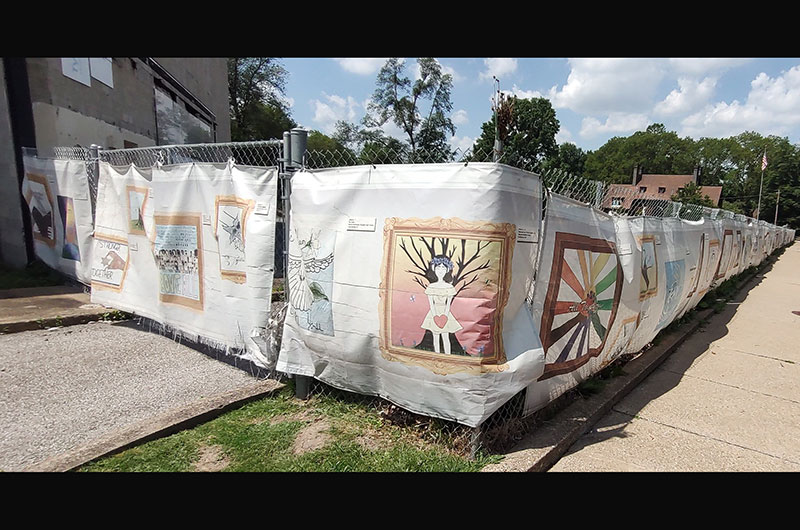


Seven years ago, a massacre of great proportions occurred at the Tree of Life Synagogue in the Pittsburgh neighborhood known as Squirrel Hill. It was a Shabbos never to be forgotten.
On October 27, 2018, as services began at approximately 9 a.m. in the trio of synagogues sharing the same building, an admitted antisemite gunned down 11 congregants: Joyce Fienberg, Rose Mallinger, Cecil Rosenthal, David Rosenthal, Bernice Simon, Sylvan Simon, and Irving Younger, of the Tree of Life synagogue; Richard Gottfried, Daniel Stein, and Melvin Wax of the New Light Congregation; and Jerry Rabinowitz from Congregation Dor Hadash.
By 11 a.m., the gunman, Robert Bowers, now 53 years old, was shot and wounded before surrendering to police. At the crime scene, he used the phrase, “Jews Need to Die.”
By 2 p.m., F.B.I. Director Christopher Wray was part of a critical incident conference call that included approximately 40 supervisors at FBI headquarters.
At the time, Shawn Brokos was a squad supervisor for the Pittsburgh F.B.I. office. Her squad was combating transnational drug organizations and organized crime. As the crisis management coordinator for the local F.B.I. branch, her role was to assess the situation and determine what assets could be brought in to properly investigate the shooting.
“I told the folks on the call, ‘We need many evidence response teams. Our 20-person Pittsburgh response team is not sufficient for this crime scene.’ It was the worst crime scene that I had ever seen in my entire history in law enforcement,” she recalled in an interview with The Jewish Press. “I was not a stranger to violent crime scenes, but this was unlike anything anybody should ever have to see.” In January 2020, Brokos, 56, who is not Jewish, was appointed director of community security for the Jewish Federation of Greater Pittsburgh.
Bowers, meanwhile, was charged with 63 federal counts, including 11 counts each of obstruction of free exercise of religion resulting in death and hate crimes resulting in death. Five years later, on June 16, 2023, he was convicted on all 63 counts.
In July 2023, a jury found Bowers eligible to receive the death penalty, and that August, he was sentenced to die by federal execution. He is serving his sentence at the maximum-security Terre Haute United States Penitentiary in Indiana.
“In August 2023, when we got the guilty verdict and the trial concluded, the community breathed a collective sigh of relief that this chapter could be closed,” Brokos said. “Even after everything that has been brought out five years later, in painful detail, we could now genuinely work on healing and moving past this – closing a chapter. Then, less than two months later, October 7 happened.
“This community that has already endured the trauma of the shooting, the trial, and then October 7 – I think it has been a very difficult set of years. This community has been through a lot, but boy, has it stuck together through good and bad. All in all, this community is cohesive, it is strong, and it is resilient.”
She admits that final justice is still a couple of decades away. “He’s on death row. He has 20 years of appeals before anything will happen because it’s the federal system,” she said of Bowers. “Then, depending upon who is in office at the time, he may be put to death. I don’t think the death penalty was a deterrent for our synagogue shooter. I don’t think he cared whether he would live or die. Unfortunately, it’s a long and painful process.”
Hate crimes are still prevalent in Pittsburgh, according to Brokos. “We have had several in Pittsburgh that have been charged federally even this past year. We continue to see it,” she said.
The impact of the shooting still creates a lingering uneasy feeling at other nearby houses of worship. Located a few blocks from the Tree of Life Synagogue is the Chabad of Squirrel Hill. The rabbi there is doing his best not to have his prayer services interrupted by gunfire.
“At the Chabad house, we have a security guard, a double entrance system, [and] the doors always remain locked. It’s common-sense security, which I hope all organizations are doing,” the director, Rabbi Yisroel Altein, told The Jewish Press. “This security liaison [Brokos] from the Federation comes and helps us strengthen our security lapses.”
Rabbi Altein, a father of six, concurred that antisemitism is still prevalent in the Pittsburgh area and is felt with trepidation among the community.
“Certainly, in terms of antisemitism, a lot of people are concerned and worried. Our job is to make sure people are able to practice their Judaism in a safe environment,” he said. “At the same time, we have to be sure that Yiddishkeit is still available to every individual because the ultimate response to it is not crying but actually to proudly celebrate our Judaism.”
Even seven years later, the impact of the shooting still lingers in the minds of the bystanders who witnessed it.
“Our membership is a little under 200 units. We’re down about 18 to 20 percent. We have a lot of people who tell us they just can’t come back. The trauma of sitting in the services, not seeing their friends and knowing what happened is just too much for them to deal with,” Alan Hausman, president of the Tree of Life Synagogue, told The Jewish Press. “I can’t tell them they’re wrong because that’s how they feel. We’re still dealing with the trauma of the event. It’s very hard. It’s the mental health aspect... Many of our folks are getting counseling but some of them have just decided that even after they visited counselors, the right fit for them is just not being there [in the synagogue].”
Brokos said it took her more than two days to let it out and cry for the loss in the Jewish community. Others found solace whenever a private moment presented itself.
“There were points when I just sat down and cried. We need to know when the time is to deal with that. Even to this day, there are things that happen and you have to take those few minutes and sit back because you never know when something is going to come up and trigger all your emotions again,” Hausman said. “It’s normal. It doesn’t mean there is anything wrong with you. When our S.W.A.T. team was in, some of them were really, really upset. We consider them heroes. Four of them got shot. Two of them suffered career-ending injuries.”
Hausman said he was told by a counselor, “The reason you’re crying, the reason we’re having these discussions, is because you care. That’s what makes you good at what you do. If you didn’t care you would just be in here like a robot doing it, but you care about the people so that’s what makes you particularly good at your job.” He said it’s frustrating that the feelings are taking so long to resolve. “I am personally a very impatient person. I like to get into something, finish it, get it done and move onto something else.”
Next week, we will explore what’s next for the rebuilding of the Jewish community, the synagogue in particular, and the funding to make it happen.