 October 16, 2026
 Categories: In Print / Halacha & Hashkafa
How Should We Navigate Working With Non-Jews Who Are Hostile To Israel?
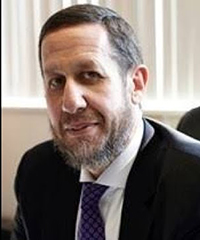


 Israel is a litmus test for morality and decency. An anti-Israel individual is at best an uneducated fool and at worst an inveterate Jew-hater. As such, an anti-Israel co-worker should be regarded with contempt. One should uphold a pro-Israel and pro-Jewish stance with dignity and pride.
– Rabbi Chaim Jachter is a prominent rabbi who serves as the rabbi at Congregation Shaarei Orah, the Sephardic Congregation of Teaneck, and is a popular Torah teacher at the Torah Academy of Bergen County. He also serves as a Dayan on the Beth Din of Elizabeth and has acquired an international reputation of excellence in the area of Get administration. He has authored sixteen books on issues ranging from contemporary Halacha, Tanach, Aggada, and Jewish Thought all available on Amazon.
Israel is a litmus test for morality and decency. An anti-Israel individual is at best an uneducated fool and at worst an inveterate Jew-hater. As such, an anti-Israel co-worker should be regarded with contempt. One should uphold a pro-Israel and pro-Jewish stance with dignity and pride.
– Rabbi Chaim Jachter is a prominent rabbi who serves as the rabbi at Congregation Shaarei Orah, the Sephardic Congregation of Teaneck, and is a popular Torah teacher at the Torah Academy of Bergen County. He also serves as a Dayan on the Beth Din of Elizabeth and has acquired an international reputation of excellence in the area of Get administration. He has authored sixteen books on issues ranging from contemporary Halacha, Tanach, Aggada, and Jewish Thought all available on Amazon.
* * * * *
* * * * *
 There are too many variables to answer this question thoroughly, so if the question is pertinent, it is worth discussing the specific case with a trusted and wise friend.
All I can offer is a characterization of some of these variables and their ramifications.
There are too many variables to answer this question thoroughly, so if the question is pertinent, it is worth discussing the specific case with a trusted and wise friend.
All I can offer is a characterization of some of these variables and their ramifications.
- “Hostility” comes in all different sizes and flavors. Are we talking about general distaste or full-throated support for Israel’s enemies?
- Is the coworker openly hostile, or did you find out from someone else or by discovering the coworker’s social media profile?
- How badly do you need this job?
- Who is the superior within the workplace hierarchy?
* * * * *
 In this very explosive and dangerous time that we presently find ourselves, it is probably best to go about one’s daily business without engaging anyone regarding the topic of Israel. A simple response to one who persists to engage you in conversation regarding the issue of Israel is to say that you prefer not talking politics and would therefore like to not discuss this issue.
It is not up to you to necessarily change the view of a person if the result could be deleterious to you – and perhaps even place you in danger.
It really doesn't matter how others think regarding this issue. We know in our heart that we are right and that the Israeli government is pursuing the proper path in this issue...
We are living in difficult times where Jews are the target of great antisemitism. One therefore must take the proper precautions to be safe in an environment that could be potentially dangerous to one’s safety.
– Rabbi Mordechai Weiss lives in Efrat, Israel, and previously served as an elementary and high school principal in New Jersey and Connecticut. He was also the founder and rav of Young Israel of Margate, N.J. His email is ravmordechai@aol.com.
In this very explosive and dangerous time that we presently find ourselves, it is probably best to go about one’s daily business without engaging anyone regarding the topic of Israel. A simple response to one who persists to engage you in conversation regarding the issue of Israel is to say that you prefer not talking politics and would therefore like to not discuss this issue.
It is not up to you to necessarily change the view of a person if the result could be deleterious to you – and perhaps even place you in danger.
It really doesn't matter how others think regarding this issue. We know in our heart that we are right and that the Israeli government is pursuing the proper path in this issue...
We are living in difficult times where Jews are the target of great antisemitism. One therefore must take the proper precautions to be safe in an environment that could be potentially dangerous to one’s safety.
– Rabbi Mordechai Weiss lives in Efrat, Israel, and previously served as an elementary and high school principal in New Jersey and Connecticut. He was also the founder and rav of Young Israel of Margate, N.J. His email is ravmordechai@aol.com.
* * * * *
 This question clearly has to be addressed on a case-by-case basis, as the answer will depend upon how hostile the individual is, meaning, whether the individual is willing to engage in an open, honest dialogue (which, unfortunately, many people quite often are not); upon the nature of one’s relationship with this individual; and upon the broader impact that having such a conversation may have on one’s position in the workplace.
Generally speaking, the Torah does present a mitzvah known as tochahah (Vayikra 19:17). While usually understood as a directive to share words of “reproof” or “rebuke,” the more accurate implication, as noted by Rashi to Bereishis 20:16 (d”h venochachas), is to clarify facts, to demonstrate that which is accurate. From the simple phraseology of this passuk, however, it would appear that this directive applies specifically to one’s dealing with fellow Jews who need to be shown the truth about something, and not to interaction with non-Jews, as Rashi to Sanhedrin (75a, d”h ve’im issa) states explicitly.
Nonetheless, there are sources which indicate that even if the technical mitzvah of tochachah does not pertain to teaching a non-Jew what is right, there is still some level of obligation to appropriately inform even a non-Jew of the error of his or her ways and understanding. Rashi himself (to Bereishis 13:7, d”h vayehi riv), for example, teaches that Avraham Avinu’s shepherds rebuked Lot’s shepherds for stealing land, and the Pnei Yehoshua to Shabbos (55a, d”h u’vazeh) suggests that Lot himself later feared that he had not adequately corrected the people of Sodom in whose midst he lived. The Sefer Chassidim (No. 1124) indeed rules that it is in fact proper to approach non-Jews and inspire them to do the right thing, as we see from the story of the prophet Yonah and the people of Nineveh; in all of the above cases, non-Jews are the target audience.
Despite this point, however, the passuk in Mishlei (9:8) advises us to engage in the type of discussion designed to teach someone else the facts only if the listener is a wise person, as he/she will certainly appreciate it, but not if he/she is not a serious person, as it will ultimately generate hatred. The Gemara in Yevamos (65b), citing this passuk, thus states that just as there is a mitzvah to teach a lesson that will be heard and accepted by the listener, so too there is a mitzvah to avoid trying to teach a lesson which will not be heard and accepted. In other words, Chazal clearly understood that sometimes it is better to say nothing and go about one’s business while remaining silent regarding even things that one may find very disturbing; as stated above, each situation requires its own independent analysis, as there are many variables.
It should be noted, though, that it is sometimes necessary to make a statement and voice an objection even when there is no realistic possibility that others will be swayed by your words. The Gemara in Bava Metzia (31a) says that you should attempt the mitzvah of tochachah multiple times, even though after a while it is clear that the listener has no interest; the Gemara in Arachin (16b) teaches that you should do so until the listener is ready to curse or act violently! The reason for this may be, as explained by Rav Yosef Dov Soloveitchik, zt”l, that even if you will absolutely be unable to persuade the other person to listen, you must still clarify to everyone where you stand on the issue at hand, and, perhaps more important, reassure yourself and reiterate your own unwavering commitment to the Torah’s values for yourself, despite what others might believe (see also Nimukei Yosef to Yevamos, 21a in Rif, d”h davar hanishma). One should thus carefully weigh all relevant considerations in navigating the need to work with people who are hostile to Israel and to Jews.
– Rabbi Michael Taubes has been involved in Jewish education, formal as well as informal, for over 40 years, serving both in the classroom and in various administrative posts. He is presently a Rosh Yeshiva at RIETS and Yeshiva University High School for Boys. In addition, he is the spiritual leader of Congregation Zichron Mordechai in Teaneck, N.J.
This question clearly has to be addressed on a case-by-case basis, as the answer will depend upon how hostile the individual is, meaning, whether the individual is willing to engage in an open, honest dialogue (which, unfortunately, many people quite often are not); upon the nature of one’s relationship with this individual; and upon the broader impact that having such a conversation may have on one’s position in the workplace.
Generally speaking, the Torah does present a mitzvah known as tochahah (Vayikra 19:17). While usually understood as a directive to share words of “reproof” or “rebuke,” the more accurate implication, as noted by Rashi to Bereishis 20:16 (d”h venochachas), is to clarify facts, to demonstrate that which is accurate. From the simple phraseology of this passuk, however, it would appear that this directive applies specifically to one’s dealing with fellow Jews who need to be shown the truth about something, and not to interaction with non-Jews, as Rashi to Sanhedrin (75a, d”h ve’im issa) states explicitly.
Nonetheless, there are sources which indicate that even if the technical mitzvah of tochachah does not pertain to teaching a non-Jew what is right, there is still some level of obligation to appropriately inform even a non-Jew of the error of his or her ways and understanding. Rashi himself (to Bereishis 13:7, d”h vayehi riv), for example, teaches that Avraham Avinu’s shepherds rebuked Lot’s shepherds for stealing land, and the Pnei Yehoshua to Shabbos (55a, d”h u’vazeh) suggests that Lot himself later feared that he had not adequately corrected the people of Sodom in whose midst he lived. The Sefer Chassidim (No. 1124) indeed rules that it is in fact proper to approach non-Jews and inspire them to do the right thing, as we see from the story of the prophet Yonah and the people of Nineveh; in all of the above cases, non-Jews are the target audience.
Despite this point, however, the passuk in Mishlei (9:8) advises us to engage in the type of discussion designed to teach someone else the facts only if the listener is a wise person, as he/she will certainly appreciate it, but not if he/she is not a serious person, as it will ultimately generate hatred. The Gemara in Yevamos (65b), citing this passuk, thus states that just as there is a mitzvah to teach a lesson that will be heard and accepted by the listener, so too there is a mitzvah to avoid trying to teach a lesson which will not be heard and accepted. In other words, Chazal clearly understood that sometimes it is better to say nothing and go about one’s business while remaining silent regarding even things that one may find very disturbing; as stated above, each situation requires its own independent analysis, as there are many variables.
It should be noted, though, that it is sometimes necessary to make a statement and voice an objection even when there is no realistic possibility that others will be swayed by your words. The Gemara in Bava Metzia (31a) says that you should attempt the mitzvah of tochachah multiple times, even though after a while it is clear that the listener has no interest; the Gemara in Arachin (16b) teaches that you should do so until the listener is ready to curse or act violently! The reason for this may be, as explained by Rav Yosef Dov Soloveitchik, zt”l, that even if you will absolutely be unable to persuade the other person to listen, you must still clarify to everyone where you stand on the issue at hand, and, perhaps more important, reassure yourself and reiterate your own unwavering commitment to the Torah’s values for yourself, despite what others might believe (see also Nimukei Yosef to Yevamos, 21a in Rif, d”h davar hanishma). One should thus carefully weigh all relevant considerations in navigating the need to work with people who are hostile to Israel and to Jews.
– Rabbi Michael Taubes has been involved in Jewish education, formal as well as informal, for over 40 years, serving both in the classroom and in various administrative posts. He is presently a Rosh Yeshiva at RIETS and Yeshiva University High School for Boys. In addition, he is the spiritual leader of Congregation Zichron Mordechai in Teaneck, N.J.