October 2, 2026
 Categories: Political Scene
Jewish War Veterans’ National Convention Brings Back Memories (Part II)
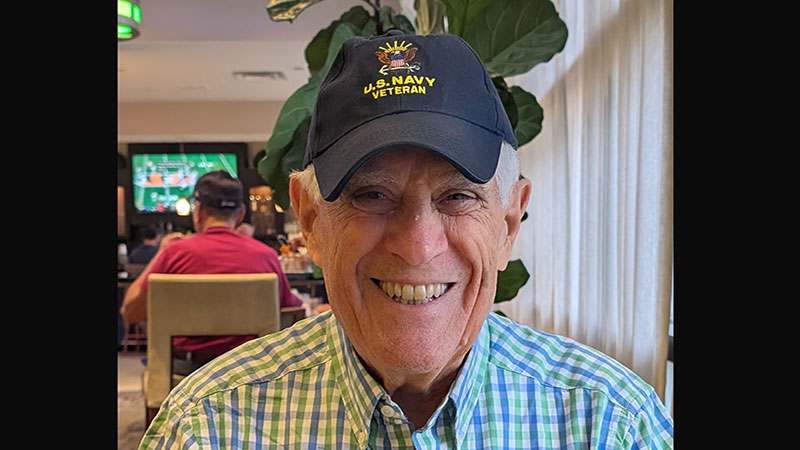


For five days during the last week of August, more than 100 veterans from the Korean, Vietnam-era, Desert Storm and Desert Shield wars gathered in the Albany suburb of Colonie for the 131st national convention of the Jewish War Veterans of the U.S.A. These hearty veterans certainly tell riveting war stories that, at times, make you think you were in combat with them.
The JWV Stands with Israel
At the convention, the veterans reaffirmed their support of Israel and commended House members for their support of $3.3 billion in security aid to Israel.
“The JWV recognizes that strong alliances are essential to our nation’s and our allies’ security. The partnership between the United States and Israel is built on shared democratic values, common strategic interests and decades of close military and security cooperation that benefit both nations,” the organization’s leaders wrote in a prepared statement. “Security assistance to Israel ensures that one of America’s closest allies can defend itself against terrorist organizations and hostile regional actors, while strengthening deterrence against those who threaten stability in the Middle East.”
At their convention, the JWV approved a resolution commending “the House of Representatives’ continued support for other critical pro-Israel initiatives, including funding for the Nita Lowey Middle East Partnership for Peace Act and provisions that ensure American taxpayer dollars are not used to fund international bodies that are biased against Israel.”
Charles Miller, 80, from JWV Post 692 in Bethesda, MD, highlighted the advocacy of Jewish veterans in an earlier era. “Jewish war veterans were instrumental in lobbying for demonstrating against the British in 1946 in Washington, D.C., against their policy of not allowing Jewish refugees to enter Palestine. Jewish war veterans supported Israel,” he said. “They had a march in New York City where there were over 4,000 marchers at the time.”
Combating Antisemitism
The JWV is also committed to combating antisemitism. “The JWV currently has an active Holocaust Education Committee,” immediate past National Commander of the JWV Scott Stevens, 69, of El Paso, Texas-based JWV Post 749 told The Jewish Press. “We have programs where we educate some of our members, teach them how to go into schools and educate elementary school children. A few of the departments have been doing high schools. JWV works with the ADL and several other organizations to get the word out.
“We have a strong commitment to fighting antisemitism, both in the military and in the areas where we reside, such as our local posts. We fight antisemitism wherever we meet it and our mission includes educating the public,” Stevens concluded.
As chairman of the Action Committee on Antisemitism for the Jewish War Veterans, Miller said he has “a passionate interest in addressing antisemitism and support for Israel. Fighting antisemitism fills a significant void and is primarily the reason why I am involved with the Jewish War Veterans. My committee is represented by action officers in 17 of the 19 departments nationwide. The mission of our committee is to educate, advocate and take action on behalf of the Jewish war veterans to address antisemitism,” Miller said.
But the ranks have been dwindling during the past 70 years.
“At our peak, the Jewish war veterans’ membership embraced 100,000 members, which was 1946-47, post-World War II. Jews in this country during World War II, men and women, served in our military to the total of about half-a-million members. Now it’s approximately 5,000,” Miller said. “We’re developing our own in-house presentations that we as veterans can take in partnership through Stand with Us to go into schools, whether they be high schools or colleges, primarily around Veterans Day or during Jewish American Heritage Month in May, to give students another perspective of what it is like to serve our country and also to be aware of antisemitism.”
David Levin, 82, post commander of PFC Frederick Hecht Post 425 Spring Valley, Rockland County, is in charge of recruiting members and helping to plan programs. “I’m proud to tell people that I’m a veteran and especially a Jewish veteran,” he said. “I also go to local high schools and present awards to graduating seniors and also make a little shpiel telling them about the Jewish War Veterans. Many people don’t even know we exist or what we do. I go over the history of how the JWV began.”
Miller is defensive when it comes to bias against Jews, stemming from the original reason the JWV was started.
“As a Jewish veteran, no one can question our loyalty to this country. Furthermore, everyone has to understand, as a Jew and a veteran who served our country, we are uniquely sensitive to the national security threat that antisemitism poses to our country, not just to Jews,” he said. “Anything that divides us as a population, anybody who weakens our resolve – that is a threat to our national security and that’s the perspective of the Jewish veteran.”
The component of advocacy makes Miller keep aiming to make a difference. “Another aspect of what we do is advocacy on the state, local and national level in terms of supporting, from the unique perspective we have as veterans, legislation that impacts antisemitism, whether it be legislation calling for the Pray Safe Act in support of grant funding to protect houses of worship and other Jewish organizations or to foster legislation that looks at antisemitism that’s coming from abroad and addressing the BDS movement or where anti-Zionism stretches into antisemitism as well,” he said. “We are non-partisan, so we do not get involved in partisan politics, but we certainly would call out any policies that promote antisemitism or any activities that give aid and comfort to those actors through their antisemitic perspective.”
Veterans Administration Health Care Comes to the Rescue
The Veterans Administration hospitals are a real blessing for retired servicemen.
“If you come to us needing assistance, getting your benefits, we’re here to help. You don’t have to be Jewish. You let us know and we’ll help you,” Stevens told The Jewish Press. “I am rated 100 percent disabled. I have back problems and knee problems. I lost 40 percent mobility in one ankle. I really appreciate the American people in Congress for providing my disability benefits. That is one of the major reasons for the Jewish War Veterans. The VA does very well for me,” he said.
The health effects New City resident Joel Hershkowitz, 79, Commander of JWV Post 720 in Nanuet, Rockland County, developed during his two years of duty is still felt today, almost 60 years later.
“I was exposed to Agent Orange, which was used in Vietnam and in Korea,” Hershkowitz told The Jewish Press. “After some wrangling with the VA they accepted people who were affected by Agent Orange in every country where it was used.
I get treated for that and dermatological ailments because I spent two freezing winters there [in Korea]. It really hurt my hands and my legs. I have some damaged nerves in my right hand which caused a circulation problem; the VA has been very helpful. They show their concern and they try to fix you up as best as possible. They do try. I’m taking medication. They examine me every six or seven weeks.”
The Frontline in Korea
Hershkowitz, who did not attend the convention, was on the frontline in Korea.
“When I enlisted in the Army, I was a Private E-2 like everybody else. When I left, I was an E–5, Specialist 5th Class. I served for two full years from 1967 to 1968. I was in the 72nd Armor Battalion. I patrolled the DMZ (Demilitarized Zone) from the Imjin River to the military demarcation line, an area of two to three miles wide.
We saw a lot of action including incidents of firefights, attempted bombings and the North Koreans trying to catch us by surprise,” Hershkowitz said. “We had special security equipment on my tank to help support the 123rd Infantry. Where Hershkowitz patrolled included serious warfare, and certainly didn’t want to run out of gas in that area.
“My tank had 300 gallons of gas and of course the tanker that filled us up wasn’t always there so we had to preserve our fuel. I was in a 50-ton tank and sometimes I had the hatch of the tank closed while looking through a periscope. There were no lights because of the possibility of snipers,” Hershkowitz said.
Where Hershkowitz was platooned included serious warfare, not the fun and games and tooling around in Army Jeeps like they actors did on the TV show M*A*S*H. You certainly didn’t want to run out of gas in this territory while patrolling the DMZ.
The Vietnam Experience
The Vietnam War began in 1954 and officially ended on April 30, 1975, when North Vietnamese forces captured Saigon, leading to the reunification of Vietnam under communist rule. This followed the withdrawal of U.S. troops in 1973 and the collapse of the South Vietnamese government shortly thereafter.

Manchester, NJ resident Bob Jacobs, a Vietnam War veteran who served from July 1969 to June 1971, told The Jewish Press, “I was a warrior, but I wasn’t the one who caused something that caused so much trouble at home... It was the government.”
More than 58,000 U.S. military personnel were killed during the war, of which 1,584 are still listed missing in action as of 2021. Jacobs’ rank when he returned home from serving in the Army, was Specialist 4, the same as a corporal.
He still had to serve stateside, which was at the now-defunct M.O.T. (Military Ocean Terminal) in Bayonne, NJ. There, he was promoted to Specialist 5, which was like a buck sergeant. “I wasn’t a military policeman [MP], but I was part of the MP unit. I was the clerk,” Jacobs said.
When he returned home from service, it was under the cover of darkness to avoid anti-Vietnam sentiments surfacing from those who did not support the war effort.
“We were warned that we would get spit at and called baby-rapers and mother-killers, all that sort of stuff, but that didn’t happen to me,” he recalled. “We were warned that when we landed [in California], bad stuff like that was going to happen. But we landed...late at night. Family welcomed me home,” Jacobs recalled.
Over the ensuing years, he has had many decades to think about the war and what went wrong.
“The mistake that was made by the United States in a lot of ways was trying to remold every country around the world into being like the United States. We’re still doing that,” he said. “A lot of it was misguided. We had to see the world in a more realistic way. A lot of the hate towards Vietnam veterans from the 1970s that was out there has since been corrected. Over the years, we had to fight an uphill battle. Instead of being spit on, people learned to separate the war from the warrior. And maybe that’s the best way to say it. Back then, they didn’t separate the war from the warrior.”
Jacobs’ big war moment came in 1970 when President Richard Nixon declared that he was sending troops into Cambodia to clean out the arms shipments. “I’m the guy who sent them in. Actually, I was part of the division headquarters company, the head clerk. In the spring of 1970, part of our company at division headquarters went over to Kuan Roy, near the Cambodian border,” he shared.
The pay for being part of these dangerous missions, even in 1970 dollars, was a mere pittance in exchange for the value of their lives.
“Besides your pay based on your rank, you got paid $65 a month, tax-free money, combat pay. That’s what your life was worth,” Jacobs lamented. He turns 80 in November. “I’ve got a problem with this hand that I’m dealing with. That’s kind of limiting, plus my back problems lately. Everybody’s got aches and pains. I got home from Vietnam pretty much all right. Things popped up later except for one minor injury that I got in Vietnam.
The tone for Vietnam veterans in this country went from disgust displayed by anti-war activists to building museums, traveling exhibits as well as granite walls to remember the fallen and those missing in action. In 1982, the Vietnam Veterans Memorial was dedicated in Washington, D.C., inscribed with the names of 57,939 members of U.S. armed forces who had died or were missing as a result of the war. Over the following years, additions to the list have brought the total past 58,200.
Holmdale, NJ, hosts such a museum. It is located in the middle of the state, north of Asbury Park and south of Newark. “We created a whole room exhibit on Jews who fought in Vietnam, including the two Jewish Medal of Honor recipients from Vietnam, one of which is alive, one of which isn’t. Jack Jacobs, no relation to me. He’s a retired Full Bird Colonel,” Jacobs said.
Hartford, CT native John Levitow received the Medal of Honor from President Richard Nixon on May 14, 1970, Armed Forces Day. Levitow died of cancer on November 8, 2000. He rose to the rank of Sergeant in the U.S. Air Force, Third Special Operations Squadron, serving in the Long Binh Army post in Vietnam.
Miller himself did a couple of tours of duty, including in Israel.
“I received a commission through the ROTC at the University of Virginia and graduated in 1963. I commenced in 1963, graduated in 1968, did three years of active service in the Navy on destroyers, got off active duty in 1971, and remained in the Reserves for the next 23 years,” he told The Jewish Press. “I was on active duty during the Vietnam War but I was not in Vietnam. I was on board a ship. In my case, we went to Northern Europe. I had a total of active and reserve time of 26 years. I retired as the rank of commander.”
He continued, “During Vietnam, I was a 23-year-old junior officer, an Ensign. The initial ship that I served on was a destroyer, the Hawkins, was actually commissioned during World War II. One of our responsibilities was anti-submarine warfare. In those days, 1968, we were chasing the Russian submarines.”
After several years in the private sector, the Navy came calling again. “I served on active duty in the Navy during Desert Storm. I was in Europe. I was serving at NATO headquarters. We were supporting the Patriot batteries in Israel. We were on destroyers, small ships,” Miller said.
“I made it a passion of mine to be a veteran helping veterans,” Jacobs said. “That’s why I belong to several veterans’ organizations. I’m not active in all of them. I’m active in the Jewish War Veterans and I’m somewhat active in the Vietnam Veterans of America.”

Another veteran, Dr. Stuart Wallet, 78, a dentist from Marlton, NJ who served in the Navy, told The Jewish Press, “I served at the tail end of the Vietnam War from June 1974 to 1976 but I never left Camp Lejeune, North Carolina.”
It turned out to be his worst nightmare decades later.
On December 24, 2018, I was diagnosed with kidney cancer from Camp Lejeune. One of the cancers came from the water in Camp Lejeune. There was a list If you’re at Camp Lejeune for more than 30 days, they [the U.S. Defense Department] had to verify that and I was 100 percent disabled. At the five-year mark, they reduced me to 30 percent because, quote, you’re not as disabled,” Wallet said.
He heard many stories about the Vietnam experience from veterans who were on-the-ground.
“A lot of my patients had been in Vietnam. The biggest complaint was...If we were out in the field, going through marshes, going through the jungle and we came upon Viet Cong, we had to radio it back and wait for orders from Washington. They would tell us what weapons we could use. That doesn’t make sense, does it? That’s losing a war,” Wallet said.
For one veteran, he admits he wanted to serve but not put his life in danger. It was the right time for him to serve. He was 22 years old.
Levin, of the Spring Valley JWV post, also avoided combat. “I served in the Coast Guard Reserve from 1966 to 1972,” he said. “I was on what they call active duty for training, which is how they characterize the active duty for reservists, for 11 months from February 1966 to January 1967. After basic training at Cape May, NJ, I attended electronic technician school for six months at Groton, Conn. After that, I was on the U.S. Coast Guard cutter Spencer, which was a 327-foot ship that was a weather ship that went out into the North Atlantic for three to four weeks. We basically made a big circle and gave weather reports. I was stationed there in case of an emergency. I didn’t think I would fare too well in Vietnam, so I was looking for an alternative where I could serve my country and also survive.”
In the final installment of this series, we will give our readers a take on Jews in baseball, as told by the president of the Baseball Hall of Fame and Museum, who is Jewish. He was the dinner speaker at the convention and mesmerized the attendees who seemed more interested in the American pastime than telling more war stories.