יום שלישי, י״ח תשרי תשפ״זTuesday, September 29, 2026



Follow Us


We do not simply remember what once occurred, we relive the experience as we tap back into the power of kabbalas haTorah.

A promise is a promise and it'll only take me a minute, I can surely do this without any problems!

By Rabbi Lord Jonathan Sacks z"l
Words can injure and inspire. Words can bless or curse. Words can create new moral facts, such as when we make a promise.
By Rabbi Lord Jonathan Sacks z"l
“Torah study without an occupation will in the end fail and lead to sin.” Avot 2:2

Words can injure and inspire. Words can bless or curse. Words can create new moral facts, such as when we make a promise.
By Talya Gross
The front of the car where the engine was had burnt to a crisp, and all the windows were shattered.
By Rabbi Lord Jonathan Sacks z"l
The holy spaces had to be kept free of conditions that bespoke mortality.

The name Maya ranked as the fifth most popular name for Jewish girls born in Israel in 2023.

How do we, as physical and limited beings, transcend our finite dimensions? How do we relate to the abstract, to the infinite, to the spiritual?

Another equally problematic motivation for speaking lashon hara is the desire to feel good about oneself. We all desire to feel important, significant, and worthy of respect.
By Rabbi Lord Jonathan Sacks z"l
There is an order to the universe, part moral, part political, part ecological. When that order is violated, eventually there is chaos.
Do you ever wonder what people really think about you? Whether they think you’re brilliant, caring, and fun; or lazy, self-centered, and boring? The truth is that you’ll never know; people only talk about you openly when you’re not in the room.
By Rabbi Lord Jonathan Sacks z"l
After the Flood, G-d gave humans permission to eat meat, but this was a concession, as if to say: Kill if you must, but let it be animals, not other humans, that you kill.
When you do something – even something good – without being commanded, all you are reflecting is yourself. It is your personal form of avodah, self-contained, limited, and disconnected from Hashem.

Makkas bechoros was unique in that Hashem Himself performed this Makkah (Rashi, Shemot 12:12). The Ramban explains that all the principles of hashgacha pratis were displayed through these events. We were clearly then on an immensely high spiritual level.
I rummaged and rummaged through every pocket in the bag while the tag continued to beep. And lo and behold – while I was still trying to locate the tag, what did I come up with but two little packages of chametz snacks!
By Rabbi Lord Jonathan Sacks z"l
If you want to be a great leader in any field, from prime minister to parent, it is essential to think long-term. Never choose the easy option because it is simple or fast or yields immediate satisfaction. You will pay a high price in the end.
Nothing in the physical world is objectively good or evil, rather, everything has the potential to be used for either good or evil. The choice is solely up to you!

What do Pope Benedict XVI, Barack Obama, Naftali Bennett, and Hosni Mubarak all have in common? Yes, they were all political leaders in the early 21st century, but this column is about names, not politics. So, my answer is actually that all their names are related to each other. Let me explain.

When G-d redeemed us from slavery he saved us from purposeless work and life without purpose.
This bag has got to go. Please ask a clear shaila, explaining what efforts you’ve already done and what the requirement is now.
As human beings, we are naturally resistant to external instruction or direction, preferring to do things only when we want to do them.
By Rabbi Lord Jonathan Sacks z"l
Physically, we are almost nothing; spiritually, we are brushed by the wings of eternity. We have a G-dly soul.

We all yearn for connection: to ourselves, to other people, and, of course, to Hashem. But connection is difficult; it requires time, patience, and constant effort. Genuine communication takes a lifetime to achieve.
By Rabbi Lord Jonathan Sacks z"l
The Egyptians sought not merely to enslave, but also to put an end to, the people of Israel. One way of doing so was to kill all male children. Another was simply to interrupt normal family life.

What happens when you don’t eat? You become faint. What happens if you continue without food? You will pass out. And if you still don’t eat, your soul will leave your body and you will die. Eating maintains the connection between your soul and your body; it is what keeps you alive.
I am anticipating a deluge of angry letters from people listing off important persons named Elimelech that I’ve ignored, but the truth remains that despite the continued use of that personal name since Biblical times, Elimelech was always a fairly rare name until the times of the Noam Elimelech.
By Eliana Klein
What most people would have done is to leave all those items behind, to become the next guy’s problem. But my incredible in-laws are definitely not most people.
In other words, we are normally not allowed to kill one person to save another; however, because the rodef is engaging in an act of attempted murder, there is a special din of chiyuv missah on the rodef that allows for the hatzalas ha'nirdaf with the life of the rodef.
By Rabbi Lord Jonathan Sacks z"l
People think they are free because they have been taught that all morality is relative, and you can do what you like so long as you do not harm others.
Amalek rejects Hashem’s connection to this world or any connection between the spiritual and the physical. Essentially, Amalek denies Hashem’s control of this world and the ability for man to uplift himself to the level of the spiritual.
Every once in a while we are treated to the induction ceremony of soldiers which takes place in the large open area above the Kotel. Sweet and handsome, these 18 year olds solemnly swear to defend our country, promised to us centuries ago by Hashem to our holy Forefathers.
By Rabbi Lord Jonathan Sacks z"l
The word kavod – dignity or honor – appears sixteen times, but in fourteen (2x7) of these cases the reference is to the glory of G-d.
Torah is not simply a guide to living a life of truth; it is the blueprint and DNA of this physical world.

By Naama Klein
Lo and behold, both my niece and nephew decided on an arrangement that I had rejected just a few minutes earlier! And although it was not particularly my taste, I was so beyond grateful that they both agreed that the style, the colors, the flowers, basically everything about it, would be to our mutual in-laws' liking.
These anti-British forces formed a pro-German government, winning the support of the Iraqi Army and administration. They had hoped that an Axis victory in the war would facilitate independence for Iraq.
By Rabbi Lord Jonathan Sacks z"l
The famous Butterfly Effect – the beating of a butterfly’s wing somewhere may cause a tsunami elsewhere, thousands of miles away – tells us that small actions can have large consequences. That is the message the Tabernacle was intended to convey.
As we have previously mentioned, Rav Moshe Feinstein holds that a fetus is a full nefesh, and even though one is not chayiv missah for aborting a fetus, it still violates the issur of retzicha.

It is a known fact that the yetzer hara, the evil inclination, is selective about which areas he strives to get us to stray. For example, the relationship he tries the hardest to wreck is the one we have with our spouse.
When you wake up each morning, the day holds infinite potential. You have the time to do anything, go anywhere, meet anyone, etc. But that’s only potential, for in reality, you haven’t done anything yet, and in reality, you can’t do everything, only something.
Several minutes after entering the hospital room, my father gave a tremor that sent them running for help from the nurse's station. The nurse called the doctor. The doctor told them that my father's systems were closing down, hinting that perhaps the respirator plug should already be pulled.

While the proliferation of technology and the distraction that comes with it is fairly recent, the struggle with being fully present is not a new phenomenon. Ask HaShem
By Rabbi Lord Jonathan Sacks z"l
So slavery is to be abolished, but it is a fundamental principle of God’s relationship with us that he does not force us to change faster than is possible of our own freewill.

When we consider whether or not someone is an observant Jew, we usually ask whether he or she is shomer Shabbos. Why is this the defining feature of religious observance? What makes Shabbos a root mitzvah, why is its punishment so severe, and why do we see it as the measuring stick for all of Torah observance? What is the secret of Shabbos?
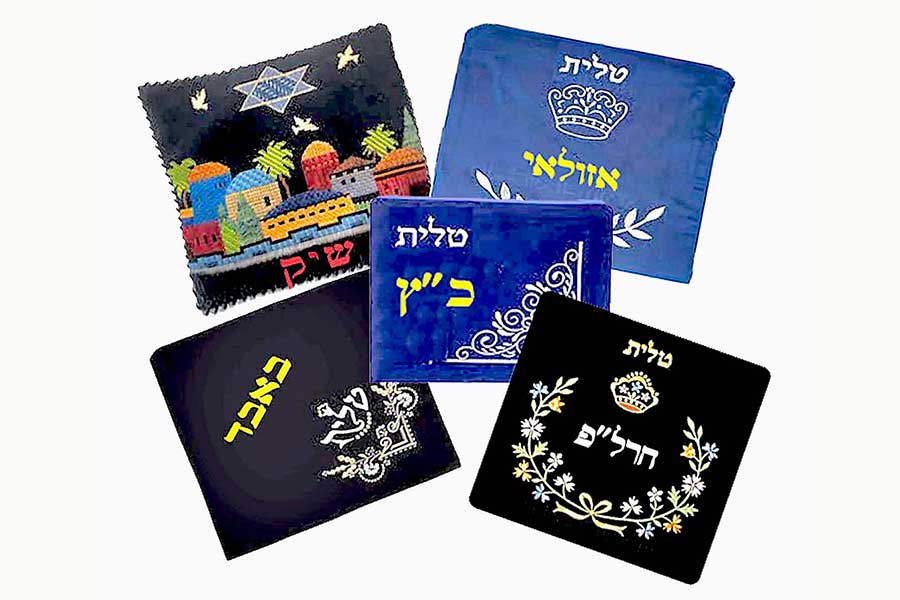
Just as acronyms serve modern convenience, they also hold a unique place in Jewish history and culture, where many family names actually derive from meaningful acronyms. These surnames serve as more than mere identifiers.

When walking down a sunny Jerusalem street with my father, he would attach clip-on sunglasses to his bifocals. When we would walk into an office or store, he would just flip them up so that he could let in the light. Perfectly practical and reasonable.
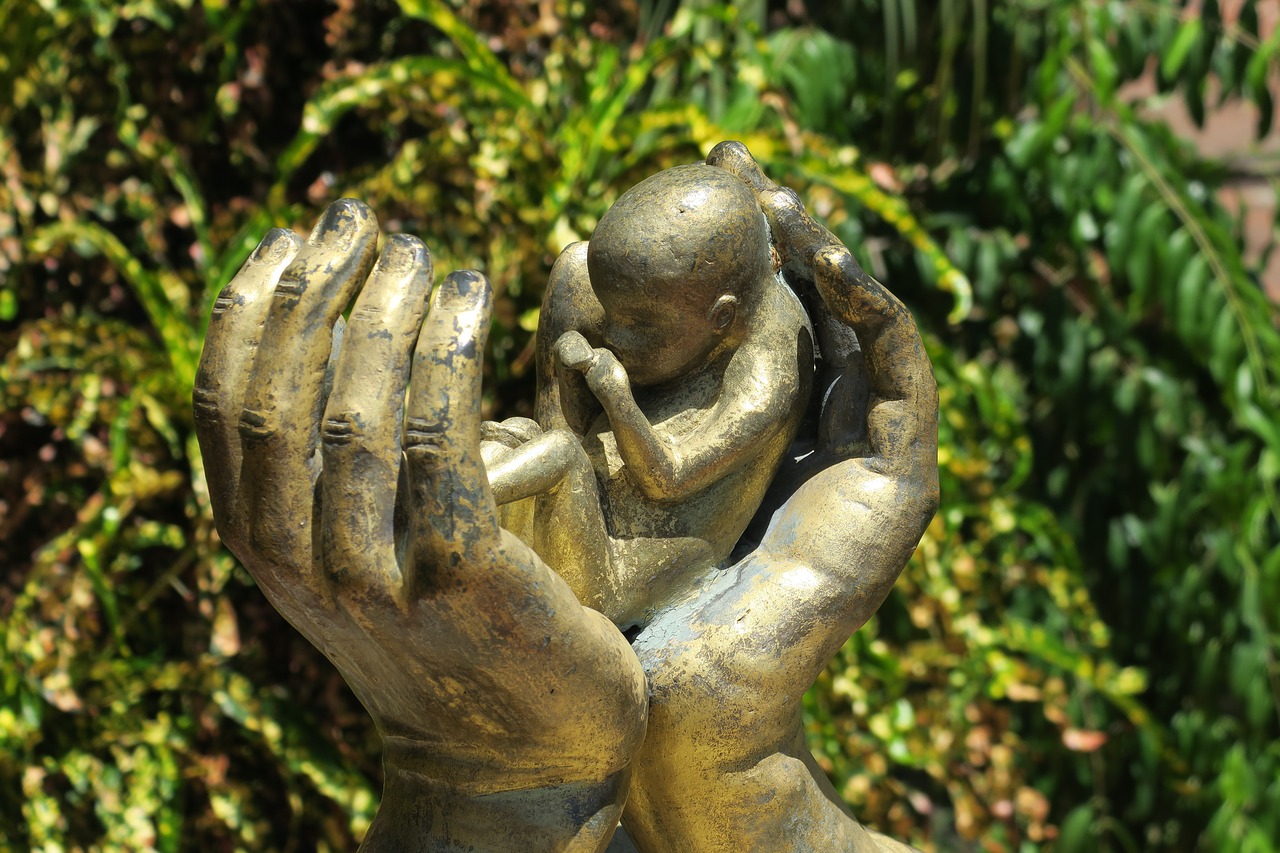
Why should the fact that the rodef is liable to be killed during his act of attempted murder affect whether or not he is chayiv to pay back the monetary damage he caused?
By Rabbi Lord Jonathan Sacks z"l
The custom of including the Ten Commandments as part of the Shema was once widespread, but from a certain point in time it was systematically opposed by the Sages. Why did they object to it?
Most of humanity lies somewhere along the middle of the spectrum. Our point of free will is located in the decision sphere of whether or not to gossip, to hit snooze, to give charity, to smile, to eat right, etc. These are the battles of inches; sometimes we win, and sometimes we lose.

By Risa Rotman
I was fed up. I had this useless machine taking up space for no reason. I had an ultimatum in my mind that if by chodesh Elul there was no solution, I would bring the machine to my daughter’s house and it could take up space in their home.
By Rabbi Lord Jonathan Sacks z"l
What is the place of song in Judaism?

There is a general principle that when one sees someone in the act of violating an aveirah, the witness should warn them before the aveirah takes place. Why then, in the case of rodef, does the Gemara say that hasra’ah is not required?

Cheit ha’egel, the sin of the golden calf, is perhaps the most infamous event in the Torah, a sin compared to the original sin of Adam HaRishon and one that has repercussions throughout Jewish history. Yet, what is most striking about this sin is not the act itself but its timing.
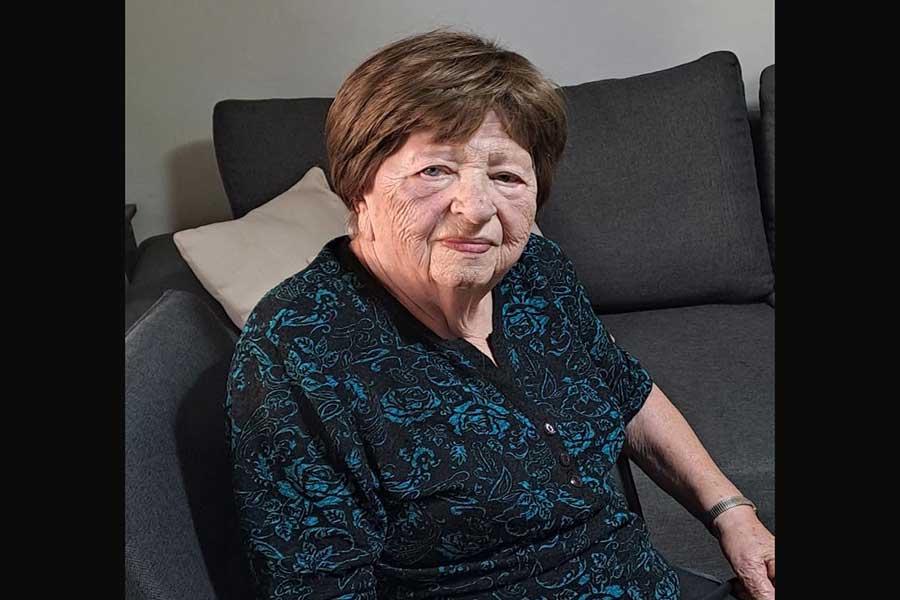
Israel was on the brink of war and Yehudit served in the Haganah as a medic. She would have liked to have become a nurse but that was impossible in her circumstances.

According to the Museum of the City of New York, a garment worker in 1905 was expected to sew at a rate twice that of her 1900 counterpart. The factories had scant safety or fire protection, mandated a 65-hour work week, and expected workers to provide their own basic materials such as needles and thread.
By Rabbi Lord Jonathan Sacks z"l
Judaism is not a religion of blind obedience. Indeed, astonishingly in a religion of 613 commandments, there is no Hebrew word that means to obey.
Had Hashem created us in Olam Haba, the goodness we would have received would have been free, unearned. This is the type of perfection that malachim enjoy. However, this is not the ultimate enjoyment.
By Yaffa Tova
The turmoil called everyday life whisked me along and before I knew it my children’s children were in that unrelenting ride of shidduchim. It was time for us to take a step back and allow our children to move into the driver seat, but once having driven down the road one’s antennas are ever sensitive for signs of new possibilities.

Even a katan has enough da'as to qualify as a rodef; by engaging in this type of act, the katan shows that he has at least some form of da'as.
By Rabbi Lord Jonathan Sacks z"l
Outside the promised land Jews in the biblical age are in danger if they tell the truth. They are at constant risk of being killed or at best enslaved.
Hashem was internally good, but He was not actively expressing this goodness by giving or doing good unto others. Hashem chose to express His capacity for doing good unto others by creating man, upon whom Hashem would bestow the ultimate goodness.

By dvora
I was terrified of the fall that seemed inevitable. Suddenly I felt my hands holding onto a handle which I had not seen before. Now holding onto the handle I was able to steady myself. The crisis was over. Days later I thought that Hashem put my hands on that handle.

Another fundamental nafka minah is whether one needs to have kavanah (intent) in order to be categorized as a rodef.

By Rabbi Lord Jonathan Sacks z"l
Consider, now, the choices Moses faced in his life. On the one hand he could have lived as a prince of Egypt, in luxury and at ease. That might have been his fate had he not intervened.
The Torah describes the voluntary gifts that the Jewish people donate toward the building of the Mishkan, the place where Hashem was most potently manifest in the physical world. The emphasis of these donations is their voluntary nature – Hashem commands Moshe to collect from Klal Yisrael whatever their hearts inspire them to give.
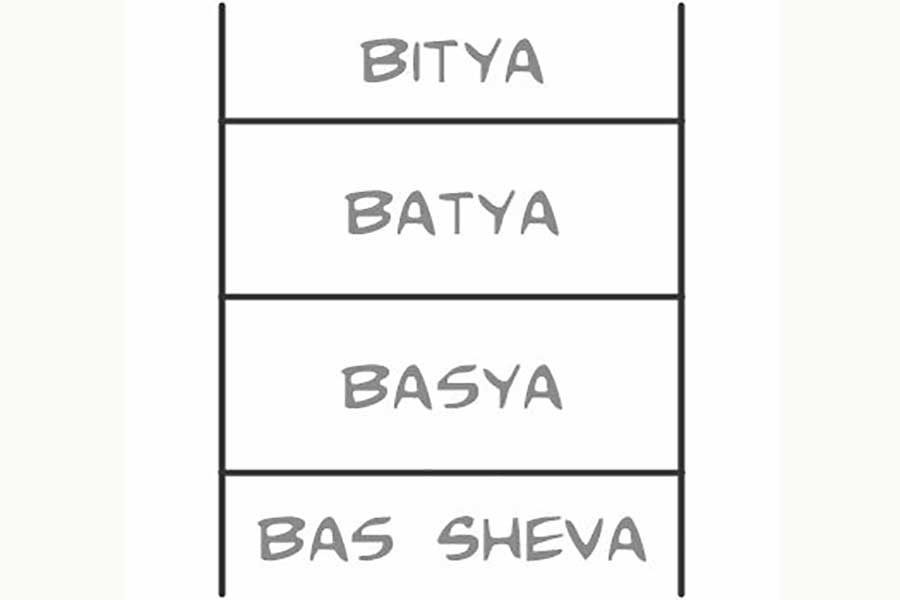
Interestingly, some argue the exact opposite: her original name was Batya, but she changed it to Bitya as an act of humility.
Sunday afternoon they dropped by for a visit. He had small pieces of shrapnel on his face and left hand, and he said that the surgeon told him that, over time, the body would rid itself of the shrapnel. That was comforting to know.

By Rabbi Lord Jonathan Sacks z"l
On the surface, Joseph holds all the power. His family are entirely dependent on him. But at a deeper level it is the other way round. He still yearns for their acceptance, their recognition, their closeness.

We are actually doing a chesed for the rodef by preventing him from spiritually destroying himself. The rodef now gets to die without the blemish of murder tainting his soul.
How can it be that Hashem made a mistake – that He originally wanted to create the world with din but then changed His mind?

For one agonizing moment, Meir thought his time in the world was about to end. But glancing at the note taped to his gun, he quickly murmured the words: Hashem Hu Elokim, ein od milvado. Then, a few meters in front of Meir, the missile changed direction in midair, as if it struck an invisible force field.
By Rabbi Lord Jonathan Sacks z"l
Abraham prays for justice. Judah prays for mercy. Elijah prays for G-d to reveal Himself.
The first stage is a gift, a spiritual high. It’s there to help you experience the goal, the destination. It’s a taste of what you can and hopefully will ultimately accomplish, but it’s not real. It’s given as a gift and is therefore an illusion.
By Rabbi Lord Jonathan Sacks z"l
Jewish law rules that if we can only light one candle – the Shabbat light takes precedence, because in Judaism the greatest military victory takes second place to peace in the home.
I asked her about the baby’s name, and she said, yes, they had named him after Daniel in the Tanach, but they had also thought of my late husband Dan when naming him. She sent me several photos and videos from the bris. I was overcome with emotion as I watched the segment where the baby received his name.

Israel’s innovative, young commander of the Negev campaign was Yigal Allon. In order to break the Egyptian hold, he would have to get his troops to the south undetected. This was a significant challenge as the only surfaced road was bordered by several Egyptian strongholds.

It appears that killing a rodef is not only a complicated halacha, but only bidieved (a secondary choice). We are therefore left with a fundamental question: Why are we allowed to, or supposed to, kill a rodef?
By Rabbi Lord Jonathan Sacks z"l
Joseph is the center of attention whenever he is, as it were, onstage, and yet he is, time and again, the done-to rather than the doer, an object of other people’s actions rather than the subject of his own.
Before Adam sinned, he looked nothing like you or I do today... The Midrash says that he wore kosnos ohr (skin of light). When you looked at Adam, you didn’t see his body but saw Adam himself, i.e., his neshama.
As an interesting aside that only etymologists like myself could appreciate, the name Juanacita itself sort of has a connection to Chanukah. This is because that name derives from the name Juan/John, which is a Latinization of the Hebrew name Yochanan.

When the shidduch Josh was in the middle of didn’t work out, he turned back to Moishy to hear about his sister. Eventually the couple met and realized that yes, it really was a match. When Josh and Sari got engaged, Moishy was the happiest of all.
By Rabbi Lord Jonathan Sacks z"l
To be sure, a persistent theme of the patriarchal stories is the two promises G-d made to each of them, namely that they would have many descendants and that they would inherit the land of Canaan.

What if the person has full intent to not only take the action, but also cause the harmful result. However, in this case, the person has the wrong information, so he thinks that he is doing something good, when in fact, he is about to do something very bad.

Spiritual debate has been a recurring phenomenon since the beginning of time. Chanukah is when we tap into the spiritual debate between the Jews and the Greeks, as the Greeks specifically attempted to destroy our spiritual way of life.
By Naama Klein
In retrospect, I really should have been clued-in as soon as I entered the store. Despite the fact that it was erev a three-day yom tov, the store looked more like a regular Tuesday night than what should have logically been a typical Thursday night on steroids.
The obvious question arises: what changes once the fetus leaves the womb? Why is it permitted to sacrifice the fetus to save the mother while the fetus is in utero, but the moment the fetus leaves the womb, we can't choose one life over another?
By Rabbi Lord Jonathan Sacks z"l
Jews don’t stand still except when standing before G-d. The universe, from galaxies to subatomic particles, is in constant motion, and so is the Jewish soul.
Have you ever felt like everything worthwhile in life eventually fades? The energy of youth fades into old age, the excitement of beginnings fades into routine, and the inspiration of a new goal fades into habit. This pattern extends to almost all spheres of the human experience.
Raffy explained to him how special the mitzvah is, and that this particular pair was donated as a merit for his uncle, who cared deeply for his fellow Jew.
By Rabbi Lord Jonathan Sacks z"l
Pharaoh was a one-time enemy of the Jews, but Lavan exists, in one form or another, in age after age.
It has often been assumed that this debate is fundamentally centered around the very question of whether a fetus is considered to be a full nefesh or not.

Shabbat is a very holy day, but in the case of pikuach nefesh (saving lives), one is allowed to transgress the laws of Shabbat. It is a very strange feeling as a religious Jew to get into one’s car and drive off on Shabbat. But the mission needed to be accomplished, and it would most likely save lives.
By Rabbi Dr. Nathan Lopes Cardozo
Whatever the reason for this phenomenon, Jews have to stop deluding themselves that they are just one member in a community of nations. They are not and never were.
By Rabbi Lord Jonathan Sacks z"l
It is the deep, reverberating question at the heart of Toldot. Why did Rebecca tell Jacob to deceive Isaac and take Esau’s blessing? Her instruction is brisk and peremptory: “Now, my son, listen carefully and do what I tell you: Go now to the flock and bring me two choice young goats, so I can […]
The reason one receives the death penalty for killing someone is because of middah k'neged middah, measure for measure. When one violates a prohibited act, they receive exactly that which they inflicted upon someone else.
In most cases, people don't desire us to fix their problems or provide perspective, they wish us to acknowledge their feelings and show that we care about their experience.
When we understand that every single aspect of our life is given to us in order to help us fulfill our unique purpose, what another person has becomes irrelevant, and jealousy becomes nonsensical.
In which we also explore the names Edna, Eidel, Ettel, and more.
By Rabbi Ron Yitzchok Eisenman
Today, Hashem allowed me to pay back my Zaydie's debt. Thank you and Yasher Koach!"
By Ann Goldberg
She called her husband and told him to search inside the car and if it wasn’t there to go back to where he had parked car when they came to me and search on the road. But no – despite my confidence in the segulah after much searching it still wasn’t found.
 September 25, 2026