יום שבת, ט״ו תשרי תשפ״זSaturday, September 26, 2026



Follow Us


By Rabbi Lord Jonathan Sacks z"l
During The Three Weeks between 17 Tammuz and Tisha B’Av, as we recall the destruction of the Temples, we read three of the most searing passages in the prophetic literature, the first two from the opening of the book of Jeremiah, the third, next week, from the first chapter of Isaiah.

By Henia
I’d like to believe that I at least have average intelligence. And when in need of inspiration or to learn something to facilitate my personal growth, I gain much from adult tapes and books. I’m greatly inspired by the words of the plethora of writers and speakers who target their words to adult audiences; their sentence structure and vocabulary meant only for us grownups. Their valuable lessons are often arrived at through a series of logical steps any adult with reasonable intelligence should be able to follow. And follow I do.

To the misnaged-opponent, chassidus was not perceived as a different strand of normative Judaism, nor as a movement to uplift downtrodden Jews – but as an existential threat to Judaism itself. And the threat was no longer viewed as a futuristic potentiality; it was a real and imminent danger, for the movement was no longer limited to just the commoner but had infiltrated the ranks of scholars.

By Alan Magill
Feeling more alone than at any time since arriving in New York, I looked inside myself for anything that could anchor me to bring me back to who I was, to move away from illusions of romance to my central sticking point. Suddenly and unexpectedly, being a Jew meant more to me than anything else in the world.

By Alan Magill
You don’t become a ba’al teshuvah overnight. There were many events in my life that contributed to the deepening of my religious commitment, including a party I attended with young, beautiful church members who tried to make me one of them, and how I met their “Jewish priest.” (I’ll discuss both experiences during the course of this continuing column.)
By Rabbi Lord Jonathan Sacks z"l
It is a scene that still has the power to shock and disturb. The people complain. There is no water. It is an old complaint and a predictable one. That’s what happens in a desert. Moses should have been able to handle it in his stride. He has been through far tougher challenges in his time. Yet suddenly he explodes into vituperative anger:

By dvora
Yom Yerushalayim, a national day of thanksgiving to Hashem for the liberation and reunification of the Holy City of Yerushalayim, is celebrated in Israel with many different meaningful programs. One of them is the annual bike ride from Hebron to Yerushalayim, celebrating the former’s liberation.

By dvora
My husband and I are living in our house for over 30 years. We have wonderful neighbors on both sides. The one on the right, a non-frum Jewish couple, lived in their house longer than we’ve resided in ours. We always got along very well with them, as they are unusually kind, friendly and helpful people.

The Baal Shem Tov was the founder and the visionary of chassidus, but the architect who built and spread the movement was Rabbi Dov Ber, the maggid of Mezeritch.

By dvora
Zohara was born in Morocco. With her husband, she raised a large family. A busy woman, she always seemed to find time to help others in need. Her daughter, Aliza, told me of the many sleepless nights her mother spent nursing babies. That is not unusual in itself, were it not for the fact that many of the babies she nursed were not her own.
By Rabbi Lord Jonathan Sacks z"l
The episode of the spies has rightly puzzled commentators throughout the centuries. How could they have got it so wrong? The land, they said, was as Moses had promised. It was indeed “flowing with milk and honey.” But conquering it was impossible. “The people who live there are powerful, and the cities fortified and very large. We even saw descendants of the giant there … We can’t attack those people; they are stronger than we are … All the people we saw there are of great size. We saw the titans there … We seemed like grasshoppers in our own eyes, and so we seemed in theirs” (Numbers 13:28-33).
By Rabbi Lord Jonathan Sacks z"l
Adaptive leadership is called for when the world is changing, circumstances are no longer what they were, and what once worked works no more. There is no quick fix, no pill, no simple following of instructions. We have to change. At a certain point, Moses had to help the Israelites change, to exercise responsibility, to learn to do things for themselves while trusting in God instead of relying on God to do things for them.

By Bette Cyznek
Huge crystal chandeliers sparkled with points of light that shone like diamonds. Hundreds of ornate, gilded chairs had been arranged on the ballroom’s thick, blue and brown carpet in the palatial Miami Beach hotel. This elegant space had been converted into a temporary synagogue for the holiday.
By Rabbi Lord Jonathan Sacks z"l
There was an ongoing debate between the Sages as to whether the nazirite – whose laws are outlined in this week’s parshah – was to be praised. Recall that the nazirite was someone who voluntarily, usually for a specified period, undertook a special form of holiness. This meant that he was forbidden to consume wine or any grape products, to have a haircut, and to defile himself by contact with the dead.

By Ed Lion
Judaism holds that nothing happens by chance, that everything is orchestrated by Hashem. And so it was long ago on a Sunday morning, about a month after Pesach when my father ran an errand for his parents.

By dvora
It was a brisk fall day in late October some years ago when Chavy (name changed) decided that since the weather was perfect she would walk to work. She had, Baruch Hashem, just resumed her work schedule after being home for six weeks due to her maternity leave for the birth of her latest child. She felt the exercise was good for her, as it was only about a half mile to her job. She put all of her work papers into her knapsack and gingerly swung it over onto her back for the trek to work.
Scholars have debated where precisely the Baal Shem Tov was born, few giving credence to the tiny village of Okopy (pronounced Akup). Most likely he hailed from Kolomyya on the slopes of the Carpathian Mountains and on the banks of the Prut River. Nearly 300 years have lapsed since the passing of the Baal Shem Tov and all the while the stories of his miraculous abilities have increased. Yet all fail to fully portray his greatness.

By Ann Goldberg
“Mum, you’ll never guess what happened.” My daughter Tammy’s tone of voice at the other end of the phone indicated that it wasn’t something pleasant. “Someone took my baby stroller from the bus. When I went to pick it up and get off the bus, it wasn’t there any more. I couldn’t believe it. Who would do such a thing?”

By dvora
My daughter, son-in-law and three children had reason to move to Buffalo, NY from Brooklyn this past summer. As we watched our grandchildren’s cute little faces peeled and waving through the back window, we knew we were in for a huge adjustment. We knew we would obviously miss them but we also were aware that we gave our children wings to do as they saw necessary (and they saw it necessary to drive seven hours away to their new home).
By Rabbi Lord Jonathan Sacks z"l
It is simply not the same to put on tefillin or keep kashrut or observe Shabbat in the Diaspora as in Israel. The Torah is the constitution of a holy people in the holy land. Only in Israel is the fulfillment of the commands a society-building exercise, shaping the contours of a culture as a whole. Only in Israel does the calendar track the rhythms of the Jewish year.

My son lost his backpack when traveling back to his base. He had put it in the hold of the bus in which he was traveling. He would need to replace his wallet, tefillin, clothes, books, phone charger and all of his documentation. Of course the tefillin was the most important item of all. It was a bar mitzvah gift from his grandparents and specially written for him, and we all know how expensive tefillin are. But obviously the sentimental value was irreplaceable.
By Rabbi Lord Jonathan Sacks z"l
It was the Septuagint, the early Greek translation of the Hebrew Bible, that translated tzara’at, the condition whose identification and cleansing occupies much of Parshiyot Tazria and Metzora as lepra, giving rise to a long tradition identifying it with leprosy.

By dvora
It was early evening in Jerusalem. I was exhausted, and thankful that the light rail train had arrived. Along with all the other passengers, I jockeyed for a place to stand where I could place some of my bundles on the floor. At the next stop a seat became available, and I was grateful to be able to claim it.
By Rabbi Lord Jonathan Sacks z"l
Why was spontaneity wrong for Nadav and Avihu, yet right for Moshe Rabbeinu? The answer is that Nadav and Avihu were kohanim, priests. Moses was a navi, a prophet. These are two different forms of religious leadership. They involve different tasks and different sensibilities, indeed different approaches to time itself.
In 1648 and 1649 Bogdan Chmelnitzky and his hordes of Cossack warriors perpetrated an annihilation campaign against the Jews of Poland and the Ukraine. Almost 100,000 Jews and 300 communities perished at the hands of these murderous mobs. All of the Jews, including infants, were targeted for murder; the general populaces nearly always joined in the attacks, and the torture and degradation of Jews was an integral aspect of the murderer’s procedures.
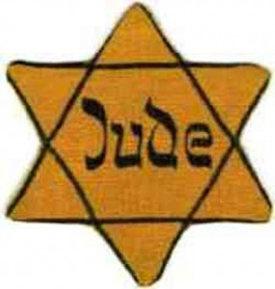
A little more than six months ago, my sister-in-law passed away after battling a serious illness. For more than 30 years she had given symposiums on the Holocaust to youngsters in the Philadelphia area, and we talked about her activities many times on our visits to the U.S. After her passing I was determined to do some kind of volunteer work for Yad Vashem in her memory.

By dvora
It was an ordinary day and Dovid (name changed) was preparing to catch the late afternoon EL AL flight to Eretz Yisrael. He had yahrzeit for his father and planned his trip so he’d arrive there just in time to join his brother at the kever. He parked his car in the area that facilitated a faster trip to JFK for his flight. Little did he know that he was being observed by a team of thieves who were “working” the Diamond District that day in order to rob the merchants of their goods.
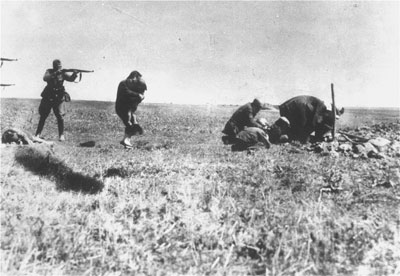
By Rayzel Reich
It was Moishele, and Itche, and me. We did everything together. We even made our own language, which only we understood. In shul they jokingly called us “the troika,” after the three bishops whose authority extended across Poland.

By dvora
It is said that giving charity can save one from death. We also believe that there is no such thing as a “coincidence.”
By Rabbi Lord Jonathan Sacks z"l
In her book The Watchman’s Rattle, subtitled Thinking Our Way Out of Extinction, Rebecca Costa delivers a fascinating account of how civilizations die. Their problems become too complex. Societies reach what she calls a cognitive threshold. They simply can’t chart a path from the present to the future.
By dvora
The Schwartzes had three vehicles but only two drivers. At any given time the third vehicle, the 2005 red Ford van, could be seen on different driveways throughout the neighborhood – and sometimes even in Miami Beach and Hollywood, Florida. The Schwartzes kept a third vehicle, knowing that not everyone had a car.
The popularity of the rise of chassidus did not go unnoticed by those who did not share the same allegiance. As long as the movement was limited to the commoner and isolated in a few pockets of Poland no one perceived it as a threat. But all of this had changed by 1772.
By Rabbi Lord Jonathan Sacks z"l
We think of a sin as something we did intentionally, yielding to temptation perhaps, or in a moment of rebellion. That is what Jewish law calls b’zadon in biblical Hebrew or b’mezid in rabbinic Hebrew. That is the kind of act we would have thought calls for a sin offering. But actually such an act cannot be atoned for by an offering at all. So how do we make sense of the sin offering?
By Alan Magill
It’s my first moment of wakefulness, and I’m chilled to the bone. Pull the covers over myself, I’m thinking, while I decide to roll over to look at the clock. It’s 5:30 a.m. and I’m exhausted. But attending morning minyan – even once – is the least I can do.
By Rabbi Lord Jonathan Sacks z"l
The name Bezalel was adopted by the artist Boris Schatz for the School of Arts and Crafts he founded in Israel in 1906, and Rav Kook wrote a touching letter in support of its creation. He saw the renaissance of art in the Holy Land as a symbol of the regeneration of the Jewish people in its own land, landscape and birthplace. Judaism in the Diaspora, removed from a natural connection with its own historic environment, was inevitably cerebral and spiritual, “alienated.”

I lost control of my car while driving in Brooklyn when a speeding taxi slammed into me. I thought my life was about to end when my car slammed directly into a tree. Baruch Hashem I survived, even though the taxi driver never stopped to help me.
By Rabbi Lord Jonathan Sacks z"l
There is a deeper message in Parshat Tetzaveh - the principle of the separation of powers, which opposes the concentration of leadership into one person or institution. All human authority needs checks and balances if it is not to become corrupt. In particular, political and religious leadership (keter malchut and keter kehunah) should never be combined. Moses wore the crowns of political and prophetic leadership, Aaron that of priesthood. The division allowed each to be a check on the other.
By dvora
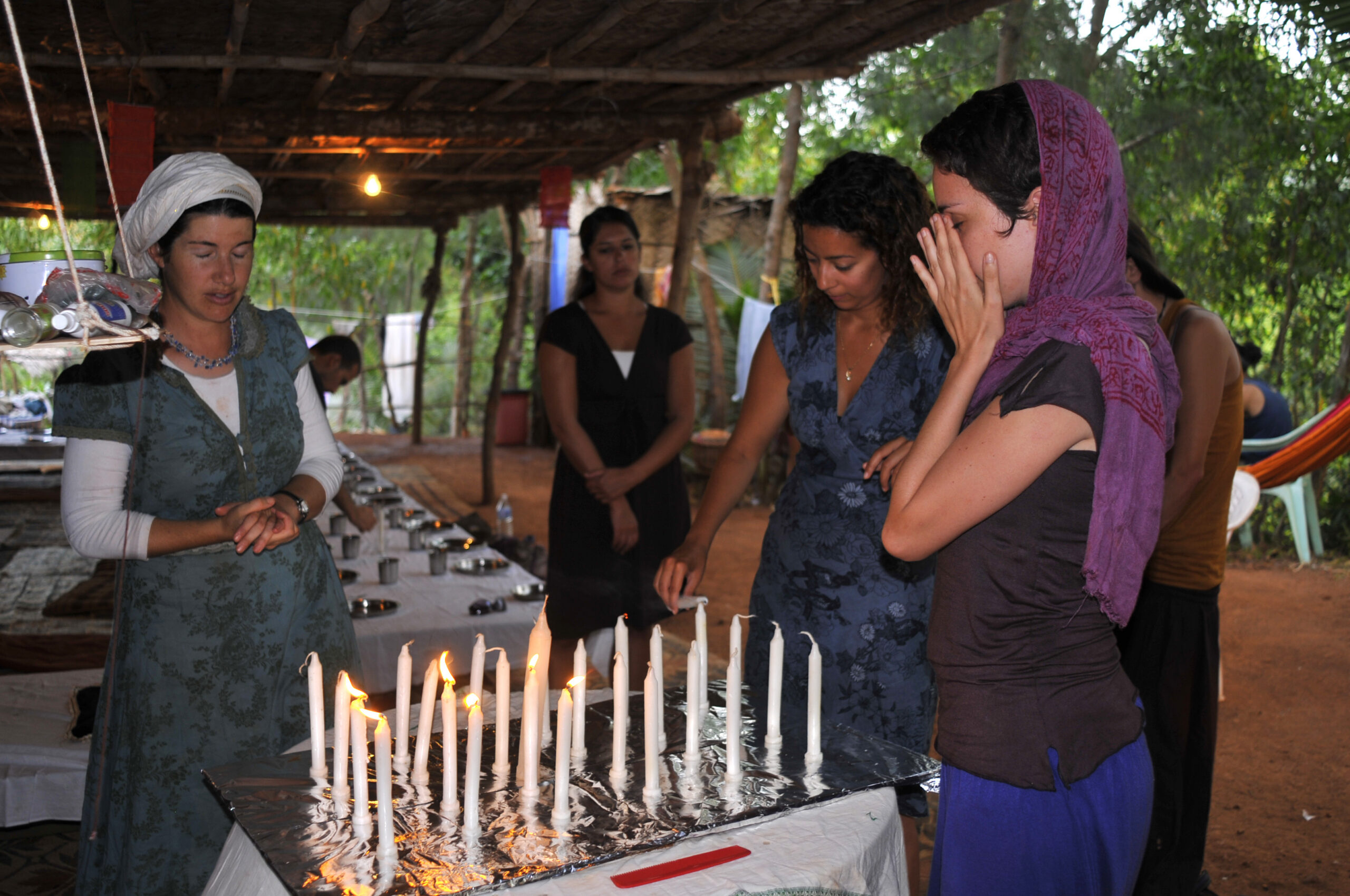
Shabbat is a time of menuchah, of rest. It is also a time of simcha, of happiness. We are often too busy during the week to stop and think about how we can do something simple to bring simcha into someone else’s life. When we can combine the menuchah of Shabbat together with its inherent simcha, we can bring ohr laYehudim, light to all of us.
By Rabbi Lord Jonathan Sacks z"l
It is not what G-d does for us that transforms us, but rather what we do for G-d. A free society is best symbolized by the Tabernacle. It is the home we build together. It is only by becoming builders that we turn from subjects to citizens. We have to earn our freedom by what we give. It cannot be given to us as an unearned gift.
By Rabbi Lord Jonathan Sacks z"l
First in Parshat Yitro there were the Asseret Hadibrot (the Ten Utterances, or general principles). Now in Parshat Mishpatim come the details.
Baruch, from the village of Radovitz, was a sharecropper who barely eked out a living. His income was at the mercy of the infamously cruel Poritz, who owned the Radovitz environs.
By N. Schechter
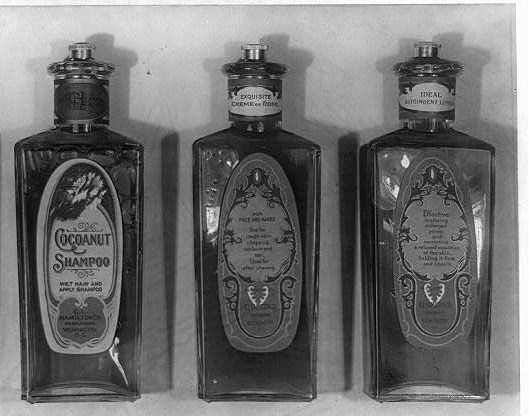
I thank Hashem that my daughters play “shampoo gemach", and I take pride in our community, which stresses gemachs and acts of gemilas chesed. Families try to find ways to help others, and people go out of their way to search for opportunities to practice kindness.
By dvora
Recently, I discovered a frum website, www.jewish-e-books.com, that allows one to download hundreds of Jewish books – both in English and Hebrew. Having written a sefer myself, I was able to get it put on their website.
By Rabbi Lord Jonathan Sacks z"l
In September 2010, BBC, Reuters and other news agencies reported on a sensational scientific discovery. Researchers at the U.S. National Center for Atmospheric Research and the University of Colorado showed through computer simulation how the division of the Red Sea might have taken place.
My friend Mrs. Rosen (not her real name) asked me to share her story. A widow for several years, she recently moved back to the community where she grew up so that she could help her elderly parents.

By Rabbi Lord Jonathan Sacks z"l
There is a fascinating moment in the unfolding story of the plagues that should make us stop and take notice. Seven plagues have now struck Egypt.
By Anonymous
The following inspiring story was told to Rochelle Rothman by her close family member. It truly shows how Hashem runs the world, and helps us in all of our endeavors.

Reb Elimelech M’Lizhensk was considered one of the finest students of the Baal Shem Tov’s successor, the Maggid MiMezretch. When the Maggid passed away, his disciples gathered for the funeral and then had to decide who would succeed their master.
By Rabbi Lord Jonathan Sacks z"l
The parshah of Va’eira begins with some fateful words. It would not be too much to say that they changed the course of history because they changed the way people thought about history. In fact, they gave birth to the very idea of history. Listen to the words:
Reb Pinchos, born in Romania, moved shortly after birth with his parents to Vienna. As a teenager, he learned in another city and took his Gemara with him. Pinchos remembered how his rebbe always liked to teach from his Gemara.
Here is an amazing story. I recently made a bar mitzvah for my second son. I went to have my daughter's hair done in Flatbush, and had to be at the hall two hours later.
By dvora
It’s lately become a family joke. During the course of a day, something occurs that touches me. My kids see the wheels turning in my head and ask, teasingly, if I have another idea for one of my columns. It can be a simple kindness, or it can be one of the miracles that Hashem has wrought for us.
 September 25, 2026