יום רביעי, י״ט תשרי תשפ״זWednesday, September 30, 2026



Follow Us



By dvora
I vowed that when I would grow up, I would speak Yiddish to my kinderlach and I would move to “a place called Crown Heights.”
By Rabbi Lord Jonathan Sacks z"l
The very act of learning in rabbinic Judaism is conceived as active debate, a kind of gladiatorial contest of the mind.

Rabbi Fohrman explains how the Torah provides the building blocks of true love.
By Rabbi Lord Jonathan Sacks z"l
In Judaism, to be without questions is a sign not of faith, but of lack of depth.
By R.M. Gross
Two husbands were there to instruct us in Texas hold ‘em – and we needed them.
By Ed Lion
As his bomber lost altitude with the ground rushing up, my father remembered his last thought: “How am I going to get out of this?

Yom Kippur is called one of the days of awe. What does awe have to do with forgiveness for our sins?
By Rabbi Lord Jonathan Sacks z"l
You perpetuate a transformative event by turning it into a ritual.
Even in the best of times, life is not free of calamity or crisis. But like the well-known Jewish expression goes: “It could be a lot worse.”

while each of us is an individual, we are also part of a larger unit

This week's parsha deals with the strange set of laws dealing with tzara'at.
By Naama Klein
Predictably, my husband agrees and is fine with either night. But after reminding him that he steadily delivers a shiur in his shul on Tuesday nights, he chooses Wednesday, offering a topic related to the Four Sons of Haggadah fame.
If you expect more, you will be less grateful; if you expect less, you will be more grateful.
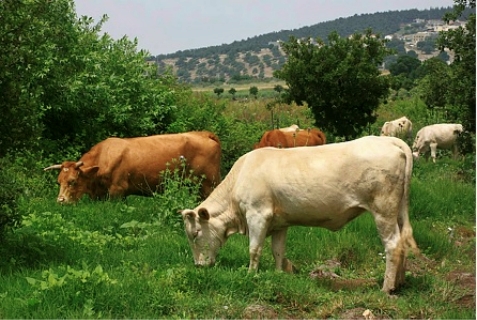
The ritual of kashrut may help us become more conscious of our responsibilities to live ethical lives.

By dvora
I insisted that one decoration, a dancing sevivon (dreidel) man, remain hanging in recognition of the chag. Some in my family questioned the appropriateness of this decision. Was it proper to have decorations hanging in what would soon become a house of shiva?
By Rabbi Lord Jonathan Sacks z"l
There is much in this episode that is hard to understand, much that has to do with the concept of holiness and the powerful energies it released that, like nuclear power today, could be deadly dangerous if not properly used. But there is also a more human story about two approaches to leadership that still resonates with us today.
So this is what she got herself into: serving chicken soup and getting bits of rent on random days. She couldn’t say it wasn’t worth it, as she was earning both a chesed and a little bit of cash.
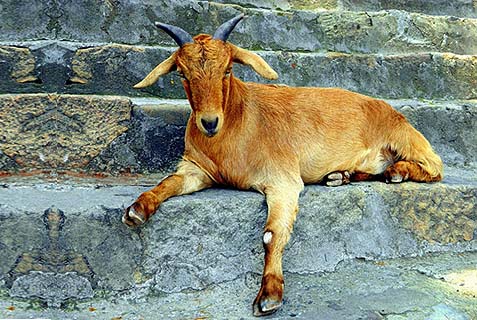
Welcome the book of Leviticus!
By Rabbi Lord Jonathan Sacks z"l
Nasi is the generic word for a leader: a ruler, king, judge, elder, or prince. Usually it refers to the holder of political power.
By dvora
He exhorted all of us to continue to reach out to one another each and every day because that is what our tafkid (life’s goal) should be. And because that is what Hashem requires of us.
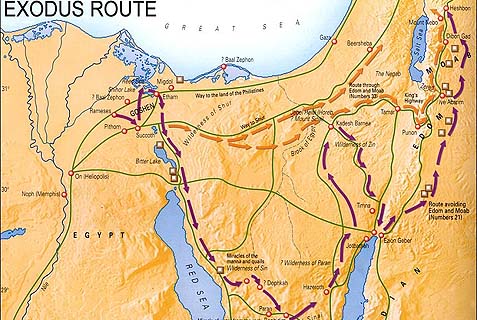
How do the pieces of this puzzle come together to help us understand how the Torah builds together?
By Rabbi Lord Jonathan Sacks z"l
The account of the construction of the Tabernacle in Vayakhel-Pekudei is built around the number seven.

It is my family’s minhag, for many generations, to light the candles 30 minutes before shekiah, as opposed to the commonly held custom of 20 minutes. So I told my husband that those 10 extra minutes should not be an issue.

So goes the story about a man in the silly town of Chelm who visited a public bathhouse and found himself in a terrible predicament. Without the distinction of clothing, everyone looked alike. “Among all these men who look alike,” he said to himself, “how will I ever know which one is me?” He solved his dilemma by tying a red string around his big toe.
This exciting and daring video and challenges us to be more God-like in our actions.
By Rabbi Lord Jonathan Sacks z"l
Vayakhel is Moses’ response to the wild abandon of the crowd that gathered around Aaron and made the golden calf.
I was pretty open [and naïve] about accepting dating suggestions. There was the Israeli that spoke little English with whom I could barely communicate, the brilliant scholar who I discovered was manic depressive, the frum hippie that was still more hippie than frum, and a slew of others – all interesting, but not for me.

The Jewish people commit the worst sin possible - worshiping a false god.
By Rabbi Lord Jonathan Sacks z"l
Sometimes, despite your best efforts, you fail. Such is life.
By dvora
Shimon’s early years were not easy ones. His mother struggled to support both of them. She never acquired the knowledge needed to help her son through school years filled with homework and tests.
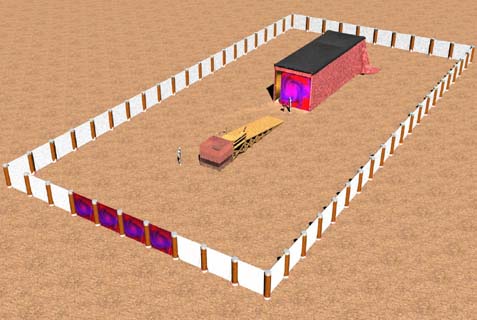
How can God be both outside of space and time, and in our physical world?
By Naama Klein
The exact details of that nocturnal levayah have long since faded from my memory. However, one poignant story shook me to the core of my being – and remains with me still.
By Rabbi Lord Jonathan Sacks z"l
In Judaism, monarchy had little or no religious function.
The mishkan represents the 'face' of God.
By dvora
There is not even a shadow of doubt that without Agudat Efrat’s help, this child would not have been born.
By Rabbi Lord Jonathan Sacks z"l
So long as every crisis was dealt with by Moses and miracles, the Israelite default response was complaint.
Worse, a female child, being sold by her parents!
Kidney transplants from a living donor are infinitely preferable over a transplant from a dead person. The chances of it being rejected by the body are much lower, the life expectancy of the newly transplanted kidney is twice as high, and the recipient’s life and diet can return to normal much faster.
By Rabbi Lord Jonathan Sacks z"l
Two laws have to do with the Israelites’ experience of being an oppressed minority:
In the campaign to rob a consumer of any sense of contentedness, which translates into sales, strategy is often focused on confusing need with want and the illusion of being dissatisfied.
By Rabbi Lord Jonathan Sacks z"l
Only in Judaism was God’s self-disclosure not to an individual or a group (the elders) but to an entire nation.

The nation and God are 'married.'
By Naama Klein
Once again neither of us had the tickets, but this time we knew to follow the unusual protocol and pick up our tickets at the airline counter. So we dutifully waited in line and requested our tickets. This time, however, no tickets awaited us.
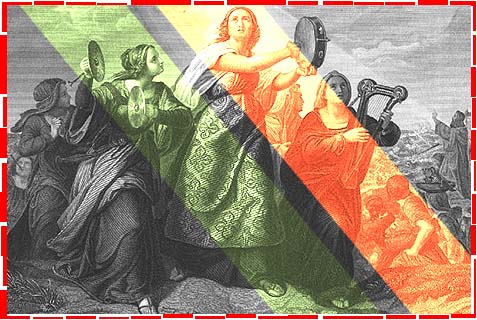
Why did Miriam lead the women of the nation in a second song?
By Dena Estrin
When my very busy friend and former neighbor called to say, “I have a story to tell you,” I knew it had to be a good one. I wasn’t disappointed.
By Rabbi Lord Jonathan Sacks z"l
A fundamental principle of leadership is being taught here.
By dvora
Parents possess divine inspiration (ruach haKodesh) when naming their children. In instances wherein a child is named after a departed loved one, we take great care in our choice – in the belief that the best character traits of the person we are honoring will be reflected in our precious progeny’s actions.
By Rabbi Lord Jonathan Sacks z"l
Moses did not speak about today or tomorrow. He spoke about the distant future.
How could He do such a thing?
“I never said I have nothing to complain about,” she intoned with an expression that belied her age. “I just don’t see the wisdom of protesting. I am fine and I am being adequately nourished.” And with that she went back to her cereal.
Not long after my mother died, I was sitting on campus talking with a friend and mentioned that it had been a long time since I had seen a frog. I used to love going out into the garden with my mother and our St. Bernard dog in the autumn evenings and see the frogs come out. I have a thing about frogs – probably from reading too many fairy tales.
We need to put ourselves into the eyes of Pharaoh's daughter.
By Rabbi Lord Jonathan Sacks z"l
six heroines, six courageous women without whom there would not have been a Moses.
By Ann Goldberg
One thing Meir couldn’t abide was machloket. He would fight wholeheartedly on behalf of his pupils in a situation involving a dispute – but not so if it was political, educational, or religious in nature.
When Joseph agrees to bury Jacob in Canaan, Jacob bows to him in relief - why?
By Rabbi Lord Jonathan Sacks z"l
It is not difficult to understand the care Joseph took to ensure that Jacob would bless the firstborn first.
A fascinating Biblical echo
By Paula Cytryn
The wedding was going full blast, with the joyful Jewish music playing. The sound of the violin awoke unfulfilled longings and triggered moisture in the eyes.
One of the ancillary axioms of cornflake fights is that they can never be contained between just two warring parties.
By Rabbi Lord Jonathan Sacks z"l
Joseph may have known ancient Egyptian traditions about seven-year famines.
By Alan Magill
Patience seems to be in such short supply these days, yet it can make a world of difference. This is particularly so in certain kinds of stressful situations whereby we think we only have time to act in a knee-jerk way instead of acting thoughtfully.
By dvora
As is my custom, I attempt to spend my father’s yahrzeit every year in Israel. This gives me the opportunity to visit this spiritual, holy land, and first and foremost give my father the kavod he deserves. I appreciate the zechus to daven at my father’s kever.
By Naama Klein
I have always told my husband that Hashem apparently loves him very much. And I have even proven my theory by citing the fact that Hashem, in His infinite goodness, gave him me! My husband usually agreed with the first part of the statement.
Are we really meant to applaud Yaakov's behavior?
By dvora
Several years ago, my wife and I were in Boro Park for a wedding. Early the next morning, we received news from Yerushalayim that we had a new grandson.
What does the parsha teach us about the nature of heritage?
After having written this column for so many years, and covering so many topics, I am (finally) bowing to the numerous requests to write about our blessed family. More specifically, I shall commit to paper everyone’s favorite routine: the scene at our breakfast table.
By dvora
Chaim (not his real name) was walking down the street, feeling very discouraged. It seemed that lately, the news was filled with stories depicting the disparities, distrust and dislike between the different streams of Jews living in Israel. Much of it revolved around the different religious affiliations or non-affiliations that people adhered to. There were times when Chaim felt the situation was hopeless, with no way to bring people together as a cohesive group – despite their differences.
With Sukkos well behind us, we are back to our normal workday mode, our post- holiday routine. The sukkah, our temporary dwelling for eight days, has been dismantled and we have returned to our comfortable, permanent homes. Likewise, our Daled Minim have been discarded, having served their purpose. We’re done with those mitzvos (at least for this season).
What Rashi's take on Sarah's life means to us.
By Rabbi Lord Jonathan Sacks z"l
The purchase of the Cave of Machpelah is evidently a highly significant event because it is recorded in great detail.
By Naama Klein
Every Sukkos, at the end of a fun action-packed day at the park, we would gather our happy, albeit exhausted, children and prepare for the long ride home. Needless to say, the first item on the list was a visit to the restrooms. This became our yearly routine and the kids would comply without protest, often before being reminded.
By dvora
My home is furnished simply. One notes the customary family photos and bric-a-brac that makes a house a home, but certain items are my priceless treasures.
The current situation with Syria reminds me of an episode that occurred in January 1991 in Toronto. I had taken my son for swimming lessons while my wife stayed in the car, anxiously listening to the news about Israel. Those were very tense times, with Iraq threatening to attack Israel with chemical weapons, God forbid.
By Rabbi Lord Jonathan Sacks z"l
Leaders lead. They don’t conform for the sake of conforming. They don’t do what others do merely because others are doing it. They think outside the box. They march to a different tune.
On the exalted Purim day, my husband collects money for needy families, as is the custom of many good-hearted Jews. Last Purim before sundown, he entered the home of his last stop, a home filled with many people. Upon receiving some generous donations, he reached for his pocket to keep these contributions safely together with the rest of the money he had gathered. To his great chagrin and shock, he put his hand into an empty pocket.
By Ann Goldberg
Meital and Aharon, married for several years, were thrilled to discover that Meital was pregnant. But within a few hours of their son’s birth, it was painfully apparent that things were far from all right medically.
By Rabbi Lord Jonathan Sacks z"l
Could we understand the history of Israel without its prehistory, the stories of Abraham and Sarah and their children?
Overtime proved to be as tense and white-knuckled as the fourth quarter. Halfway through, New London grabbed a defensive rebound and charging toward their basket when Monona’s forward poked away the ball and broke away. In a slick maneuver he managed to split the defense and went up virtually slamming it to give Monona Grove the lead.
By Naama Klein
The incessant loud knocking on the door startled me from my brief reverie. My husband had left to attend a chassanah in Yerushalayim just moments earlier, the kids were comfortably tucked into bed, and I was spending a quiet evening at home tackling sundry neglected tasks. The sudden pounding and muffled voices soon interrupted my plans for the lonely hours that beckoned. I hurried to answer the door while drying my hands on a kitchen towel haphazardly draped over my shoulder.
By dvora
The zaidie sat at the head of the dining room table. I was a small child and unaware that my friend Esther’s grandfather was the revered rosh yeshiva at Yeshiva University, Rav Moshe Aaron Poleyeff, zt”l.
Approximately 30 days before Shavuos, my fondest friend, Joshua, a prominent diamond importer, invited me to his Fifth Avenue office. “Chaim, I want to show you a beautiful stone. Maybe you have a customer, and I am sure you could use the broker’s commission” (usually not more than two percent).
Avi and Rachel had always assumed, as most people do, that within a year or two of their marriage they would be blessed with a child. But, as we know, that isn’t always the reality.
By Rabbi Lord Jonathan Sacks z"l
The Torah scroll is the nearest Judaism comes to endowing a physical entity with sanctity.
Monona Grove was headed to “State” and the Silver Eagle fans went insane. The coming games would not be played in monotonous high school gyms erected in the 1950s. They were off to the University of Wisconsin's colossal Kohl Center where they would play before a crowd of 12,000. The games would be broadcast to a statewide television audience of millions, as a battery of newspapers and stations would be begging for interviews. The Kohl Center was just a short drive from Monona, technically in the same city.
It was a few minutes after sunrise. A new day had begun, and everyone was preparing for work, school and shopping for Shabbat. But the sun was setting slowly in our basement, as it was setting calmly for my mother-in-law. It was time for her to take leave of family, children and everything in this world.
By Rabbi Lord Jonathan Sacks z"l
The ancients saw the gods in nature, never more so than in thinking about the harvest and all that accompanied it.
By Naama Klein
Aseres Yemei Teshuvah. The mere mention of these three potent words invariably strikes fear into the hearts and souls of God-fearing Jews everywhere. Each weekday morning, the piercing cry of the shofar penetrates our collective consciousness and urges us to mend our ways, repent our transgressions and return wholeheartedly to our Father in Heaven.
By Rabbi Lord Jonathan Sacks z"l
Fathers shall not be put to death for their children, nor children put to death for their fathers -- how is that compatible with the idea that children may suffer for the sins of their parents?
By dvora
I returned to work after the pre-summer Memorial Day weekend and found on my desk a brochure sent from the American Friends of Kupat Ha’ir. It described a tragedy that had recently taken place in Eretz Yisrael. A tzedakah campaign had been created after the father of 13 children was suddenly killed in a car accident, leaving behind a wife and the 13 children – including a six-day-old baby.
By Rabbi Lord Jonathan Sacks z"l
On the face of it, the test is simple: if what the prophet predicts comes to pass, he is a true prophet; if not, not. Clearly, though, it was not that simple.
By Alan Magill
I recently heard a Pirkei Avos shiur in which the speaker said that our spiritual DNA derives from our patriarchs and matriarchs. The great tests they withstood and for which they gained ever greater prominence was witnessed by the Jews who followed them, many of whom succeeded in overcoming great challenges as well. It seems that an individual’s great effort helps the spiritual strength kick in.
By Rabbi Lord Jonathan Sacks z"l
These stories all have to do with the mitzvah of tzedakah whose source is in this week’s parshah.
With absolutely nothing to lose, including his employment for the coming year, Dan Zweifel devised a strategy for a team that could not seem to catch an offensive rhythm and for players that had protracted shooting slumps and 10-minute-long droughts. His solution, his only recourse, was defense.
In an April Lessons in Emunah column, I wrote an article called “Learning to Dance in the Rain” about two friends who were very ill. One was in a hospice. The doctors had given up hope and the family waited with a heavy heart. But there was still One Doctor left. And He began to heal her. Slowly, the disease began to reverse itself, slowly it began to withdraw.
By Rabbi Lord Jonathan Sacks z"l
One of the more unusual aspects of being a chief rabbi is that one comes to know people one otherwise might not.
 September 25, 2026