 October 23, 2026
 Making Up for Lost Time


Parshas Beha’aloscha
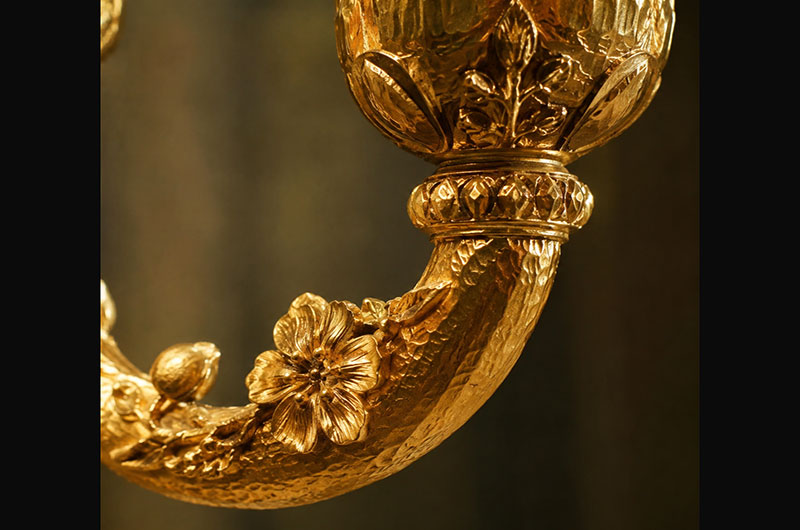
The Menorah had seven stems. One stem, known as the Ner HaMa’aravi, was in the middle and its light burned for twenty-four hours, even though the quantity of oil poured in to it was sufficient for only twelve hours. This central stem symbolized the spiritual life of the Torah. The message is that even though we, as humans, must spend most of the day tending to our physical needs, if we do so with the Torah in mind, if we eat and sleep in order to recharge our batteries so that we can better serve Him, then it is as if our entire lives were dedicated to the service of G-d twenty-four hours a day. Our physical lives are like the match that lights the eternal light. If we divorce ourselves from it, we will burn out. If we join it, we will last forever.
The six other stems of the Menorah symbolize the seven wisdoms of the world. They all emanate from the central wisdom of the divine Torah and they have purpose only when they too contribute to the Torah. Whatever G-d-given talents a person is gifted with, they only have meaning if they are used in the service of the Torah.
When Ben Bag Bag says, “Turn the pages of the Torah and you will find everything in it” (Avos 5:22), he does not necessarily mean that the Torah contains all mathematical, medical, scientific answers for everything. What he means is that these wisdoms, when applied for the sake of the Torah, become part of Torah. So, we need mathematicians to figure out the Jewish calendar, doctors to save lives, artisans to build the Beis HaMikdash, and each one of us with his own talents contributes to the light of the Torah enabling it to shine and survive perpetually. That is why the six stems representing secular wisdom all faced toward the central stem of Torah.
Furthermore, the six stems of the Menorah were not independently fashioned and then soldered on to the central stem. Rather they were part of and beaten out of one solid piece of gold. This means that any seeming contradiction between one’s own understanding and the Torah’s commandments is really no contradiction at all, or if it is, its solution is the solution that the Torah dictates, because all wisdom is subservient to the Torah. This is why this instruction that the six lights must tilt towards the Ner HaMa’aravi was given to Aharon alone (8:1) and not to the rest of the Kohanim, even though they were all eligible to light the Menorah (Shemos 27:1). It was Aharon who had erred when he gave in to his own logic. He justified his acquiescence in the building of the golden calf by arguing that if he would stand in the way, he would be killed like Chur before him, and if that would happen, the Jews would never be forgiven for the crime. Instead, Aharon should have simply done what the Torah commanded of him, give up your life when asked to commit idolatry, instead of giving in to your logic.
There were some men who were not able to offer up the Korban Pesach at its prescribed time on the fourteenth of Nissan because they had come in contact with the dead and were therefore ritually unclean. They could have just shrugged it off and said, “Oh well, too bad, perhaps next year.” But no, they were distressed at the possibility of missing out on this mitzvah. So they came to Moshe and said, “Why should we lose out and not be able to bring the Korban Pesach at the right time along with the others?” “Wait here,” replied Moshe. “I will consult with G-d regarding your matter” (9:7-8).
The Torah then continues with the laws of Pesach Sheni. But the Torah had already been given by this time and we know that all of the laws of the Torah, including Pesach Sheni, were given at Sinai. So why did Moshe make out as if he did not know the answer and had to consult G-d about this “new” problem? The answer is that indeed the laws of Pesach Sheni were already given at Sinai. But they were given by G-d at Sinai precisely because He foresaw this very incident of some Jews complaining that they could not possibly pass up the mitzvah of Korban Pesach because it would so distress them. Yes, Moshe knew all about Pesach Sheni, but he made out as if he didn’t and needed to consult with G-d in order to make it clear to them that the only reason this catch-up opportunity was afforded them and included in the Torah at Sinai is because G-d saw that in the future that they would ask for it.
The Jews began their trek to Israel by leaving the mountain of G-d (10:33). They traveled for three days taking the Holy Ark with the Torah inside with them. We are told that the Holy Ark symbolizes us ourselves and that even when we travel, the Torah should be with us. Nevertheless, when it comes to describing the travels of the Jews with the Holy Ark, the Torah uses the word “Vayehi” (10:35). The word Vayehi always presages something foreboding and negative. What is the Torah alluding to here?
It is warning the Jews that they are beginning to embark on a different life. They are leaving the Har Hashem where they heard the word of G-d and they are leaving the life of the desert where all of their physical needs were taken care of, with no investment of time and effort on their part. That life gave them all the time in the world to study the Torah free from the worries of a livelihood. Now, however, they were about to enter the real world, where the physical and spiritual juggle and compete for space. “If a person plows his field when it is time to plow, sows his seeds when it is time to sow, reaps his produce when it is time to reap, thrashes his grain when it is time to thrash and winnows the grain when it is time to winnow, when will he have time to learn Torah?” (Berachos 35b). Clearly the studying of Torah is going to suffer once we enter the land of Israel and take over the responsibility of our own livelihood.
Perhaps nobody penned this dilemma better than King David who wrote that his only wish was to sit in the house of G-d all the days of his life and enjoy the beauty of the Torah. But alas, he too could not afford this luxury and had to find study time between leading the people and fighting wars. That is the meaning of “Vayehi.”
However, there is always down time in life. “When the ark came to rest Moshe said, ‘Return O G-d to the people’” (10:36). The trick is to supplement the learning deficit forced upon us in times of stress with extra study in times of calm to make up the shortfall.