 October 16, 2026
 Categories: Featured / Parsha / Torah
Mordechai in the Torah


Ki Tisa
The word the Torah uses for counting the Israelites is (Ki) tisa. The real meaning of tisa means to lift up, as we see from the description of Avraham and the three angels. Avraham lifted up his eyes and saw the angels (Bereishis 18:2). What is the connection between counting and lifting up? The Midrash tells us that Moshe asked G-d how the Jewish people could raise their stature. G-d answered that it can only be raised by counting them for the purpose of a mitzvah. Not by counting their money or their possessions. How many do we have toward a minyan, how many volunteers do we have to build the Mishkan?
Whatever one contributed, one should admit to oneself that one could have given more, that one’s work is never complete. The half shekel represents a job half done and atones for it. It is this admission that elevates a person by incentivizing one to reach for more.
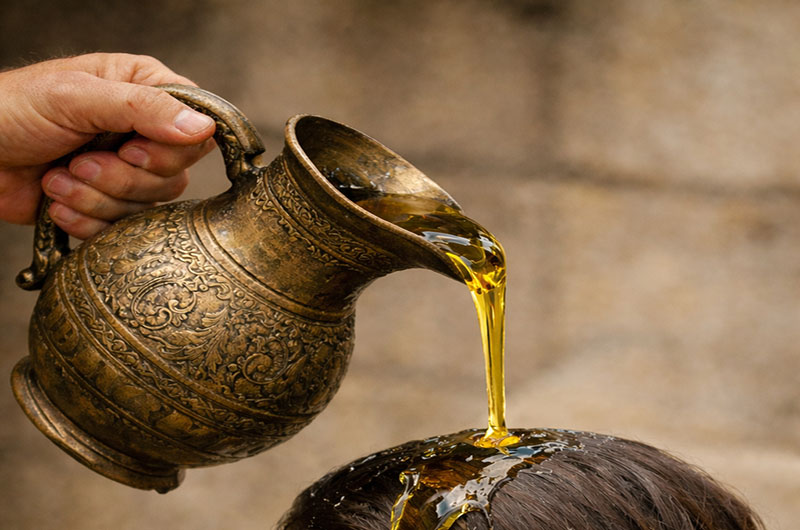
Moshe was given the recipe for making the sacred anointing oil. This oil was used to anoint the kohen gadol and later on the kings of Israel.
One of the oil’s ingredients was besamim rosh, a choice spice called mor deror (30:23), which the Targum translates as “meira dachya,” which sounds like Mordechai. Indeed, Chazal tell us (Chullin 13b) that these words refer to Mordechai who was the leader of the Jewish people who are compared to fragrant spices.
What is the connection between these choice spices and Mordechai?
By accepting the Torah, the Jews themselves became “a Kingdom of Priests and a Holy Nation” (19:6). However, Chazal tell us (Shabbos 88a) that their acceptance of the Torah was under duress. At the Revelation, G-d gave them an ultimatum: “If you accept the Torah you will be fine, but if not, you will die.”
Being that their acceptance was under duress, the Jews had an escape clause. They could unilaterally revoke the covenant with G-d and abandon their status as the Chosen People at any time.
That almost happened during the reign of Achashverosh. The king invited the Jews to participate in a party which celebrated three things: the abandonment of their hope of ever returning to Israel, the renouncement of their Jewish identity, and their total assimilation with the Persian people. The Jews participated in this party and were about to trigger the escape clause when suddenly Haman and the King threatened to annihilate them.
It was Mordechai who saved the day by making them fast, pray, repent and unconditionally accept the Torah. Now they understood that G-d’s ultimatum at Sinai was not a threat. It was the answer to antisemitism. The only escape was to remain faithful to the Torah, because that is the Jews’ guarantee of survival. It was due to Mordechai that the Jews renounced the escape clause and regained their status as the holy nation who could once again be compared to the fragrance of choice spices.
We are told that the Ketores atones for lashon hara (Zevachim 88b). We are also told that the biggest culprit in spreading lashon hara was Haman (Megillah 13-14). He told Achashverosh, “There is a certain people scattered and dispersed among everyone in all the provinces of his kingdom whose laws are unlike those of every other people and who do not obey the King’s laws. It is not worthwhile for the King to put up with them. An edict should be issued for their destruction” (Esther 38). But Achashverosh was hesitant to listen to this advice because he knew that G-d would protect the Jews. Haman allayed his fear by telling him Yashnu am echad, the whole nation of Israel is asleep. They are asleep to the laws of the Torah and therefore G-d will not protect them.
But then Achashverosh was concerned that if he destroyed the Jews he would cripple his economy. So Haman told him that the Jews were unproductive, because some of them kept Shabbos and Yom Tov and therefore earned less than their non-Jewish peers and so paid less tax. It was Mordechai who persuaded the Jews to don their protective armor by returning to the laws of Torah. And at the end of the Megillah we read that thanks to Mordechai (he was appointed as secretary of treasury), the King was able to collect more taxes than before (Esther 10:1). The lesson Mordechai was teaching us is that the way to elevate oneself is not by putting someone else down, but by achieving something oneself. That is the way one can anoint oneself with greatness. The shemen ha’mishchah shared four common ingredients with the Ketores, and like it, it atoned for the sin of lashon hara.
The story of the building of the Mishkan is interrupted by the laws of Shabbos to remind us that although the laws of Shabbos are suspended when it comes to offering up sacrifices in the Temple, they are not suspended for the purpose of building the Temple (Rashi to 31:13). The reason for this is because Shabbos is an everlasting sign that there is a G-d and that He created the world (31:17). The Beis Hamikdash also bore testimonyto the existence of G-d through the ten miracles that were evident there for all to see (Avos 5:5.) But the Beis Hamikdash was only a temporary sign of G-d’s existence, whereas Shabbos is a permanent sign. The temporary cannot override the permanent.
On Shabbos we are told that G-d ceased working and withdrew to the spiritual – “shavas va’yinafash” (31:17). So too, Shabbos for us should consist of two components: Resting from physical work and working on restoring our souls by studying his Torah.