October 2, 2026
 Parshat Vayeira - Songs About Brit Milah and the Akeidah
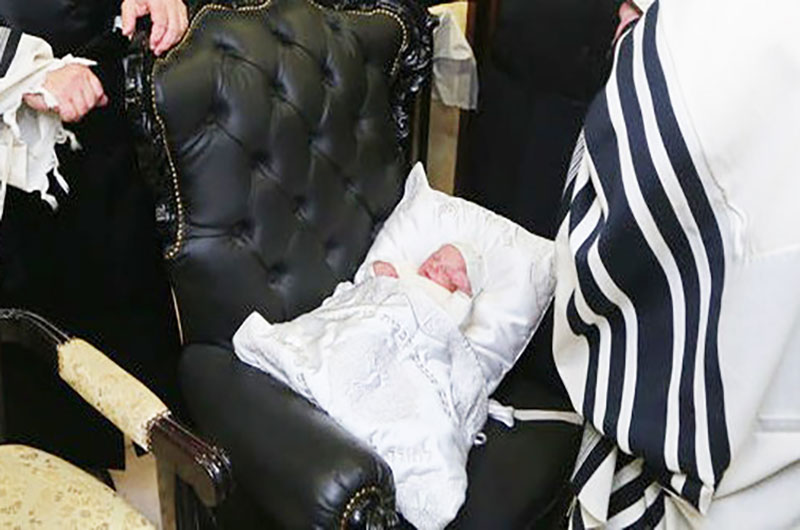


In Parashat Vayeira, we read about Yitzchak’s brit milah, and later in the parsha, about Akeidat Yitzchak. Every year, in the tefillot of Rosh Hashanah and Yom Kippur, we remember the Akeidah as a zechut for our tefillot to be accepted. Some say the Akeidah every day in Shacharit (right after Birchot HaShachar) and that’s also a big zechut.
So today I’d like to review a few songs about brit milah and Akeidat Yitzchak.
In a WhatsApp group of musicians, members sometimes ask, “What songs are appropriate for a brit milah?” It’s a good question – are there songs about brit milah? While I’m not going to give a full playlist, here are a few songs that I like.
We know that at every brit milah, Eliyahu HaNavi (Elijah the Prophet) comes to visit. Perhaps the most well-known song about him is “Eliyahu HaNavi” by Rabbi Shlomo Carlebach. This song just doesn’t get old. Even so many years since Rabbi Carlebach performed it, the song is still with us and people enjoy listening to it and singing it.
Another beautiful song that I like is also called “Eliyahu HaNavi,” sung by Avraham Fried on his album We Are Ready!, which was released in 1988. We Are Ready! was one of Fried’s early albums – the sixth one. His “Eliyahu HaNavi” was composed by Yossi Green. The song is upbeat and begins with the familiar brass intro, then strings, before the lyrics begin. The best part? The chazanut-style part toward the end of the song when Fried goes high and then the ending with piano and brass.
Another nice song is “Eliyuhi HaNuvi” by Motty Steinmetz, which was released just a few months ago on his new album Emunah U’Bitachon, and composed by Itzi Berry.
In 2006, Baruch Levine released the song “Vezakeini” which he composed. Since then, it has become very popular and been performed by many singers. The lyrics are from the prayer recited after lighting Shabbat candles. In an interview with Ynet in 2014, Levine said that he already had nine songs for his first album and he was missing one more song. Then his son was born, and the night before the brit, he sat down at the piano. There on the ledge was the Birkat HaBanim, a tefillah that women say for their children. He had never said this tefillah before, but he saw it on the piano and the song just came out.
“Vezakeini legadel banim u’vnei banim, chachamim u’nevonim, ohavei Hashem, yirei Elokim, anshei emet, zera kodesh b’Hashem dveikim. U’me’irim et ha’olam baTorah u’vemaasim tovim u’vechol melechet avodat haboreh.” Please give me the merit to raise children and grandchildren who are wise and intelligent, who love Hashem, fear G-d, people of truth, holy seed who cleave to Hashem; who light up the world with Torah and good deeds and service of the Creator.
Many singers have performed the song since then. I like the version by Yosef Karduner, which sounds more acoustic. You can find more performances by other singers online, but the best one is “Vezakeini” by Gilad Potolsky & Shalhevet Orchestra from the HaNeshama Lach #8 album. This performance is full of emotion and features a very rich harmony. Another nice performance of “Vezakeini,” composed by Yossi Green, is the one by Avraham Fried on the album Keep Climbing.
And speaking of songs for brit milah, obviously there is “HaMalach HaGo’el” which also has many versions by many musicians. My favorite (again) is the one by Gilad Potolsky & Shalhevet Orchestra found on the HaNeshama Lach album. They also have another rendition of “HaMalach HaGoel” on HaNeshama Lach 2.
Later in the parsha we have the Akeidah story. The Akeidah took place on Har HaMoriah. One of Avraham Fried’s hits is the song “Moriah.” It was composed by Mona Rosenblum and featured on the album Mona 4 which was released in 2003.
“Lama lama ma nikrah Moriah, al shem hamor hatov she’yeshno sham. Mi she’ana l’Avraham Avinu b’Har HaMoriah Hu yaane etchem v’yishma kol tzaakatchem bayom hazeh.” Why, why, why is it called Moriah? Because of the good mor (myrrh) which is found there. He who answered Avraham Avinu at Har HaMoriah should answer you and hear your cry on this day.
The song has an interesting story. Not many know this, but according to the website Srugim, the tune was actually composed and recorded 30 years before the song was recorded. It turns out that the singers Moshe Giat and Yehudah Wasserman sang the tune to different words on their album Zemed HaRishonim – Modeh Ani which they released in 1977. The song was “Ana Slach Na” and was composed by Mona. The album was not a success, but almost 20 years later, Mona remembered the tune and decided to put different lyrics to it, taken from the Gemara and the Zohar.
Interestingly, one comment on the article suggests that the original words were actually the words about Har HaMoriah, which Mona composed for a bat mitzvah of a girl named Moriah (in Israel it’s a popular name for girls), and that he later gave the tune to Zemed HaRishonim. Years later, he decided to insert the song on his album Mona 4. But, keep in mind that I have not verified the story on Srugim or this comment on it.
The song “Ana Slach Na” to the tune of “Moriah” can be found in this link beginning at the 20-minute mark: https://www.youtube.com/watch?v=LMHRwu2vcls&t=1226s.
Another beautiful song about the Akeidah is “Akeidat Yitzchak” by Shmuel Ouziel, which was composed by Avi Peretz and featured on his debut album Baderech Chazarah, which was released in 2016.
I mentioned Motty Steinmetz above, and another song by Motty Steinmetz is about the Akeidah. “Zechor Brit” features his unique style, which is full of emotion.
“Zechor Brit Avraham v’Akeidat Yitzchak v’hashev shvut ohalei Yaakov v’hoshieinu leman sh’mecha…” Remember the covenant of Avraham and Akeidat Yitzchak and return from captivity the tents of Yaakov and save us for the sake of your Name.
One of my favorite singers is Yehuda Glanz, whose album Na’ale, which was released in 1993, has been one of my favorites since I was in high school. (I still listen to it sometimes.) In 1995, he released another album, which I also have on my HiFi music player. It’s called Rak Litzok El Hashem. Song number 10 on the album is “LeOlam Yehe Adam,” whose lyrics are from the Akeidah tefillah which some say every day in Shacharit.
A beautiful medley with songs about the Akeidah was recorded with Isaac Honig, Zanvil Weinberger, Dudi Linker, the Malchus Choir and a fire band all on one stage. The result is 14 minutes of songs which I recommend you find on YouTube and listen to. It’s good – I think you’ll enjoy it.
Shabbat Shalom.