 October 23, 2026
 Categories: Features On The Jewish World / Featured / In Print
Pinkas Hazkarot Neshamot – a Miraculous Treasure
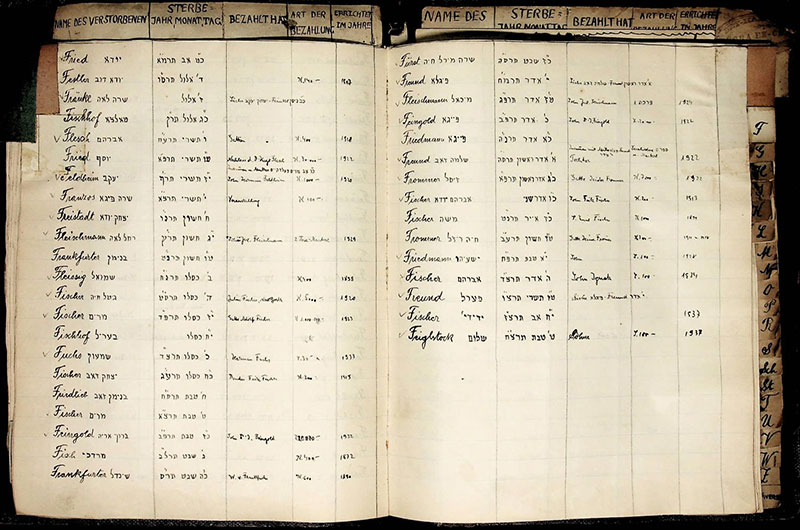


Among the precious remnants of European Torah life that miraculously survived the horrors of the Holocaust, few that I was able to acquire are as poignant – or as packed with historical treasure – as the Pinkas Hazkarot Neshamot of the famed Schiff Shul in Vienna.
This handwritten volume, recording the names and yahrzeits of nearly 1,500 neshamot, was copied for the shul’s last rav, Rabbi Shlomo Baumgarten, just before he fled the Nazis in 1938. It is only thanks to that copy that we know what we know today.
The original Schiff Shul was a bastion of uncompromising Torah observance in the heart of a modernizing Vienna. Established in 1864 at 8 Grosse Schiffgasse, the shul was built by a community of Galician, Hungarian, and Slovakian Jews seeking to maintain a traditional kehillah amidst growing secular influences. The interior was modest, modeled after the simple batei midrash of Eastern Europe, with a central bimah, 500 men’s seats, and an upper women’s gallery seating 250.
 The Adass Jisroel community, as it came to be known, was more than just a synagogue. It was a full-fledged Torah ecosystem: Yeshivas Yesod HaTorah, a women’s chesed organization, a kosher matzah bakery, butcher shops, even a traditional black-and-white pastry bakery – all under strict halachic supervision. It was the only Bethausverein in Vienna to operate independently of the larger Jewish community, financially and spiritually.
Leading this community for forty years was Rabbi Binyomin Shlomo Zalmen Spitzer, zt”l (1853-1893), a son-in-law of the Chasam Sofer, no less. Later, the kehillah was led by Rabbi Yeshayahu Fürst, a prominent figure in Agudas Yisroel, alongside the dayan, Rabbi Yosef Baumgarten – father of the last rav, Rabbi Shlomo Baumgarten, who safeguarded the Pinkas for posterity.
The Pinkas itself is divided into two parts:
The first section, arranged by Hebrew months, lists some 767 individuals, noting whether a simple yahrzeit was observed or whether hazkarat neshamot was also recited.
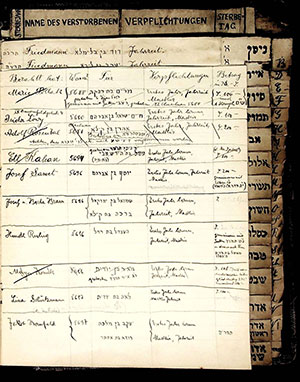
The second section, organized alphabetically by family name, records approximately 660 entries, including dates of passing, names of those who arranged for the memorials, the fees paid, and membership information.
Among the entries is a reference to the passing of the Pri Megadim in 1792 – likely recorded from an earlier tradition – indicating that the community’s memory stretched even further back than the physical record.
But this vibrant Torah community was not spared from destruction.
On November 10, 1938 – Kristallnacht – the Schiff Shul was attacked in the early morning hours. The building was looted, torched, and reduced to rubble. According to the fire brigade report: “The temple was fully ablaze upon arrival… six hoses were deployed… the entire structure burned down...damages estimated at 100,000 Reichsmarks.”
Eyewitnesses describe scenes of unspeakable cruelty. Sifrei Torah were dragged into the streets and burned. Religious women were assaulted – kisuy rosh torn off in public. Children watched in horror as their kedoshim were humiliated.
But from these ashes, one book survived.
Rabbi Shlomo Baumgarten managed to flee to London with a hand-copied version of the Pinkas in tow. That document – written in his careful hand – preserved the names, dates, and memories of hundreds of neshamot who would have otherwise been forgotten.
More than just a memorial list, the Pinkas is a sefer of zechusim – a rare glimpse into a world that once was, a community of Yidden who lived with sincerity, humility, and unwavering emunah.
For historians, it is a priceless record. For Torah Jews, it is a sacred reminder: Am Yisrael chai – even in the face of devastation.