 October 9, 2026
 Categories: Featured / Parsha / Torah
Purim and Ki Tisa: Between Shadow and Light
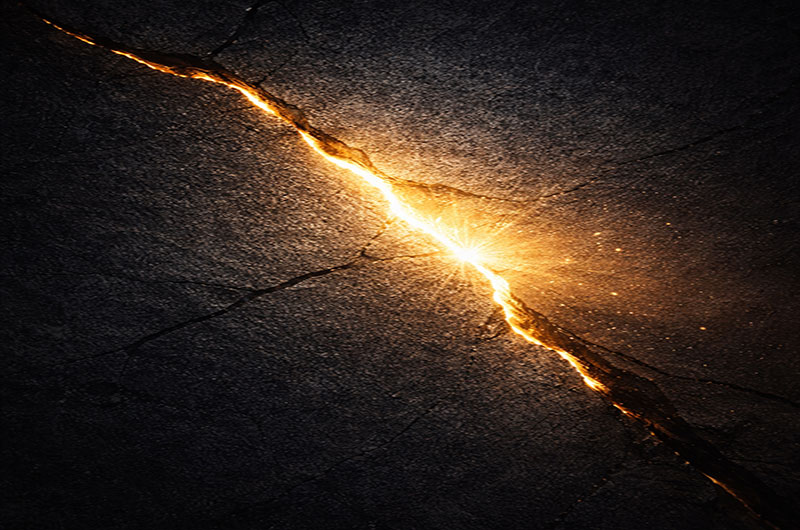


Purim leaves us standing in the soft glow of hester panim. The hidden light that flickers in the cracks, the kind of light that asks us to lean in, to listen differently, to trust what we cannot see. It is the light that does not overwhelm, but invites. The light that does not command, but whispers. The light that teaches the neshama how to see in the dark. The light that asks us to trust our own trembling.
Ki Tisa arrives with the opposite force: gilui Shechinah so bright it shatters. A light that exposes everything: the beauty, the fear, the longing, the shadow. A light that does not ask us to search, but to survive. A light that does not whisper, but roars.
In the span of a few days, we move from Esther’s quiet courage in the shadows to Moshe holding luchot carved by the hands of Hashem. Two extremes of Divine presence. Two ways a people can tremble. Two ways a heart can break open.
Purim is the holiday of hiddenness. Where Hashem’s name never appears, where salvation comes through human courage, where the miracle is buried inside ordinary decisions. Ki Tisa is the parsha of exposure. The blinding nearness of Hashem, the unbearable intimacy of revelation, the moment when the people stand too close to the fire and cannot hold themselves together.
One story unfolds in exile and the other at the foot of Har Sinai, but both ask the same question: What do we do when the world feels unsteady and Hashem feels either too far or too close?
The soul knows two kinds of light: the hidden glow that asks us to search, and the fierce brightness that asks us to stand steady. Purim gives us the first. Ki Tisa gives us the second. And the calendar, in its quiet wisdom, places them side by side. Not to confuse us, but to teach us that the spiritual life is not linear. It is a trembling dance between shadow and revelation, between fear and courage, between collapse and repair.
Two Kinds of Panic
Fear is the thread that binds these stories. Not the fear of punishment, but the deeper, more human fear of uncertainty. This is the fear of not knowing what comes next, of being abandoned, of being seen too clearly, of being asked to step forward when every instinct tells us to hide. This fear drives the people in Shushan to fast and pray and the people at Har Sinai to build the Egel HaZahav. It drives Esther toward the palace doors and Moshe toward the breaking of the luchot. Fear is not the exception in these narratives; it is the condition. And if fear is the condition, then courage becomes the response. But courage does not look the same in every landscape. In Shushan, courage is quiet. It is Esther stepping into the palace with her heart pounding, knowing she may not survive. It is Mordechai refusing to bow, not out of defiance, but out of fidelity. It is a people who tremble but do not break. This is the courage that grows in the dark, without guarantees, without revelation, without a voice from heaven saying Al Tira – do not be afraid. In Ki Tisa, courage is fierce. It is Moshe standing before Hashem and refusing to let the people be erased. It is Moshe breaking the luchot, not in rage, but in protection – shielding the people from a covenant they have already shattered. This is the courage that rises in the light, when everything is exposed, when the truth is too bright to bear, when the stakes are unbearable. These are not two versions of courage; they are two necessary forms of it. One is the courage of the hidden place and the other is the courage of the revealed place. One is the courage of the dark and the other is the courage of the light. Both are holy. Both are human. Both belong to us.Esther and Moshe as Mirrors
Esther breaks her silence; Moshe breaks the luchot. Two gestures that could not look more different, yet both are acts of leadership. Both are acts of love. Both are moments of standing between power and a frightened people. True leadership is not about authority. It is about presence and the willingness to hold a trembling community with enough steadiness that they can find their way back to themselves. Esther steps into the palace alone, carrying the fear of an entire people in her body. Moshe steps into the cloud alone, carrying the weight of revelation in his hands. Esther risks her life to save her people. Moshe risks Hashem’s anger to save his. Two leaders. Two moments. One truth: Leadership is the willingness to stand in the trembling. And this is where the stories begin to mirror each other in ways we rarely notice. In Purim, the people tremble and choose faith. In Ki Tisa, the people tremble and choose collapse. In Purim, the people hold each other. In Ki Tisa, the people reach for gold. Both responses are human. Both responses are understandable. Both responses are born from the same ache: Where is Hashem when we need Him?What the Soul Does When It Trembles
The Torah long knew what modern thinkers would later name: that when human beings tremble, we reach for whatever helps us survive the moment. The Sfas Emes teaches that the places we refuse to enter become the very places where our avodah waits for us. This is the Jewish version of what psychologist Carl Jung would call the shadow. And Rebbe Nachman of Breslov teaches that the soul trembles before every true choice, a trembling that echoes philosopher Søren Kierkegaard’s “dizziness of freedom.” The Torah gives us both not as theory, but as lived experience. Jung teaches that what we refuse to face becomes the idol we create. The Sfas Emes says the same in Torah’s language: that when we cannot hold our inner darkness, we project it outward and mistake it for something real. The Egel HaZahav is exactly that: a collective shadow cast in gold. The people cannot bear their fear, their uncertainty, their longing, their vulnerability. They cannot bear the silence of Moshe’s absence. They cannot bear the weight of revelation without the reassurance of presence. So, they pour their fear into something they can touch. They give shape to their shadow. The Egel HaZahav is not about idolatry; it is about panic and the human need for something solid when everything feels unstable. It is the collapse that happens when the soul cannot hold the moment. Kierkegaard names the opposite response. He writes that “anxiety is the dizziness of freedom,” the moment when we must choose without certainty, when the ground beneath us feels unsteady, when the leap feels impossible. Reb Nachman teaches this in his own language: that every person must cross a narrow bridge, and the essential thing is not to be overcome by fear. Purim lives in that space. Esther lives in that space. The people of Shushan live in that space. They tremble, but they leap anyway. Ki Tisa lives in the other dizziness. It is the terror of too much light. The people are not asked to leap; they are asked to stand. They are asked to hold themselves in the presence of Hashem, who is suddenly too close, too bright, too overwhelming. And they cannot. Jung explains the collapse. Kierkegaard explains the leap. The Sfas Emes and Rebbe Nachman show us that Torah has been teaching both all along. Because the spiritual life is not a single posture. It is the oscillation between shadow and courage, between panic and presence, between the instinct to grasp for something solid and the willingness to step into uncertainty. The Torah does not shame us for either response. It names them. It reveals them. It invites us to recognize ourselves in both.The Mishkan: Returning to Terumah’s Foreshadowing
Weeks ago, in Parshat Terumah, we learned that the Mishkan would become the repair for a wound we had not yet encountered. Midrash Tanchuma teaches that the Mishkan was given as a response to the Egel HaZahav as a way to rebuild the relationship, a way to hold the intensity of Divine presence without being undone. Ramban writes that the Mishkan is a continuation of Har Sinai, a portable revelation, a way to carry the encounter without being consumed by it. Now, in Ki Tisa, we meet the wound and the Mishkan becomes the answer. The Mishkan is not a punishment; it is a kindness. It is a container for the light. It is a place where the shadow can be held rather than denied. It is a place where fear can be brought into presence rather than poured into gold. It is a place where the people can learn to stand in the light without collapsing. The Mishkan is the repair not only for the Egel HaZahav but for the human condition. It is the meeting point of hiddenness and revelation, of fear and courage, of rupture and repair.What It Means to Be Human Between Hiddenness and Revelation
Purim teaches us to find Hashem in the hidden places. Ki Tisa teaches us to survive Hashem in the revealed ones. Purim teaches us to leap. Ki Tisa teaches us to stand. Purim teaches us to speak. Ki Tisa teaches us to break what must be broken. Purim teaches us that courage can rise in the dark. Ki Tisa teaches us that courage can rise after the shattering. And the Mishkan teaches us that repair is always possible. Taken together, these moments form a map of the human condition. We move through seasons of hiddenness and seasons of revelation, through shadows that ask us to search and lights that ask us to steady ourselves. We tremble in both. We long in both. We learn in both. The Torah does not ask us to choose one mode of being over the other; it asks us to recognize that holiness lives in the movement between them. Whether we stand in Shushan or at Sinai, in New York City or Indianapolis, in shadow or in light, in fear or in trembling, the work is the same: to choose presence over panic, courage over collapse, and repair over despair. To hold ourselves and each other with enough steadiness that we can find our way back to the light. To build a world where hiddenness and revelation are not threats but invitations to deepen, to listen, and to become. To be human is to live in the tension between what we can see and what we cannot. It is to stand in the presence of Hashem, whether Hashem is hidden or revealed, without losing ourselves. It is to trust that even when we tremble, even when we falter, even when we cast shadows or shatter tablets, there is always a path back. There is always a Mishkan waiting to be built. There is always a way to begin again.