 October 23, 2026
 Categories: Ask the Rabbi / Torah
Q & A: May One Visit Egypt?
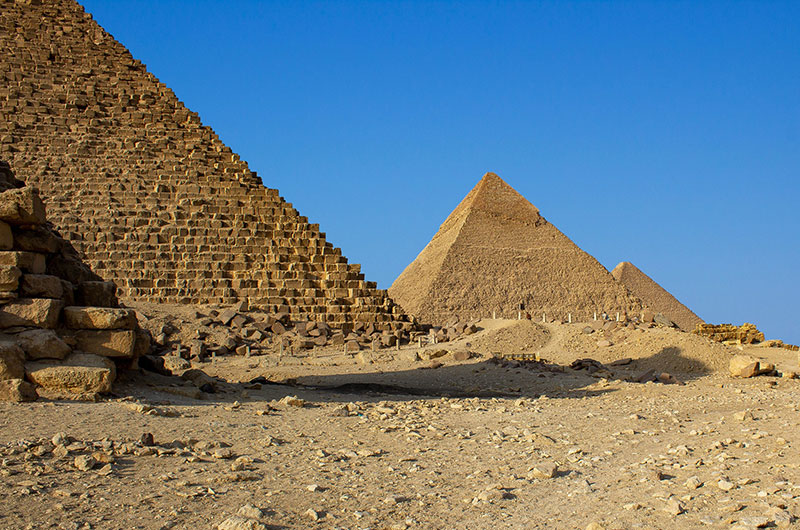


Question: Is the prohibition of living in the land of Egypt equally applicable to travel there as well? I know people who go there to see the pyramids.
Zelig Aronson
Via email
Answer: First, let’s amend your question: Is it permissible for a Jew to live in the land of Egypt? To answer this question, we turn to the gaon Rabbi Ovadiah Yosef, zt”l, the Rishon LeZion, the late Chief Rabbi of Israel, who expressed his view on the matter of dwelling outside the land of Israel, and in particular dwelling in the land of Egypt. His answer is to the following question as recorded in Responsa YechavehDa’at (vol. 3:81): Is it permissible to travel to and stay [i.e., dwell] in Egypt?
This question was posed to him in 1977 by religious journalists engaged in reporting on the then-historic peace process between Egypt and Israel, which would require them to travel to Egypt in the course of their assignments. It is obvious that these journalists were well acquainted with the view of Rambam (as we will cite) on this matter, and wished not to violate this edict for even one moment.
Rabbi Yosef cites Rambam (Hilchot Melachim 5:7): “One is allowed to dwell anywhere in the world with the exception of Egypt from the Mediterranean Sea to the west to the Land of Kush and the desert. It is forbidden to dwell in all these places. In three places, the Torah warns not to return to Egypt: In Parshat Shoftim (Deuteronomy 17:16): ‘V’lo yashiv et ha’am Mitzrayma...’ – In order that he [the king] not return the people to Egypt; in Parshat Ki Tavo (Deuteronomy 28:68): ‘Lo tosif od lir’ota...’ – You shall never see it again; and finally, in Parshat Beshalach (Exodus 14:13): ‘Lo tosifu lir’otam od ad olam’ – You shall not see them ever again.”
Rabbi Yosef notes that the source for Rambam’s statement is the Mechilta (Shemot, Beshalach, parsha 3): “We learned, Rabbi Shimon Bar Yochai says: in three places [in the Torah] the Jewish people are warned not to return to Egypt, as it states..., yet three times they returned, and for those three times they fell. The first was during the days of Sancheireb (Isaiah 31:1), ‘Hoy ha’yordim Mitzrayim l’ezrah...’ – Woe to those who go down to Egypt for help. The second was in the days of Yochanan ben Kareyach (Jeremiah 43:5-7), and the third is mentioned regarding the wealthy Jewish community of Alexandria in Egypt in the days of Troganus (Sukkah 51b).”
Rabbi Yosef comments in his notes that the Gemara refers to Alexander the Great as having killed the Jews of Alexandria of Egypt, but the Gra amends the text to read “Troganus the Roman Emperor” (Trajan, to parallel the text in the Jerusalem Talmud ad. loc.).
The Gemara questions, “Why were they killed? Because they transgressed the admonition of [the end of] the verse in Deuteronomy (17:16), ‘You shall no longer return on this road again.’”
Rabbi Yosef notes that in light of the above opinion of Rambam, it is quite astonishing that many Gedolei Yisrael, even Rambam himself, as well as many sanctified communities, found themselves in Egypt in spite of this ruling based upon the Mechilta.
Rabbi Yosef therefore cites Ritva (Novella, Yoma 38b), who explains that this edict only applied to the Egypt of old. However, all those original Egyptian cities were interspersed and/or destroyed by Sancheireb, King of Ashur (Yoma 54a). The present-day cities where these communities are found are not considered the same ones.
On the other hand, the incident cited in the Gemara (Sukka 51b) about the destruction of the entire Jewish community of Alexandria in Egypt concerned an age-old city that was indeed subject to the edict of the Torah.
Thus, according to Rabbi Yosef, if today one may even dwell in Egypt, which Rambam specifically cited in his text as prohibited from settlement, then it is surely permissible to dwell anywhere else in the world, even outside EretzYisrael, as Rambam specifically states. It is, of course, common knowledge that Rabbi Yosef himself lived in Egypt for a few years, before being forced to leave that country due to his dissatisfaction with the Egyptian Jewish community’s overall laxity of religious practice, as well as the mass exodus of Jews from the country upon the rise of Gamal Abdel Nasser to power.