October 2, 2026
 Categories: Collecting / Arts
Rabbi Tuvia Geffen, Rav Moshe Feinstein, And The Coca-Cola Kashrut Story



Author’s note: there are several halachic discussions of kashrut in this article, so please keep in mind that I am not a rav, nor do I have any claim to being particularly halachically knowledgeable. As such and as always, please consult your local rav with any halachic questions.
The story of the kosher supervision of The Coca-Cola Company is one of those rare episodes in modern religious history in which industrial secrecy, rabbinic authority, immigrant experience, and American capitalism converged in a way that is at once practical and almost folkloric. A story told and retold, it is sometimes embroidered, occasionally misunderstood, and often simplified into a charming anecdote about a rabbi who “made Coke kosher.” The truth is both more complex and more revealing, and it unfolds over decades, involves multiple rabbinic figures of great stature, and raises serious questions about trust, verification, and the limits of religious knowledge in an age of proprietary formulae.
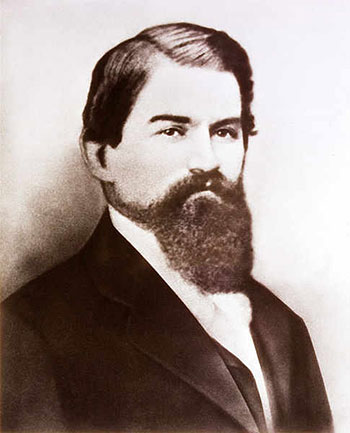
To begin at the beginning, Coca-Cola was created in 1886 in Atlanta by John Stith Pemberton (1831-1888) after temperance laws forced him to make a non-alcoholic version of his French Wine Cola. By the early twentieth century, it had become one of the most widely distributed beverages in the United States. The early history of The Coca-Cola Company contains several details that are often overshadowed by the later global success of the drink but are, in their own right, unusually revealing about the culture in which it was born. In its earliest incarnation, Coke was not marketed as a casual refreshment, but as a kind of patent medicine, part of a late nineteenth-century American tradition in which pharmacists compounded tonics that promised relief from fatigue, headaches, and “nervous disorders.”
When Pemberton introduced the drink in 1886, it was dispensed at soda fountains rather than bottled and sold for five cents a glass. (Interestingly, it was first sold to customers at Jacob’s Pharmacy, which was owned by Joseph Jacobs, a second-generation German-Jewish immigrant.) Its name, which was coined by Pemberton’s bookkeeper, Frank Mason Robinson, referred to two of its original ingredients, coca leaf extract and kola nut, both associated at the time with stimulating properties. Although the cocaine content derived from coca leaves would later be removed – by the early twentieth century, it had been reduced to negligible levels and then eliminated as an active narcotic – its presence in the original formula reflects the looser regulatory environment of the era and the blurred line between medicine and beverage.
Another striking feature of Coke’s early history is how quickly control of the product passed out of Pemberton’s hands; within a few years of its invention, a series of partial sales, licensing arrangements, and financial pressures led to the consolidation of ownership under Asa Griggs Candler, an Atlanta entrepreneur whose marketing instincts would prove decisive. Candler transformed Coke from a local curiosity into a regional and then national product, relying heavily on aggressive advertising, free samples, and the distribution of branded merchandise, including calendars, clocks, and signs that familiarized the public with the name (today, these are highly-prized and sometimes very valuable collectibles). Perhaps most consequentially, the decision in the 1890s to license independent bottlers, initially for a nominal fee, created a decentralized distribution network that allowed Coke to spread rapidly across the United States, and this franchised bottling system, unusual at the time, became one of the structural foundations of the company’s later global reach.
Turning more closely to Pemberton himself, his biography adds an almost tragic dimension to the story. Born in Knoxville, Georgia, he trained as a pharmacist and established a respectable practice in the pre-Civil War South. He served during the war as a lieutenant colonel in the Confederate Army and was wounded in battle, an injury that reportedly led to chronic pain; as a result, like so many physicians of his generation, he turned to morphine as a treatment and developed a dependency, a not uncommon outcome in an era before the addictive properties of opioids were fully understood. Some historians believe that his search for alternative pain remedies and stimulants contributed directly to his experimentation with coca-based tonics, including an earlier product modeled on the popular European drink Vin Mariani (a coca-infused wine). When local prohibition laws in Atlanta forced him to remove alcohol from the formula, he adapted the drink into what became Coca-Cola. Financially, however, he did not live to see its success; he died in 1888, relatively poor, having sold much of his interest in the product.
As Eastern European Jewish immigrants settled in American cities, they encountered a dizzying array of new foods and beverages, many of which had no clear status under traditional Jewish dietary laws. Unlike meat, which required ritual slaughter, or wine, which had long-standing halachic complexities, soft drinks presented a novel category because they were industrial products often composed of chemical flavorings and extracts whose origins were opaque even to those who manufactured them.
By the 1920s and 1930s, observant Jews in the United States were increasingly concerned with the kashrut status of mass-produced goods, a concern that was particularly acute in places like Atlanta, where Coke was headquartered and where a significant Jewish community had taken root. In the decades surrounding the birth and early spread of The Coca-Cola Company, the Jewish community of Atlanta was relatively small but already well-established, and it possessed a distinctive character shaped by both Southern culture and the broader patterns of American Jewish immigration.
The earliest Jewish settlers in Atlanta were largely of German origin, arriving in the mid-nineteenth century and tending toward economic integration, civic participation, and, in many cases, Reform Judaism. By the 1880s and 1890s, however, a newer wave of immigrants from Eastern Europe, more traditionally observant and often Yiddish-speaking, began to arrive, creating a layered community with differing religious needs and sensibilities. This internal diversity is crucial to understanding later kashrut concerns: while earlier German Jewish residents were often more acculturated and less stringent about dietary law, the newer immigrants brought with them a stronger attachment to traditional observance and a heightened sensitivity to questions of kosher status. It was in Atlanta that the central figure in this story, Rabbi Tuvia (Tobias) Geffen, emerges.
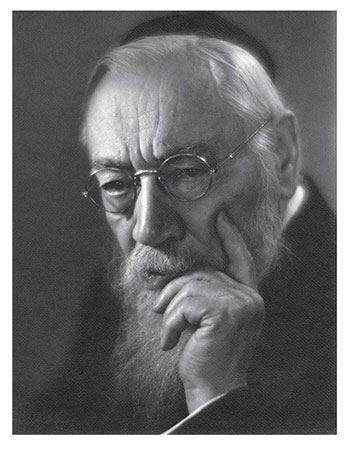
Born in in Kovno, then part of the Russian Empire, a region that produced many prominent rabbinic scholars, Rabbi Geffen (1870-1970) studied in the great Lithuanian yeshivot, including Slabodka, and was steeped in the rigorous analytical tradition that would later characterize much of American Orthodoxy. He emigrated with his wife, Sarah, to the United States after 1903 to escape Eastern Europe antisemitism and, after suffering through frigid Canton (Ohio) winters, they moved to Atlanta in 1910, where he became the leader of Shearith Israel Synagogue (which still exists today). His tenure there, which lasted more than half a century, made him one of the most influential Orthodox rabbis in the American South.
In Atlanta, R. Geffen established the city’s first Hebrew school; actively assisted Jewish women to obtain gets (religious divorces) from uncooperative husbands; provided religious services to Jewish soldiers stationed at nearby military bases; and helped Jewish prisoners housed at the Atlanta Penitentiary. (In one notable case, he helped convince Georgia Governor Eugene Talmadge to pardon a Jewish prisoner who had been wrongfully convicted). He also raised significant funds for Jews affected by World War I, including those in Eretz Yisrael, which at that time was colonized by the Islamic Ottoman Empire, and he was a passionate Zionist, serving in leadership organizations for various Zionist organizations throughout this lifetime.
R. Geffen’s personality and method deserve closer attention because they help explain how he approached something as unusual as a corporate formula. Contemporary accounts from congregants and family members describe a figure of quiet determination rather than flamboyant authority; he was known to spend long hours in study but also to engage patiently with laypeople who brought practical questions. One oft-repeated anecdote, likely accurate in substance even if perhaps embellished in detail, describes how local Jewish shopkeepers pressed him repeatedly about Coca-Cola, not out of theoretical curiosity but because they themselves drank it and sold it. This grassroots pressure reflects an important dynamic: kashrut supervision in America was not only imposed from above but demanded from below.
The question of Coke’s kashrut came to him in the 1930s, when the beverage contained glycerin, which could be derived from either vegetable or animal sources. If the glycerin were animal-derived, it could pose a serious kashrut problem, particularly if it came from non-kosher animals or was processed in a non-kosher manner. Complicating matters further was the company’s famous “secret formula,” known only to a handful of executives, secrecy that was not merely a marketing gimmick but a genuine business practice designed to protect the product.
Here the narrative enters a realm that has often been romanticized. According to widely circulated accounts, R. Geffen was granted access to Coca-Cola’s formula under conditions of strict confidentiality and, while the precise details of what he was shown and how much he was told are not publicly documented in full – owing, in part, to the very secrecy that defines the story – many historians and communal accounts agree that he was given sufficient information to make a halachic determination. It is often said that he signed a nondisclosure agreement, a most unusual step for a rabbi at the time, which underscores both the company’s concern for secrecy and the seriousness with which the rabbi approached his task.
After examining the ingredients, R. Geffen determined that certain components were indeed problematic; most notably, he discovered that one component was glycerin derived from non-kosher beef tallow. (There are also references in secondary literature to concerns about alcohol used as a solvent for flavor extracts, though these appear to have been less central than the glycerin question.) The company’s research laboratories subsequently worked to identify a substitute and found that Procter & Gamble produced glycerin from cottonseed and coconut oil and, once the company agreed to use the vegetable-based alternative, he granted his certification, enabling Coke to be marketed as kosher.
In his writings, preserved in the archives of the American Jewish Historical Society, R. Geffen explained:
Since Coca-Cola had already been accepted by the general public in this country and in Canada, and since it had become an insurmountable problem to cause the majority of Jews to refrain from drinking this beverage, I seriously endeavored to find a method to permit its use. With the help of Hashem, I succeeded in discovering a practical solution whereby there would be no question or doubt concerning its ingredients.
In another letter, he wrote a response in 1935 that:
With the help of G-d, I have been able to uncover a pragmatic solution according to which there would be no question nor any doubt concerning the ingredients of Coca-Cola. It is now possible for the most stringent halachicist to enjoy Coca-Cola.
A particularly interesting and less frequently discussed aspect of this encounter concerns the intermediaries who likely facilitated it. Coca-Cola’s leadership in the early twentieth century included figures deeply attuned to public perception and market expansion and, while the exact corporate officers who were involved in the discussions with R. Geffen are not definitively identified in surviving public records, some scholars suggest that local Jewish businessmen in Atlanta acted as informal brokers, helping to establish trust between the rabbi and the company. If so, this would place the episode within a broader pattern of Jewish commercial networks mediating between religious authority and American industry.
R. Geffen’s ruling that Coke could be considered kosher – provided that the specified changes were implemented – was a landmark decision that demonstrated that even a product shrouded in corporate secrecy could, given sufficient transparency and trust, be evaluated within the framework of halacha. It also set a precedent for future positive interactions between rabbinic authorities and large corporations.
Nonetheless, the decision did not go entirely unchallenged. Some rabbinic contemporaries expressed unease, not necessarily with R. Geffen’s conclusions but with the process. These questions touch on a deeper tension within Jewish law between reliance on expert testimony and the ideal of communal verification, because in traditional settings, such as a butcher’s shop or a wine press, the processes were visible and subject to communal oversight. Industrial production, by contrast, was hidden, complex, and constantly evolving.
One recurring and very specific concern, raised in various kashrut discussions of the period and attributed in oral accounts to visiting rabbis and correspondents with R. Geffen, was the problem of ingredient substitution without notice. The question was put bluntly: if a company reserves the right to alter its formula (even slightly) for cost or supply reasons, what halachic mechanism ensures that the original ruling remains valid? In more concrete terms, rabbis asked whether a shift in the source of glycerin, from vegetable to animal, even temporarily, could occur without the certifying rabbi’s knowledge, and whether reliance on corporate assurances was sufficient absent continuous on-site supervision. This was not a theoretical concern; it reflected common industrial practices of the era, in which suppliers changed and formulations were adjusted with little public disclosure.
A second concrete issue, discussed in halachic correspondence of the time and very much applicable to Coke even when not always named explicitly, involved multi-source chemical derivatives. Rabbis asked: if a substance such as glycerin or a flavoring agent can be produced from both kosher and non-kosher raw materials, and the finished chemical is identical in composition, does halacha treat those sources as halachically interchangeable, or does origin remain determinative? This question was particularly pressing in the early twentieth century, when industrial chemistry was advancing faster than halachic terminology could easily categorize. Some rabbis were inclined to be stringent, arguing that origin remained decisive; others, in line with later positions articulated by Rav Moshe Feinstein (see discussion below), were more open, under defined conditions, to considering the transformation process and the possibility of bitul (nullification) or even substantive chemical change (nishtaneh ha-mahut).
A third concrete concern, again reflected in contemporary kashrut debates, was the issue of confidential inspection itself. Rabbis asked whether a halachic ruling could legitimately rest on information that the rabbi was not permitted to disclose, even in general terms, to other scholars. In traditional responsa literature, transparency allows peer evaluation; here, by contrast, R. Geffen’s access to the formula was conditioned on secrecy. Some rabbinic voices therefore raised the procedural question: does the inability of other authorities to review the underlying data weaken the ruling’s standing, or is the personal credibility (ne’emanut) of a recognized posek sufficient? This question was not unique to Coke, but the case made it unusually vivid.
One revealing anecdote, preserved in various oral histories, tells of a visiting rabbi who questioned Atlanta Jews about their reliance on Coke; when told that R. Geffen had approved it, the visitor reportedly responded along the lines of, “Do you trust the rabbi, or the company?” The rhetorical force of the question lies in its implicit challenge: trust in kashrut supervision ultimately depends on a chain of reliability, from the manufacturer to the certifying authority to the consumer. As such, perhaps R. Geffen’s greatest achievement was to create a chain strong enough that most were willing to rely upon it.
As kosher supervision became more institutionalized in the mid-twentieth century, larger organizations such as the Orthodox Union began to play a central role. Coke eventually came under the supervision of such agencies, which established systematic methods for inspecting facilities, verifying ingredient sources, and ensuring ongoing compliance. This transition from individual rabbinic authority to organizational oversight is one of the most important developments in modern kashrut history, and Coke stands as an early case study in how that transition could occur.
The issue of the “secret formula” remained a point of fascination and, at times, skepticism, as some critics questioned whether any rabbi could truly verify the kashrut of a product whose full composition was not publicly disclosed. Others argued that the halachic system has long dealt with analogous situations, relying on principles such as trust (ne’emanut) and the presumption that a company will adhere to agreed-upon standards when doing so is in its interest.
At the foundation stand major early modern authorities, such as Rav Moses Isserles and Rav Shabbatai HaKohen, who codified and elaborated the principle that certain individuals engaged in a trade have a presumption of credibility because they would not undermine their own livelihood (uman lo mera umnutei). This concept appears in discussions of butchers, wine merchants, and others whose economic self-interest aligns with maintaining trust, and, while these rulings predate industrial food production by centuries, they established a conceptual basis: halacha recognizes that economic incentives can create a form of reliability.
Moving into the modern period, this principle was reexamined in light of industrialization by figures such as Rav Yechiel Michel Epstein who, in the Aruch HaShulchan, addresses the growing complexity of commercial life and the extent to which established business practices can be relied upon. Of course, he does not specifically discuss Coke, but he does broaden the application of earlier principles to more systematized and less personally transparent economic settings, implicitly paving the way for later reliance on structured commercial assurances.
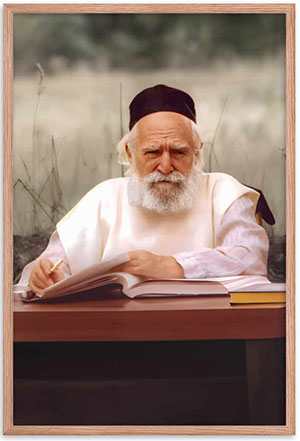
Into this evolving landscape entered one of the most significant halachic authorities of the twentieth century, Rav Moshe Feinstein (1895-1986), who was among the greatest poskim after the Holocaust, the most central and influential halachic figure in the United States, Chairman of the Moetzes Gedolei HaTorah of Agudath Israel of America, and Rosh Mesivta of Mesivta Tifereth Jerusalem in New York. He addressed a wide range of modern issues in his responsa, collected in the seminal series Igrot Moshe, and his rulings shaped the face of halacha in the modern era, with their influence enduring to this day.
A deeper look at Rav Feinstein’s methodology sheds additional light on the Coke question. In several responsa dealing with industrial food production, he grapples with the concept of ta’arovet (mixture) and the extent to which minute quantities of potentially non-kosher substances affect the status of a product. While he never reduces kashrut to a purely quantitative calculus, he does acknowledge that in large-scale manufacturing, trace ingredients may be present at levels that are halachically negligible under certain conditions, but only when read within this tightly structured framework; it is not a blanket leniency, but it is a conditional application of classical doctrines to modern industrial realities, bounded by careful attention to function, transformation, and verification. This analytical framework would later prove essential in evaluating flavorings and additives in beverages like Coke.
There is also evidence – although, to be clear, not always in the form of explicit rulings – that Rav Feinstein was attentive to the reputational stakes of major corporations. A company like Coca-Cola, with its global brand and regulatory scrutiny, had strong incentives to maintain consistency and avoid scandal, and some experts argue that this factor implicitly strengthened the case for relying on its disclosures, though Rav Feinstein himself would have framed the issue in strictly halachic terms.
With respect to Coca-Cola specifically, many experts believe that Rav Feinstein accepted the general framework established by earlier authorities and the emerging certification bodies. While there is no widely recognized responsum in which he directly overturns or disputes the kashrut of Coca-Cola as certified under reputable supervision, his broader teachings provided the intellectual and halachic foundation for evaluating such cases, and later poskim frequently cite his principles when discussing similar issues.
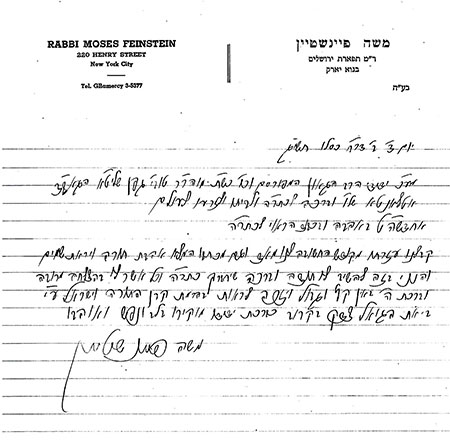
Further support for this proposition is this incredible 1953 correspondence from Rav Feinstein to Rabbi Geffen in which he writes:
May Your Honor and all that is yours be blessed with abundant success and with the blessing of Hashem without limit or end, and may you merit to witness the raising of the horn of Torah and Israel through the coming of the righteous Redeemer speedily – with the blessing of your friend who esteems you with heart and soul and loves you,
Moshe Feinstein.
This correspondence is considered to be a rare letter among the writings of the great Posek HaDor because the vast majority of his manuscripts and letters consist of profound halachic responsa sent to thousands of correspondents and later published in his monumental responsa series, Igrot Moshe. Rav Moshe did not head a yeshiva dependent on frequent fundraising campaigns, nor did he serve as a Chasidic Rebbe to whom masses flocked for blessings. Consequently, personal letters of blessing entirely in his handwriting are exceedingly rare and particularly meaningful. It was most unusual indeed for him to communicate such obviously earnest and heartfelt blessings, and he unmistakably held Rabbi Geffen in his highest esteem; this would be improbable indeed if Rav Feinstein harbored any issue with R. Geffen’s Coke hechsher.
The question of Pesach introduced an additional layer of complexity. During Passover, Jews abstain from chametz (leavened grain products), and many Ashkenazi Jews also avoid kitniyot (legumes and certain other crops). Coca-Cola’s standard sweetener in the United States has long been high-fructose corn syrup, which is not considered chametz but is often treated as kitniyot. As such, special production runs of Coca-Cola for Passover are made using cane sugar instead, and these are certified as kosher for Passover, with the yellow caps on these bottles becoming a seasonal marker in many Jewish communities, sometimes even generating informal “hunts” among consumers eager to find them.
An intriguing cultural footnote is that some non-Jewish consumers have also sought out these Passover bottles, believing – accurately, as it turns out – that they contain cane sugar rather than corn syrup and therefore have a slightly different taste. This unintended crossover highlights how a religious requirement can influence broader consumer behavior, further incentivizing companies to accommodate such needs.
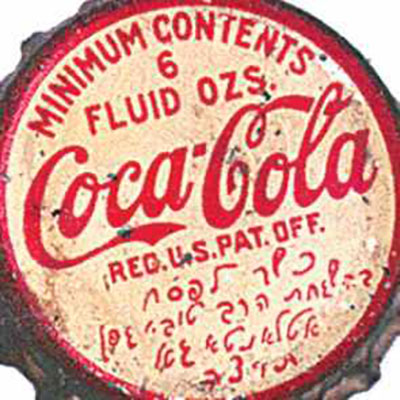
Another layer of complexity arises from Coke’s global operations because in different countries, the formulation of the beverage may vary due to local regulations, ingredient availability, and consumer preferences. As a result, kosher certification must be assessed on a case-by-case basis; a bottle of Coke in one country may not automatically share the same certification status as one in another, even if the branding is identical. This has led to occasional confusion among travelers and underscores the importance of looking for recognized certification symbols rather than relying on assumptions.
From a broader perspective, the kosher certification of Coca-Cola represents a turning point in the relationship between traditional Jewish law and modern industry. It demonstrated that halacha could engage with complex, proprietary systems without compromising its principles, and it also showed that corporations could adapt to religious requirements in ways that were both practical and economically beneficial.
There were – and are – to be sure, skeptics and dissenters. Some rabbis questioned whether any system of supervision could fully account for the intricacies of industrial production, and others worried about the potential for complacency, where consumers might assume that a familiar product is always kosher without verifying its certification. These concerns remain relevant today, not only for Coke but for the entire kosher food industry.
For example, in the 1950s, rabbis objected to Coke even after it had been reformulated, because, they said, that the vegetable glycerin was processed in shared equipment with non-kosher glycerin and might absorb and transfer prohibited taste (blios). In response, at R. Geffen’s insistence, Procter & Gamble built separate piping systems to satisfy these rabbinic concerns.
Yet, the overall trajectory has been one of increasing sophistication and reliability. Certification agencies now employ chemists, food scientists, and trained inspectors who work alongside rabbinic authorities and they maintain detailed records, conduct unannounced visits, and use advanced methods to trace ingredients back to their sources. In this context, the early efforts of R. Geffen are both pioneering and foundational.
His biography, in retrospect, reads as a case study in the adaptation of traditional leadership to modern circumstances. He was not a marginal figure but a central authority in his community, and his willingness to engage with Coca-Cola was consistent with his broader approach to halachic problem-solving. He issued responsa on a wide range of topics, many of which addressed the challenges of American life, and he did so with a combination of rigor and practicality that earned him lasting respect.
Among other things, R. Geffen addressed questions about commercial bakeries and factories, including supervision standards when ingredients and equipment were not fully under Jewish control; he dealt with hidden or derivative ingredients (like glycerin, emulsifiers, and flavorings), which were becoming common in American food production; he ruled on the permissibility of using electric lights on Shabbat (generally prohibiting active use but addressing borderline cases such as preset lighting); and addressed a broad variety of issues regarding how Jews should function within the American legal and economic system, including the interface between American courts and rabbinical courts and whether and how the principle of dina de-malchuta dina (“the law of the land is binding”) applies in the United States.
Rav Feinstein, for his part, represents the next stage in this evolution. His towering influence extended far beyond any single product or issue, but his teachings provided the framework within which kosher certification could expand and standardize. If R. Geffen’s role was that of a pioneer, Rav Feinstein’s was that of a systematizer and legitimizer.
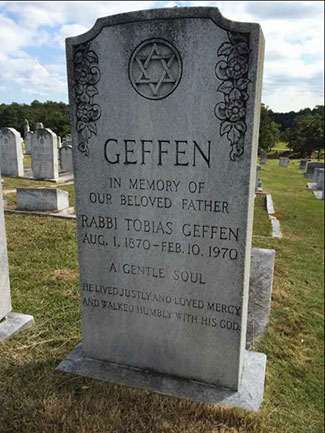
Rabbi Geffen was buried in Greenwood Cemetery in Atlanta, and the funeral drew Congregation Shearith Israel members, the broader Jewish community, and many admirers from many walks of life far beyond the Jewish community. His passing was reported in the February 13, 1970 issue of The Southern Israelite (Atlanta’s Jewish weekly), which carried a front-page obituary and continuation inside that described him as the “dean of Southern Orthodoxy” and cited his famous kosher certification of Coca-Cola
Today, Coca-Cola’s kosher status is generally taken for granted by consumers who rely on established certification symbols. The drama of the original investigation, the intrigue of the secret formula, and the debates among rabbis may have receded into the background, but they remain an essential part of the story, reminding us that even something as commonplace as a soft drink can raise profound questions about knowledge, trust, and the interface between tradition and modernity.