 October 16, 2026
 Categories: Featured / Parsha / Torah
Rainmakers


Parshas Behar-Bechokosei
Why does G-d emphasize that the laws of Shemittah were relayed at Har Sinai? Weren’t all the laws in the Torah given there?
We are told that the leaders of Israel ate and drank as they witnessed the Revelation. What this may mean is that they ate up the words of the Torah being transmitted to them and were drunk with the atmosphere of the divine presence, to the point that they never thought of physical food or drink.
This one-time experience would help them later on in navigating the challenging year of Shemittah, where the concern could be: “What will we eat in the seventh year; we have not planted nor harvested crops?” (Vayikra 25:20). They would be able to look back and draw on the Revelation experience which taught them that man does not live by bread alone, but by all that comes out of G-d’s mouth (Devarim 8:3).
“When you come to the land that I am giving you, the land must be given a rest period, a Sabbath to G-d” (25:2). The point here is that the land does not belong to us. Neither do what we plant and what we reap. “For the land is Mine,” says G-d, and we are just resident aliens as far as He is concerned (25:23). If we believe that it is our hard work that produces the crops and our livelihood, Shemittah shows us that our efforts, though necessary, are futile if G-d does not bless us with success. The proof is that even though we do not work the land on the seventh year, it produces twice as much as it did when we did work the land (25-20-21). Clearly then, there is little connection between our efforts and our success. Some other Power at work behind the scenes. Not only are we enjoined from sowing our fields to produce new crop, we are also no longer the owners of produce that grows by itself in the seventh year. Anybody can help themselves to it even though we thought it belonged exclusively to us (Rashi, 25:5).
But we soon become accustomed to miracles which repeat themselves and we redefine them as nature. And so after the sixth Shemita cycle, having seen the land produce double six times in a row, we would become accustomed to it and tell ourselves, it can’t be G-d at work, it must be nature at work. Then Yovel comes along and we see how wrong we were. This time the fields lie fallow for two years in a row and yet enough food grows in the 48th year to last through the 49th year, and the 50th year into the 51st year.
We are told that we are supposed to blow the shofar during Yovel on the 10th day of the seventh month on Yom Kippur (25:9). We know that Yom Kippur is on that day. So would it not have been enough for the Torah to save words and just give us the date without telling us again that date is Yom Kippur?
But there is message behind those seemingly redundant words. On Yom Kippur we ask G-d to waive the rights He has over us to exact retribution for our sins. Have we done for others what we are asking Him to do for us on this day? Have we waived our rights over our lands and over our debts? On the day of Yom Kippur of the Jubilee year we have a unique opportunity to put our money where our mouth is. When we pray for leniency, we show Him that the benefits of clemency will not stop with us but will be passed down to others in need.
“You shall not cheat one another; you shall fear G-d” (25:17). If one deceives another by overpricing an article when the purchaser is unaware of it, one demonstrates that one does not believe that one’s livelihood comes from G-d. If one did believe it, one would not feel the need to cheat. Similarly, if one charges interest to a person in need of a loan, when G-d has told us not to, one is demonstrating that he believes it is only self-help that gets one by, not G-d’s help. One misses the point that the money G-d gave us is deposited with us to help others, not to benefit oneself. “Do not make him pay interest for your money; I am G-d Your Lord who brought you out of Egypt” (25:28). You did nothing to free yourselves from slavery. Similarly, Hashem says, you did nothing to receive the money I gave you, and you have no right to earn from it, instead of lending it to others for free, the same way I lent it to you.
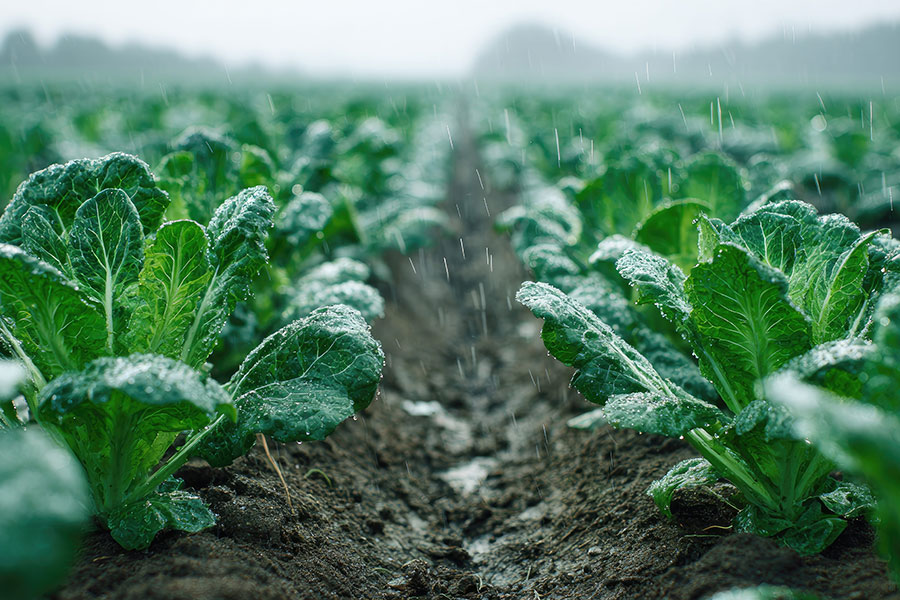
“If you follow my laws and are careful to keep my commandments” (26:3). The word the Torah uses for laws here is chok and the word the Torah uses for “to follow” is telechu. A chok is a commandment that is axiomatic to our Jewish lives, like breathing is to our physical lives. Just as we breathe 24/7, there are certain commandments that we keep 24/7, like not eating non-kosher food, or not charging interest. Our spiritual lives depend on it. We should follow these chukim as if they were the only street on which we can walk, G-d’s street. There are other commandments that come our way periodically, like Shabbat and we look forward to keeping them. Those, the Torah here calls mitzvot. Both of them, the non-stop commandments and the periodic commandments, are the keys to our livelihood. Our reward for keeping them is rain. We all become rainmakers for ourselves, for our families and for those in society who need us if we stick to His road.